Page 2 of 5

100,000 POETS & FRIENDS FOR CHANGE, THE BeZine 2016 virtual event is live now…join us … American-Israeli Poet Michael Dickel hosts

Welcome to The BeZine’s online,
virtual 100,000 Poets for Change event!

This is reblogged from The BeZine blog – post done by Master of Ceremonies, Michael Dickel – and we invite you to come on over and share a poem or two or other art … if you are clergy, please feel free to pop in the link to a sermon or homily related to the subject … read on to learn more … We’ve been live since 12:01 a.m. 25th September, Saturday Isreali time and we’ll close at midnight today P.S.T. (California) September 24, Saturday. I’ve been pitching in for Michael for a few hours but he should be back by the time this publishes or shortly thereafter.  / J.D.
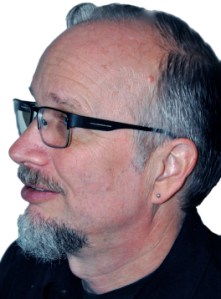
American-Isreali Poet, Michael Dickel

This past week, an international aid convoy in Syria was attacked with devastating results, during a ceasefire. Bombs went off, as usual, in Iraq. They also went off in New Jersey and New York. There were terrorist knife attacks in Jerusalem. And knife attacks also in St. Cloud, Minnesota. Police shot (at least) two unarmed African-Americans in the United States. Police shot “terror suspects” in Israel. Iran arrested dissidents. China gave a dissident’s attorney a 12-year sentence.

Climate change has reduced the arctic ice sheets at record levels, this summer just ended. The Fertile Crescent, where Western civilization began, has suffered such a devastating drought that farmers have fled it for years now—a contributing cause to the Syrian civil war and the refugee crisis. The hardened, drought-stricken soil in the region, broken up by heavy war-machinery, artillery shelling, and bombs, has turned into dust that the wind picks up—a contributing cause of record dust storms throughout the region.

It is time for global change

For the past six years, September 100,000 Poets for Change (100TPC) has inspired and supported events on a Saturday in September. This year, there are over 550 events scheduled throughout the world. This blog/zine is one of them. The goal is for poets (artists, musicians, actors, even mimes) to band together and perform / exhibit their work in a call to change the world for the better.

The 100TPC themes are peace, sustainability, and social justice. The September 2016 issue of The BeZine, edited by Priscilla Galasso and Steve Wiencek, focuses on environmental justice. This focus relates to social justice and sustainability, but is a necessary part of obtaining peace. If we still have poverty and homelessness, what is sustained other than inequality? And, without social justice and a sustainable environment, could there be peace? Could peace be maintained without both social and environmental justice alongside environmental and economic sustainability?

Share your work on The BeZine blog, today, as part of our 100TPC online event—help us create a space for change. As in past years, the event will be archived and made available later on The BeZine’s website and will also be archived at Standford University in California.

– Michael Dickel

© words and photograph, Michael Dickel

I, too, sing America … Langston Hughes poem at the opening of the Smithsonian Museum of African American History and Culture

National Museum of African American History and Culture, opens September 24, 2016
National Museum of African American History and Culture.  Opens September 24, 2016

AMERICAN POETRY: Langston Hughes’ I, too, sing America will be used in the opening ceremonies on Saturday for the National Museum of African American History and Culture at the Smithsonian in DC.

The poem predates the Civil Rights Movement by about ten years:

I, too, sing America.

I am the darker brother.
They send me to eat in the kitchen
When company comes,
But I laugh,
And eat well,
And grow strong.

Tomorrow,
I’ll be at the table
When company comes.
Nobody’ll dare
Say to me,
“Eat in the kitchen,”
Then.

Besides,
They’ll see how beautiful I am
And be ashamed–

I, too, am America.

– Langston Hughes

The website with details on the grand opening is HERE.

The photograph is by Fuzheado under CC BY-SA 4.0 license

There Is Pleasure in the Pathless Wood … and therein is your Wednesday Writing Prompt

IMG_0046There is a pleasure in the pathless woods,
There is a rapture on the lonely shore,
There is society, where none intrudes,
By the deep sea, and music in its roar:
I love not man the less, but Nature more,
From these our interviews, in which I steal
From all I may be, or have been before,
To mingle with the Universe, and feel
What I can ne’er express, yet cannot all conceal

Gordon George Byron, Lord Byron
from Childe Harold, Canto iv, Verse 178

WEDNESDAY WRITING PROMPT

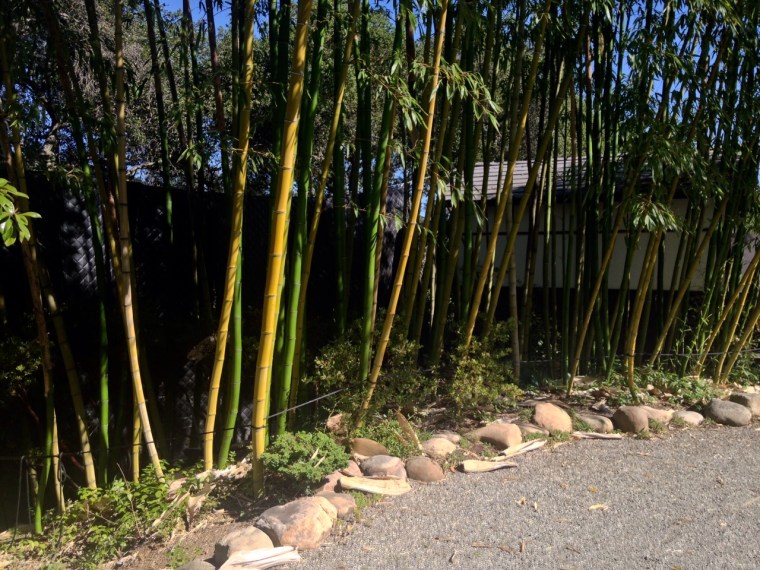
It’s important – and it’s often a relief – to get out in nature where the quiet is healing and the beauty helps us to feel our connection with the whole of the Universe.  Byron writes here of the woods.  Where do you go for solitude and solice, refreshing your soul? Woods. Garden, Lake. Ocean. Wilderness lands. Perhaps a park like the one in the photograph above. Tell us about it and how you feel, how it draws you in and wakes you up spiritually. Do it by way of poetry or creative nonfiction. May this be a meditative exercise for you.

© photo, Jamie Dedes

Blind like us … Two by Charles Hamilton Sorely

CHARLES HAMILTON SORLEY (1895 - 1915)
Charles Hamilton Sorely (1895 – 1915)

A version of this post that I put together several years ago and published elsewhere keeps coming up in the stats for that site, a few people each week popping by to read it … and so I read the poems again myself.  Seems we have to learn the same lessons over and over. What Sorely writes still applies …

SUCH, SUCH IS DEATH (1915)

Such, such is Death: no triumph: no defeat:
Only an empty pail, a slate rubbed clean,
A merciful putting away of what has been.
And this we know: Death is not Life, effete,
Life crushed, the broken pail. We who have seen
So marvellous things know well the end not yet.
Victor and vanquished are a-one in death:
Coward and brave: friend, foe. Ghosts do not say,
“Come, what was your record when you drew breath?”
But a big blot has hid each yesterday
So poor, so manifestly incomplete.
And your bright Promise, withered long and sped,
Is touched, stirs, rises, opens and grows sweet
And blossoms and is you, when you are dead.

TO GERMANY (1914)

You are blind like us. Your hurt no man designed,
And no man claimed the conquest of your land.
But gropers both through fields of thought confined
We stumble and we do not understand.
You only saw your future bigly planned,
And we, the tapering paths of our own mind,
And in each other’s dearest ways we stand,
And hiss and hate. And the blind fight the blind.

When it is peace, then we may view again
With new-won eyes each other’s truer form
And wonder. Grown more loving-kind and warm
We’ll grasp firm hands and laugh at the old pain,
When it is peace. But until peace, the storm
The darkness and the thunder and the rain.

– Charles Hamilton Sorely

Charles Hamilton Sorley was born in Aberdeen in 1894. He was the son of a professor of moral philosophy at Aberdeen University.  When the First World War was declared in August 1914, Sorley enlisted in the British Army. He joined the Suffolk Regiment and after several months training he became Lieutenant Sorly was sent to the Western Front. Sorley arrived in France in May 1915 and after three months was promoted to captain. He was killed by a sniper at the Battle of Loos on October 13, 1915, leaving just thirty-seven poems completed. Sorley’s posthumously published book, Marlborough and Other Poems was as popular and critical success when it was published in 1916. [A more comprehensive bio is provided by the Poetry Foundation HERE.]

Photo credit ~ Charles Hamilton Sorely dated c. 1914/1915. The photo was first published in 1918. The poems came out in 1919 and are excerpts from Marlborough and Other Poems by Charles Hamilton SorelyYou can read the entire book on or download it from Internet Archives HERE.