Page 4 of 5

U.S. LIBRARY OF CONGRESS 2019 EXHIBITIONS AND PROGRAMS EXPLORE AMERICA’S CHANGE MAKERS

“On a very personal level, I have fond memories of spending a lot of time in the Library of Congress working on my collection of poems ‘Native Guard.’ I was there over a summer doing research in the archives and then writing in the reading room at the Jefferson building.” Natasha Trethewey
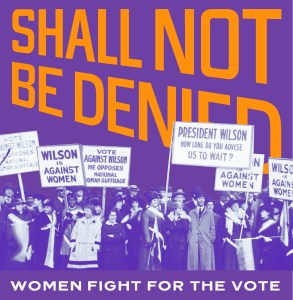


The Library of Congress launched a yearlong initiative for 2019 inviting visitors to Explore America’s Change Makers with a series of exhibitions, events and programs. Major exhibitions drawing from the Library’s collections are focused on important figures in women’s history and the fight for suffrage, Rosa Parks’ groundbreaking role in the civil rights movement and artists’ responses to major issues of the day.

Additional events will Explore America’s Change Makers through music, films, performances and public programs throughout the year.

The 2019 initiative is being announced on the 101stanniversary of the day when the U.S. House of Representatives first passed a constitutional amendment for women’s suffrage on Jan. 10, 1918 – a victory that Rep. Jeannette Rankin, the first woman to serve in Congress, helped achieve. The Senate would pass the measure in 1919 to send the amendment to the states for ratification. The story of the lengthy movement for women’s suffrage will be told in the Library’s centerpiece exhibition.

Shall Not Be Denied: Women Fight for the Vote
June 4, 2019 – September 2020

The new exhibition, “Shall Not Be Denied: Women Fight for the Vote,” will tell the story of the long campaign for women’s suffrage – considered the largest reform movement in American history – which lasted more than seven decades. The struggle was not for the fainthearted. For years, determined women organized, lobbied, paraded, petitioned, lectured, picketed and faced imprisonment.

The exhibition draws from the Library’s extensive collections of personal papers and organizational records of such figures as Susan B. Anthony, Elizabeth Cady Stanton, Mary Church Terrell, Carrie Chapman Catt, the National Woman’s Party, the National American Woman Suffrage Association and others. Documents, images, video and audio recordings will trace the movement leading to the women’s rights convention at Seneca Falls, the contributions of suffragists who worked to persuade women that they deserved the same rights as men, the divergent political strategies and internal divisions they overcame, the push for a federal women’s suffrage amendment and the legacy of this movement.

“Shall Not Be Denied” is part of the national commemoration of the 100th anniversary of women’s suffrage, marking major milestones in 2019 and 2020. The exhibition will open on the 100th anniversary of the U.S. Senate’s passage of the suffrage amendment that would become the 19th amendment to the Constitution once ratification by the states was certified on Aug. 26, 1920.

The Library’s 2019 exhibitions also will include:

Art in Action: Herblock and Fellow Artists Respond to Their Times
Jan. 31, 2019 – Aug. 17, 2019

A new exhibition, “Art in Action,” will explore the tradition of artists as social commentators. Drawings by renowned editorial cartoonist Herblock will be paired with historical and contemporary artists’ prints, drawings and posters that respond to major issues from the 17th century to the current day. As a political cartoonist for The Washington Post and other newspapers, Herbert L. Block, better known as Herblock, devoted his career to creating social commentary through art. Topics that drew his attention provide the exhibition’s framework, including civil rights, women’s rights, health, war, refugees and the role of media.

Herblock’s cartoons provide a call and response with other socially-engaged artists who expressed their opinions through art. The exhibition includes depictions of Pablo Picasso and works in the global tradition of political art by Jacques Callot, Francisco de Goya, and Leopoldo Méndez – as well as modern and contemporary American artists including Alexander Calder, Enrique Chagoya, Shepard Fairey, Kerry James Marshall, Juan Fuentes, Favianna Rodriguez and Helen Zughaib, among others.

Public domain photograph of Rosa Parks and Dr. Martin Luther King, Jr.

Rosa Parks
December 2019

Rosa Parks is best known for her refusal to give up her seat to a white man on a crowded bus in Montgomery, Alabama on Dec. 1, 1955. Her arrest sparked the Montgomery Bus Boycott, a seminal event in the civil rights movement. But Parks is often characterized by misconceptions. Contrary to popular belief, she was not a demure seamstress. The real Rosa Parks was a seasoned activist. She would be punished for the famous bus incident with death threats, unemployment and poverty – but she remained committed to the struggle for social justice until her death in 2005 and inspired millions of people worldwide.

This will be the first major exhibition to showcase the Rosa Parks Collection, which came to the Library in 2014. The collection includes thousands of pages of Parks’ personal correspondence, letters from presidents, her writings from the time of the Montgomery Bus Boycott and about 2,500 photographs, as well as her Presidential Medal of Freedom and Congressional Gold Medal.

RELATED:

*****
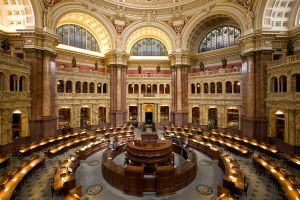
Public domain photograph of the Library of Congress, Main Reading Room

The Library of Congress is the world’s largest library, offering access to the creative record of the United States – and extensive materials from around the world – both on site and online. It is the main research arm of the U.S. Congress and the home of the U.S. Copyright Office. Explore collections, reference services and other programs and plan a visit at loc.gov, access the official site for U.S. federal legislative information at congress.gov and register creative works of authorship at copyright.gov


ABOUT

Testimonials

Disclosure

Facebook

Twitter

Poet and writer, I was once columnist and associate editor of a regional employment publication. I currently run this site, The Poet by Day, an information hub for poets and writers. I am the managing editor of The BeZine published by The Bardo Group Beguines (originally The Bardo Group), a virtual arts collective I founded.  I am a weekly contributor to Beguine Again, a site showcasing spiritual writers. My work is featured in a variety of publications and on sites, including: Levure littéraure, Ramingo’s PorchVita Brevis Literature,Compass Rose, Connotation PressThe Bar None GroupSalamander CoveSecond LightI Am Not a Silent PoetMeta / Phor(e) /Play, and California Woman. My poetry was recently read by Northern California actor Richard Lingua for Poetry Woodshed, Belfast Community Radio. I was featured in a lengthy interview on the Creative Nexus Radio Show where I was dubbed “Poetry Champion.”


The BeZine: Waging the Peace, An Interfaith Exploration featuring Fr. Daniel Sormani, Rev. Benjamin Meyers, and the Venerable Bhikkhu Bodhi among others

“What if our religion was each other. If our practice was our life. If prayer, our words. What if the temple was the Earth. If forests were our church. If holy water–the rivers, lakes, and ocean. What if meditation was our relationships. If the teacher was life. If wisdom was self-knowledge. If love was the center of our being.” Ganga White, teacher and exponent of Yoga and founder of White Lotus, a Yoga center and retreat house in Santa Barbara, CA

“Every pair of eyes facing you has probably experienced something you could not endure.” Lucille Clifton

BEGINNING WRITER’S TOOL BOX: PART 4 – EDUCATION AND TRAINING WHEN YOU CAN’T AFFORD CREATIVE WRITING PROGRAMS AND CONFERENCES

“Everyone is born creative; everyone is given a box of crayons in kindergarten. Then when you hit puberty they take the crayons away and replace them with dry, uninspiring books on algebra, history, etc. Being suddenly hit years later with the ‘creative bug’ is just a wee voice telling you, ‘I’d like my crayons back, please.”  Ignore Everybody: and 39 Other Keys to Creativity, Hugh MacLeod 


Creative writing programs – certificate, degree / residency or low-residency – available through colleges and universities are the first to come to mind, but I know these are not feasible for everyone. They’re expensive, as are conferences. You have to be able to carve time out from your day job and family responsibilities. Sometimes transportation is a challenge. You might be homebound due to illness or disability. If these are some of the barriers you face, there are lots of resources to explore. Not all require you to get your hot little body to a classroom. Some won’t cost you a dime.  Some are moderately priced.

AUTODIDACTISM (SELF-EDUCATION) is education without the guidance of teachers or coaches.  If your circumstances are such that this is the route you must go, don’t turn your nose up at it or feel in any way inferior.  Don’t be tempted to think it’s not credible. You’re not going to do surgery on anyone. You are going to tell stories and write poems. Your best teachers are the other writers you read and study. Your best practice is writing every day. This is not to discourage people from aspiring to and obtaining higher education or to put that route down. It’s just an acknowledgment that some may not have the temperament and others may not have the resources.

“Libraries raised me. I don’t believe in colleges and universities. I believe in libraries because most students don’t have any money. When I graduated from high school, it was during the Depression and we had no money. I couldn’t go to college, so I went to the library three days a week for ten years.” Ray Bradbury.

Some self-taught writers and poets :

  • Maya Angelou, poet, writer, entertainer, activist.
  • Jorge Luis Borges, Argentine writer, essayist, and poet.
  • Truman Capote,novelist, screenwriter, playwright, and actor.
  • Camilo José Cela, Nobel Prize for Literature
  • John Clare, poet.
  • Joseph Conrad, novelist.
  • Julio Cortázar, a novelist, short story writer, poet and essayist.
  • Sor Juana Inés de la Cruz, scholar and poet of New Spain (Mexico).
  • Machado de Assis, considered a great Brazilian writer.
  • Mukul Deva, a well-known Indian writer, keynote speaker and coach.
  • Harlan Ellison, multi-award-winning speculative fiction author and screenwriter. Ellison attended Ohio State University for about a year-and-a-half. He was expelled for hitting a professor who criticized his writing.
  • William Faulkner, Nobel Prize for Literature.
  • Charlotte Perkins Gilman, a feminist writer, lecturer, and thinker at the turn of the 20th century
  • Hermann Hesse, Nobel Prize for Literature.
  • Maxim Gorky, writer.
  • Knut Hamsun, Nobel Prize for Literature
  • Henry Miller, famous for breaking with existing literary forms.
  • Jack London,a novelist, journalist, and social activist; a pioneer in the world of commercial magazine fiction, London was one of the first writers to earn a fortune from writing
  • Howard Phillips Lovecraft, primogenitor of modern horror fiction.
  • Nazir Naji, a Pakistani writing in Urdu, rose from poverty to progressive news columnist, intellectual, and a speech writer to former Pakistani Prime Minister Nawaz Sharif.
  • Sir Terry Pratchett, a writer of science fiction, fantasy and children’s books. He is quoted as saying “I didn’t go to university. Didn’t even finish A-levels. But I have sympathy for those who did.”
  • José Saramago, Nobel Prize for Literature.
  • Rabindranath Tagore, Nobel Prize for Literature. A Bengali who became the first non-European to win the Nobel Prize in Literature in 1913.
  • Mark Twain, writer and humorist.
  • August Wilson, a playwright, attended school through ninth grade and then continued his studies at the local library.
  • George Bernard Shaw, Nobel Prize for Literature, left school in his teens. It is said he compared schools to prison.
  • Ernest Hemingway, Nobel Prize for Literature.
  • Louis L’Amour, known for his novels of the American West.
  • Alan Moore, graphic novelist, V for Vendetta and Watchmen.
  • Wally Wood, comic book writer.

RELATED:

ADULT EDUCATION:  The cost for adult education is nominal or free. These tend to focus on remedial education (which some readers might feel they need) and work training. The roster of classes just might include art, poetry, memoir writing, and short-story writing. I encourage you to think outside the proverbial box as well. Many many years ago I took a bookkeeping class to help with the tax records and the business side of my writing. Computer classes might also be a worthy consideration if you feel you need to kick your skills up a notch. I know of only one publication that accepts hand-written poems by snail mail.  Fewer and fewer accept submissions via the postal service. Most now want submissions by email or through a submission processing system like Submittable.

The Canadian Literacy and Learning Network provides seven keys to adult education.

  • Adults cannot be made to learn. They will only learn when they are internally motivated to do so.
  • Adults will only learn what they feel they need to learn. In other words, they are practical.
  • Adults learn by doing. Active participation is especially important to adult learners in comparison to children.
  • Adult learning is problem-based and these problems must be realistic. Adult learners like finding solutions to problems.
  • Adult learning is affected by the experience each adult brings.
  • Adults learn best informally. Adults learn what they feel they need to know whereas children learn from a curriculum.
  • Children want guidance. Adults want information that will help them improve their situation or that of their children.

Canadian Literacy and Learning Network. Principles of Adult Learning Archived 2014-02-17 at the Wayback Machine.. Jossey-Bass, 2013

COMMUNITY COLLEGE: In the US these colleges offer programs that are two years (generally associates degrees) or short-term education leading to certificates.  There’s nothing that says you have to walk the degree or certificate path. You can create your own program focusing on literature, writing, communications, and technology classes that directly meet your personal needs and goals as a writer. For added convenience, some classes are available online.

“A community college is  … a term  [that] can have different meanings in different countries: most community colleges have an “open enrollment” with a high school (also known as senior secondary school) completion, but usually refers to an educational institution that provides workforce education and college transfer academic programs.” MORE Wikipedia

LIBRARIES and INSTRUCTIONAL BOOKS:  For the frugal there’s always the library, the best budget-wise book option. Many libraries have kind volunteers available to pick-up and deliver books to the homebound. Your local library may host book-clubs, writing clubs, and classes. The local library is a good place to start.

Type in “How-to Write” in the Amazon search feature and see how many books come up.  Writer’s Digest and The Writer (to name just two publishers) have more books on writing than you would ever need. They address the subject every which way: poetry, novels, character development, plotting, revising, query letters, crafting the short story, ghostwriting, freelancing, and on and on.

LOCAL POETS AND WRITERS: Find established poets and writers living near you – it will take a bit of research and networking – and see if they teach classes or if they host weekend workshops. You may find listings in writer’s trade magazines. Often classes will be once a month or once a week and held at the writer’s home. This helps to keep costs low and therefore registration fees are low and perhaps affordable for you. Value added is that if the coach/instructor is impressed with your work, they are sometimes willing to use their connections to help you get published. Another value added is that you will make friends with other poets and writers.

DISTANCE LEARNING (REMOTE CLASSES)/POETRY SCHOOLS: I suspect there’s a lot of this around the world thanks to current technology. You’ll have to do some digging. Do an online search and  network with other writers and you might find some good small schools in your area or region. As an example, the Poetry School in the UK sounds genius, “largest provider of poetry education, providing inspiring education and ways to connect with other supportive poets.”  Poetry School offers downloadable courses for remote learning. Second Light Network offers remote workshops too.

YOUTUBE: This is a truly rich resource that includes writing classes, literature courses, poetry readings, and discussions with panels of poets and writers, which you can access for free and at whim. Often the “classes” are presentations made at those conferences you couldn’t get to or couldn’t afford. Literature courses are posted by such prestigious institutions as Yale University.  Poetry readings come from a broad range of outlets that include, for example, Emery College and the Dodge Poetry Festival. Do a search by poet, school, or a more specific interest like ecopoetics.  Here’s a sample:

I hope this helps you find the instruction you need or want. Good luck!


Often information is just thatinformation– and not necessarily recommendation. I haven’t worked with all the publications or other organizations featured in my regular Sunday Announcements or other announcements shared on this site. Awards and contests are often (generally) a means to generate income, publicity and marketing mailing lists for the host organizations, some of which are more reputable than others. I never attend events anymore. Caveat Emptor: Please be sure to verify information for yourself before submitting work, buying products, paying fees or attending events et al.


ABOUT

Testimonials

Disclosure

Facebook

Twitter

Poet and writer, I was once columnist and associate editor of a regional employment publication. I currently run this site, The Poet by Day, an information hub for poets and writers. I am the managing editor of The BeZine published by The Bardo Group Beguines (originally The Bardo Group), a virtual arts collective I founded.  I am a weekly contributor to Beguine Again, a site showcasing spiritual writers. My work is featured in a variety of publications and on sites, including: Levure littéraure, Ramingo’s PorchVita Brevis Literature,Compass Rose, Connotation PressThe Bar None GroupSalamander CoveSecond LightI Am Not a Silent PoetMeta / Phor(e) /Play, and California Woman. My poetry was recently read by Northern California actor Richard Lingua for Poetry Woodshed, Belfast Community Radio. I was featured in a lengthy interview on the Creative Nexus Radio Show where I was dubbed “Poetry Champion.”


The BeZine: Waging the Peace, An Interfaith Exploration featuring Fr. Daniel Sormani, Rev. Benjamin Meyers, and the Venerable Bhikkhu Bodhi among others

“What if our religion was each other. If our practice was our life. If prayer, our words. What if the temple was the Earth. If forests were our church. If holy water–the rivers, lakes, and ocean. What if meditation was our relationships. If the teacher was life. If wisdom was self-knowledge. If love was the center of our being.” Ganga White, teacher and exponent of Yoga and founder of White Lotus, a Yoga center and retreat house in Santa Barbara, CA

“Every pair of eyes facing you has probably experienced something you could not endure.” Lucille Clifton

THE BEGINNING WRITER’S TOOL BOX: PART 3 – MAGAZINES FOR POETS AND WRITERS

“No one says a novel has to be one thing. It can be anything it wants to be, a vaudeville show, the six o’clock news, the mumblings of wild men saddled by demons.” Ishmael Reed, Yellow Back Radio Broke-Down


Trade and professional publications for writers offer writing how-to features along with info on new directions in publishing and on the business side of writing; for example, how to submit work, how to target the right publications, how to organize your work and plan your day, and how and when to write query letters.

The Writer,  Writer’s Digest and Poets & Writers are perhaps the most well-known and credible. The Writer and Writer’s Digest provide writing tips. All three publish relevant news about writers and their books, updated market lists, and the information on the latest trends in our field. Which magazine/s will work for you? That would depend on your taste, goals, and experience.

Publisher’s Weekly is expensive ($249 a year) magazine but it is available at many local libraries in the U.S.  It’s a trade magazine for publishers, librarians, booksellers, and literary agents.  Its emphasis is on book reviews but it also provides a range of news-worthy features addressing self-publishing, trends in sales and technology, and other germane topics. Its content often includes tips from well-known writers. Publisher’s Weekly can certainly be useful but again: you might do best to just peruse it at the library.

Other magazines include:

I’ve provided the links to Amazon Magazine Subscriptions. Remember that those are automatically renewed.

This is by no means a comprehensive list but it’s more than enough to get you started on the path to finding the resources that will work best for you.

The magazine covers below give you a good sense of what you can expect from these publications.

If you are reading this from an email subscription, you may have to link through to the site to view the slide show below.

This slideshow requires JavaScript.


Often information is just thatinformation– and not necessarily recommendation. I haven’t worked with all the publications or other organizations featured in my regular Sunday Announcements or other announcements shared on this site. Awards and contests are often (generally) a means to generate income, publicity and marketing mailing lists for the host organizations, some of which are more reputable than others. I rarely attend events anymore. Caveat Emptor: Please be sure to verify information for yourself before submitting work, buying products, paying fees or attending events et al.


ABOUT

Testimonials

Disclosure

Facebook

Twitter

Poet and writer, I was once columnist and associate editor of a regional employment publication. I currently run this site, The Poet by Day, an information hub for poets and writers. I am the managing editor of The BeZine published by The Bardo Group Beguines (originally The Bardo Group), a virtual arts collective I founded.  I am a weekly contributor to Beguine Again, a site showcasing spiritual writers. My work is featured in a variety of publications and on sites, including: Levure littéraure, Ramingo’s PorchVita Brevis Literature,Compass Rose, Connotation PressThe Bar None GroupSalamander CoveSecond LightI Am Not a Silent PoetMeta / Phor(e) /Play, and California Woman. My poetry was recently read by Northern California actor Richard Lingua for Poetry Woodshed, Belfast Community Radio. I was featured in a lengthy interview on the Creative Nexus Radio Show where I was dubbed “Poetry Champion.”


The BeZine: Waging the Peace, An Interfaith Exploration featuring Fr. Daniel Sormani, Rev. Benjamin Meyers, and the Venerable Bhikkhu Bodhi among others

“What if our religion was each other. If our practice was our life. If prayer, our words. What if the temple was the Earth. If forests were our church. If holy water–the rivers, lakes, and ocean. What if meditation was our relationships. If the teacher was life. If wisdom was self-knowledge. If love was the center of our being.” Ganga White, teacher and exponent of Yoga and founder of White Lotus, a Yoga center and retreat house in Santa Barbara, CA

“Every pair of eyes facing you has probably experienced something you could not endure.” Lucille Clifton

THE BEGINNING WRITER’S TOOL BOX: PART 2 – ONLINE MARKET RESOURCES FOR WRITERS, POETS AND ARTISTS

“I learned from the age of two or three that any room in our house, at any time of day, was there to read in, or be read to.” Eudora Welty, One Writer’s Beginnings [recommended}


There are quite a number of online resources for finding markets for your creative work. Some, like Submittable covered yesterday, offer the ability to conveniently track your submissions.

  • All Freelance offers a market directory with an advanced search feature.  It also posts other helpful information focused on the concerns of freelancers.
  • The Burry Man Writers Center (Scotland) serves “a worldwide community of writers” and publishes freelance job links, resources for fiction and nonfiction writers, playwrights, and screen writers.
  • CBC provides A Guide to Canadian Literary Magazines and Journals open to submissions.
  • The Christian Writers Market Guide provides 1,000 listings of publishers, periodicals, specialty markets, conferences, contests and other services including writing courses.  A month-to-month subscription to the listing guide is $5.99 a month. A six-month subscription is $3.00 a month, and a twelve-month subscription is $2.99 a month.
  • Dark Markets offers lists for horror genre including publishers, contests, magazines and zines.
  • Duotrope boasts that its site publishes 7,000 listings of active publishers and agents for writers of fiction, poetry and nonfiction encompassing literary, genre and academic. It also has listings for the visual arts and provides an advanced search feature, a submission tracker, and interviews with editors. There is a free trial period after which you pay $5 a month or $50 a year.
  • JBWB (UK) publishes listings for short stories, novels, non-fiction, poetry, agents, small press, US, Australia, and New Zealand.
  • The Market List is a resource for genre fiction offering relevant listings including agents.
  • Poets & Writers Magazine publishes listings for small presses, literary agents, editors, contests, grants and awards.
  • Speculative Literature Foundation promotes speculative fiction and publishes relevant market listings.
  • Writers Write shares a list of paying markets.

This is by no means comprehensive but it’s more than enough resources to get you started on the path to finding the ones that will work best for you.

Note: Sunday Announcements: Calls for Submissions, Competitions, and Other Information and News will return to The Poet by Day on Sunday, January 13.

RELATED:


Often information is just thatinformation– and not necessarily recommendation. I haven’t worked with all the publications or other organizations featured in my regular Sunday Announcements or other announcements shared on this site. Awards and contests are often (generally) a means to generate income, publicity and marketing mailing lists for the host organizations, some of which are more reputable than others. I rarely attend events anymore. Caveat Emptor: Please be sure to verify information for yourself before submitting work, buying products, paying fees or attending events et al.


ABOUT

Testimonials

Disclosure

Facebook

Twitter

Poet and writer, I was once columnist and associate editor of a regional employment publication. I currently run this site, The Poet by Day, an information hub for poets and writers. I am the managing editor of The BeZine published by The Bardo Group Beguines (originally The Bardo Group), a virtual arts collective I founded.  I am a weekly contributor to Beguine Again, a site showcasing spiritual writers. My work is featured in a variety of publications and on sites, including: Levure littéraure, Ramingo’s PorchVita Brevis Literature,Compass Rose, Connotation PressThe Bar None GroupSalamander CoveSecond LightI Am Not a Silent PoetMeta / Phor(e) /Play, and California Woman. My poetry was recently read by Northern California actor Richard Lingua for Poetry Woodshed, Belfast Community Radio. I was featured in a lengthy interview on the Creative Nexus Radio Show where I was dubbed “Poetry Champion.”


The BeZine: Waging the Peace, An Interfaith Exploration featuring Fr. Daniel Sormani, Rev. Benjamin Meyers, and the Venerable Bhikkhu Bodhi among others

“What if our religion was each other. If our practice was our life. If prayer, our words. What if the temple was the Earth. If forests were our church. If holy water–the rivers, lakes, and ocean. What if meditation was our relationships. If the teacher was life. If wisdom was self-knowledge. If love was the center of our being.” Ganga White, teacher and exponent of Yoga and founder of White Lotus, a Yoga center and retreat house in Santa Barbara, CA

“Every pair of eyes facing you has probably experienced something you could not endure.” Lucille Clifton