Page 7 of 8

Celebrating American She-Poets (5): Rita Mae Brown, “I wanted to write a perfect poem.”

511kK247BML._SX336_BO1,204,203,200_

“Time had not teased me. I thought eternity was mine in which to live and in which to write. Thinking myself amazingly intelligent, I saw no reason to hide my light under a bushel basket.  My youthful poetry paraded my stuff. I imitated Horace shamelessly; he still remains one of my favorite poets in the original Latin but I have grown up enough not to imitate him. Who could?

“Perhaps there will only be one Rita Mae.  I’m not sure I could stand another one.  Anyway, as I learned more and more about language and literature I also learned more and more about my own limitations.  I wanted to write a perfect poem.  I was soon humbled and wanted to write a great poem.  I eventually became realistic: I wanted to write a good poem.”

. . . so says American novelist, screenwriter, POET and activist, Rita Mae Brown (b. 1944) in the intro to Poems, poetry from her two published collections combined into one book. Who among us can’t sympathize with that ambition? Or perhaps you want to write the perfect short story, paint the perfect picture, or compose the perfect piece of music. It’s all in the same spirit.

Spare and elegant, Rita Mae Brown’s poems deal with war, human rights and feminist and lesbian themes. She’s always confident and often contemptuous.

A Short Note for Liberals

I’ve seen your kind before
Forty-plus and secure
Settling for a kiss from feeble winds
And calling it a storm

Many of the poems were written when she was eighteen and the introduction is written from the perspective of middle-age. She’s fierce, her imagery apt and sometimes breath-taking.

For Those of Us Working For a New World

The dead are the only people
to have permanent dwellings.
We, nomads of Revolution
Wander over the desolation of many generations
And are reborn on each other’s lips
To ride wild mares over unfathomable canyons
Heralding dawns, dreams and sweet desire.

Thumbs-up on this collection.  It’s out of print, but used copies are available through Amazon and other book vendors.
Unknown

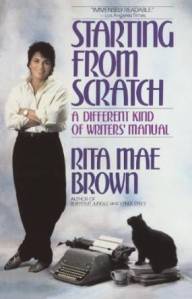
Rita Mae Brown is also a New York Times bestselling author of the Mrs. Murphy mystery series, which is cowritten with her cat, Sneaky Pie. Other novels include In Her Day, The Sand Castle and Six of One. She’s written two memoirs and was nominated for an Emmy for her screenwriting. Writers might enjoy Starting From Scratch: A Different Kind of Writer’s Manual. It’s savvy and full of sass, an enjoyable read.

© poems and book cover art, Rita Mae Brown

For Everyone Who Wishes Poetry Was Their Day Job

PBDFor everyone who eats, sleeps and breathes poetry and wishes poetry was their day job, THE POET BY DAY (including  The Poet by Day Facebook Page) is reinventing itself, transitioning to an information hub on all things poesy with special – but not exclusive – light on:

  • regional and global poetry initiatives for peace, sustainability and social justice
  • she-poets
  • minority poets
  • poets just finding their voices in maturity

On Occasion: Celebrating American She-Poets. Yes! I know it’s cheeky to steal from Muriel Rukeyser like that, but “American She-Poets” is so pungent v. “American Woman.”

So join with me in the glory of poetry: poets, poems, news, reviews, readings and events. If you’d like to share an announcement for an event, publication, book launch or class, you must send it fourteen days in advance to thepoetbyday@gmail.com. Publication is subject to editorial discretion.
Thank you!
Jamie Dedes

© All rights reserved

Celebrating American She-Poets (4): Pearl Buck “Words of Love”

I give you the books I’ve made,
Body and soul, bled and flayed.
Yet the essence they contain
In one poem is made plain,
In one poem is made clear:
On this earth, through far or near,
Without love there’s only fear.

Essence by Pearl Buck, novelist and humanitarian

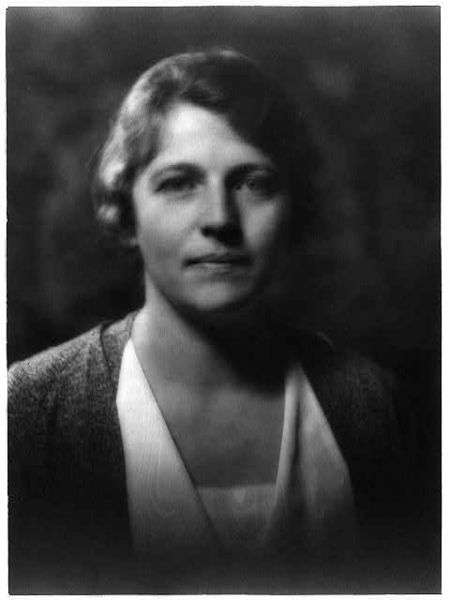
No one will think first of poetry when they think of Pearl Buck. She was primarily a novelist and memoirist. She did write poetry though and one collection was published. I consider her a sort of spiritual mother and so include her early in this ongoing Thursday series: Celebrating American She-Poets.

Pearl S. Buck (1892-1973) was born in Virginia, the daughter of Presbyterian missionaries. She grew up in China and spoke Chinese before she spoke English. Her Chinese name was Sai Zhenzhu.

Pearl Buck was a prolific writer of novels and memoir who started publishing her stories and essays in the 1920s in popular periodicals of the day: The Nation, The Chinese Recorder, Asia, and The Atlantic Monthly. Her first novel was East Wind, West Wind (John Day Company, 1930).

Of her novels, The Good Earth is the best known. It won the Pulitzer in 1932. The focus of most of her writing was China and the Chinese. When Chinese-American author Anchee Min wrote Pearl of Chinaa fictionalized account of Pearl Buck’s life, she said that she was touched by the warmth and understanding with which Ms. Buck had written about Chinese peasants and their lives.

Pearl Buck was awarded the Nobel Prize for Literature in 1938.

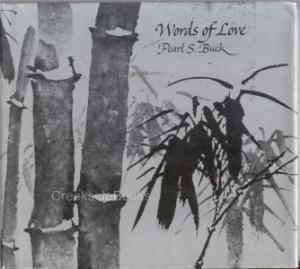
To my knowledge, there is only one small book of her poems. The collection is titled Words of Love. It is simply illustrated with Asian art by Jeanyee Wong and was published a year after Ms. Buck’s death by the John Day Company, the publishing firm run by Pearl Buck’s second husband, Richard Walsh.

I found a copy of Words of Love in a used-book store some years ago. The poem quoted above is an excerpt. In brief, eloquent, deft strokes, Ms. Buck’s poems do indeed express the themes of her novels. I can’t help but wonder whether there might be more of her poetry stored in some university archive awaiting discovery by an ambitious student or devoted biographer.

Dust-jacket, Words of Love by Pearl S. Buck.

© 2016,  Jamie Dedes, All rights reserved; illustrations are in the public domain

Celebrating American She-Poets (3): Elizabeth Bishop, “One Art”

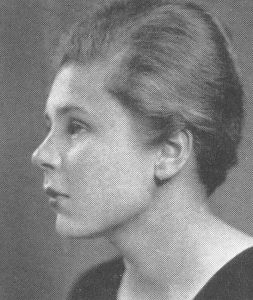
Elizabeth Bishop, 1934 Vassar Yearbook, Public Domain Photograph

Elizabeth Bishop (1911-1979), a poet and short-story writer, was U.S. Poet Laureate from 1949-1950.  She won a Pulitzer Prize for poetry in 1958, the National Book Award in 1970 and she received the Neustadt International Prize for Literature in 1976. One of her most loved – world renown – poems was One Art.

When people are good at their work, they seem to do their jobs effortlessly. We never see the hours of practice behind the dancer’s bravura performance or the pianist’s breathtaking delivery nor the years of experience behind the actor’s overnight success, the accountant’s instant analysis or the cook’s fabulously original meal pulled together with left-overs and kitchen odds-and-ends. And so it is with the practiced precision of poetry …

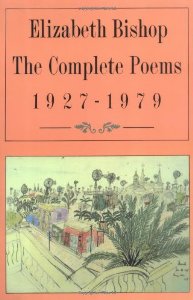
EB Collected PoemsElizabeth Bishop’s One Art  seems effortless but over the course of years she rewrote it seventeen times.

 In the short video that follows Professor M. Mark at Vassar College (Bishop’s alma mater) discusses Elizabeth Bishop, her work, and her only villanelle,* One Art, which is included in The Complete Poems 1926-1978 (recommended reading). .

One Art

The art of losing isn’t hard to master;
so many things seem filled with the intent
to be lost that their loss is no disaster.

Lose something every day. Accept the fluster
of lost door keys, the hour badly spent.
The art of losing isn’t hard to master.

Then practice losing farther, losing faster:
places, and names, and where it was you meant
to travel. None of these will bring disaster.

I lost my mother’s watch. And look! my last, or
next-to-last, of three loved houses went.
The art of losing isn’t hard to master.

I lost two cities, lovely ones. And, vaster,
some realms I owned, two rivers, a continent.
I miss them, but it wasn’t a disaster.

—Even losing you (the joking voice, a gesture
I love) I shan’t have lied. It’s evident
the art of losing’s not too hard to master
though it may look like (Write it!) like disaster.

– Elizabeth Bishop

Video uploaded by Vassar College.

* Vinanelle ~ a nineteen-line poem with two rhymes throughout, consisting of five tercets and a quatrain, with the first and third lines of the opening tercet recurring alternately at the end of the other tercets and with both repeated at the close of the concluding quatrain. New Oxford American Dictionary

© 2016, words, Jamie Dedes, All rights reserved