Page 2 of 4

CELEBRATING AMERICAN SHE-POETS (#22): Jane Hirshfield, a human poet

Jane Hirshfeld (b. 1953), poet, essayist, translator
Jane Hirshfield (b. 1953), poet, essayist, translator

I always feel a slight dismay if I’m called a “Zen” poet. I am not. I am a human poet, that’s all.” Poet Jane Hirshfield on the Mystery of Existence, Spirituality & Health Magazine, Mar./Apr. 2013

When I think of Jane Hirshfield, I think first of her kindness to my friend, Bay Area poet, Ann Emerson (poet #9 in this series), who died a few years back and who received compassionate and generous guidance from Jane at a conference some years ago. It meant a lot to Ann and was a high-point in her six-year journey through cancer with poetry. Once having read Jane Hirshfield’s work, you can’t conceive of her as being anything but kind. The empathy expressed in her poetry is vast.

I admit to being one of those who also thinks of her as a Buddhist poet. Her poetry is Zen-like in its attentiveness, its inward-looking meditative quality, a quality of the ineffable given expression. Jane Hirshfield is a Zen practitioner, lived for several years at Tassajara and is ordained in Soto Zen.

Immersion in the life of the world, a willingness to be inhabited by and to speak for others, including those beyond the realm of the human, these are the practices not just of the bodhisattva but of the writer.” Jane Hirshfield in Nine Gates: Entering the Mind of Poetry

Another New York girl who eventually migrated to the San Francisco Bay Area, Jane Hirshfield was famously graduated from Princeton University’s first class to include women. She is the author of eight collections including The Lives of the Heart (Harper Collins, 1997), which won the Bay Area Book Reviewers Award and Given Sugar, Given Salt: Poems.

51LEMWRIG0L._SX326_BO1,204,203,200_

TREE

It is foolish
to let a young redwood
grow next to a house.

Even in this
one lifetime,
you will have to choose.

That great calm being,
this clutter of soup pots and books —

Already the first branch-tips brush at the window.
Softly, calmly, immensity taps at your life.

– ©Jane Hirshfield (from Given Sugar, Given Salt, Poems)

Originality requires the aptitude for exile.” The Question of Originality in Nine Gates

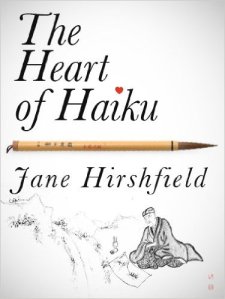
Her two collections of essays (must reads, no pedantry here) are Nine Gates: Entering the Mind of Poetry (Harper Perennial, 1998) and Ten Windows: How Great Poems Transform the World (Knopf, 2015). She also translated a collection of poems by Japanese women with Mariko Aratani: The ink dark moon : love poems by Ono no Komachi and Izumi Shikibu, women of the ancient Court of Japan (Vintage Classics). Her study The Heart of Haiku is available in Kindle Edition.
51oJEaBJOEL._SX373_BO1,204,203,200_

Reading Jane Hishfield’s work is both a joy and education for your writerly self and a balm for your spirit. If by some incalculable misfortune you haven’t met her yet, seize this day.

© 2016, words, Jamie Dedes; photograph by A. Phillips and generously released into the public domain

CELEBRATING AMERICAN SHE-POETS (21): Alice Walker, on the way to being daffodils

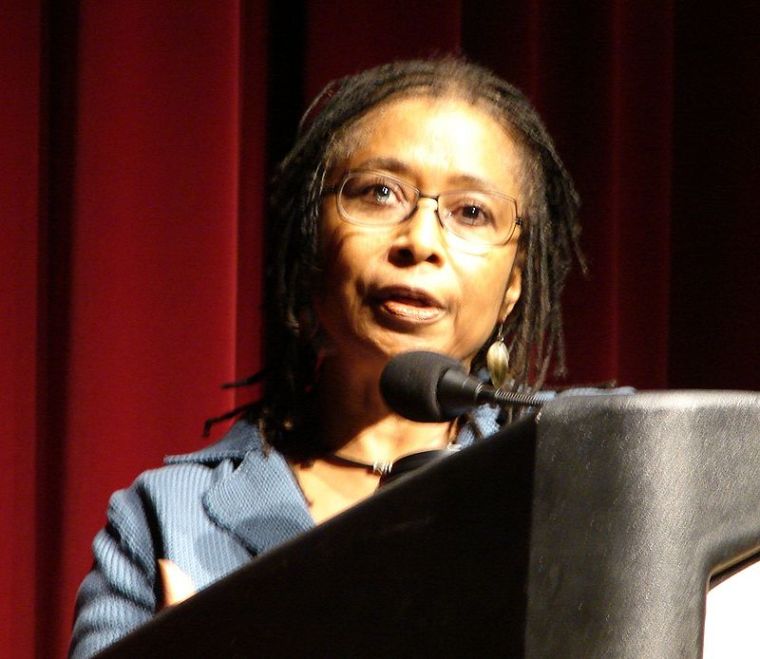
Writer, Poet and Activist, Alice Walker (b. 1944)

Speaking of death
and decay
It hardly matters
Which
Since both are on the
way, maybe –
to being daffodils.

excerpt from Exercises on Themes from Life in Once: Poems (Harcourt Brace Jovanovich, 1968)

This celebration is a rain-drop next to the ocean of ongoing world-wide applause for Alice Walker (Alice Walker’s Garden). Her roots are in Putnam Country, Georgia where her family subsisted financially on earnings from sharecropping, dairy-farming and her mother’s part-time employment as a maid.  Ms. Walker seems to come by her spunk and savvy honestly. When a white plantation owner told her mother that black people had “no need for education,” she replied …

“‘You might have some black children somewhere, but they don’t live in this house. Don’t you ever come around here again talking about how my children don’t need to learn how to read and write.’ Her mother enrolled Alice in first grade when the girl was four years old.”  Evelyn C White in Alice Walker: A Life (W.W. Norton, 2004)

51-dZyRDSyL._SX318_BO1,204,203,200_

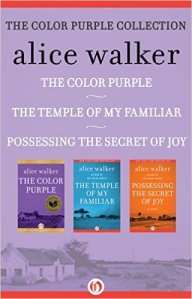
Alice Walker is perhaps most well-known to some for her fiction especially The Color Purple, The Temple of My Familiar and Possessing the Secret of Joy (Open Road Media, 2012 – Kindle edition).  The Color Purple won her the National Book Award and The Pulitzer Prize. It was adapted for theater, both screen and as a musical stage play. The latter won the 2016 Tony Award for Best Revival of a Musical and the 2016 Drama League Award for Outstanding Revival of a Musical. Alice Walker was the first African-American woman to win the Pulitzer for fiction. (Gwendolyn Brooks was the first African-American woman to win it for poetry.)

41I+GqM1XdL._AC_US160_

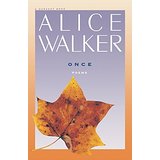
Once:Poems was Alice Walker’s debut poetry collection, written during a 1965 trip to East Africa and her senior year at Sarah Lawrence College. The book established her as an A-list poet and Muriel Rukeyser (among many others) gave it a thumbs-up saying, “Brief slashing poems – Young, and in the sun.”

In Kampala
the young king
goes often to Church
the young girls here
are
so pious.

excerpt from African Images, Glimpses from a Tiger’s Back in Once:Poems

Her other collections include: Hard Times Require Furious Dancing: New Poems (2013); The World Will Follow Joy: Turning Madness into Flowers (2013); Her Blue Body Everything We Know: earthling Poems 1965-1990 (2004); and Absolute Trust in the Goodness of the Earth: New Poems (2004).

With Gloria Steinem on the Fall 2009 Cover of Ms. magazine

No celebration of Alice Walker’s work would be complete without acknowledging her ceaseless efforts on behalf of the poor and marginalized. She is an advocate for peace and understanding. She was initially inspired by Martin Luther King, Jr. and worked in the civil rights movement and by Howard Zin. She dedicated Once:Poems to Mr. Zin. Wherever people are oppressed in this world, you will find Alice Walker fighting the compassionate fight.

If you are viewing this from an email subscription, you’ll have to link through to the site to view this video of Alice Walker in Palestine in August 2010.

Ms. Walker regularly posts new poetry at her site Alice Walker’s Garden along with opinion pieces and updates on her own work and that of others.  Her Amazon page is HERE.

portrait © Virginia Bolt under CC BY-SA 2.0; Ms. cover © Ms. Magazine under CC BY-SA 2.0.

CELEBRATING AMERICAN SHE-POETS (18): Joy Harjo, Crazy Brave

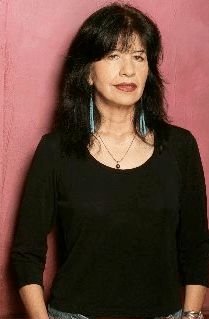
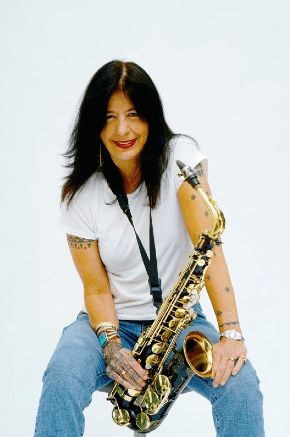
Joy Harjo (b 1951), Mvskoke (Creek) Poet, Musician, author and key player in the second wave of the Native Merican Renaissance (literary efflorescence)
Joy Harjo (b 1951), Mvskoke (Creek) Poet, Musician, author and key player in the second wave of the Native American literary efflorescence

51fFPVB5FTL._SX329_BO1,204,203,200_

 Crazy Brave (Norton & Company, 2012), Joy Harjo’s eminently engaging memoir, flows like a long prose poem. It is rich and well-built on a foundation of tribal mythologies, a strong sense of her ancestry, her difficult childhood and youth and salvation found in poetry and music. From her birth to a handsome much-loved fire-spirit father who inherited Indian oil money, allowing him to indulge a passion for cars, and her beautiful water-spirit singer-mother whose voice was stilled by a bully of a second-husband, Harjo tells the story of girl who survived a physically and emotionally abusive step-father, crushing poverty and the greater cultural obscenities to become one of our most influential poets and a formidable advocate for justice for Native Americans and liberation for women.

I was entrusted with carrying voices, songs, and stories to grow and release into the world, to be of assistance and inspiration. These were my responsibility.”

*****

I can’t imagine the human being who wouldn’t relate to Joy Harjo’s history, but those who have come from “broken” homes, poverty and a family of mixed ethnicity will most especially appreciate it and perhaps find some healing and strength in the pages of Crazy Brave. That Joy Harjo survived so much to become a decent loving person leaves the rest of us with no excuse; and any writer, poet or musician will take to heart the dreams and visions of that long journey to find hope and creative voice in poetry.

Joy Harjo, a member of the Mvskoke tribe was born in Tulsa, Oklahoma, an area where the Native American trail of tears ended, an area to which the indigenous peoples were removed – forced to relocate –  as people of European descent moved into their original home places. The removed were the Five Civilized Tribes – Cherokee, Chickasaw, Choctaw, Mvkoke and Seminole  – who were living as autonomous nations in what is now the American Deep South.

“I fought through the War Between the States and have seen many men shot, but the Cherokee Removal was the cruelest work I ever knew”. Georgian soldier who participated in the removal

*****

When the World as We Knew It Ended
It was coming.
We had been watching since the eve of the missionaries in their long
and solemn clothes, to see what would happen.
We saw it
from the kitchen window over the sink
as we made coffee, cooked rice and potatoes
enough for an army.
We saw it all, as we changed diapers and fed
the babies. We saw it,
through the branches of the knowledgeable tree,
through the snags of stars, through
the sun and storms, from our knees
as we bathed and washed the floors …
The conference of the birds warned us as they flew over
destroyers in the harbor, parked there since the first takeover.
It was by their songs and talk we knew when to rise,
when to look out the window

excerpt from When the World Ended in How We Became Human, New and Selected Poems (W.W. Norton & Co., 2004)

*****

screen-shot-2013-12-27-at-9-02-25-pm

Joy Harjo’s poetry and music are influenced by her ethnic heritage and her feminist and social concerns as well as by her love of word and sound and her education in the arts. Largely autobiographical, her poetry is informed with descriptions of the Southwestern landscape and the mythologies, symbols and values of the Mvskoke people. Hers is the sort of writing that sits with you to become part of your own bone and marrow, which is the way of good poetry and good story. A poet of the people but also a critically-acclaimed poet, her many awards include the Wallace Stevens Award of the Academy of American Poets, The William Carlos Williams Award from the Poetry Society of America and the American Indian Distinguished Achiement in the Arts Award. She is the recipient of several grants and is a teacher, musician (saxophone) and singer.  She has published some fourteen books and ten music albums.

It was a dance,
her back against the wall
at Carmen’s party. He was alone
and he called to her – come here, come here
that was the firs time she saw him
and later she and Carmen drove him home
and all the way he talked to the moon,
to the stars, to someone riding

excerpt from There Was a Dance, Sweetheart in How We Became Human: New and Selected Poems (1975-2022) (W.W. Norton & Co., 2004) © Joy Harjo

If you are reading this post from email, you will likely have to link though to this blog to enjoy the video. Joy Harjo’s Eagle Song, poem and music:

© review, Jamie Dedes; poems, Joy Harjo, photographs courtesy of Ms Harjo

CELEBRATING AMERICAN SHE-POETS (17): NIKKI GIOVANNI, Quilting the Black-eyed Pea

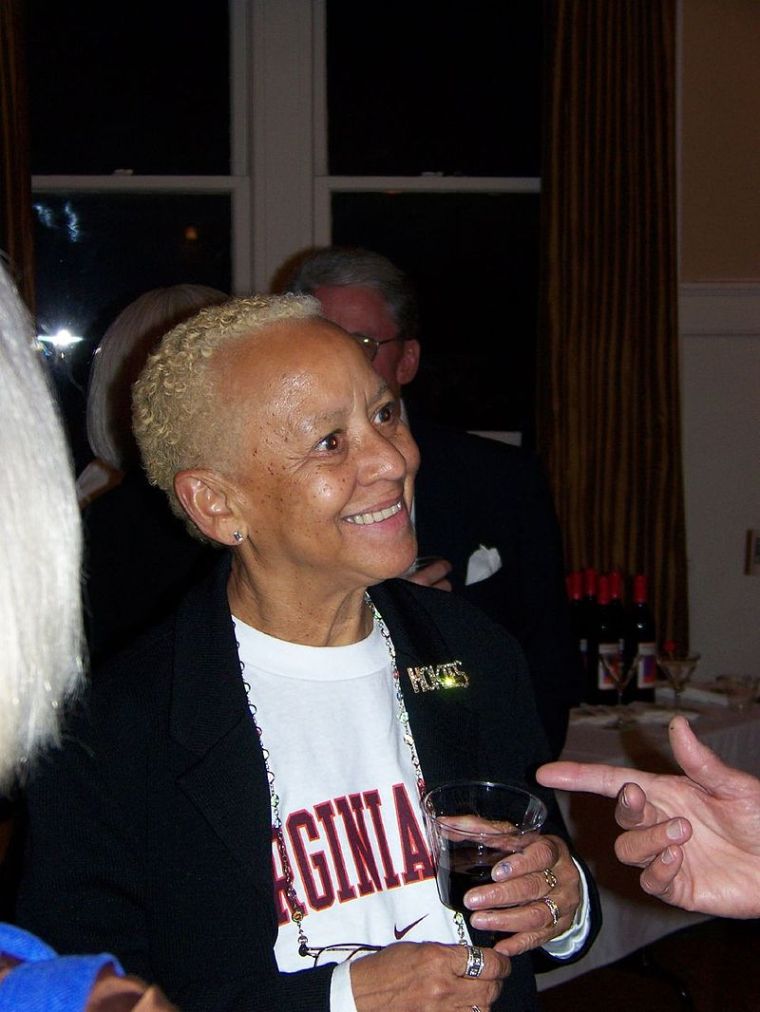
Nikki Giovanni (1943), American poet, writer, activist and educator

Everyone deserves Sanctuary a place to go where you are
safe
Art offers Sanctuary to everyone willing
to open their hearts as well as their lives”
excerpt for Art Sanctuary in Quilting the Black-Eyed Pea, poems and not quite poems

Nikki Giovanni is lauded as iconic, luminous, adventuresome and courageous.  She is all of these, but I think what I like most about her is that she is straight-forward, practical and compassionate. These characteristics are the underpinning that make her a rather extraordinary poet, a powerful combination of visceral and intellectual.

There is always something to do. There are hungry people to feed, naked people to clothe, sick people to comfort and make well. And while I don’t expect you to save the world I do think it’s not asking too much for you to love those with whom you sleep, share the happiness of those whom you call friend, engage those among you who are visionary and remove from your life those who offer you depression, despair and disrespect.”

Nikki Giovanni first came to note in the late ’60s and early ’70s as part of the Civil Rights, Black Arts and Black Power movements. The strength of her voice punctuated our poetic and political world and she has written, taught and advocated for uncommon good sense ever since. As with all of us, she has many roles in life including daughter, mother, friend and lung cancer survivor. It is clear in her work that she values family and community and supports and encourages these values in others.

Ms. Giovanni was born in Knoxville, Tennessee. She earned her undergraduate degree in history with honors at Fisk University and did her graduate work at the University of Pennsylvania and Columbia University. Her knowledge of history richly informs her perspectives in poetry, essay and talk. She taught at several universities including Virginia Tech and was at Virginia Tech for the shooting by Seung-Hui Cho in 2007 when he murdered thirty-seven people.  Cho was a student in her poetry class. She sensed something was amiss with him and asked the authorities to remove him from her class.  After the shooting, she spoke at the convocation.

We know we did nothing to deserve it. But neither does a child in Africa dying of AIDS. Neither do the invisible children walking the night awake to avoid being captured by a rogue army. Neither does the baby elephant watching his community being devastated for ivory. Neither does the Mexican child looking for fresh water….We are Virginia Tech….We will prevail.”

This video is the first of two in this post. If you are reading from an email subscription, you will have to link through to the site to view the videos.

Ms Giovanni’s early writing was a response to the assassinations of Martin Luther King, Jr., John and Robert Kennedy, and Medgar Evans.  Her first book (1968) Black Feeling, Black Talk/Black Judgement is considered by some to be the one of the most important books on the black-rights movement.  Younger people reading it will want to research the history of the era to put the book in context.

Ms. Giovanni has written some twenty-one books of poetry as well as autobiography and children’s books. She’s edited anthologies and collaborated on books with James Baldwin and Margaret Walker. She’s won countless awards for both her work and her activism. The following video is a reading of Quilting the Black-Eyed Pea (We’re Going to Mars).

I want to be clear about this. If you wrote from experience, you’d get maybe one book, maybe three poems. Writers write from empathy.”

portrait ~ Brett Weinstein under CC BY-SA 2.0