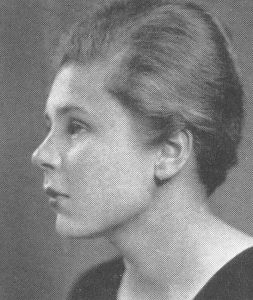
Elizabeth Bishop, 1934 Vassar Yearbook, Public Domain Photograph
Elizabeth Bishop (1911-1979), a poet and short-story writer, was U.S. Poet Laureate from 1949-1950. She won a Pulitzer Prize for poetry in 1958, the National Book Award in 1970 and she received the Neustadt International Prize for Literature in 1976. One of her most loved – world renown – poems was One Art.
When people are good at their work, they seem to do their jobs effortlessly. We never see the hours of practice behind the dancer’s bravura performance or the pianist’s breathtaking delivery nor the years of experience behind the actor’s overnight success, the accountant’s instant analysis or the cook’s fabulously original meal pulled together with left-overs and kitchen odds-and-ends. And so it is with the practiced precision of poetry …
Elizabeth Bishop’s One Art seems effortless but over the course of years she rewrote it seventeen times.
In the short video that follows Professor M. Mark at Vassar College (Bishop’s alma mater) discusses Elizabeth Bishop, her work, and her only villanelle,* One Art, which is included inThe Complete Poems 1926-1978(recommended reading)..
One Art
The art of losing isn’t hard to master;
so many things seem filled with the intent
to be lost that their loss is no disaster.
Lose something every day. Accept the fluster
of lost door keys, the hour badly spent.
The art of losing isn’t hard to master.
Then practice losing farther, losing faster:
places, and names, and where it was you meant
to travel. None of these will bring disaster.
I lost my mother’s watch. And look! my last, or
next-to-last, of three loved houses went.
The art of losing isn’t hard to master.
I lost two cities, lovely ones. And, vaster,
some realms I owned, two rivers, a continent.
I miss them, but it wasn’t a disaster.
—Even losing you (the joking voice, a gesture
I love) I shan’t have lied. It’s evident
the art of losing’s not too hard to master
though it may look like (Write it!) like disaster.
– Elizabeth Bishop
Video uploaded by Vassar College.
* Vinanelle ~ a nineteen-line poem with two rhymes throughout, consisting of five tercets and a quatrain, with the first and third lines of the opening tercet recurring alternately at the end of the other tercets and with both repeated at the close of the concluding quatrain. New Oxford American Dictionary
I first published this piece on Ruth Stone in 2013, but I love her poetry so much I had to include her early in this Thursday series of mine inspired by the work of poet Dilys Wood and the London-based Second Light Network of Women Poets (SLN), which Dilys founded. SLN encourages and supports the poetry of women, including those women with voices emerging in their third act.
Poems clutter the landscape of my mind with bite-sized portions easily committed to memory, ready to be pulled out in a moment of need or want. I like to think of poetry as literary dim sum, which means “touch the heart.” And poems do spring themselves on me and touch the tender places. Depending on the poem and the poet, they may also tickle my funny bone, stimulate my intellect, or affirm some insight. In the art of living hugely, poetry is warp and weft.
Whether I am writing poetry or reading it, poetry gifts to me those blessed eureka moments, the moments when I understand myself or another, can put a name to the demons, or simply realize that I am not alone in my joy or sorrow. Think of W. H. Auden’s Funeral Blues and the simple line, “Pack up the moon and dismantle the sun.” I am getting older, approaching elderly, and though I am always making new friends, I’m of an age where I lose a friend or two each year. Bereft at the loss of someone precious and shocked that the earth hasn’t stood still, I think of this line and know that in this circumstance, everyone feels what I do . . .
. . . and all it takes is one disappointment in love to relate to Mad Girl’s Love Song by Silvia Plath, “I dreamed that you bewitched me into bed/And sung me moon-struck, kissed me quite insane./(I think I made you up inside my head.)
Of the many poets I dearly love, I particularly appreciate Ruth Stone for her quality of giving things their true names and for the practicalities embedded in her poems. “Dear children,/You must try to say/Something when you are in need./Don’t confuse hunger with greed;/And don’t wait until you are dead.”
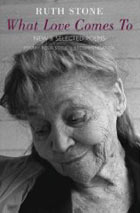
Ruth Stone was an American poet and poetry teacher born into an impoverished family at Roanoke, Virginia in 1915. She lived most of her life in rural Vermont, attended the University of Illinois at Urbana-Champaign, won many awards for her poetry and was a finalist for the Pulitzer Prize for her last collection, What Love Comes To: New & Selected Poems (2008). She was wry, bold, conversational, edgy, philosophical and used the language and imagery of the natural sciences to good effect. Her second husband, the poet Walter Stone, committed suicide leaving her with three young children and an experience that indelibly etched itself on her life, heart and poetry. She once remarked that she spent the rest of her life writing to him.
Not Expecting an Answer
This tedious letter to you,
what is one Life to another?
We walk around inside our bags,
sucking it in, spewing it out.
Then the insects, swarms heavier
than all the animals of the world.
Then the flycatchers on the clothesline,
like seiners leaning from Flemish boats
when the seas were roiled with herring.
This long letter in my mind,
calligraphy, feathery asparagus.
When Ruth Stone won the Whiting Writers’ Award, she got plumbing for her house. When she received the Walter Cerf Award for Lifetime Achievement in the Arts at the National Book Awards, she said “I’ve been writing poetry or whatever it is since I was five or six years old, and I couldn’t stop, I never could stop. I don’t know why I did it.… It was like a stream that went along beside me, you know, my life went along here . . . and all along the time this stream was going along. And I really didn’t know what it was saying. It just talked to me, and I wrote it down. So I can’t even take much credit for it.”
Ruth Stone died in 2011 leaving behind thirteen collections of literary dim sum. This poem, which gave its name to a collection that I just purchased, is a new favorite.
In the Next Galaxy
Things will be different. No one will lose their sight, their hearing, their gallbladder. It will be all Catskills with brand new wrap-around verandas. The idea of Hitler will not have vibrated yet. While back here, they are still cleaning out pockets of wrinkled Nazis hiding in Argentina. But in the next galaxy, certain planets will have true blue skies and drinking water.
In the scant two-minute video that follows, the writer Elizabeth Gilbert(Eat, Pray, Love) shares the revealing story of her meeting with Ruth Stone.
Inspired by my long-distance poetry friends at London-based Second Light Network of Women Poets (SLN), which is dedicated to encouraging and promoting women poets and women’s poetry, I’ve decided to feature one American woman poet each week on Thursday. I hope you’ll join me for these short tidbits by way of celebration.
OPPORTUNITY KNOCKS: Second Light Network of Women Poets publishes well-regarded anthologies and the biannual magazine ARTEMISpoetry, which feature the works of both contemporary well-known A-list women poets as well as talented emerging voices. Membership and publication is not limited to the UK but there are demographic restrictions: age and gender. Associate memberships are available for women under 40. Recommended.
I had eight birds hatched in one nest,
Four Cocks there were, and Hens the rest.
Note: I recognize that more correctly Anne Bradstreet would be considered an English poet. I have decided for my purposes here, I’d include her as “American.”
The illustration above is Anne Bradstreet on the cover of The Works of Anne Bradstreetpublished by The John Harvard Library . The book’s introduction is by contemporary American Poet, Adrienne Rich. Some say she (Bradstreet) was the first serious woman poet in colonial America. It could be though that she was the first to be taken seriously and published while other talents plied their art in the women’s-work ghetto of obscurity
From the publisher:
“Anne Bradstreet was one of our earliest feminists and the first true poet in the American colonies. This collection of her extant poetry and prose, scrupulously edited by Jeannine Hensley, has long been the standard edition of Bradstreet’s work. Hensley’s introduction sketches the poet’s life, and Adrienne Rich’s foreword offers a sensitive critique of Bradstreet as a person and as a writer. The John Harvard Library edition includes a chronology of Bradstreet’s life and an updated bibliography.”
public domain illustration
This is telling of the times:
Let Greeks be Greeks, and women what they are
Men have precedency and still excell,
It is but vain unjustly to wage warre;
Men can do best, and women know it well
Preheminence in all and each is yours;
Yet grant some small acknowledgement of ours.
And yet, Anne Bradstreet did have confidence in her gender as we can see in this portrait of Queen Elizabeth:
Who was so good, so just, so learned so wise,
From all the Kings on earth she won the prize.
Nor say I more then duly is her due,
Millions will testifie that this is true.
She has wip’d off th’ aspersion of her Sex,
That women wisdome lack to play the Rex
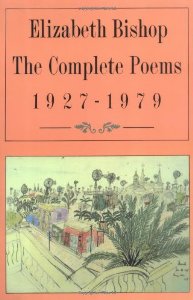 Elizabeth Bishop’s One Art seems effortless but over the course of years she rewrote it seventeen times.


 Jamie Dedes' THE POET BY DAY Webzine