PEN Center USA objects to the arrest and the charges made against Native American journalist Jenni Monet (her website), who was covering protests against the North Dakota Access pipeline in North Dakota.
“Monet was wearing press credentials as she covered ongoing protests near the Standing Rock reservation. She provided her credentials to an officer when asked, but was arrested Feb. 1, at 4 p.m., Central, near protest encampments along Highway 1806. Monet was held for about thirty hours and was not released until 9 p.m., Feb. 2. She faces charges of criminal trespassing and engaging in a riot from Morton County prosecutors.” High Country News
The first amendment rights of journalists and free press liberties are in danger. Please join us in demanding that the District Attorney of North Dakota drop these charges immediately. ADD your name to the petition that will be sent to Wayne Stenehjem, District Attorney of North Dakota, and Allen Kopp, Morton County State’s Attorney.
“I believe in the resistance as I believe there can be no light without shadow; or rather, no shadow unless there is also light.”Margaret Atwood
Thank you for sharing your love of words. Comments will appear after moderation.
We’re getting ready to hit the publish button on this month’s issue of The BeZine in a few hours. The theme this month is Environment/Environmental Justice. Here, our friend Judith Black helps us to warm up with her TED-X video on StoryTelling and Climate Change organized by the storytelling community.
JUDITH BLACK (Storytelling: A Window on to the World A Mirror into the Heart) is a professional storyteller, story maker, and teacher/coach with an international following. Originally trained at Wheelock College as an early childhood educator, Judith leapt from the classroom to the stage after training at London’s Royal Academy of Dramatic Arts. Ultimately she bound these two passions with storytelling and for thirty-five years has been using story to motivate, humanize, entertain, and teach. She is the winner of many awards in her field.
If you are reading this in an email, you’ll likely need to link through to view the video.
our gray skies pass when mango sky comes,
warm with laughter, chanting its gentle way into
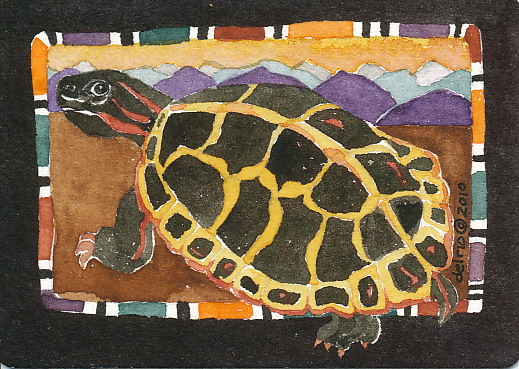
the space where turtle speaks in earthy colors,
speaks in that easy way only turtle can, as one who is
at home in herself, between her plastron and carapace,
wisdom in her slow ballet; her introversion, a model
for living well in this grinding war-spun world . . .
turtle is my totem and we live on our turtle island,
she is the everyday re-enchantment of my solitary
cosmos, my solidarity with life, i read her pastoral
letters in green on green, the sweet grasses and seas,
she speaks of connectedness, the basic constituents
of enigma, wizardry, and the madness of the times
and how best to dance the madness into light, she is
essence, the unrushed cure for wretched nature-deficit,
that consuming affliction, the spawn of modern day’s
backlit screens and relentless marketers of every bilk;
turtle healing is simple peace and master lessons in
self-containment, she draws us into our meditations
and back along the first path of Maka Ina, the lost or
forgotten primal path of the earth ways and feminine
energies and the lunar cycles that whirl us heavenward
Turtle ~ totem or power animal representing earth in Native American tradition
Turtle Island ~ in Iroquois tradition, when the earth was covered over with water, sundry animals attempted to create land by swimming to the bottom of the ocean and hauling up dirt. Muskrat succeeded. He placed the dirt on the back of Turtle, which grew into the landmass known today as North America.
Maka Ina ~ Lakota (Sioux) ~ “maka” is earth and “ina” is mother, so Mother Earth. Earth teachings were/are considered a path to wholeness (heaven) by the First Peoples.
This poem is posted in continued solidarity with The People’s Climate Mobilization and as a response to Victoria C. Slotto’s Writers’ Fourth Wednesday prompt “Got Change?” on The Bardo Group today.
Victoria’s writing prompt is about change. Beyond adding my one small voice to the voices of others, I feel powerless to dramatically effect some changes that need to happen for a green and peaceful life on this Earth. These issues seem to be my major preoccupations. I want my son and my daughter-in-law and other people I treasure to grow old in a world that is stable, salubrious and kind.
In the end, my best gift to them – perhaps the best gift any of us can give to the people we love – is to honor Gandhi’s admonition to “be the change,” to let our inner work toward wholeness (heaven) combine with the inner work of others to move the flow of world culture, customs and events toward a positive tipping point. There is an old wisdom that says “each wo/man’s step forward is a step forward for all human kind.” The inherent tranquility to be found in nature helps when taking these important steps forward. This is one of the reasons we need to protect the environment. Our connection with nature and our hope for peace are inextricably bound.
“Around the world–even in some of the countries most troubled by poverty or civil war or pollution–many thoughtful people are making a deep, concerted search for a way to live in harmony with each other and the earth. Their efforts, which rarely reach the headlines, are among the most important events occurring today. Sometimes these people call themselves peace workers, at other times environmentalists, but most of the time they work in humble anonymity. They are simply quiet people changing the world by changing themselves.”Eknath Easwaran, Your Life is Your Message: Finding Harmony With Yourself, Others, and the Earth
 This message is from PEN Center U.S.A. Feel free to re-blog or link to this post.



 Jamie Dedes' THE POET BY DAY Webzine