“Poetry. It’s better than war!” Michael Rothenberg, cofounder of 100,000 Poets (and friends) for Change
“It is from numberless diverse acts of courage and belief that human history is shaped. Each time a [woman or] man stands up for an ideal, or acts to improve the lot of others, or strikes out against injustice, he [or she] sends forth a tiny ripple of hope, and crossing each other from a million different centers of energy and daring, those ripples build a current that can sweep down the mightiest walls of oppression and resistance.” —Robert F. Kennedy South Africa, 1966
Today, under the banner of 100,000 Poets (and friends) for Change (100TPC), people the world over are gathered to stand up and stand together for PEACE, SUSTAINABILITY and SOCIAL JUSTICE.
Think on this when you are tempted to lose all hope for our species. Remember that—not just today, but everyday—there are…
All of the interviews on Paul’s blog – The Wombwell Rainbow – are interesting and worth your time. Paul’s doing a fabulous job. I have selected Bozhidar Pangelov’s interview to feature today because it includes a tidbit of a reference about what it is like to be a writer and lover of literature in times and places of repression. Though those of us who came of age during the Cold War are conscious of this, I often wonder about younger people. Perhaps I’m just out of touch. Bozhidar also shares some thoughts on authenticity that I appreciate as well as his practical perspective on the poet as professional.
At any rate, many of you are familiar with Bozhidar’s work since he is a frequent contributor to The Poet by Day, Wednesday Writing Prompt (as is Paul) and he has also been featured on this site before.
My thanks to both Paul and Bozhidar for permission to share this interview with you here today. And thanks to Paul for doing this series. I think it’s a real contribution. / J.D.
Prolific Yorkshire Poet, Paul Brookes
PAUL BROOKES (The Wombwell Rainbow): “I am honoured and privileged that . . . poets, local, national and international have agreed to be interviewed by me. I gave the writers two options: an emailed list of questions or a more fluid interview via messenger.
“The usual ground is covered about motivation, daily routines and work ethic, but some surprises too…”
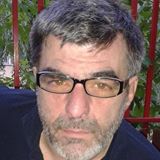
Bozhidar Pangelov
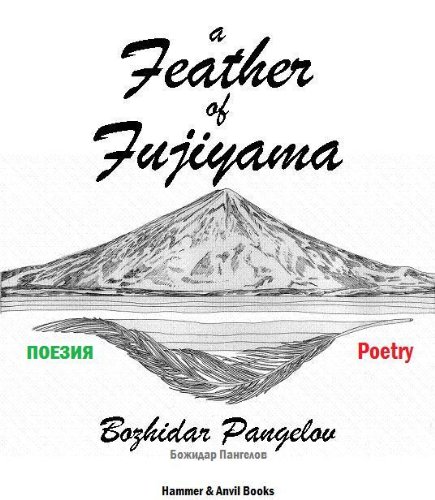
BOZHIDAR PANGELOV (bogpan – блог за авторска поезия блог за авторска поезия ) was born in the soft month of October in the city of the chestnut trees, Sofia, Bulgaria, where he lives and works. He likes joking that the only authorship which he acknowledges are his three children and the job-hobby in the sphere of the business services. His first book Four Cycles was written entirely with an unknown author but in a complete synchronicity on motifs of the Hellenic legends and mythos. The coauthor (Vanja Konstantinova) is the editor of his next book Delta. She is the woman to whom The Girl Who… is dedicated. Bozhidar’s last (so far) book is The Man Who. A bilingual poetry book A Feather of Fujiama is being published on Amazon as a Kindle edition.
Some of Bozhidar’s poems are translated in Italian, German, Polish, Russian,Chinese, Turkish, Arabic, Romanian, Portuguese and English languages and are published on poetry sites as well as in anthologies and some periodicals all over the world. Bozhidar Pangelov is on of the German project Europe .. takes Europa ein Gedicht. Castrop Rauxel ein Gedicht RUHR 2010 and the project SPRING POETRY RAIN 2012, Cyprus.
Bozhidar’s pen name “bogpan” means “god Pan” – in Greek religion and mythology.
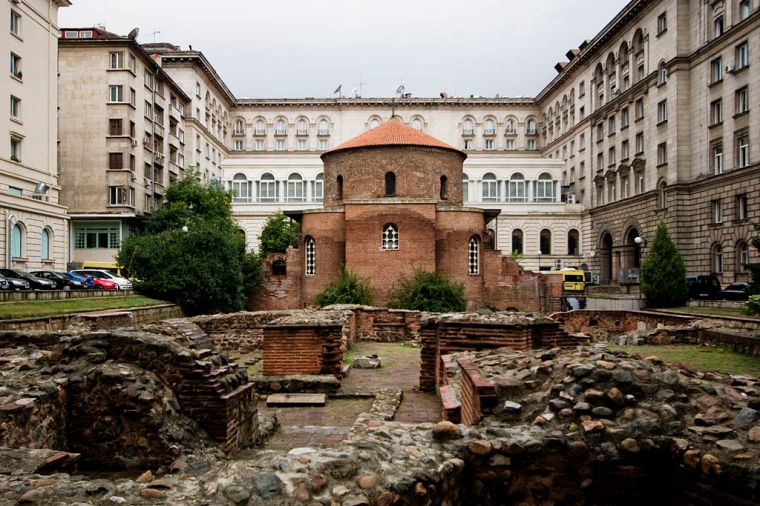
The Fourth Century St. George Rotunda is considered the oldest building in Sofia, the capital of Bulgaria, the city in which Bozhidar was born and lives. Photo courtesy of Sveti Georgi underCC BY 2.0 license.
The Interview
What were the circumstances under which you began to write poetry?
I have the feeling that I have always written poetry. At home we used to have quite rich book library. Throughout my awkward past the (the political system), reading was a way of having a life in another worlds. Can you imagine that there used to be long queues for each translated book from a foreign author! Well, eventually the cause of writing my first poem was quite funny. Me and a friend of mine used to be in love with the same girl. The conflict about who is going to meet her was resolved after each of us wrote a poem. Romantics of the youth.
2. Who introduced you to poetry?
To answer this question I would like to make some clarifications concerning the educational system in my country. In that system literature is considered as a compulsory subject and leads to serious exams that allow you to apply for a higher educational degree. In the study books are included national as well as international authors. In that aspect, if you like literature you just start writing.
3. How aware were you of the dominating presence of older poets?
During the time when I was young, the government used to dictate names of poets, but I have always been a rebel and that’s why I never accepted any names. Later on, when the political system changed what remained was my love and amusement by the great worldwide poets.
4. What is your daily writing routine?
I am not a professional poet and I don’t need to write every day to earn my living. Certainly I don’t trust poems written by professional poets because in most of the cases these poems have unclear aesthetic values and are there to satisfy the popular reader’s taste.
5. What motivates you to write?
The emotions. Despite the fact that everybody feels the defined emotions as love,pain and etc., each person senses them in their own unique way. The thought that inevitably exists in a poem rests between the conscious and unconscious. I think that a poem written only by the conscious effort of one’s mind is rather a short essay or a short novel. Still there should be a cross point between poetry and prose and for me that’s the emotions.
6. What is your work ethic?
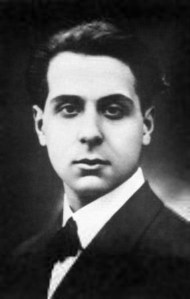
George Seferis [Georgios Seferiades] (1900 – 1971). One of the most important Greek poets of the last century, a diplomat and a Nobel laureate.I understand this question as related to writing. Ethic for me means to write a “real” poem. Now I sense the forthcoming question which would be what is the criteria or how would you determine what “real” is. A possible answer to this question is the one of the Nobel winner of Greek origin Georgius Seferis, who answers to a similar question in the following way: “But he must somehow have an instinct—a guiding instinct—which says to him: ‘My dear boy, my dear chap, be careful; you are going to fall. You are exaggerating at this moment.'” In this sense my instinct tells me that it’s an absurdity to expect everybody to understand poetry. Whoever wants to understand everything can read newspapers or magazine news. Still it’s uncertain that one will understand everything. At that point I would like to remind the following thought of T.S. Eliot: “Genuine poetry can communicate before it is understood.“
7. How do the writers you read when you were young influence you today?
Youngsters, who tend to get highly impressed after reading an author who relates to their inner self remember this artwork and this author which remains forever in their subconscious no matter if they are aware of it or not. That’s how the model works, which we reproduce in our own way. A poem doesn’t emerge from the nowhere.
8. Who of today’s writers do you admire the most and why?
Considering my experience and age it’s hard for me to get impressed. I just get extremely happy when I come across with an author, who has his/her own unique style, who is distinguishable from the majority. I would like to point at one single name, so I don’t miss out on some of my favourite authors. Stefan Goncharov – a young poet, who established his presence in a quite powerful and mature way just within few months time and having in mind that these were his first poems! As I can say – this man was born a poet.
9. Why do you write?
With writing I’m trying to express the inexpressible.
10. What would you say to someone who asked you “How do you become a writer?
In case that your question is – how can I become a professional writer, I can’t reply. I guess that this is something you can learn at the creative writing courses. For me this question has never been important. I just write. I think that if one wants to become a good writer, not only many books need to be read, but that person at a certain point needs to forget about all the knowledge and without a fear start writing in the way of expressing his/her own thoughts and feelings. To be honest with himself/herself and without thinking how to be liked by the readers. There isn’t an ultimate audience of readers that is there to like your writing. Here I would give a longer quote from the interview with Georgius Seferis – Henri Michaux “You know, my dear, a man who has only one reader is not a writer. A man who has two readers is not a writer, either. But a man who has three readers”—and he pronounced “three readers” as though they were three million—“that man is really a writer.”
11. Tell me about the writing projects you have on at the moment.
At the moment I don’t run my own projects. I’m engaged as an editor of the monthly magazine, New Asocial Poetry. We are preparing surprises for the published authors and new sections. There is already a new section for translations from mostly English language. At this point I would like to say that most of the young people know English, but unfortunately only few people for whom English is their mother tongue know my language. Maybe the reason for that the Cyrillic alphabet is mistaken for the Russian alphabet. Historically is exactly the opposite. Translations require hard work, especially when the literature is created in another language. For that reason we came up with the idea of having a new section for foreign literature dedicated to foreign authors who are a living example for language’s application and usage. All the authors, who are interested in participating in such project can read more about it HERE. .Whoever wants to learn more about the publishing requirements is kindly invited to apply with his/her literature by contacting me at newasocialpoetry@gmail.com.
Poet and writer, I was once columnist and associate editor of a regional employment publication. Currently I run this site, The Poet by Day, an information hub for poets and writers. I am the managing editor of The BeZine published by The Bardo Group Beguines (originally The Bardo Group), a virtual arts collective I founded. I am a weekly contributor to Beguine Again, a site showcasing spiritual writers.
My work is featured in a variety of publications and on sites, including: Levure littéraure, Ramingo’s Porch, Vita Brevis Literature,Compass Rose, Connotation Press, The Bar None Group, Salamander Cove, Second Light, I Am Not a Silent Poet, Meta / Phor(e) /Play, and California Woman.
Thank you for sharing your love of words. Comments will appear after moderation.
“Poetry. It’s better than war!” Michael Rothenberg, cofounder of 100,000 Poets (and friends) for Change
The slide show below displays some of the posters for 100TPC events happening in different parts of the world. To find something in your area check 100tpc.org or Michael Rothenberg’s 100,000 Poets for Change Communication Hub. I’ve also been trying to track the events and post links to them on The Poet by Day Facebook Page. The Zine is an online event, so you can go to an event in your area and still participate inThe BeZine‘s virtual 100TPC on Saturday, September 29th.
Over 2,000 groups and individuals have signed-up to read poems to children (part of 100TPC Global 2018) from September 24-29.
If you are reading this post from an email subscription, you’ll likely have to click through to this site to view the slide show.
This slideshow requires JavaScript.
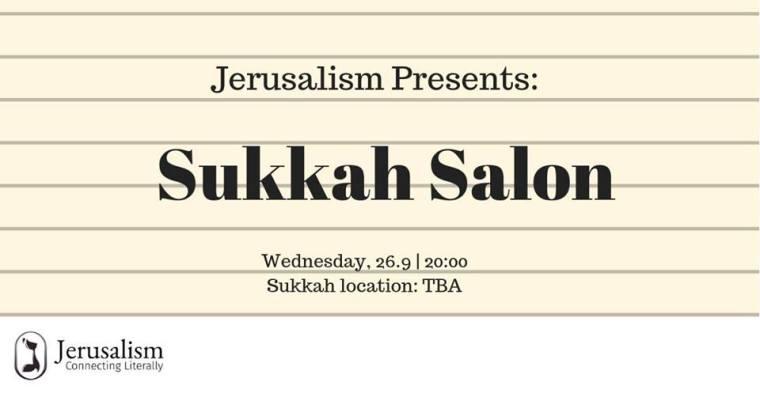
HEADS-UP ISRAEL …
SEP
26
Sukkah Salon
Public · Hosted by Jerusalism.
This 100TPC event is hosted by our own Michael Dickel (Meta/ Phor(3) /Play) and his friends.
Our poster for 100TPC 2018. It was designed by Corina Ravenscraft (Dragon’s Dreams)
Michael Dickel is also the Master of Ceremonies for The BeZine Virtual 100TPC event, Sept 29. Join with us on Saturday and support this great global effort, read some fine work, share your poetry and other art, and meet poets and other artists who share your values and concerns.
By focusing on efforts across the country to remove or restrict access to books, Banned Books Week draws national attention to the harms of censorship. The books featured during Banned Books Week have all been targeted with removal or restrictions in libraries and schools. While books have been and continue to be banned, part of the Banned Books Week celebration is the fact that, in a majority of cases, the books have remained available. This happens only thanks to the efforts of librarians, teachers, students, and community members who stand up and speak out for the freedom to read. Banned Books Week is an annual event celebrating the freedom to read. Typically held during the last week of September, it highlights the value of free and open access to information. Banned Books Week brings together the entire book community – librarians, booksellers, publishers, journalists, teachers, and readers of all types – in shared support of the freedom to seek and to express ideas, even those some consider unorthodox or unpopular.
About Book Bans and Challenges
Books are still being banned and challenged today. A challenge is an attempt to remove or restrict materials, based upon the objections of a person or group. A banning is the removal of those materials.
While books have been and continue to be banned, part of the Banned Books Week celebration is the fact that, in a majority of cases, the books have remained available. This happens only thanks to the efforts of librarians, teachers, students, and community members who stand up and speak out for the freedom to read.
Poet and writer, I was once columnist and associate editor of a regional employment publication. Currently I run this site, The Poet by Day, an information hub for poets and writers. I am the managing editor of The BeZine published by The Bardo Group Beguines (originally The Bardo Group), a virtual arts collective I founded. I am a weekly contributor to Beguine Again, a site showcasing spiritual writers.
My work is featured in a variety of publications and on sites, including: Levure littéraure, Ramingo’s Porch, Vita Brevis Literature,Compass Rose, Connotation Press, The Bar None Group, Salamander Cove, Second Light, I Am Not a Silent Poet, Meta / Phor(e) /Play, and California Woman.
Thank you for sharing your love of words. Comments will appear after moderation.
This is an except from the September issue of The BeZine, themed social justice. It is another example of the quality of work we share there. It’s also an important story at this time and Michael explains why. / J.D.
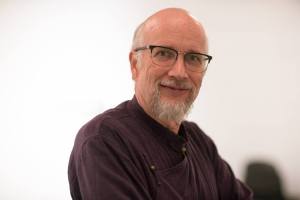
Michael Dickel (c) 2018, Photo credit Zaki Qutteineh
Off the trail
Author’s note: Originally written in July, 2013, this piece seems even more relevant and urgent 5 years later. It originally appeared here, on Meta/ Phor(e) /Play. A revised version appears in my flash fiction collection, The Toad’s Garden after The Palm Reading. This version has been slightly edited, most significantly to add the word “consumer” to modify capitalism, as the term “consumer capitalism” has come to my attention as one bandied about in place of democracy as the essential system of the United States (and promoted by some on the so-called “Christian” Right, although from my perspective, that political group seems neither Christian nor right…). The line about the great purges goes back to 2013, but we now see something like them beginning to form…
By chance I learned that they planned to crucify the married couple for honeymooning off the grid and outside of the mainstream consumer economy. The couple backpacked along the Appalachian Trail, using second-hand equipment, carrying home-prepared dried goods for meals , which friends provided to them as gifts.
The followers of Christ, Consumer-Capitalist, found such sacrilege untenable, especially in light of the anger it would cause the Corporate Lords of the Boardrooms.
I overheard my editor on his cell, assigning someone to cover the Meeting of Judgment where the sentence would be pronounced. When I understood that the other reporter wouldn’t be back from her current assignment in time, I sauntered in and asked what Ed had for me, like I didn’t know anything.
“The Reverend called to request we send someone to this meeting, give it coverage to send the message out. Work, spend, play inside the economy.”
“Got it. Keep the money flowing to oil the consumer capitalism machinery of wealth.”
I knew the catechism, but didn’t believe it. I’d sent dried lemon peels, home-made penne (dried to preserve it), a chunk of parmigiana traded on the underground market, and a sealed container of pesto for them to make a backpacker’s lemon pasta.
The Meeting of Judgment followed the usual pattern of these religious courts. A minister of the Reverend’s flock read out the charges. Two other ministers sat on either side, listening gravely. They conferred briefly. It didn’t matter that the accused even now were somewhere hiking in the woods.
As per custom, the ushers served cups of tea to the witnesses of the Meeting. We remained silent. I sipped a sad orange-pekoe until the lead minister announced the decision.
Crucifixion. It had come back in style around 2020, shortly after the great purges that deported, jailed, or enslaved first the non-Christians, then the wrong-type of Christians.
I had not seen a crucifixion. Up to now, it had been an advantage of a rural assignment.
“What are you going to do?” The man I knew as Germaine asked me. He’d popped up out of the crowd as I pushed out the door.
I’d seen Germaine at several social gatherings of people like me. My circles went along with the Reverend to a point, that is, enough to survive, and no more. We kept to ourselves, and tried to avoid the scrutiny of the Reverend and his ministers.
“Do? I’ll write a story about the Judgment, the reasons for it, and watch to see how many hits it gets on the Screens.”
I didn’t know Germaine enough to be baited into saying something damaging. Besides, that was what I planned to do.
“No, about them. We can’t let them get caught.”
“You could get crucified yourself for getting involved. Even what you said is a crime against Christian Consumer Capitalism.”
“What is Christian Capitalism? Something made up by corporate overlords who overeat from our consumption. There never was such a religion.”
I walked away. I considered whether he might be an agent provocateur, meaning I should report him before he denounced me for doing nothing. I decided that I didn’t want to get involved, and would invoke my sometime role as investigative reporter should he accuse me.
The next morning I had coffee with Frank, someone I thought I knew enough to trust under most circumstances. He told me that Germaine had been arrested for sedition, blasphemy, and heresy as a result of spouting the Devil’s own socialism.
“I’ll be damned.”
“Probably,” Frank said. “To tell you the truth, I thought he was a spy.”
After Frank went off to work, I looked for a screen-story on Germaine, but didn’t find one. I wondered how Frank had heard.
I read my own story on my screen, instead. It played well, several hits, re-posts, and praiseful comments.
It bored me. No, more than that, it sickened me.
I didn’t believe any of it. I knew the young couple, knew they loved the woods, knew they couldn’t afford a resort honeymoon because they wanted to buy a house and the downpayment would take everything they had.
They actually wanted to fit in and had no revolutionary or irreligious intent. They wanted to get along, but to also live their lives and not be pulled under the tide of consumer debt.
Just then, I realized that the Reverend and the ministers didn’t care. And maybe Frank didn’t read about Germaine on a screen.
The Reverend wanted to make a statement, keep people scared, keep people trying harder than ever to feed the economy and concentrate power and wealth into the Corporate Lords, who ran the Reverend.
Or maybe the other way around, the Reverend ran them. It doesn’t matter now, I realize.
Frank wanted me to play along and keep away from people like Germaine. It was almost a friendly gesture. It could have been a warning, even.
And that’s why I find myself sitting in a deer stand along the Appalachian Trail. The newlyweds should pass under it sometime today, if they haven’t yet been waylaid.
When they do, I’ll wait to see if they find the package I left out.
It has printouts of the screen story I wrote. It has a copy of the Judgment Decree. It has a map of little-known trails that cross this path, and what cash I could withdraw without getting stopped by a minister.
I thought that I would watch them pick it up and wait until they were gone, then make my way home after a few stops to justify my travel, should I get checked.
Now, I’m thinking maybe I’ll ask if I can walk with them a while when they go off the trail. I’ll cut out after a few days, find my own way.
I don’t know why I’ve decided to do this. I just don’t feel like writing another story I don’t believe in, I guess.
MICHAEL DICKEL a poet, fiction writer, and photographer, has taught at various colleges and universities in Israel and the United States. Dickel’s writing, art, and photographs appear in print and online. His poetry has won international awards and been translated into several languages. His chapbook, Breakfast at the End of Capitalism came out from Locofo Chaps in 2017. Is a Rose Press released his most recent full-length book (flash fiction), The Palm Reading after The Toad’s Garden, in 2016. Previous books: War Surrounds Us, Midwest / Mid-East, and The World Behind It, Chaos…He co-edited Voices Israel Volume 36(2010). He was managing editor for arc-23 and arc-24. With producer / director David Fisher, he received an NEH grant to write a film script about Yiddish theatre. He is the former chair of the Israel Association of Writers in English. Meta/ Phor(e) /Play is Michael’s blogZine. Michael on Social Media: Twitter | FaceBook Page | Instagram | Academia
ABOUT
Testimonials
Disclosure
Facebook
Twitter
Poet and writer, I was once columnist and associate editor of a regional employment publication. Currently I run this site, The Poet by Day, an information hub for poets and writers. I am the managing editor of The BeZine published by The Bardo Group Beguines (originally The Bardo Group), a virtual arts collective I founded. I am a weekly contributor to Beguine Again, a site showcasing spiritual writers.
My work is featured in a variety of publications and on sites, including: Levure littéraure, Ramingo’s Porch, Vita Brevis Literature,Compass Rose, Connotation Press, The Bar None Group, Salamander Cove, Second Light, I Am Not a Silent Poet, Meta / Phor(e) /Play, and California Woman.
Thank you for sharing your love of words. Comments will appear after moderation.







 Jamie Dedes' THE POET BY DAY Webzine