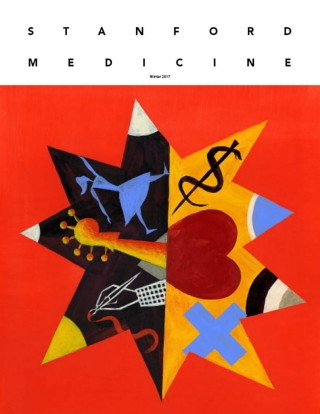
Cover illustration by Jeffrey Fisher c Stanford Medicine
“In this biomedical revolution, we need the humanities now more than ever.” – Lloyd B. Minor, MD, Dean, Stanford University School of Medicine
Writing, poetry and art have been comforts to me throughout my work and personal life. I know their power as meditative processes that relieve physical and mental stress, enhance mental acuity and decision-making, and improve self-image. Artistic pursuits may not cure but they do heal.
When I recently transferred to Stanford Health Care I was delighted to find that there is a serious commitment at Stanford University and Stanford Health Care to incorporate the arts into care for patients and into physician training, going beyond the usual poetry and art classes for cancer victims that are offered by some health care organizations. Stanford is even using dance with Parkinson’s Disease patients.
Stanford Magazine
The winter issue of Stanford Medicine featured articles on the intersection of medicine with the arts and humanities. You can read these articles online. The winter issue was produced in collaboration with Stanford’s Medicine and the Muse program.
A physician-poet’s essay on the movement to include the arts and humanities in medical education and practice.
An article by an ophthalmologist explaining how our eyes help us perceive color, including strategies artists use, knowingly or otherwise, to create magical effects.
A Q&A with Max Aguilera-Hellweg, MD, a world-class photographer who earned a medical degree and then returned to photography to document the body during surgery and in everyday life.
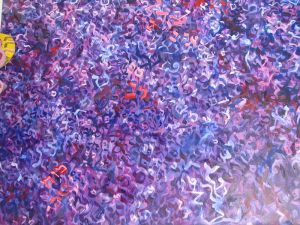
Kabbalistic painting of the supernal illumination of Hebrew letters in Creation. Courtesy of David Rakia under CC BY 3.0 License
March 15, 2017 Originally published on The BeZine site. Most of the links here will take you there.
The title of David Cooper’s book on Kabbalah invites us to re-think the Creator as Creating: God is a Verb. While I don’t want to equate science to God in a religious sense, I want to borrow this re-conception. Science is creative, creating, if you will, knowledge of the world. Science is a verb.
Too often we get tied down to a concept of science as about facts. However, as Thomas Kuhn describes it in The Structures of Scientific Revolutions, science is a process (hence, verb). The process involves a method (the scientific method), observation, repeated results, and, if repeated results are consistent, an assertion that a hypothesis is likely to be true. However, Kuhn explains that it is also a sociological process where the method and affirmed hypotheses lead to paradigmatic beliefs—models that predict reasonably well future observations.
The paradigms are not easily changed—the paradigm of Newtonian Mechanics, which work very well in most real-world situations, did not easily yield to Relativity and Quantum Mechanics even as Newtonian physics accumulated observations it couldn’t explain while quantum physics explained more and more. As a model for most human activities on Earth, though, Newton’s model still works. It’s when boring down to atomic particles or moving out into massive astronomical systems, or specific cases like black holes and light itself, that we need Quantum Mechanics.
The different (and often competing) models—also known as theories—are products of science, the verb. The scientific process refines, overturns, explores new models. Science, at its best, produces closer and closer approximations of the actual universe it models. This is different from a belief in an unwavering truth or an ideology—in part, because it relies on observation and corrections if observations do not show what the model predicts. And second, because science does not make truth statements but, rather, probability statements. Sometimes, the probability approaches 100%, sometimes only 95%.
The flexibility that comes from self-correction unfortunately also provides ammunition for “science deniers,” such as those who deny climate change. As science is a process and models do change, as models are based on predictive ability and that ability is not 100% even in the best cases, those whose ideology or greed get in the way of accepting the predictions (even the very strongly likely ones) often claim the whole model is “unreliable,” or point to earlier results that required corrections to the model in order to discredit the whole theory. Yet, those who object do not offer an alternative model that does stand up to the process of scrutiny, repeated results, and reliable prediction of future events. They often offer no alternative at all.
At its outer theoretical spheres, the science verb sometimes takes us to conversations that sound like mysticism—as do some of aspects of that mysterious energy, light. Humans have a long cultural (and religious) history with light. Arthur Zajonc’s book Catching the Light: The Entwined History of Light and Mind provides a wide ranging cultural and inter-cultural exploration of human understanding of light through history. In the end, Zajonc re-connects current quantum physics concepts with those from ancient myths as accurate metaphors (or analogies). Zajonc, a professor of physics at Amherst (now retired), has studied culture, mind and spirit in relation to physics from his perspective as a physic working in quantum optics (for example: The New Physics and Cosmology: Dialogues with the Dalai Lama, one of his better known books).
In a very real sense, the verb science interacts with arts and culture. It is an active process of human society, a developed methodology for producing close observations and repeatable results to help us build models that predict future results under different conditions. It is not a series of facts, but rather a system of understanding and predicting creation. In this way, it actively creates the world, literally as we know it. And it has influence culture. Certain newly (re)discovered understandings from mathematics helped European artists develop perspective in painting. A recent example, Chaos Theory, with its fractals and butterfly effect, has influenced art, music, and literature, and not just with science fiction movies.
In this issue, we celebrate, explore, and raise questions involving science, culture, politics, and religion. John Anstie and I both contribute poems that have sub-atomic particles at their centers, but are not (only or even mostly) about them. Naomi Baltuck explores Galileo through the Musee Galileo, in another one of her marvelous photo-essays. An sampling of snippets from science take us through “Science in culture, politics and religion” in Corina Ravenscraft’s exploration of connections. In “A Life,” Michael Watson gives a highly personal account of his own encounters and loves with different ways of understanding — or knowing — embodied in the theme’s elements of science, culture, religion, and politics. Current politics seem to attack the different approaches each has to offer. Phillip T. Stevens begins with Chaos Theory and moves into myths, the myths of myths, as it happens. Hearts, Minds, and Souls, by John Anstie, considers the theme from a socio-political framework, considering societies need to control as one of many elements in shaping science, culture, and religion through politics.
The issue has much more to offer— fiction by Joseph Hesch and lots of poetry by Jamie Dedes, Renée Espiru, Priscilla Galasso, Terri Muuss, and Phillip T. Stevens. The more light section has three more poems that are not directly related to this month’s theme, but we wanted to share with our readers at this time.
Michael Dickel
Associate Editor
“It is frequently the tragedy of the great artist, as it is of the great scientist, that he frightens the ordinary man.” Loren Eiseley (1907 – 1977), American anthropologist, educator, philosopher, and natural science writer
This issue of The BeZine is dedicated to scientists the world over, especially those who are conscientiously fighting to preserve this earth, its people, and scientific integrity. Throughout history scientists have met with the same skepticism they face in some quarters today. They were sometimes misunderstood and crudely punished. Alan Turing comes to mind first, cruelly treated after being of enormous service to his country.
I think of Rhazes (865-925), a forward-looking medical scientist who wrote a compendium of all that was known about medicine in his time. He was beaten over the head with his book, went blind and was unable to continue his work. Galileo’s (1564-1642) insight and honesty was labeled heresy. Albert Einstein’s (1879-1955) books were burned. Henry Oldenburg (1619-1677) was suspected of spying when he sought to acquire and publish worthy works by people outside his own country.
The tensions between ignorance and cognoscence continue today. So much so that in my country scientists are planning an Earth Day march on Washington to protest the current regime’s dismantling of climate protections. Members of many scientific and research groups are scrambling to archive government data they believe could be in jeopardy under this new regime.
Many thanks this month to Michael Dickel for having my back on this issue and for his distinguished contributions. Thanks also to all our supporters – especially Terri Stewart, Charlie Martin, Chrysty Darby Hendrick, Ruth Jewel, Lana Phillips, Sharon Frye, Silva Merjanian, M. Zane McCllelan and Inger Morgan and to this month’s contributors (not in any particular order) Priscilla Galasso, Corina Ravenscraft, Joe Hesch, Michael Watson, Naomi Baltuck, John Anstie, James R. Cowles, Terri Muuss and Pat Leighton. All are valued as we pursue this small effort in the name of peace and understanding.
New to our pages this month is Phillip T. Stevens. Phillip tells me he spent most of the eighties and nineties as a community and arts activist. To pay his bills he taught writing and visual design to community college students and at-risk youth for the Texas Youth Commission. He published four novels, two volumes of poetry and academic papers (including a series of articles on the role of metaphoric thinking in the development of scientific theory and religious belief for the International Journal of Religion and Spirituality in Society). Phillip lives with his wife Carol in Oak Hill, Texas, where they rescue abandoned cats for Austin Siamese Rescue.
And here we are. Thanks to the efforts of many, we leave the March issue in your hands. Enjoy and …
Be inspired. Be creative. Be peace. Be …
On behalf of the Bardo Group Beguines
and in the spirit of love and community, Jamie Dedes, Managing Editor
TABLE OF CONTENTS
Science in Culture, Politics and Religion
To Read this issue of The BeZine
Click HERE to read the entire magazine by scrolling. (I placed it in backwards though, so you start at the end and move forward. Sorry about that. Just getting this down. J.D.), or
You can read each piece individually by clicking the links the below.
Rev. Benjamin Meyers and the congregation of the Unitarian Universalists in San Mateo (UUSM) invite you to join in Justice Action Mondays. This coming Monday, March 20, from 5:30 to 7:30 p.m. we’ll gather to tell our reps to reject Trumpcare, which the CBO says would:
take away health care from twenty-four million people over the next ten years,
defund Planned Parenthood,
destroy Medicaid, and
raise insurance premiums.
The Republicans are hoping to pass it in the next eighteen days. We’ll write postcards with a personal message or thank you notes to those you appreciate.
Cards, stamps, snacks, and like-minded people are provided. Drop by for a fun hour of activism.
Unitarian Universalists of San Mateo, 300 E. Santa Inez Avenue, San Mateo, CA 94401 Phone: 650-342-5946
The March 15 rally in Sacramento to support SB 54, the California Values Act, is hosted by PICO California and partners.
“PICO California is the largest multi-racial faith-based community-organizing network in the state connecting and leveraging the power of the people to impact broad systemic change. Motivated by various prophetic traditions, we ground our civic action and demands for change in moral and ethical principles. We use a relationship-based organizing model to develop leadership and build capacity for civic engagement in communities throughout California.” MORE
The California Values Act and the people who support it are concerned with the injustices implicit in recent executive orders that marginalize and put at risk Muslims, people fleeing violence, undocumented immigrants and retaliation against our sanctuary cities. Many citizens feel that these actions encourage hate and racial profiling and are immoral and in direct conflict with the American traditions that have made us the great nation that we are. (Detail on SB 54 in the third section of this feature.)
MARCH 13, UUSM JUSTICE ACTION MONDAYS: FLASH ADVOCACY
Standing on the Side of Love
Unitarian Universalist Church of San Mateo California
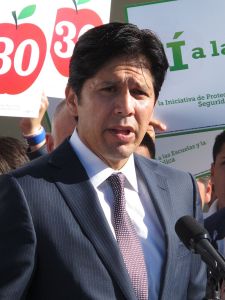
In preparation for the rally, this Monday, March 13, the greater San Mateo community is invited to the Unitarian Universalists of San Mateo (UUSM) Justice Action Mondays/Flash Advocacy to prepare signs and banners for the rally on March 15 in Sacramento in support of SB 54, the California Values Act. SB 54 is proposed legislation by California Senate President pro Tempore Kevin de León (D-Los Angeles). The intention of SB 54 is to prevent the use of state and local public resources to aid federal Immigration and Customs Enforcement (ICE) agents in deportation actions.
UUSM Justice Action Mondays: Flash Advocacy:a new theme every Monday, 5:30 – 6:30 pm, youth room, Unitarian Universalists of San Mateo, 300 E. Santa Inez Ave., San Mateo, CA 94401. Free event and open to the greater community. Supplies, snacks and interesting conversation are provided.
SB 54, THE CALIFORNIA VALUES ACT
A Wall of Justice
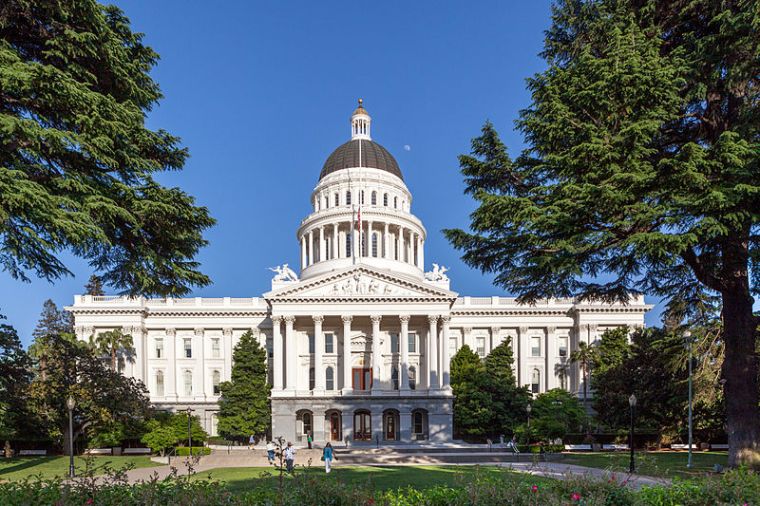
State Capitol, Sacramento, CA
Last December California Senate President pro Tempore Kevin de León (D-Los Angeles) introduced SB 54, the California Values Act, to prevent the use of state and local public resources to aid federal Immigration and Customs Enforcement (ICE) agents in deportation actions.
California State Senator,Kevin de León (b1966)California State Senate.Democrat – 45th District
“To the millions of undocumented residents pursuing and contributing to the California Dream, the State of California will be your wall of justice [against the adoption of] an inhumane and over-reaching mass-deportation policy,” said Senator de León. “We will not stand by and let the federal government use our state and local agencies to separate mothers from their children.”
SB 54 will ban state and local law enforcement officials from performing the functions of a federal immigration officer. The California Values Act does not prevent state and local departments or agencies from complying with a judicial warrant to transfer violent offenders into federal custody for immigration enforcement purposes.
“The right to due process is the bedrock of the U.S. criminal justice system,” said San Francisco District Attorney George Gascón. “A warrant requirement will enable California to preserve our civil liberties and enhance public safety by maintaining the trust and effectiveness of law enforcement. A warrant requirement will ensure the government confirms a person’s identity and whether they are subject to deportation before they can be detained, thereby preventing citizens, authorized immigrants and victims of crime from being jailed.”
District Attorney Gascón, formerly San Francisco’s Police Chief and Deputy Police Chief in Los Angeles, added that public safety suffers when local police enforce immigration laws. “When victims of crime don’t come forward for fear of immigration consequences, the impact on public safety reaches far beyond immigrant communities,” he said.
The California Values Act will also create “safe zones” throughout the state by prohibiting immigration enforcement on public school, hospital, and courthouse premises. To ensure eligible immigrants are not deterred from seeking services and engaging with state agencies, the bill also requires state agencies to review and update confidentiality policies.
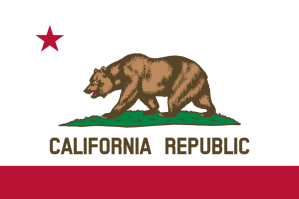
California State Flag
“In California we have policies that provide health, safety, education, and an environment where all people can thrive,” said Assembly member Marc Levine (D-Marin County) principal co-author of SB 54. “California is a state where everyone is welcome. SB 54 will make it clear California public schools, hospitals, and courthouses will not be used by the Trump regime to deport our families, friends, neighbors, classmates, and co-workers.”
[The President’s] reckless comments about immigrants and deportation has honest, hardworking families living in fear and their children being taunted at school, Senator de León during the December unveiling of a separate “Immigrants Shape California” package.
“I cannot stand by and allow federal ICE agents to use state and local dollars, data, personnel, and facilities to help deport the very families who contribute so much to our economy and community,” he said.
California State Seal
Cynthia Buiza, Executive Director of the California Immigrant Policy Center, added: “The California Values Act answers the ugly slurs of xenophobia with a simple but profound truth: all people are created equal. Against Trump and other forces who seek to demonize and persecute immigrants, the Golden State must embrace and defend our common humanity and deepest values. Getting law enforcement out of painful deportations, protecting the integrity of public spaces, and rejecting any registry which targets Muslims will send a potent message to the nation – and the world.”
Marcus McKinney, Policy Director, People Improving Communities through Organizing (PICO) California, said: “As a faith-based organization we wholeheartedly oppose draconian deportation policies out of the new administration in Washington that will further exacerbate racial profiling. California must take an aggressive stance against these policies to ensure families are not torn apart by reactionary and divisive immigration policies.”
Angie Junck, Supervising Attorney, Immigrant Legal Resource Center, said: “In continuation of California’s long-standing history of welcoming, the CA Values Act presents a prime opportunity to ensure that our law enforcement and local governments are no longer a front door to deportation for our residents.”
The … government [effectively] sanctioned discrimination that runs counter to our values as Californians, would unfairly target millions of hard working families, devastate our economy and impose unfair burdens on taxpayers,” said AFSCME Local 3299 President Kathryn Lybarger. “The California Values Act reflects our common ideals and reaffirms our shared responsibilities.”
Photo credits: California Flag and Seal of California, public domain; California State Capitol courtesy of Rafal Konieczny under CC BY-SA 4.0 license; photograph of California State Senator Kevin de Léon courtesy of Neon Tommy under CC BY-SA license; UUSM illustration coutresy of the Unitarian Universalists and all rights reserved
Support justice in California and the people and institutions that are working for that objective. Please reblog and share links to this on Facebook and Twitter and attend the rally if that’s possible for you.
Thank you for sharing your love of words. Comments will appear after moderation.





 Jamie Dedes' THE POET BY DAY Webzine
