What happiness that today
I can be “open and confident”
Though normally I would hide
in the safety of feigned ignorance,
feign joy, pretend
that I can see my clear sky
in spite of his clouds
Respectfully, I provide the detail requested …
The year is 2016
The month, January
This the first Wednesday
The hour is 6 a.m.
now that i am getting to know you,
now that i am chest-high in your poesy
it’s your time that interests me ……….1902 ~
You were birthday twins, Nazim
You and my mysterious father,
born the same year, into the same culture,
spent your youth in that turmoil
If I study you, Nazim, will I find him, my diffident father,
in the dissident roots of your Turkish sensibility ~
they said he left with a price on his head
only to be caught, chained, imprisoned
in America, between a lover and a wife, ……….strong women . . . ………………..well, at least stronger than he
Hello Nazim!
I say “Hello!” gleefully ……….without a wink
I think we could have been perfect friends
that we might have understood each other ……….Hello! to you and your poetry ……………….Hello Nazim, Hello!
Note: My father and Nazim Hikmet would have come of age just as WW I (1914-1918) was ending and the Turkish War of Independence (1919-1923) was beginning. Hikmet (1902-1963) was a renown poet, playwright and novelist, a communist and a revolutionary who spent his life in and out of jail. He won the International Peace Prize in 1950. My father (1902-1977) was a furrier. I didn’t know him well and saw him only two or three times a year, always at his office. This poem is after Hikmet’s Hello Everybody from Things I Didn’t Know I Loved.
brown eyes
we took the subway to meet you,
the train screeching like a warning omen,
rocketing me heart-first into destiny;
mom wore her best mended gloves,
had me in my sunday dress, hem let-down,
you came in a cashmere coat, a felt
stingy-brimmed fedora, leather gloves
there was some to-do over coffee or tea,
hot chocolate for me and a red balloon;
you examined my face, shook your head,
your brown eyes looked into mine, No!
you said, beautiful child, not mine
you turned away then, a chimera
floating down a city street …
now and again over time
you looked back; but your denial drew
life from mom, stole my red balloon,
tossed it up in your wake; i watched, daddy,
watched you with your warm cashmere coat,
your wife, two sons and those brown eyes,
they stare back at me from my mirror, No! they say, but you were never quite sure
your mother
a tattered memoir in sepia tones
hanging on the wall of your office
a tiny plump sparrow of a woman
by a lone stone cottage
toothless, poor old thing
a warm shawl pulled to cover her head
an apron, worn shoes
from a time long past
from another world
my Turkish grandmother
what was her name?
you never said
i never asked
Thanks to poet, writer and anthologist, M. J. Tenerelli, for sharing this story with us today.
Several years ago I did a show for the Northport Arts Coalition highlighting the work of well established women poets. I thought at that time that pulling together a collection of passionate, local women’s voices in a book of poetry would be a wonderful thing to do. There were so many talented women I knew on the New York circuit, giving profoundly moving performances, sharing really fine work. Two years ago my friend and co-editor, Terri Muuss, suggested that we get together and produce what became Grabbing the Apple, and anthology of New York women poets. And so a two-year project began.
The idea behind the book was to share what we believed was the unique voice of the New York woman, informed by place as well as a particular confidence, savvy, and passion. Terri and I wanted the book to serve as a conduit for these women, allowing them to define themselves as opposed to the traditional definitions existing in male-created literature, including the bible. Eve from Eve’s perspective.
First we needed a title. We wanted something that reflected the concept of women defining themselves. We turned to the original story of creation in the bible, where the mother of us all begins the downfall of man by plucking an apple from a tree. With Grabbing the Apple, we believed we had a title that turned that creation story upside down. Yes, the first woman, embraced wisdom, and that did not make her a monster but rather a heroine and a role model. The poets in the book define themselves and the lives and concerns of women, forcefully and without shame. We felt the anthology’s title embodied that. And of course “Apple” brings to mind New York.
Call for Submissions: We used social media, college websites and word of mouth to solicit submissions. We emailed the women poets we personally knew. The amount of work that poured in amazed us. I think the concept of the book really spoke to these writers, and they wanted to be heard. We culled 47 pieces from hundreds of submissions. It wasn’t easy. With the help of poet Matt Pasca, Terri’s husband, we instituted a blind process. Matt oversaw the email submission box, and printed out the poems for us, minus the writers’ names. Terri and I both had complete copies of the submissions to read through and consider. I don’t think we understood at the time just how long it would take to come up with a book we were satisfied with–to do right by the poets and the idea behind the book.
Reading and Selecting: I spent a lot of time with the work. As a mother with a full-time job, I spent many lunch hours in my car, and on the couch after work, reading poetry. It was far from a chore. The work energized me, moved me, and surprised me again and again. I started to feel honored to be stewarding these pieces into publication. It was often hard to choose what to accept and what to leave behind. Terri was also reading and considering. We each had a form to work with, where we gave each poem, identified only by number, a yes, no, or maybe. Then we would meet to compare our opinions.
In pizza restaurants, cafes, and often in Terri’s spacious living room, we would have “Apple” meetings. Often we agreed on what needed to go into the book. But not always. Sometimes one or the other of us would make a strong case for a poem we were passionate about. There were negotiations. It was never contentious. We respect each other as writers and editors, and are good friends. So we really listened to what the other had to say. It worked. We came up with a manuscript we could both stand behind. When it came to our own work, I picked a poem of Terri’s that I thought was perfect for the book, and Terri chose a piece that I had done. The next step was to create an order for the poems.
Terri suggested dividing the book into three parts, “Eden,” “The Fall,” and “After the Garden.” I loved the idea, but worried the poems we had wouldn’t lend themselves to the categories. It turned out to be needless worry. Whether loosely or specifically, each poem fits under one of the headings. I remember one night crawling around on Terri’s living room floor with the work spread out in front of us, moving poems around like puzzle pieces into each of the three sections. Again, there was a lot of consideration and some negotiating, but in the end we had groupings that made us both happy. We high fived each other and then celebrated with brownies! We had our poems and we had an order. We weren’t quite done though.
Finalizing and Publishing: We were our own proofreaders. There were a hundred plus pages to pour over. We wanted to get everything right. This took time, and in the end there were a few mistakes but we did our best. We proofed alone and together. We sent the manuscript to the publisher, corrected galleys, and up to the day before publication were still proofing! While we had input into the layout and design, it was the artist Janine DiNatale who created and did the layout for the front and back covers, and the publisher, J.B. Stillwater, who provided the beautiful finished book. I remember cradling the first copy sent to us and feeling like a proud mother. The final step was to get the collection out into the world.
Our initial book launch was at Cyrus Chai, in Bay Shore, New York. So many of the poets in the book came to read. For me, this was the defining moment. The poems I’d been living with for so long came to life. The electricity, love, and sisterhood in the room were palpable. The words sang. We’d accomplished what we set out to do, with more launches planned throughout the Summer.
Grabbing the Apple is on Amazon where you can have a peek inside and sample a poem or two.
M. J. Tennerelli
M.J. Tenerelli is a poet and a legal writer. She has worked as an editor of trade magazines and text books for the cosmetology, cosmetics and fragrance industries in New York City. She writes legal briefs for a Social Security Disability law firm and hosts a monthly poetry reading for the Northport Arts Coalition in Northport, NY. Her poetry has appeared in several anthologies, including Cat’s Breath and Estrellas En El Fuego, both by Rogue Scholars Press. Her poems have been published in a number of print and electronic journals, including The Feminist Wire; Poetry Bay;Alaska Quarterly Review; The Improper Hamptonian; Zuzu’s Petals; The Mom Egg; Blue Fifth Review; Poetry Kit; Poetry Super Highway; Big City Lit;American Muse and Parameter. She is a former editor of the art and literary magazine The Wormwood Press. She is the co-editor of the recently published poetry anthology Grabbing the Apple.
Thank you for sharing your love of words. Comments will appear after moderation.
Silva Zanoyan Merjanian is an Armenian ethnic who was born in Lebanon. She escaped the civil war there and lived for a time in Geneva, ultimately settling to build a family life in California. Silva has two published collections. Most recently Rumor (Cold Water Press, 2015), which received the Best Book Award from NABE in the 2015. Three poems from Rumor were nominated for a Pushcart Prize. Silva’s first collection is Uncoil a Night (CreateSpace, 2013).
Falling
In rind of wishes sticky on lips
and sermons’ echo on facepsalms slipping
in envies squirted on spruce and cedar
whims twirling, spiraled, speckled
gossamer visions of friendships withered
in crevices of an upbeat mien
Your name hidden in prayer embers
I mend among buds of poems
flying on a trapeze
with no one at the other end
Rumor is a stunning tour de force of passionate, life-affirming poetry. Silva Merjanian evokes time and place with both grace and authority. Poetry is obviously a tool for her own healing and in that she brings us face to face with the human condition in all its complexity, beautiful and loving and devastating cruel, and she does so totally without pretension.
Mornings arriving
Me alone
Poems half written and done
Poems between toes and toast
‘Round Midnight and Monk
Nostalgia
Right reasons
Brave decisions
Thoughts that glow in the light
Just love
Always, in absence of rats and such
fresh sheets and I
between over and under
from Between the Sheets
She writes with immediacy of war:
bounce of gold crosses between breasts
colorful hijabs ’round others’ bare face
friendships seeded in borrowed sugar, borrowed time
she, unaware of borrowed wailers on their way
makes plans on a sunny balcony as she hangs
her blue jeans on a clothesline
moments before war drums ripple through crisp calm
from Borrowed Sugar Borrowed Time
INTERVIEW
JAMIE:Silva, Rumor is a remarkable collection with many poems that stay with one. It’s also quite generous of you to donate proceeds to the Syrian-Amenian Relief Fund (SARF). How are sales going and how is the fundraising?
SILVA: Thank you Jamie. I did not have an event or a formal fundraising with Rumor. The sales were a result of readings, speeches, word of mouth and some ads in newspapers and on Facebook. In July there will be an ad for it in Poets & Writers and it will also be included in five book fairs this summer.
My publisher, Dave Boles of Cold River Press, will release the e-book version soon. He is kind enough to donate all proceeds from the e-book also to the SARF. So with all these developments I expect a boost in sales.
JAMIE:When did you fall in love with poetry? When did you realize you are a poet?
SILVA: I am a late bloomer. I started writing in 2011 and my first book was released in 2013. Even though we grew up with the poetry of Shakespeare, Keats, etc.. and many Armenian poets, the thought of writing poetry hadn’t occurred to me. My education is in Business Administration not Fine Art. It was almost like catching the bug of poetry, very unexpected, once I started writing I couldn’t stop. I didn’t write to be published at first, it was just for the pleasure of it, later when I saw friends publishing books, the idea came to me to publish and make it count for something by donating the proceeds.
JAMIE:What are the reactions to your work that surprise you most?
SILVA: I didn’t expect the level of appreciation for my poetry that I received. Especially from those who themselves write and/or are well read in poetry. I have to thank the Irish first for this recognition. They have such talented poets and they recognized my potential first.
I also didn’t expect the difficulty to be accepted as a writer in the Armenian community. It was almost like they waited for me to be respected in the foreign circles before they’d acknowledge me, instead of reading my work and appreciating it themselves. I am disappointed in that respect.
JAMIE:Tell us something about your travels: How did your family arrive in Lebanon and why did they move from there. How did you end up in the U.S.?
SILVA: My grandparents had to flee their homes twice, trying to survive the Armenian Genocide. If you are familiar with the book The Forty Days of Musa Dagh by Austrian -Bohemian writer Franz Werfel, first published in German in 1933, it is the story of my grandparents. The French helped the population of seven villages escape and relocate as refugees in the Bekaa Valley in Lebanon. So my grandparents did live under refugee tents for a whole year. Now the area is a buzzing town with three churches and schools and commerce.
I left Lebanon after experiencing eight years of the civil war*. Geneva was the city I healed from the war scars. Later I settled in California to raise my sons with my husband.
JAMIE: What do you think most Westerners don’t understand about the Middle East? What do you know and understand that you would like everyone to know?
SILVA: What most don’t understand about Lebanon, and to a degree parts of the Middle East, is that the vast majority of the people are just the nicest fun loving, peace loving, hard working families. They want for their children everything an American family wants. The number of innocent people who are collateral damage to the events in that part of the world is just heartbreaking.
JAMIE:I understand that your brother is a novelist. Does your family have a history of poets and writers?
SILVA: My brother has two volumes of poetry in Armenian. He is writing his third novel. I am not aware of anyone else in my family who has published books, except a volume of translations by my father.
JAMIE: You have two well-received collections completed. Where to now?
SILVA: That’s a question I’ve been asking myself. I think I will keep writing and hope a third book will be in the future for me.
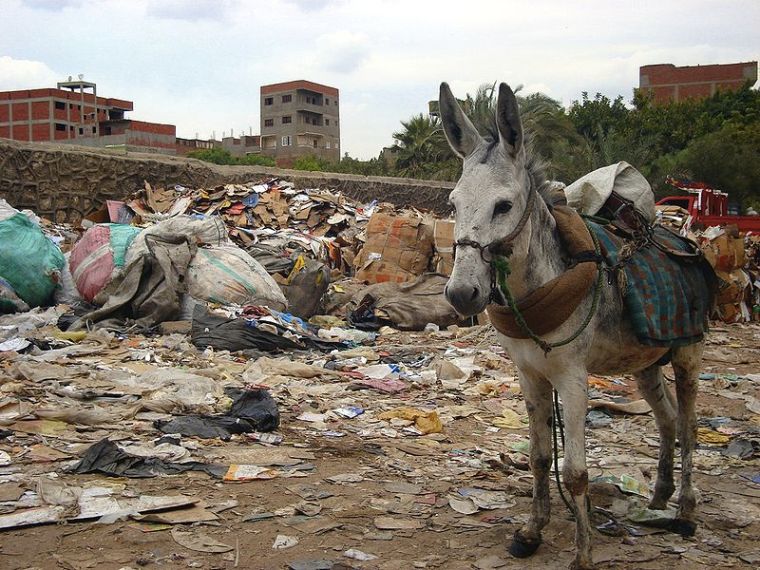
It is – unfortunately – not news that in some places (including First World countries) children and adults dig through trash cans or garbage dumps looking for something to eat or for cast-off goods that might be used or sold. There is no story, however, that quite compares to that of the Egyptian Zabbaleen or “garbage people” for sheer industry and inventiveness. From the 1940s these people ran 120 micro-enterprises that collected and recycled Cairo’s garbage. This was the Zabbaleen’s creative solution to the need for jobs and income when farming ceased to be a viable for them.
There was as you might imagine a downside: social stigma, subsistence and disease. Garbage collecting did, however, offer something of a living to an estimated 60,000 – 70,000 people and what these people did was quite remarkable. In fact, it was unique in all the world. They recycled 80-85% of the garbage, which is where their income came from. Most Western countries recycle about 20-25% of garbage.
In 2005, Egypt hired private contractors from Spain and Italy to bring in huge trucks and cart garbage to landfills. This move along with others made in the name of modernization and Westernization cost the Zabbaleen dearly and, in fact, in the end all of Cairo suffered for this decision.
A Donkey at Mokattam Hill in Cairo
I first learned the story of the Zabbaleen from Mai Iskander’s award-winning feature-length film Garbage Dreams, whichaired on the PBS Independent Lens program for Earth Day in 2010. While the context and culture of the story is unique, the experience of losing one’s livelihood to corporate giants, funding cuts, social or technological change or other conditions is all too commonplace. Almost all of us and our communities have been touched – if not devastated – and sometimes recreated by such experience.
Some people are remarkably resourceful and inspiring, like the Zabbaleen when they transitioned from farming to garbage collection. During The Depression, my own father’s import & export business was failing. He got the idea to tell the furriers in the neighborhood that he would clean their offices at night. He made them an offer “they couldn’t refuse.” Then, in the same spirit as the Zabbaleen, while he handled the factory and office maintenance, he’d sort through the trash and save all the tossed away bits of fur. He made them into little bow-ties and earings and little mink teddy bears and sold them to Macy’s. Even in a depression there are people with enough money to buy useless luxury tchotchkes, so that’s the market he went after. He eventually became a furrier.
WRITING PROMPT: Write a poem, short story or article about the impact of job loss on an individual, family or community. This might be a poem about someone’s grief over job loss or how they reinvented themselves in the face of hard times. It might be a short story about family dynamics in the aftermath of financial catastrophe. Or, it might be an article about your own community and how it survived (or not) the loss of a company or industry that was once the foundation of your town’s economy. Is there a story in your heart or your own back yard that until now you hadn’t thought of telling?
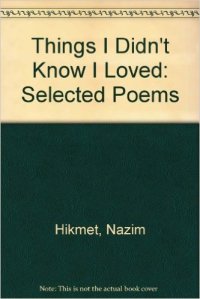 Note: My father and Nazim Hikmet would have come of age just as WW I (1914-1918) was ending and the Turkish War of Independence (1919-1923) was beginning. Hikmet (1902-1963) was a renown poet, playwright and novelist, a communist and a revolutionary who spent his life in and out of jail. He won the International Peace Prize in 1950. My father (1902-1977) was a furrier. I didn’t know him well and saw him only two or three times a year, always at his office. This poem is after Hikmet’s Hello Everybody from Things I Didn’t Know I Loved.





 Jamie Dedes' THE POET BY DAY Webzine