Page 5 of 6

CELEBRATING AMERICAN SHE-POETS (18): Joy Harjo, Crazy Brave
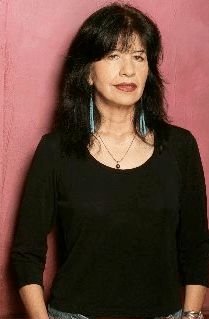
Joy Harjo (b 1951), Mvskoke (Creek) Poet, Musician, author and key player in the second wave of the Native Merican Renaissance (literary efflorescence)
Joy Harjo (b 1951), Mvskoke (Creek) Poet, Musician, author and key player in the second wave of the Native American literary efflorescence

51fFPVB5FTL._SX329_BO1,204,203,200_

 Crazy Brave (Norton & Company, 2012), Joy Harjo’s eminently engaging memoir, flows like a long prose poem. It is rich and well-built on a foundation of tribal mythologies, a strong sense of her ancestry, her difficult childhood and youth and salvation found in poetry and music. From her birth to a handsome much-loved fire-spirit father who inherited Indian oil money, allowing him to indulge a passion for cars, and her beautiful water-spirit singer-mother whose voice was stilled by a bully of a second-husband, Harjo tells the story of girl who survived a physically and emotionally abusive step-father, crushing poverty and the greater cultural obscenities to become one of our most influential poets and a formidable advocate for justice for Native Americans and liberation for women.

I was entrusted with carrying voices, songs, and stories to grow and release into the world, to be of assistance and inspiration. These were my responsibility.”

*****

I can’t imagine the human being who wouldn’t relate to Joy Harjo’s history, but those who have come from “broken” homes, poverty and a family of mixed ethnicity will most especially appreciate it and perhaps find some healing and strength in the pages of Crazy Brave. That Joy Harjo survived so much to become a decent loving person leaves the rest of us with no excuse; and any writer, poet or musician will take to heart the dreams and visions of that long journey to find hope and creative voice in poetry.

Joy Harjo, a member of the Mvskoke tribe was born in Tulsa, Oklahoma, an area where the Native American trail of tears ended, an area to which the indigenous peoples were removed – forced to relocate –  as people of European descent moved into their original home places. The removed were the Five Civilized Tribes – Cherokee, Chickasaw, Choctaw, Mvkoke and Seminole  – who were living as autonomous nations in what is now the American Deep South.

“I fought through the War Between the States and have seen many men shot, but the Cherokee Removal was the cruelest work I ever knew”. Georgian soldier who participated in the removal

*****

When the World as We Knew It Ended
It was coming.
We had been watching since the eve of the missionaries in their long
and solemn clothes, to see what would happen.
We saw it
from the kitchen window over the sink
as we made coffee, cooked rice and potatoes
enough for an army.
We saw it all, as we changed diapers and fed
the babies. We saw it,
through the branches of the knowledgeable tree,
through the snags of stars, through
the sun and storms, from our knees
as we bathed and washed the floors …
The conference of the birds warned us as they flew over
destroyers in the harbor, parked there since the first takeover.
It was by their songs and talk we knew when to rise,
when to look out the window

excerpt from When the World Ended in How We Became Human, New and Selected Poems (W.W. Norton & Co., 2004)

*****
screen-shot-2013-12-27-at-9-02-25-pm

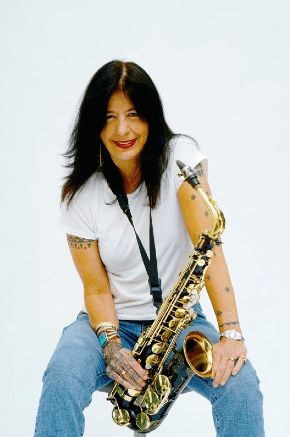
Joy Harjo’s poetry and music are influenced by her ethnic heritage and her feminist and social concerns as well as by her love of word and sound and her education in the arts. Largely autobiographical, her poetry is informed with descriptions of the Southwestern landscape and the mythologies, symbols and values of the Mvskoke people. Hers is the sort of writing that sits with you to become part of your own bone and marrow, which is the way of good poetry and good story. A poet of the people but also a critically-acclaimed poet, her many awards include the Wallace Stevens Award of the Academy of American Poets, The William Carlos Williams Award from the Poetry Society of America and the American Indian Distinguished Achiement in the Arts Award. She is the recipient of several grants and is a teacher, musician (saxophone) and singer.  She has published some fourteen books and ten music albums.

It was a dance,
her back against the wall
at Carmen’s party. He was alone
and he called to her – come here, come here
that was the firs time she saw him
and later she and Carmen drove him home
and all the way he talked to the moon,
to the stars, to someone riding

excerpt from There Was a Dance, Sweetheart in How We Became Human: New and Selected Poems (1975-2022) (W.W. Norton & Co., 2004) © Joy Harjo

If you are reading this post from email, you will likely have to link though to this blog to enjoy the video. Joy Harjo’s Eagle Song, poem and music:

© review, Jamie Dedes; poems, Joy Harjo, photographs courtesy of Ms Harjo

“BROKEN HOMES,” Single Moms, Remarkable Sons …. Gil Scott-Heron, jazz poet

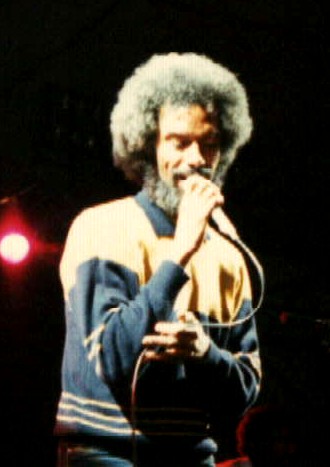
Gill Scott-Heron (1949-2011), American jazz poet, spoken-word poet, muscian and author
Gill Scott-Heron (1949-2011), American jazz poet, spoken-word poet, musician and author

All I really want to say
Is that the problems come and go
But the sunshine seems to stay

Gil Scott-Heron died around this time in 2011. He’d started out fiery and angry. Some will remember his forceful The Revolution Will Be Televised and other such works. He was always an artist of political integrity. It showed in actions such as refusing to perform in Tel Aviv because “we do not like wars.”  Over time his style mellowed, but his ideals remained.

Gil Scott-Heron is considered by many to be the grandfather of rap and the father of political rap.  Famously, he didn’t accept those titles; he was critical of young rappers, felt they needed to study more, to promote change and not perpetuate the status-quo.  He is quoted in ChickenBones: A Journal as saying …

They need to study music. I played in several bands before I began my career as a poet. There’s a big difference between putting words over some music, and blending those same words into the music. There’s not a lot of humor. They use a lot of slang and colloquialisms, and you don’t really see inside the person. Instead, you just get a lot of posturing.”

In the poem shared today (sent to me by my son on Mother’s Day, 2011) it’s interesting to see what Heron does with his personal experience.  I like that there’s nothing of the victim mentality in this piece. I like the way he talks of dealing with life as it is. I appreciate that he points out that single-parent homes are not always the result of abandonment but are often made so due to parents who were lost in war or in jobs as police officers, firefighters or pilots.

They lost their lives, but not what their lives stood for.” 

On Coming From a Broken Home (video below) is a good example of how art can explain, validate and give us new perspectives … perhaps even encourage us to talk with one another. The piece is from Gil Scott-Heron’s last studio album, I’m New Here. It came out in 2010 not long before he died.

As always if you are viewing this post from an email, you will have to click on the link to this site to see and hear the piece.

header photograph/Heron at the WOMARD festival in Bristol England, 1988 by Robman94 under CC BY SA 2.0 license.

Poetry Into Music ~ grab your box of tissues first

If you are viewing this from Facebook or an email, you'll have to link through to the site to view the video.

Iris_Dement_-_Ron_Baker_-_2007-1A poet by any other name is still a poet.

WALKIN’ HOME

I’m walkin’ home tonight
The streets are glowing ‘neath the pale moonlight
I look around, there’s not a soul in sight
and I’m walkin’ home
Once again I hear my mother’s voice
and all us kids making a bunch of noise
If I’m not careful I might start to cry
Just walkin’ home tonight

I turn my head and hear the screen door slam
and there he is, that tall and dark-haired man
He looks my way but all alone he stands
and I am walkin’ home
He’s my Dad, you know I was his girl
He taught me all he knew about this world
and then he traveled right on out of sight
and I’m just walkin’ home tonight

I’m walkin’ home tonight
The streets are glowing ‘neath the pale moonlight
I look around, there’s not a soul in sight
and I am walkin’ home

Old worn-out couches and a bunch of kids
Four to a bedroom and all Mom’s plates were chipped
but I never knew about the things I missed
and I’m walkin’ home
You see, it’s just the place where I come from
and, good or bad, it’s where the deal was done
Mom and Dad, their daughters and their sons
and I’m just walkin’ home tonight

I’m walkin’ home tonight
The streets are glowing ‘neath the pale moonlight
I look around, there’s not a soul in sight
and I’m walkin’ home
Once again I hear my mother’s voice
and all us kids making a bunch of noise
If I’m not careful I might start to cry
Just walkin’ home tonight

Iris Dement

© words and music, Iris Dement; photograph, Ron Baker under CC BY-SA 3.0 license

Music, Language of the Soul: the second in a series from Imen Benyoub on music in the context of war and occupation

Poet, writer and artist, Imen Benyoub is from Guelma, Algeria and currently lives in East Jerusalem. She shares with us on The Bardo Group blog a series of stories and insights on music in war and occupation. This month she writes about Palestinian Musician Ramzi Aburadwan, his pursuit of music and his success in bringing it to the children of occupation. It’s a story with a lot of heart, soul and generosity … read on … it’s worth your time …

The Bardo Group Beguines's avatarThe BeZine

The first post in this series is HERE.
10423604_519811371480762_878196538_n
Music, the language of the soul
The cultural Intifada*…From stones to musical instruments.
The story of Ramzi Abu Radwan.

They impressed the world
And all they had in their hands were stones
They lit like lanterns, and came like messengers
From “children of the stones” Nizar Quabbani (1923-1998), Syrian poet and publisher

The first Intifada is the Palestinian uprising against the Israeli occupation that started on December 1987 in Jabalia** refugee camp and spread throughout the rest of Gaza, the West Bank and East Jerusalem. It lasted six years until the signing of Oslo Accords in 1993.

It was an unarmed, spontaneous yet exploding uprising, men with their faces covered with keffiyehs***, women and children with nothing but stones, slingshots and Molotov cocktails faced tanks and live ammunition of well-trained, heavily equipped Israeli soldiers.

10423556_519811321480767_1963506964_aOne of those children, a kid…

View original post 740 more words