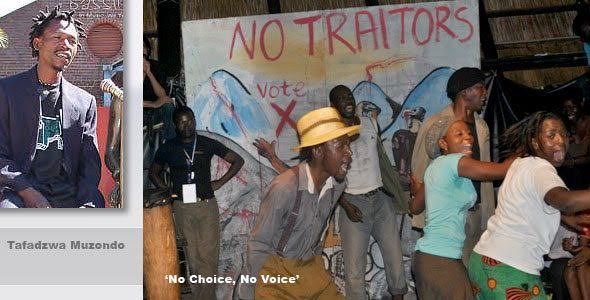
Tafadzwa Muzondo curates the Inaugural Zimbabwe Human Rights Festival. It was held December 10 – 13.
Thanks to our rich connection with Zimbabwean poet in exile, Mbizo Chirasha, I have the pleasure and privilege of expanding The Poet by Day to include African artists, to feature their efforts in support of human rights and just governance. More to come in 2020 from poets and other artists all over Africa. I hope readers will enjoy the lyrical difference in English, the passionate action, and the creativity demonstrated. The Poet by Day jamiededes.com and The BeZine support crossing borders and honoring shared humanity. One world. One race: the human race. / J.D.
Machipisa in Highfeilds is a paradoxical African high density suburb in Zimbabwe. It gave birth to the both iconic song maestros and political heavyweights inclusive of the late George Nyandoro, Enos Nkala. Robert Mugabe the late nationalist and former long serving president of Zimbabwe resided in Highfeilds before his long trip to Mozambican jungles to preside over the liberation struggle in the 70s . Highfeilds shaped the life and creativity of the late Dendera Superstar Simon Chopper Chimbetu, father the current Dendera crooner Sulumani Chopper Chimbetu. while the Oliver Tuku Samanyanga, the iconic Ketekwe maestro had most of his musical walk to stardom inside Highfeilds .
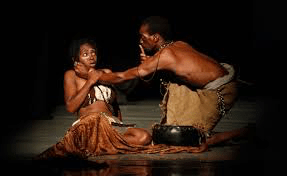
Theatre against violence showcase at HIFA
Like an other creatively fervent generation, to revive the legendary traits of Highfeild Tafadzwa Muzondo of the Edzau Isu fame, an independent theatre guru and human rights defender have artistically turned an old disused bridge into a popular, edutainment and infortainment theatre, arts and poetry venue. The artists and human rights defenders are using these venue as a space for artistic exhibition, freedom of expression through arts as they continue to promote civil dialogue through theatre arts production. Theatre PaBridge (pa Machipisa) has become a common artistic oasis or Theatre Arts hub for both young and established artists in Zimbabwe and abroad .
If hate is the only beverage in the bar,
I’m holding on to my thirst,
suppress the crave for the meanwhile
reciting lines and verses that question our sanity,
rhythms and rhymes that expose us to our stupidity.
Assuming we still have the conscience
I want to see them meet the hatred in the streets…
i want them to know how we so much yearn for peace
– Edward Dzonze
Tafadzwa Muzondo and patterns at the launch of the Theatre PaBridge
To mark the International Human Rights Week Tafadzwa Muzondo, Edzai Isu Theatre Arts and Action Hub curated and hosted the inaugural Zimbabwe Human Rights Festival (ZHRF) at Theatre PaBridge from the 10th to 13th December 2019 . The artists spoke human rights through poetry, expressed freedom through dance, sung songs against political tolerance through Katekwe violins and used stand-up theatre to stop corruption, political abuse and injustice in high offices. The Zimbabwe Human Rights Festival was an entertaining, engaging and empowering platform, which took stock of the human rights situation at local, national and international levels. It was a profound artistic initiative meant to mainstream human rights in an innovative way by rallying together rights holders and solution holders.
The late Zimbabwean musical icon, Oliver Tuku Mutukudzi
ZHRF featured theatre, music, dance and poetry performances on human rights as well as post performance discussions and exhibitions by relevant civic society organizations and responses by invited solution holders. Major highlights of the performances, discussions and representations will be streamed live on our social media platforms as well as other partner platforms.
The theme of the inaugural festival is “AFTER”, which is an abbreviation for Arts Fostering Total Enforcement of Rights also meaning AFTER all the bickering, sloganeering and propagandizing, citizens need their rights to be respected not trampled on.
It is encouraging that the Zimbabwean government has established the Zimbabwe Human Rights Commission, a Constitutional Commission to promote awareness, protection, development and attainment of human rights and freedoms in Zimbabwe. As a transformative arts organization, EDZAI ISU Trust conceived a creative and innovative initiative in the name of ZHRF to commemorate Human Rights Day and contribute to the need to respect human rights in our dear country.
The universal declaration of human rights 10 December 1948 / courtesy of the United Nations Department of Public Information / Public Domain
Besides the Zimbabwean constitution being clear on human rights, the Universal Declaration of Human Rights, ratified by Zimbabwe, recognizes the inherent dignity of all members of the human family as the foundation of freedom, justice and peace in the world. It includes civil and political rights as well as economic, social and cultural rights, like the right to social security, health and education.
Tafadzwa Muzondo is the organizer.
The Zimbabwe Human Rights Festival, the brainchild of award winning transformative artist and social activist Tafadzwa Muzondo, is a rallying point in the mission to improve accountable, democratic governance that serves an engaged citizenry. Respect for human rights is at the core of social and economic development as without citizens enjoying and authorities respecting human rights, we cannot talk of any meaningful people centered development.
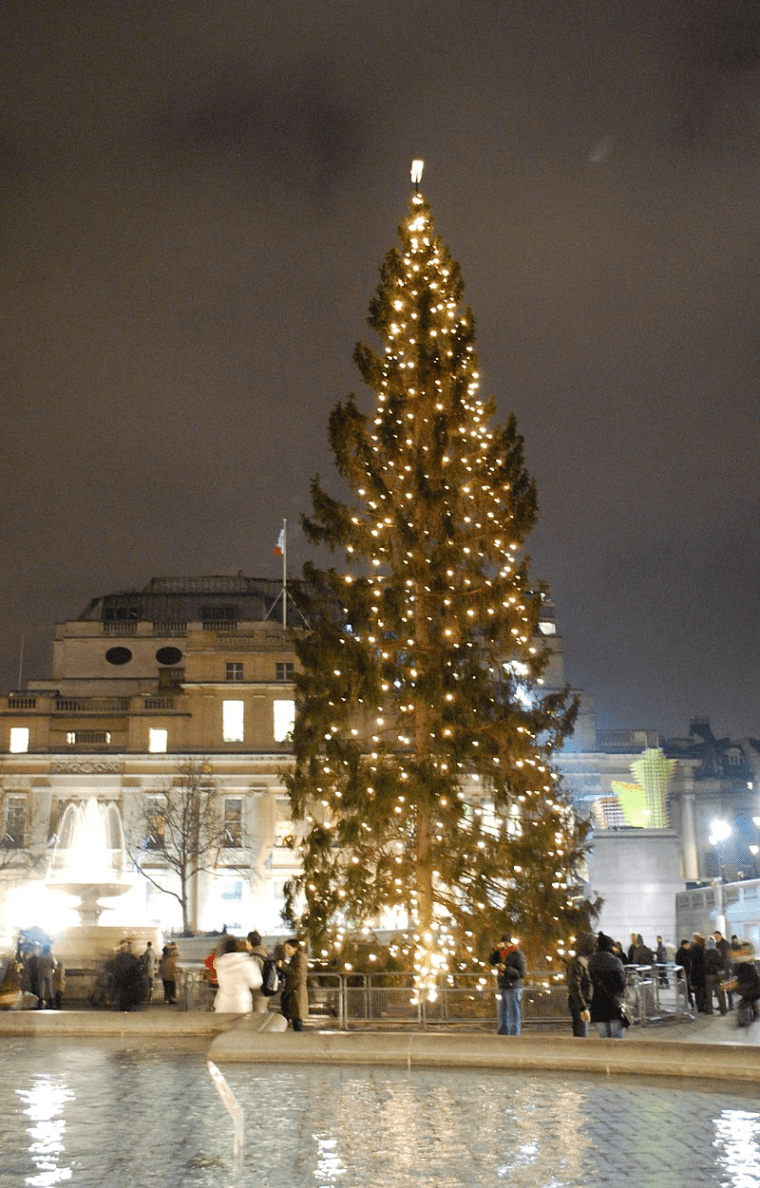
Clare Pollard’s poem will be displayed on banners around the Christmas tree in Trafalgar Square until January 6, 2010. The banners feature artwork by Marcus Walters.
I’m a New Yorker who grew up on the magnificent Christmas tree lightings in Rockerfeller Square in Midtown Manhattan. In my childhood this was still a relatively modest community event. In those days, it was attended mostly by New Yorkers. In more recent years, it has become a loud commercial affair attended by tourists and visitors.
It may be in part the memory of those long-ago and magical tree-lightings that drew my attention to this lovely relatively understated English-Norweign collaboration. The inclusion of poetry makes it all the more engaging: for the eleventh year running, The Poetry Society commissioned a poem to wrap around the Norwegian Christmas tree in Trafalgar Square.
For 2019 poet Clare Pollard wrote The Gift inspired by the theme of hope. It will adorn the Trafalgar Square Christmas tree through January 6th. The Gift was inspired by the images and ideas of London primary school children who received free poetry workshops from Cheryl Moskowitz, Coral Rumble, and Clare Pollard. The workshops were organised by The Poetry Society in October and November. The poem was read by a small group of primary school children at the lighting ceremony last Thursday.
This ceremony is organised by the Mayor of Westminster and Royal Norwegian Embassy, attended by the public, the Mayors of London’s thirty-two boroughs, and VIP guests including the Mayor of Oslo. The Poetry Society and the Royal Norwegian Embassy encircled the Trafalgar Square Christmas tree in poetry, celebrating the City of Oslo’s annual gift to London, as part of The Poetry Society’s Look North More Often project. The Poetry Society’s Christmas tree poem project, Look North More Often, was launched in 2009 as part of its centenary celebrations, encouraging local schoolchildren to write in celebration of the tree’s arrival from Norway.
The tradition of the Mayor of Oslo sending a Christmas tree to London as a symbol of peace and friendship dates back to 1947, in recognition from Norway of Britain’s support during World War II. The tree’s journey starts with the Lord Mayor of Westminster visiting Oslo for a traditional tree-felling ceremony followed by the Mayor’s return with the tree to London.
In addition bringing professional poets into London primary schools to work with the students on their ideas and words for the Christmas tree poem, Look North More Often provides teachers across the UK with new digital resources to assist them in teaching poetry.
Here is an except from the commissioned poem, which was read on Thursday.
The Gift
by Clare Pollard (with thoughts and images dreamt up by primary schoolchildren from Westminster)
The seed becomes a golden flower of pouring light, a gift.
I need you to believe, Hope says. It’s you makes me exist.
I feel bright feathers lifting.
I hear a tiger’s roar.
I’ve taken many forms, Hope says – changing is what I’m for.
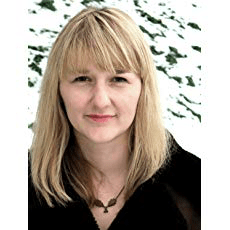
CLARE POLLARD (Clare’s Official Site) (b. 1978) is a poet and playwright who was raised in Bolton and educated at Turton School in Bromley Cross. She studied English at Cambridge University. At age 19 Pollard published her first poetry collection, The Heavy-Petting Zoo (Bloodaxe Books Ltd. (1997)) In 2000, Pollard won a Society of Authors Eric Gregory Award. In 2004, her play The Weather was performed at the Royal Court Theatre. In 2007, My Male Muse, a radio documentary was broadcast on BBC Radio 4. In 2009, Pollard and James Byrne edited the Bloodaxe young poets showcase titled Voice Recognition: 21 Poets for the 21st Century.[5] Pollard has been a Royal Literary Fund Writing Fellow at Essex University. In 2013, she was the judge for the inaugural international Hippocrates Prize for Young Poets.
Clare Pollard has published four collections of poetry, the most recent which, Changeling (Bloodaxe, 2011) is a Poetry Book Society Recommendation. Her play The Weather premiered at the Royal Court Theatre and her documentary for radio, She co-edited the anthology Voice Recognition: 21 Poets for the 21st Century and her new version of Ovid’s Heroides was published by Bloodaxe in May 2013
Clare’s Amazon Page U.K. is HERE and U.S. is HERE.
Note: The content of this post is courtesy of The Poetry Society, Wikipedia, Clare Pollard, and Amazon.
Jamie Dedes. I’m a freelance writer, poet, content editor, and blogger. I also manage The BeZineand its associated activities and The Poet by Dayjamiededes.com, an info hub for writers meant to encourage good but lesser-known poets, women and minority poets, outsider artists, and artists just finding their voices in maturity. The Poet by Day is dedicated to supporting freedom of artistic expression and human rights and encourages activist poetry. Email thepoetbyday@gmail.com for permissions, commissions, or assignments.
An annual international literature carnival, where writers, academics and readers discuss, critique literature. / copyright Litfest Harare
LitFest Harare Voices stitched together the November sacredness with the December Christmas fever.
Africa is gifted with a blessing of spoken word artists, literalists, wordsmiths and poetry arts activists. Recently in Zimbabwe dub poet and UNESCO Affiliate Chirikure Chirikure and fellow poets hosted a lineup of accomplished writers and poets through the the highly recognized literary arts fete Litfest Harare in partnership with Glasgow University, Daves Guzha’s Theatre in Park, United States of America Cultural Affairs in Harare and others. LitFest Harare Voices stitched together November sacredness with December Christmas fever.
Poet Sotambe Pusetso Lame at 2019 Sotambe Festival
Mbizo Chirasha
The Sotambe Live Literature Hub curated by fellow poet Mbizo Chirasha saw poetic words bathing copper belt of Kitwe to welcome the beautiful month of October. The Sotambe Live Literature Hub was a collaboration of Sotambe Film, Documentary Arts Festival with the International Human Rights Arts Festival founded by Writer and Artist Thomas Block. The Festival brought together poets from the SADC region that included Pusetso Lame of Botswana, trailblazing Vanessa Chisakula of Lusaka Zambia, and the dare – daring Philani Amadeus Nyoni of Zimbabwe. Africa’s poetry year was capped by the Maruping festival (GBV issues themed festival) in Botswana in partnership with European Union Delegation in Botswana bringing poets from around the world.
In that same literary arts activism wavelength, the Brave Voices Poetry Journal and the Zimbabwe We Want Poetry campaign founded and curated by Mbizo Chirasha an internationally acclaimed literary arts projects curator and poet introduces the Freedom Voices Poetry Writing Prize, an International poetry writing contest that saw more than fifty poets and activists participating from all over the globe. The contest was judged by globally revered poets and acclaimed writers that included Professor Michael Dickel, Poet and Editor James Coburn, and Reputable Journalist and writer Omwa Ombara and Professional Writing Mentor Tracy Yvonne Breazile.
The Winners of the 2019 Freedom Voices Prize are:
Adesina Ajala, a Nigeria poet with his poem FOR KEN SARO-WIWA ( First Prize),
Chrispah Munyoro, a Zimbabwean Poet with her poem ECHO CHAMBERS (Second Prize), and
Christopher Kudyahakudadirwe, a South African based Zimbabwean poet with his poem THE BUDDS ARE FRUITING ( third prize) .
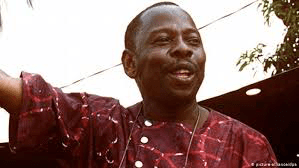
Deceased Nigerian poet Ken Saro-Wiwa for whom Adesina Ajala’s poem is written
There are seven special mentions. The winners are to be published in five digital poetry spaces including the new look Brave Voices Poetry Journal and the seven special mentions will be featured in two platforms including the BRAVE VOICES POETRY JOURNAL.
The 2019 Freedom Voices Poetry Writing Prize was paying Tribute to Unique Heroes/ Heroines. It is an Ode for Cadres of Resistance (human rights, anti-imperialistic, antiapartheid, freedom of expression, fight for political justice, right to economic justice and right to social inclusion) including:
Ken Saro-Wiwa for movement for the survival of Ogoni people ( Nigeria,) Dedan Kimathi (Kenyan liberation struggle),
Steve Biko (fighting inequalities in South African apartheid,)
Lookout Masuku (fighting for political justice in Zimbabwe),
Charles Dambudzo Marechera (PenSlinger of Truth in Zimbabwe),
Ambuya Nehanda (medium spirit of Chimurenga (war of liberation) in Zimbabwe),
Ruth First (South African fighter for civil rights),
Winnie Madikizela Mandela (Fighter for political and economic rights in South Africa,
Itai Dzamara (fighter for human rights and freedom of expression in Zimbabwe), and
Freedom Nyamubaya (gunslinger during war of liberation, poet against dictatorship regime in Zimbabwe).
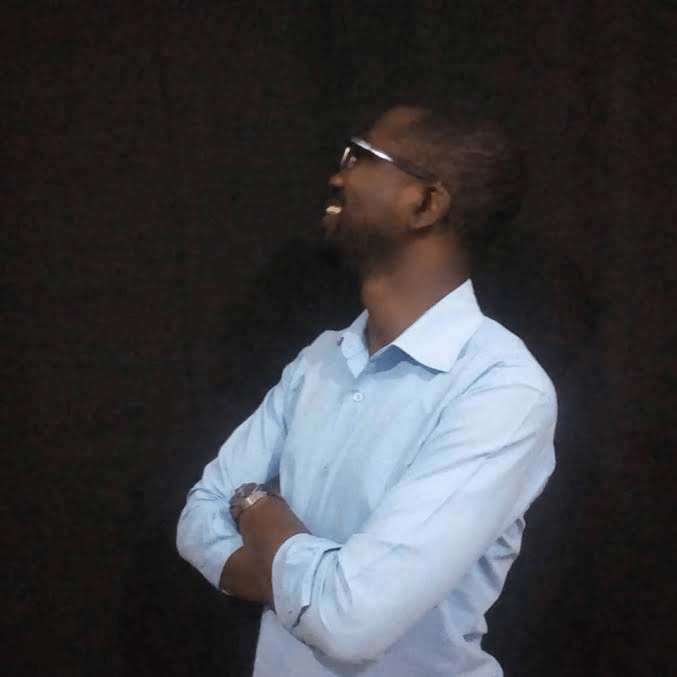
First Prize Winner, Nigerian Poet Adesina Ajala
ADESINA AJALA (Nigerian Poet) on winning the First Prize
SOZA’S BOY AND THE LEMONA’S TALE
For Ken Saro-Wiwa
October 10, 1941,
A sweet cry creaked into the crevices of Bori,
Cascaded with the swings of time
into songs in a time of war.
Like the anopheles mosquito, war was the drill poking Basi & company—
an ethnic minority, crisp lands & fecund rivers.
Shrapnel of crude oil scared faces of waters.
Oil marched the wicks of farmlands, wrecked every lushness in its paths.
A forest of flowers wilted, shed petals,
Became silhouette on a darkling plain.
The singing anthill homed bland silence.
This loud silence would be treason merely set in some four farcical plays.
Berserk bites of genocide in [Ogoniland] Nigeria.
& the Sozaboy chanted the Lemona’s tale—
the agony in the Ogoni girl became bared on the transistor radio.
& the warlords wrangled Wiwa’s weighted words,
Clasped him like prisoners of Jebs,
& clenched his body between the teeth of gallows.
Tell the hand that cuts the mahogany, his stump has sprout fresh leaves.
This poem, a leaf, sways.
Adesina Ajala is sprouting Nigerian medical doctor and writer, Adesina Ajala, desires to grow roots in the loam of the pen and the stethoscope. He does not know how he would fare, but he believes in journeying, in chances, possibilities and the divine. His works have found home in Writers Space Africa, EBOquills, Libretto, Featiler Rays, Brave Voices Poetry Journal and elsewhere. He was the co-winner of the first place of 2018 TSWF Writers Prize. He is on Instagram as and tweets @adesina_ajala.
CHRISPAH MUNYORO (Zimbabwean Poet) ON WINNING THE SECOND PRIZE
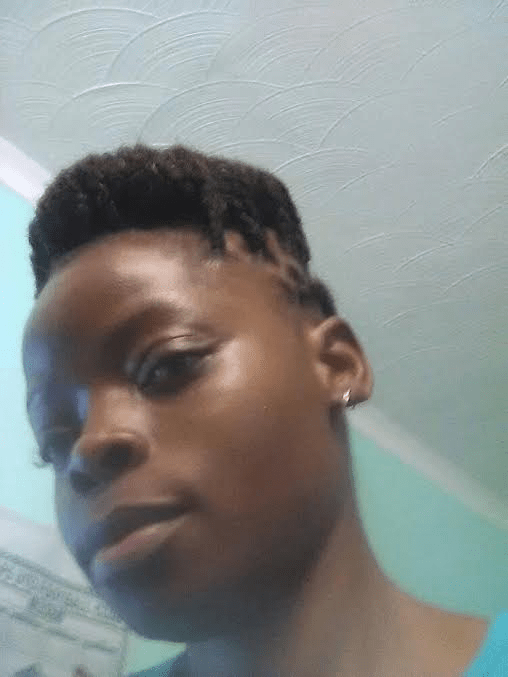
Second Prize Winner, Zimbabwe Poet Chrispah Munyoro
ECHO CHAMBER
When eobiont is my father
Living in darkness
Languishing sodom and gommorah
Christened by vampires
Baptised in Hades
My toys,wails and anguish
Bathing with my sweat
Lullaby of sjamboks,button sticks and tear gases
I am a graduate of doom
Hunger and thirst my delicacies
Daughters and sons of darkness
That chieftain ,who rule by subterfuge
Who had fried his heart eons ago
In glee at the cries of the babies
Salivating in total erasure of humans
Ejaculating venomous fire
How then can i think paradise is there
When i am a citizen of hell
Pot trained to be a hardcore bandit
Shrivelling,flowers squashed mercilessly
Future suspended and eroded
Pissing on the precious blemis
Expecting fruits from cactus
Chrispah Munyoro says, “I am a woman who never backs on what she wants to achieve. Ambiguous and hard work is the keys to success. Patience is a virtue I live by I don’t want cut out turn success. The saltiness of sweat unlocks hidden destinies. I am a down to earth woman who looks up to God with zeal.”
CHRISTOPHER KUDYAHAKUDADIRWE (Zimbabwe poet based in South Africa) on Winning the Third prize
THE BUDS ARE FRUITING
Who will tell Dambudzo Marechera
That the seeds that he sowed in us
Have sprouted and are doing well?
That’s right, we want him to know that
The flowers he left slowly budding
Have unfurled their bright petals
To grace the garden of literary bliss
Allowing bees to drink nectar sweet verse?
Who will tell our gallant literary hero:
One of the few who made living prophecies,
About the fermenting corruption
By trying nipping sprouting nepotism
And the cancerous looting in the bud
That would seize our house of stone?
Who will tell Dambudzo Marechera
What has become of the house of hunger
Which he was mind-blasting about
While non-believers stood on the fence
Pointing accusing fingers at him?
But, let me say: never mind your departure.
We, the little buds, will continue
That work that you left unfinished.
Christopher ‘Voice’ Kudyahakudadirwe is a Zimbabwean freelance writer, poet and teacher living and working in South Africa. His first poems appeared in a magazine called Tsotso which was published by the Budding Writers Association of Zimbabwe in the early 90s. Over the years his poems have been published in the following anthologies among others: Harvest: The University of the Western Cape Masters in Creative Writing Poetry Anthology 2016, Best “New” African Poets 2015 Anthology, Zimbolicious Poetry Anthology Volume 1. And his short stories in, Ghost-Eater and Other Stories, New Contrast, Moving On and Other Stories. He is currently running a poetry blog called http://www.kudyahakudadirwe.wordpress.com where he publishes his own poems.
The Magic was also in the Judging
OMWA OMBARA
Omwa Ombara
“The competition was pretty stiff. I hated to let some poems go. I hope the rest get literary mentions. Thank you for the opportunity to judge.”
Omwa Ombara ( First Phase Judge ).Omwa Ombara is The Editor in Chief at Tulipange Africa Media, a diaspora based Magazine in United States of America and Contributing Editor of Women Global Affairs at WOMAWORDS LITERARY PRESS.
TRACY YVONNE BREAZILE
Tracy Yvonne Brazile
“Reading the poems, I was delighted to find polished and confident voices. The poets offered a promise of creative potential surpassing my expectations. The quantity and quality of the writing served to motivate and challenge the mind with a common respect for the voices that linger in our shadows, reminding us of the importance that poetry can bring to problems that demand solutions. The only problem that I found was removing some from the list. This task was far more difficult that I had imagined. In the end, the poems that most closely matched the guidelines were the only match for decision making.
They were all beautifully crafted in both form and function. Although ultimately, there will be a list of winners, I found all of the poems that I read to be prized pieces of poetry that deserve a standing ovation. I found letters meant for reading and listening. Literature and Orature. I do declare, this was a tough task. Thank you, Brave Voices Poetry Journal 67, for paying tribute to unique heroes and heroines and celebrating their uniqueness.
Although ultimately, there will be a list of winners, I found all of the poems that I read to be prized pieces of poetry that deserve a standing ovation. I found letters meant for reading and listening. Literature and Orature.”
Tracy Yvonne Breazile (Second Judging Phase). is a writer living in the United States of America. She was granted the opportunity to serve as Writer/Mentor in Residence with the 2018 Zimbabwe We Want Poetry Mentorship Program, originated by Mbizo Chrirasha. Breazile studied Language and Literature with a concentration in Professional Writing at Columbus State University, Columbus, Georgia, USA
JAMES COBURN
James Coburn
“I was happy to read each poem. Each writer should be encouraged, as well as the ones not chosen. It was a pleasure reading the force and magnetic insight of each word. These are living words with a life of their own. Powerful and penetrating, forged in the flame of heart and traversing fear. Their ancestors would be proud.”
James Coburn is an Oklahoma poet in the United States of America. Coburn has always valued the subtext of life and seeks to reveal its undercurrents. He believes indifference is the enemy of man as it is the benefactor of ignorance, racism and xenophobia” James Coburn (Third Stage Freedom Voices Poetry Writing Contest). is an Oklahoma poet in the United States of America. Coburn has always valued the subtext of life and seeks to reveal its undercurrents. He believes indifference is the enemy of man as it is the benefactor of ignorance, racism and xenophobia.
MICHAEL DICKEL
Michael Dickel
“Poetry contest judges almost always must comment on the subjectivity of what we do. While the Freedom Prize has criteria to decide the quality of the poems, which I used, how well we / I as a single reader see the fit of any given poem to those criteria has to do with myself as reader as much as to the poem itself.
In this case, there were four criteria:
The poem fit the stated theme of the contest,
the poem was indeed poetry and not slogans and clichés,
the quality of the words and language used, and
the originality and creativity of the poem.
The first round of judging selected a “short-list” of ten poems, from which I was asked to select and rank the three best poems. All of this done anonymously, of course.
Another reader reading the ten poems on the short-list of poems might have found other poems of more merit for one reason or another. Reasonable readers may disagree with each other. I had the honor of being asked to select, and I have chosen three that I think stood out. However, this was not an easy task.
The passion of the voices in these ten poems would come across to any reader. The music of the poems, with rhythm and rhyme flowing, consonance and assonance, sounds crafted into what we call poetry. The poet of each of these poems deserves praise both for political activism expressed as poetry and for caring for others, their people, and the world.
The Third Place poem I chose is The Buds Are Fruiting. In this highly original poem, we learn “That the seeds…” Dambudzo Marechera“…sowed in us/ have sprouted and are doing well…” and “The flowers he left slowly budding/ Have unfurled their bright petals…” Unfortunately, “fermenting corruption,” “nepotism,” and “cancerous looting” have also budded, and need to be nipped. Merechera is blamed and indicted by finger pointers. Yet, the poem ends with hope: “We, the little buds, will continue/ That work that you left unfinished.”
The Second Place poem, Echo Chamber introduced me to a new word, eobiont (a hypothetical primordial pre-life chemical) in its opening line. The poem moves from the “father” (of life?) to “Living in darkness” and moves through Sodom and Gomorrah, vampires that Christen the speaker of the poem in Hades…the speaker’s “toys, wails and anguish/ Bathing with my sweat…” This dark poem paints a vivid picture in images painted with a few words, and in these images we see and feel the suffering of Africa and its children from “That chieftain, who rules by subterfuge/ Who had fried his heart eons ago/ In glee at the cries of the babies…” This poem strongly condemns and indicts the cruelty of those in power who savor the suffering of others. Rather than taking responsibility and stopping the suffering, they savor it, and this has cost them their hearts (and souls).
(For Ken Saro-Wiwa), my selection as the First Place poem in the Freedom Prize contest, combines the strengths of these other two poems. It speaks to an historical figure, using strong images and poetic skill to create a poem that reaches the heart, lays bare injustices, but also ends with a type of hope. After a significant date in the first line, “October 10, 1941,” we read “A sweet cry creaked into the crevices of Bori…” The repeated hard “c”— cry, creaked, crevices— pulls us along with some dread, given their contretemps to the “sweet.” The next line begins with “cascaded,” repeating that same hard “c” into “the swings of time/ into songs in a time of war.” In the next stanza we read that “Shrapnel of crude oil scarred faces of waters.” The oil goes on to “march” through farmland, destroying the environment as it goes, until “ This loud silence would be treason merely set in four farcical plays.” We are given “genocide,” “warlords,” and “gallows,” along the way “the agony in the Ogoni girl became bared on the transistor radio.” And after Saro has been hung, where is the hope? “Tell the hand that cuts the mahogany, his stump has sprout fresh leaves./ This poem, a leaf, sways.” The hope comes from the poem, from poets. At least, we hope that this will be true.)
—Michael Dickel, Jerusalem, November 2019
Michael Dickel (Finalists Judge). Michael (Dickel) Dekel has authored six published books and chapbooks (pamphlets) of poetry and short fiction, and published over 200 individually published poems, short stories, and non-fiction pieces, in addition to book-reviews and academic articles—under his birth name, Michael Dickel.
RESILIENCE IS THE KEY
“We advocate for freedom of expression and upholding of human rights through our voices of resistance –POETRY and Literary Arts Activism Interventions like the Freedom Voices Poetry Writing Prize.” MBIZO CHIRASHA is the Originator of the Zimbabwe We Want Poetry Campaign , Curator of the Brave Voices Poetry Journal and the Founder of the Freedom Voices Poetry Writing Prize .
Editor’s Note: This post is complied courtesy of Mbizo Chirasha, the three prize-winning poets, the four competition judges along with LitFest Harare, Brave Voices Poetry Journal, Freedom Voices Poetry Prize, and the Sotambe Festival. The poems, photographs and header illustration are under copyright to the poets, those photographed, and LitFest as noted. The judges own their narratives and photographs.
The blogosphere being what it is – a soundbite world – I know readers will be tempted to skim. I would submit the material here is worthy of close attention, the poems and the judges commentary offer much for us to ponder as caring and conscious human beings and as poets.
Jamie Dedes. I’m a freelance writer, poet, content editor, and blogger. I also manage The BeZineand its associated activities and The Poet by Dayjamiededes.com, an info hub for writers meant to encourage good but lesser-known poets, women and minority poets, outsider artists, and artists just finding their voices in maturity. The Poet by Day is dedicated to supporting freedom of artistic expression and human rights and encourages activist poetry. Email thepoetbyday@gmail.com for permissions, commissions, or assignments.
Income earned (or not) by inmates v. charges for reading-time in the feature below: “In 1865, the United States passed the 13th Amendment to the United States Constitution, which banned slavery and involuntary servitude “except as punishment for a crime whereof the party shall have been duly convicted.” This provided a legal basis for slavery to continue in the country.
As of 2018, many prisoners in the US perform work. In Texas, Georgia, Alabama and Arkansas, prisoners are not paid at all for their work. In other states, as of 2011, prisoners were paid between $0.23 and $1.15 per hour. Federal Prison Industries paid innmates an average of $0.90 per hour in 2017. In many cases the penal work is forced, with prisoners being punished by solitary confinment if they refuse to work.From 2010 to 2015 and again in 2016, and in 2018 some prisoners in the US refused to work, protesting for better pay, better conditions, and for the end of forced labor. Strike leaders are currently punished with indefinite solitary confinement. Forced prison labor occurs in government-run prisons and private prisons.
The prison labor industry makes over $1 billion USD per year selling products that inmates make, while inmates are paid very little or nothing in return.In California, 2,500 incarcerated workers are fighting wildfires for only $1 per hour, which saves the state as much as $100 million a year.” MORE Wikipedia
“West Virginia’s recent institution of pay-per-minute electronic tablets in prisons is predatory and would effectively limit prisoners’ access to free books,” according to PEN America. The program allows incarcerated people to read a limited selection of books from a free online library, but the service provider will charge up to 5¢ per minute to access this content. The state sharing some of the revenue. The private vendor, Global Tel Link, also reportedly maintains the right to raise prices without state permission.
“If you want to demonstrate how misguided prison policies towards access to literature have become, this serves as a perfect example,” said James Tager, deputy director of Free Expression Research and Policy at PEN America. “Incarcerated people are actually being charged money to read books already in the public domain, and the state gets a portion of the revenue. Not only is this a predatory policy that will actively disincentivize incarcerated people from reading, but it rewards the state for being complicit in these restrictions. After all, do we really expect West Virginia prison officials to develop more permissive policies towards book access now that the state is literally receiving a monetary award for funneling incarcerated people towards these pay-per-minute plans?”
In its September 2019 report Literature Locked UpPEN America examined the recent trend of prisons deploying e-readers. In November 2018, responding to public pressure, the state of Pennsylvania reversed a policy that banned physical book orders and required prisoners to buy e-tablets in order to read. Civil rights groups have increasingly warned that prisons may turn to e-tablets as a lower-cost substitute for physical services — such as law libraries or access to legal assistance — in ways that ultimately degrade the substance of incarcerated people’s constitutional rights.
“The average person may see a headline that says ‘prisoners receive e-tablets’ and think that such an agreement can only be beneficial for the incarcerated population’s right to read. Not necessarily,” Tager said. “We have to look at how these policies are being implemented in practice. Are they truly enlarging incarcerated people’s access to literature? Or are they further entrenching the idea that access to literature is a privilege for incarcerated people and a source of profit for the state? In the case of West Virginia, charging for per-minute access to books in the public domain clearly falls in the latter category. Access to free books should be free. Period.”
This feature is courtesy of PEN America, Wikipedia, and PrisonPolicy.org
PEN America a stands at the intersection of literature and human rights to protect open expression in the United States and worldwide. It champions the freedom to write, recognizing the power of the word to transform the world. Its mission is to unite writers and their allies to celebrate creative expression and defend the liberties that make it possible.
Jamie Dedes. I’m a freelance writer, poet, content editor, and blogger. I also manage The BeZineand its associated activities and The Poet by Dayjamiededes.com, an info hub for writers meant to encourage good but lesser-known poets, women and minority poets, outsider artists, and artists just finding their voices in maturity. The Poet by Day is dedicated to supporting freedom of artistic expression and human rights and encourages activist poetry. Email thepoetbyday@gmail.com for permissions, commissions, or assignments.











 Jamie Dedes' THE POET BY DAY Webzine