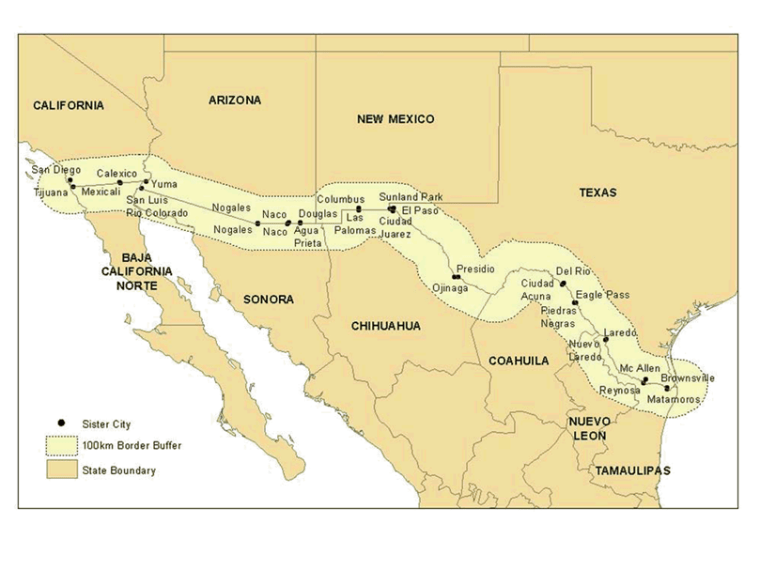
100-mile border region on the U.S.–Mexico border courtesy of the Environmental Protection Agency / Public Domain
“A crude age. Peace is stabilized with cannon and bombers, humanity with concentration camps and pogroms. We’re living in a time when all standards are turned upside-down, Kern. Today the aggressor is the shepherd of peace, and the beaten and hunted are the troublemakers of the world. What’s more, there are whole races who believe it!” Erich Maria Remarque, Flotsam
Climbing the Mexico–United States barrier fence in Brownsville, Texas courtesy of Nofx221984 and generously released into Public Domain
PEN America issued the statement [below] in response to The Washington Post’s report that the Trump Administration is blocking journalists from accessing migrant detention camps on the southern border to see the facilities for themselves and speak to children, who are reportedly held in squalid conditions.
“It is shocking that the American public largely must learn about the dangerous conditions at these detention centers not through reporters being able to cover the news, but through second-hand reports from lawyers and advocates granted access under a legal agreement with the U.S. border patrol,” said Nora Benavidez, PEN America’s Director of U.S. Free Expression Programs. “The fact that journalists are being sealed off and held behind a wall of secrecy, unable to show the American people the faces and voices of those who are suffering in squalor is one more unconscionable aspect to this epic horror story on the southern border.”
“Cutting the press off from this story to hide what is going on is unacceptable and unwarranted; professional journalists are well-equipped to handle issues of privacy and consent, and this should pose no barrier to press access. The American public has a right to see for themselves what is happening in these camps through first-hand accounts, images and video documented by professional journalists. Indeed, the fact that every story that does make it to a reporter galvanizes public attention and action demonstrates the importance of that reporting. PEN America calls on the Trump administration to open the camps to the scrutiny of the press–and thus, the American people–immediately, and end this effort to keep what is happening in the detention centers a secret.”
PEN America has previously spoken out and advocated about press access to migrant detention centers and the situation for journalists covering the immigration crisis on the border. In October 2018, it hosted a panel discussion at the Texas Book Festival entitled “Stories (Un)told,” featuring journalists speaking to the challenges of covering child detention issues and immigration more broadly. Following months of tracking and public comments on the situation of lawyers and journalists being surveilled at the southern U.S.-Mexico border, PEN America joined a coalition of human rights and media freedom organizations in sending an open letter to the Department of Homeland Security in May, 2019, expressing concern for the privacy violations and explicit targeting by Customs and Border Protection of journalists, activists, and lawyers working on issues around the “migrant caravan”. Following our letter, the Department of Homeland Security acknowledged it had engaged in the surveillance and tracking of these individuals. PEN America has also condemned the unacceptable practice of the government’s surveillance of journalists reporting on this issue and authored a petition urging the administration to stop monitoring journalists at the border. That petition has garnered more than 58,000 signatures to date.
*****
PEN America stands at the intersection of literature and human rights to protect open expression in the United States and worldwide. It champions the freedom to write, recognizing the power of the word to transform the world. Its mission is to unite writers and their allies to celebrate creative expression and defend the liberties that make it possible.
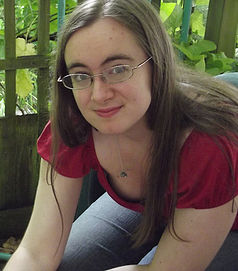
From Kella Hanna-Wayne, poet, blogger, activist
“Today, I read something terrible; a story that possibly upset me more any other news story from our current administration and it filled me with helplessness.
“Over the past year, Trump’s immigration policies have become increasingly strict and dehumanizing. Detention centers, separation of families without keeping records, poor hygiene, inadequate access to food, water, and medical attention, children in cages– these were all themes among reports of the horrifying conditions our government was signing off on for immigrants, regardless of their documentation.
“But in the last week, it came to light that not only is Trump using Fort Sill– the base used to hold Japanese-Americans in concentration camps during WWII– to hold immigrant children, but that our government is now using concentration camps as a strategy to manage the influx in immigrants coming to the US. “
Kella goes on from these introductory remarks to provide a comprehensive list of tips and resources: What You Can Do to Close the Camps. I particularly appreciate it when folks don’t just regurgiate the bad news we’re all reading anyway but who go on to provide tools for mitigating the travesties. Bravo, Kella!
Stay tuned for a comprehensive interview with Kella here on The Poet by Day.
Recent in digital publications:
* Four poems , I Am Not a Silent Poet * Remembering Mom, HerStry
* Three poems, Levure littéraire Upcoming in digital publications: * Over His Morning Coffee, Front Porch Review * From the Small Beginning, Entropy Magazine (Enclave, #Final Poems)
A mostly bed-bound poet, writer, former columnist and the former associate editor of a regional employment newspaper, my work has been featured widely in print and digital publications including: Ramingo’s Porch, Vita Brevis Literature, Connotation Press,The Bar None Group, Salamander Cove,I Am Not a Silent Poet, Meta/ Phor(e) /Play, The Compass Rose and California Woman. I run The Poet by Day, a curated info hub for poets and writers. I founded The Bardo Group/Beguines, a vitual literary community and publisher of The BeZineof which I am the founding and managing editor.
“Every pair of eyes facing you has probably experienced something you could not endure.” Lucille Clifton
Thank you for sharing your love of words. Comments will appear after moderation.
Simon Armitage (b. 1963) English poet, playwright, novelist, and DJ. Photo courtesy of Alexander Williamson under CC BY – 2.0 License
“It’s never going to be very mainstream. One reason is that poetry requires concentration, both on the part of the writer and the reader. But it’s kind of unkillable, poetry. It’s our most ancient artform and I think it’s more relevant today than ever, because it’s one person saying what they really believe.” Simon Armitage
Last month saw poet, playwright, novelist, and DJ Simon Armitage‘s appointment as Poet Laureate, U.K. succeeding Scots poet Carol Ann Duffy. The term of the appointment is ten years.
.
Productive and versital, Armitage’s poetry collections include Book of Matches (1993) and The Dead Sea Poems (1995). He has written two novels, Little Green Man (2001) and The White Stuff (2004), as well as All Points North (1998), a collection of essays on Northern England. He produced a dramatised version of Homer’s Odyssey (2006) and a collection of poetry entitled Tyrannosaurus Rex Versus The Corduroy Kid (2006), which was shortlisted for the T.S. Eliot Prize. Many of Armitage’s poems appear in the Assessment and Qualifications Alliance GCSE syllabus for English Literature in the United Kingdom. These include Homecoming, Extract from Out of the Blue, November, Kid, Hitcher, and a selection of poems from Book of Matches, most notably of these Mother any distance…. His work also appears on CCEA’s GCSE English Literature course.
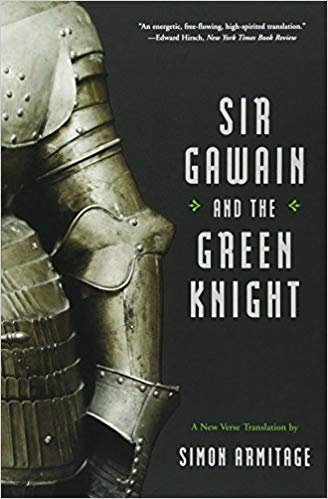
Armitage work is characterised by a dry Yorkshire wit combined with “an accessible, realist style and critical seriousness.” His translation of Sir Gawain and the Green Knight (2007), was adopted for the ninth edition of The Norton Anthology of English Literature and he was the narrator of a 2010 BBC documentary about the poem and its use of landscape.
.
Armitage also writes for radio, television, film and stage. He is the author of five stage plays, including Mister Heracles, a version of Euripides‘ The Madness of Heracles. The Last Days of Troy premiered at Shakespeare’s Globe in June 2014. He was commissioned in 1996 by the National Theatre in London to write Eclipse for the National Connections series, a play inspired by the real-life disappearance of a girl in Hebden Bridge, and set at the time of the 1999 solar eclipse in Cornwall.
.
Most recently Armitage wrote the libretto for an opera scored by Scottish composer Stuart MacRae, The Assassin Tree, based on a Greek myth recounted in The Golden Bough. The opera premiered at the 2006 Edinburgh International Festival, Scotland, before moving to the Royal Opera House, Covent Garden, London. Saturday Night (Century Films, BBC2, 1996): he wrote and narrated a fifty-minute poetic commentary to a documentary about night-life in Leeds, directed by Brian Hill. In 2010, Armitage walked the 264-mile Pennine Way, walking south from Scotland to Derbyshire. Along the route he stopped to give poetry readings, often in exchange for donations of money, food or accommodation, despite the rejection of the free life seen in his 1993 poem Hitcher, and has written a book about his journey, called Walking Home.
.
He has received numerous awards for his poetry, including The Sunday Times Author of the Year, a Forward Prize, a Lannan Award, and an Ivor Novello Award for his song lyrics in the Channel 4 film Feltham Sings. Kid and Cloud Cuckoo Land were short-listed for the Whitbread poetry prize. The Dead Sea Poems was short-listed for the Whitbread, the Forward Poetry Prize and the T. S. Eliot Prize. The Universal Home Doctor was also short-listed for the T.S. Eliot. In 2000, he was the UK’s official Millennium Poet and went on to judge the 2005 Griffin Poetry Prize, the 2006 Man Booker Prize for Fiction and the 2010 Manchester Poetry Prize.
.
In 2004, Armitage was elected a Fellow of the Royal Society of Literature and was appointed Commander of the Order of the British Empire (CBE) in the 2010 Birthday Honours. He is a vice president of the Poetry Society and a patron of the Arvon Foundation.
.
In 2007 Armitage released an album of songs co-written with the musician Craig Smith, under the band name The Scaremongers.
.
For the Stanza Stones Trail, which runs through 47 miles (76 km) of the Pennine region, Armitage composed six new poems. With the help of local expert Tom Lonsdale and letter-carver Pip Hall, the poems were carved into stones at secluded sites. A book, containing the poems and the accounts of Lonsdale and Hall, was produced as a record of that journey and was published by Enitharmon Press.
.
In 2016 the arts program 14-18 NOW commissioned a series of poems by Simon Armitage as part of a five-year program of new artwork created specifically to mark the centenary of the First World War. The poems are a response to six aerial or panoramic photographs of battlefields from the archive of the Imperial War Museum in London. The poetry collection “Still” premiered at the Norfolk & Norwich Festival and has been published in partnership with Enitharmon Press.
“Prose fills a space, like a liquid poured in from the top, but poetry occupies it, arrays itself in formation, sets up camp and refuses to budge.” Simon Armitage, Walking Home: A Poet’s Journey
Simon Armitage Amazon Page U.K. HERE
Simon Armitage Amazon Page U.S. HERE
Schedule of upcoming events HERE
Armitage official website HERE
This post is courtesy of The Poetry Society, Wikipedia, Amazon, Armitage website, and my bookshelf
****
The Poetry Society is the UK’s national organisation for poety. It was founded in 1906 to promote a “more general recognitions and appreciation of poetry.” Since then, it has grown into one of Britain’s most dynamic arts organisations, representing British poetry both nationally and internatonally with innovative education and commission programs and a packed calendar of performances, readings and competitions, the Poetry Society champions poetry for all ages. It publishes the leading U.K. poetry magazine, The Poetry Review. The Poetry Society also runs the National Poetry Competitions, the Foyle Young Poets of the Year Award and the youth performance poetry championship SLAMbassadors U.K. The U.K. has been consistant in its support of poetry and poets through its Poet Laureate progam beginning in 1668 with John Dryden.
Recent in digital publications:
* Four poems , I Am Not a Silent Poet * Remembering Mom, HerStry
* Three poems, Levure littéraire Upcoming in digital publications: Over His Morning Coffee, Front Porch Review From the Small Beginning, Entropy Magazine (Enclave, #Final Poems)
A homebound writer, poet, and former columnist and associate editor of a regional employment newspaper, my work has been featured widely in print and digital publications including: Ramingo’s Porch, Vita Brevis Literature, Connotation Press,The Bar None Group, Salamander Cove, I Am Not a Silent Poet, The Compass Rose and California Woman. I run The Poet by Day, a curated info hub for poets and writers and am the founding/managing editor of The BeZine.
“Every pair of eyes facing you has probably experienced something you could not endure.” Lucille Clifton
Thank you for sharing your love of words. Comments will appear after moderation.
Harjo at “Legacies: A Conversation with Sandra Cisneros, Rita Dove, and Joy Harjo”, 2017 courtesy of Gage Skidmore under CC BY-SA 2.0
“I can hear the sizzle of newborn stars, and know anything of meaning, of the fierce magic emerging here. I am witness to flexible eternity, the evolving past, and I know we will live forever, as dust or breath in the face of stars, in the shifting pattern of winds.”Joy Harjo, Secrets from the Center of the World
I don’t think I’ve seen Laureate news spread as quickly as this announcement today by the Librarian of Congress Carla Hayden: that is, the appointment of Joy Harjo as the nation’s 23rd Poet Laureate Consultant in Poetry for 2019-2020. Harjo will take up her duties in the fall, opening the Library’s annual literary season on Sept. 19 with a reading of her work in the Coolidge Auditorium.
Harjo is the first Native American poet to serve in the position – she is an enrolled member of the Muscogee Creek Nation. She succeeds Tracy K. Smith, who served two terms as laureate.
“Joy Harjo has championed the art of poetry – ‘soul talk’ as she calls it – for over four decades,” Hayden said. “To her, poems are ‘carriers of dreams, knowledge and wisdom,’ and through them she tells an American story of tradition and loss, reckoning and myth-making. Her work powerfully connects us to the earth and the spiritual world with direct, inventive lyricism that helps us reimagine who we are.”
Harjo currently lives in her hometown of Tulsa, Oklahoma, and is also the nation’s first Poet Laureate from Oklahoma.
Poet Laureate of the United States Joy Harjo, June 6, 2019. Photo by Shawn Miller, Library of Congess
“What a tremendous honor it is to be named the U.S. Poet Laureate,” Harjo said. “I share this honor with ancestors and teachers who inspired in me a love of poetry, who taught that words are powerful and can make change when understanding appears impossible, and how time and timelessness can live together within a poem. I count among these ancestors and teachers my Muscogee Creek people, the librarians who opened so many doors for all of us, and the original poets of the indigenous tribal nations of these lands, who were joined by diverse peoples from nations all over the world to make this country and this country’s poetry.”
Harjo joins a long line of distinguished poets who have served in the position, including Juan Felipe Herrera, Charles Wright, Natasha Trethewey, Philip Levine, W.S. Merwin, Kay Ryan, Charles Simic, Donald Hall, Ted Kooser, Louise Glück, Billy Collins, Stanley Kunitz, Robert Pinsky, Robert Hass and Rita Dove.
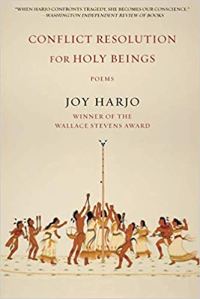
Harjo was born in Tulsa, Oklahoma, on May 9, 1951, and is the author of eight books of poetry – including “Conflict Resolution for Holy Beings”(W. W. Norton, 2015); “The Woman Who Fell From the Sky” (W. W. Norton, 1994), which received the Oklahoma Book Arts Award; and “In Mad Love and War” (Wesleyan University Press, 1990), which received an American Book Award and the Delmore Schwartz Memorial Award. Her next book of poems, “An American Sunrise,” will be published by W.W. Norton in fall 2019. Harjo has also written a memoir, “Crazy Brave” (W.W. Norton, 2012), which won the 2013 PEN Center USA literary prize for creative nonfiction, as well as a children’s book, “The Good Luck Cat” (Harcourt, Brace 2000) and a young adult book, “For a Girl Becoming” (University of Arizona Press, 2009).
As a performer, Harjo has appeared on HBO’s “Def Poetry Jam” and in venues across the U.S. and internationally. In addition to her poetry, Harjo is a musician. She plays saxophone with her band, the Arrow Dynamics Band, and previously with Poetic Justice, and has released four award-winning CDs of original music. In 2009, she won a Native American Music Award (NAMMY) for Best Female Artist of the Year.
Harjo’s many literary awards include the PEN Open Book Award, the American Indian Distinguished Achievement in the Arts Award, the New Mexico Governor’s Award for Excellence in the Arts and the Arrell Gibson Lifetime Achievement Award from the Oklahoma Center for the Book. Harjo has received fellowships from the Guggenheim Foundation, the Witter Bynner Foundation, and the National Endowment for the Arts. Her collection “How We Become Human: New and Selected Poems 1975-2001” (W.W. Norton, 2002) was selected by the National Endowment for the Arts for its Big Read program. Her recent honors include the Jackson Prize from Poets & Writers (2019), the Ruth Lilly Poetry Prize from the Poetry Foundation (2017) and the Wallace Stevens Award from the Academy of American Poets (2015). In 2019, she was elected a Chancellor of the Academy of American Poets.
Harjo has taught at UCLA and was until recently a professor and chair of excellence at the University of Tennessee, Knoxville. She has returned to her hometown where she holds a Tulsa Artist Fellowship.
This post compiled courtesy of the U.S. Library of Congress, Wikipedia, Amazon, and my personal library.
About the Laureateship
The Library of Congress Poetry and Literature Center is the home of the Poet Laureate Consultant in Poetry, a position that has existed since 1937, when Archer M. Huntington endowed the Chair of Poetry at the Library. Since then, many of the nation’s most eminent poets have served as Consultant in Poetry to the Library of Congress and, after the passage of Public Law 99-194 (Dec. 20, 1985), as Poet Laureate Consultant in Poetry – a position that the law states “is equivalent to that of Poet Laureate of the United States.”
During his or her term, the Poet Laureate seeks to raise the national consciousness to a greater appreciation of the reading and writing of poetry. The Library keeps to a minimum the specific duties required of the Poet Laureate, who opens the literary season in the fall and closes it in the spring. In recent years, Laureates have initiated poetry projects that broaden the audiences for poetry.
For more information on the Poet Laureate and the Poetry and Literature Center, visit loc.gov/poetry. Consultants in Poetry and Poets Laureate Consultants in Poetry and their terms of service can be found at loc.gov/poetry/laureate.html.
The Library of Congress is the world’s largest library, offering access to the creative record of the United States – and extensive materials from around the world – both on site and online. It is the main research arm of the U.S. Congress and the home of the U.S. Copyright Office. Explore collections, reference services and other programs and plan a visit at loc.gov, access the official site for U.S. federal legislative information at congress.gov, and register creative works of authorship at copyright.gov.
Recent in digital publications:
* Four poems , I Am Not a Silent Poet * Remembering Mom, HerStry
* Three poems, Levure littéraire Upcoming in digital publications: Over His Morning Coffee, Front Porch Review
A homebound writer, poet, and former columnist and associate editor of a regional employment newspaper, my work has been featured widely in print and digital publications including: Ramingo’s Porch, Vita Brevis Literature, Connotation Press,The Bar None Group, Salamander Cove, I Am Not a Silent Poet, The Compass Rose and California Woman. I run The Poet by Day, an info hub for poets and writers and am the founding/managing editor of The BeZine.
“Every pair of eyes facing you has probably experienced something you could not endure.” Lucille Clifton
Thank you for sharing your love of words. Comments will appear after moderation.
I’ve read Michael’s collection and will post a review, interview, and some sample poems shortly, meanwhile NOWIS THE TIME TO PRE-ORDERMichael Dickel’s title, Nothing Remembers.
.
Advanced praise:
.
“He raises the question of whether the past can be preserved in memory, or whether memory is most effective in the face of loss. Either way, what does the past leave us, who are we with or without the past, and if poetry can occasionally fill gaps in our present, what if anything can it give us of our past? Is poetry anything at all — or is it nothing at all, and is the nothing of poetry the best memorialization? Dickel’s sensory, sensual, musical lyric roves across wet and dry landscapes, food and drink, family and friends, darkness and light, sleep and wakefulness, dreams and reality. His words hover between his homes in the Mideast and the American Midwest, conveying the fragility of present and past, enacting a memory at high risk of loss, maintaining faith against staggering odds. Nothing Remembers is a dream of peace, the peace that may come if and when persons and peoples live in a present comfortable with close and distant memory.
–Hassan Melechy, author of Kerouac: Language, Poetics, and Territory (Bloomsbury) and A Modest Apocalypse (Eyewear)
.
Michael Dickel combines powerful imagery and poetic beauty with a reality beneath life’s skin, that will gently shake the reader into an awareness, refreshing and engaging. He will take you through his pages to a ‘resting state’ where possibilities in your mind will feel endless.
–Silva Merjanian, author of Life and Legends
.
Between knowing and dreaming, shattered screams, pulses, shadows and longing, Michael Dickel’s arresting fourth collection, Nothing Remembers, navigates an erotics of re-membrance renegotiating a Proustian ethos of things resonant, prescient, and the ghostly revenance of hope.
–Adeena Karasick, author of Salomé: Woman of Valor
.
“I know so many wildly talented writers. It is one of the great privileges in my life. Michael Dickel is one of them: he uses language like layers of color in a complex painting — you can access experiences that you otherwise wouldn’t have. I’ve just preordered his upcoming collection, Nothing Remembers, from Finishing Line Press; poetry lovers, this is worth having.”
–Ina Roy-Faderman, author of 56 Days of August: an anthology of postcard poems
Recent in digital publications:
* Four poems , I Am Not a Silent Poet * Remembering Mom, HerStry
* Three poems, Levure littéraire Upcoming in digital publications: Over His Morning Coffee, Front Porch Review
A homebound writer, poet, and former columnist and associate editor of a regional employment newspaper, my work has been featured widely in print and digital publications including: Ramingo’s Porch, Vita Brevis Literature, Connotation Press,The Bar None Group, Salamander Cove, I Am Not a Silent Poet, The Compass Rose and California Woman. I run The Poet by Day, an info hub for poets and writers and am the founding/managing editor of The BeZine.
“Every pair of eyes facing you has probably experienced something you could not endure.” Lucille Clifton
Thank you for sharing your love of words. Comments will appear after moderation.

 From Kella Hanna-Wayne, poet, blogger, activist

 Armitage work is characterised by a dry Yorkshire wit combined with “an accessible, realist style and critical seriousness.” His translation of Sir Gawain and the Green Knight (2007), was adopted for the ninth edition of The Norton Anthology of English Literature and he was the narrator of a 2010 BBC documentary about the poem and its use of landscape.


 Harjo was born in Tulsa, Oklahoma, on May 9, 1951, and is the author of eight books of poetry – including “Conflict Resolution for Holy Beings” (W. W. Norton, 2015); “The Woman Who Fell From the Sky” (W. W. Norton, 1994), which received the Oklahoma Book Arts Award; and “In Mad Love and War” (Wesleyan University Press, 1990), which received an American Book Award and the Delmore Schwartz Memorial Award. Her next book of poems, “An American Sunrise,” will be published by W.W. Norton in fall 2019. Harjo has also written a memoir, “Crazy Brave” (W.W. Norton, 2012), which won the 2013 PEN Center USA literary prize for creative nonfiction, as well as a children’s book, “The Good Luck Cat” (Harcourt, Brace 2000) and a young adult book, “For a Girl Becoming” (University of Arizona Press, 2009).
 A homebound writer, poet, and former columnist and associate editor of a regional employment newspaper, my work has been featured widely in print and digital publications including: Ramingo’s Porch, Vita Brevis Literature, Connotation Press, The Bar None Group, Salamander Cove, I Am Not a Silent Poet, The Compass Rose and California Woman. I run The Poet by Day, an info hub for poets and writers and am the founding/managing editor of The BeZine.
 I’ve read Michael’s collection and will post a review, interview, and some sample poems shortly, meanwhile NOW IS THE TIME TO PRE-ORDER
 Jamie Dedes' THE POET BY DAY Webzine