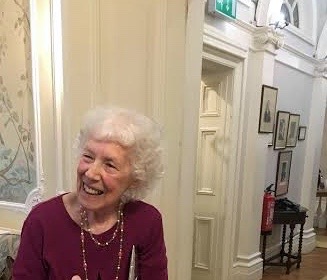
English Poet Myra Schneider at her 80th Birthday celebration and the launch of her 12th collection
for Anne Cluysenaar
A honey sun, the cease of gnawing wind
so we seize the day, unleash ourselves
in the country park, gaze at flowers inscribed To Dad
lying on a bench. They summon a huge bee
to their pink and yellow freesia bells. Dreamily,
I too enter the nectar-laden chambers and feed.
Turning away, we follow the droghte of March track
to the water garden where snowdrops are fading,
daffodils are on the brink of opening
and expectation’s in bloom on naked trees.
Welters of lily stalks in the darks of a pond
are tangles of umbilical cords. Beyond the garden,
beyond the singing of birds is a lake which glitters
as if it’s a source of light. We sit down
on a wicker seat and there you are breathing
in the budding warmth, freed from the last
of October now and that distressed message
you sent before your life was snatched.
You’re stooping over a small plant, stroking
its leaves, tracking the hover-rise of a damsel-fly,
smiling as you follow all the riverlets.
– Myra Schneider
The First of Spring is taken from Myra’s twelfth poetry collection, Persephone in Finsbury Park, which was published last month by Second Light Publications. It is available from poet Anne Stewart’s p f poetry site. The site is set up with PayPal, so it works well if you are making a purchase from outside of England. I haven’t read the collection yet, but Myra never disappoints.
Over there
all that happened
(and didn’t happen)
folded
packed in mental mothballs
stories fading with licked creases
some reduced and softer versions
wonder why I preserve breaths
forced through my lungs in those days
stringed around the eye of a hurricane
circling, demonic, nameless
shaking me shameless for a day
on nights when a collective sigh stings
and I can’t tell
which tale will toll for me
and which nocturnal howl
will lift the dust
through endless times
relive slivers
on a pink tip of my tongue
afraid to bite a dreamt memory
that it might hemorrhage
bleed the night
I want a dripping whiff of that afternoon coffee
instinctively bitter, solemnity and hot
ten minutes when lonely hearts
willed an arching cease fire
and time hovered among us
long enough for my mother
to build castles in my cup
over there
the man flying his doves
on the roof across two streets
remains a blur
but the doves stirring the air
in perfect shades of unison
(I had named them after heroes long forgot)
sometimes still raise dust in my room
of their feathers’ aches and plight
I believed then
I could break away
would break away
I did one day
the doves were left to die
over there
at dusk my father played the mandolin
and my mother’s voice filled all the gaps
between our breaths –
the dam that held surpluses of war
long enough for us to shed in dreams
why do I long for hell
on nights
when I can’t sieve my sigh from the wind’s eye
and I wonder if I ever broke away
from a circle named dead doves
perhaps
scent of jasmine
still smells like home
back home in the rain
Excerpt from the 2015 collection, Rumor, reviewed and published along with an interview of Silva Merjanian HERE. Beirut is published today with the permission of the poet and is under copyright.
Thank you for sharing your love of words. Comments will appear after moderation.
What happiness that today
I can be “open and confident”
Though normally I would hide
in the safety of feigned ignorance,
feign joy, pretend
that I can see my clear sky
in spite of his clouds
Respectfully, I provide the detail requested …
The year is 2016
The month, January
This the first Wednesday
The hour is 6 a.m.
now that i am getting to know you,
now that i am chest-high in your poesy
it’s your time that interests me ……….1902 ~
You were birthday twins, Nazim
You and my mysterious father,
born the same year, into the same culture,
spent your youth in that turmoil
If I study you, Nazim, will I find him, my diffident father,
in the dissident roots of your Turkish sensibility ~
they said he left with a price on his head
only to be caught, chained, imprisoned
in America, between a lover and a wife, ……….strong women . . . ………………..well, at least stronger than he
Hello Nazim!
I say “Hello!” gleefully ……….without a wink
I think we could have been perfect friends
that we might have understood each other ……….Hello! to you and your poetry ……………….Hello Nazim, Hello!
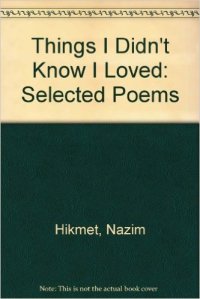
Note: My father and Nazim Hikmet would have come of age just as WW I (1914-1918) was ending and the Turkish War of Independence (1919-1923) was beginning. Hikmet (1902-1963) was a renown poet, playwright and novelist, a communist and a revolutionary who spent his life in and out of jail. He won the International Peace Prize in 1950. My father (1902-1977) was a furrier. I didn’t know him well and saw him only two or three times a year, always at his office. This poem is after Hikmet’s Hello Everybody from Things I Didn’t Know I Loved.
brown eyes
we took the subway to meet you,
the train screeching like a warning omen,
rocketing me heart-first into destiny;
mom wore her best mended gloves,
had me in my sunday dress, hem let-down,
you came in a cashmere coat, a felt
stingy-brimmed fedora, leather gloves
there was some to-do over coffee or tea,
hot chocolate for me and a red balloon;
you examined my face, shook your head,
your brown eyes looked into mine, No!
you said, beautiful child, not mine
you turned away then, a chimera
floating down a city street …
now and again over time
you looked back; but your denial drew
life from mom, stole my red balloon,
tossed it up in your wake; i watched, daddy,
watched you with your warm cashmere coat,
your wife, two sons and those brown eyes,
they stare back at me from my mirror, No! they say, but you were never quite sure
your mother
a tattered memoir in sepia tones
hanging on the wall of your office
a tiny plump sparrow of a woman
by a lone stone cottage
toothless, poor old thing
a warm shawl pulled to cover her head
an apron, worn shoes
from a time long past
from another world
my Turkish grandmother
what was her name?
you never said
i never asked
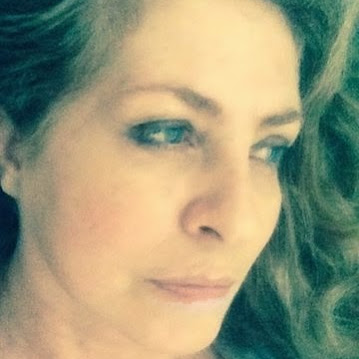
Silva Zanoyan Merjanian is an Armenian ethnic who was born in Lebanon. She escaped the civil war there and lived for a time in Geneva, ultimately settling to build a family life in California. Silva has two published collections. Most recently Rumor (Cold Water Press, 2015), which received the Best Book Award from NABE in the 2015. Three poems from Rumor were nominated for a Pushcart Prize. Silva’s first collection is Uncoil a Night (CreateSpace, 2013).
Falling
In rind of wishes sticky on lips
and sermons’ echo on facepsalms slipping
in envies squirted on spruce and cedar
whims twirling, spiraled, speckled
gossamer visions of friendships withered
in crevices of an upbeat mien
Your name hidden in prayer embers
I mend among buds of poems
flying on a trapeze
with no one at the other end
Rumor is a stunning tour de force of passionate, life-affirming poetry. Silva Merjanian evokes time and place with both grace and authority. Poetry is obviously a tool for her own healing and in that she brings us face to face with the human condition in all its complexity, beautiful and loving and devastating cruel, and she does so totally without pretension.
Mornings arriving
Me alone
Poems half written and done
Poems between toes and toast
‘Round Midnight and Monk
Nostalgia
Right reasons
Brave decisions
Thoughts that glow in the light
Just love
Always, in absence of rats and such
fresh sheets and I
between over and under
from Between the Sheets
She writes with immediacy of war:
bounce of gold crosses between breasts
colorful hijabs ’round others’ bare face
friendships seeded in borrowed sugar, borrowed time
she, unaware of borrowed wailers on their way
makes plans on a sunny balcony as she hangs
her blue jeans on a clothesline
moments before war drums ripple through crisp calm
from Borrowed Sugar Borrowed Time
INTERVIEW
JAMIE:Silva, Rumor is a remarkable collection with many poems that stay with one. It’s also quite generous of you to donate proceeds to the Syrian-Amenian Relief Fund (SARF). How are sales going and how is the fundraising?
SILVA: Thank you Jamie. I did not have an event or a formal fundraising with Rumor. The sales were a result of readings, speeches, word of mouth and some ads in newspapers and on Facebook. In July there will be an ad for it in Poets & Writers and it will also be included in five book fairs this summer.
My publisher, Dave Boles of Cold River Press, will release the e-book version soon. He is kind enough to donate all proceeds from the e-book also to the SARF. So with all these developments I expect a boost in sales.
JAMIE:When did you fall in love with poetry? When did you realize you are a poet?
SILVA: I am a late bloomer. I started writing in 2011 and my first book was released in 2013. Even though we grew up with the poetry of Shakespeare, Keats, etc.. and many Armenian poets, the thought of writing poetry hadn’t occurred to me. My education is in Business Administration not Fine Art. It was almost like catching the bug of poetry, very unexpected, once I started writing I couldn’t stop. I didn’t write to be published at first, it was just for the pleasure of it, later when I saw friends publishing books, the idea came to me to publish and make it count for something by donating the proceeds.
JAMIE:What are the reactions to your work that surprise you most?
SILVA: I didn’t expect the level of appreciation for my poetry that I received. Especially from those who themselves write and/or are well read in poetry. I have to thank the Irish first for this recognition. They have such talented poets and they recognized my potential first.
I also didn’t expect the difficulty to be accepted as a writer in the Armenian community. It was almost like they waited for me to be respected in the foreign circles before they’d acknowledge me, instead of reading my work and appreciating it themselves. I am disappointed in that respect.
JAMIE:Tell us something about your travels: How did your family arrive in Lebanon and why did they move from there. How did you end up in the U.S.?
SILVA: My grandparents had to flee their homes twice, trying to survive the Armenian Genocide. If you are familiar with the book The Forty Days of Musa Dagh by Austrian -Bohemian writer Franz Werfel, first published in German in 1933, it is the story of my grandparents. The French helped the population of seven villages escape and relocate as refugees in the Bekaa Valley in Lebanon. So my grandparents did live under refugee tents for a whole year. Now the area is a buzzing town with three churches and schools and commerce.
I left Lebanon after experiencing eight years of the civil war*. Geneva was the city I healed from the war scars. Later I settled in California to raise my sons with my husband.
JAMIE: What do you think most Westerners don’t understand about the Middle East? What do you know and understand that you would like everyone to know?
SILVA: What most don’t understand about Lebanon, and to a degree parts of the Middle East, is that the vast majority of the people are just the nicest fun loving, peace loving, hard working families. They want for their children everything an American family wants. The number of innocent people who are collateral damage to the events in that part of the world is just heartbreaking.
JAMIE:I understand that your brother is a novelist. Does your family have a history of poets and writers?
SILVA: My brother has two volumes of poetry in Armenian. He is writing his third novel. I am not aware of anyone else in my family who has published books, except a volume of translations by my father.
JAMIE: You have two well-received collections completed. Where to now?
SILVA: That’s a question I’ve been asking myself. I think I will keep writing and hope a third book will be in the future for me.





 Jamie Dedes' THE POET BY DAY Webzine