I think what gets a poem going is an initiating line. Sometimes a first line will occur, and it goes nowhere; but other times – and this, I think, is a sense you develop – I can tell that the line wants to continue. If it does, I can feel a sense of momentum – the poem finds a reason for continuing.”
Billy Collins’ poetry is profound, bazaar or tenderhearted observation expressed with wit; the ordinary expressed in the most extraordinary ways. We love this former U.S. Poet Laureate from New York.
If you are reading this post in an email, please click on the link to the blog in order to view the video.
Thank you for sharing your love of words. Comments will appear after moderation.
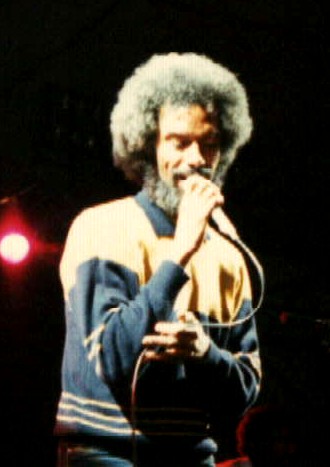
Gill Scott-Heron (1949-2011), American jazz poet, spoken-word poet, musician and author
All I really want to say Is that the problems come and go But the sunshine seems to stay
Gil Scott-Herondied around this time in 2011. He’d started out fiery and angry. Some will remember his forceful The Revolution Will Be Televised and other such works. He was always an artist of political integrity. It showed in actions such as refusing to perform in Tel Aviv because “we do not like wars.” Over time his style mellowed, but his ideals remained.
Gil Scott-Heron is considered by many to be the grandfather of rap and the father of political rap. Famously, he didn’t accept those titles; he was critical of young rappers, felt they needed to study more, to promote change and not perpetuate the status-quo. He is quoted in ChickenBones: A Journalas saying …
They need to study music. I played in several bands before I began my career as a poet. There’s a big difference between putting words over some music, and blending those same words into the music. There’s not a lot of humor. They use a lot of slang and colloquialisms, and you don’t really see inside the person. Instead, you just get a lot of posturing.”
In the poem shared today (sent to me by my son on Mother’s Day, 2011) it’s interesting to see what Heron does with his personal experience. I like that there’s nothing of the victim mentality in this piece. I like the way he talks of dealing with life as it is. I appreciate that he points out that single-parent homes are not always the result of abandonment but are often made so due to parents who were lost in war or in jobs as police officers, firefighters or pilots.
They lost their lives, but not what their lives stood for.”
On Coming From a Broken Home (video below) is a good example of how art can explain, validate and give us new perspectives … perhaps even encourage us to talk with one another. The piece is from Gil Scott-Heron’s last studio album, I’m New Here.It came out in 2010 not long before he died.
As always if you are viewing this post from an email, you will have to click on the link to this site to see and hear the piece.
header photograph/Heron at the WOMARD festival in Bristol England, 1988 by Robman94 under CC BY SA 2.0 license.
Thank you for sharing your love of words. Comments will appear after moderation.
Taylor McDowell Mali (b. 1965) is an American slam poet, humorist, teacher, and voiceover artist.
Taylor Mali’s career in poetry evolved out of the slam poetry movement. He is a native New Yorker and taught school for nine years at Browning School for Boys (Manhattan) and Cape Cod Academy (Massachusetts). Currently, he travels the world facilitating workshops for teachers and students. He is a dedicated supporter of teachers and he says that through his New Teacher Project he hopes to attract 1,000 people into education through “poetry, persuasion, and perseverance.”
What follows is a video of Taylor Mali performing his poem, What Teachers Make? (You’ll note Billy Collins sitting side-stage.)
If you are viewing this post from an email, you will have to link through to the site to watch the video. You can read the text of the poem HERE.
portrait: Taylor Mali at the international school in Stockholm.by Emil Brikha under CC BY-2.0 license
Thank you for sharing your love of words. Comments will appear after moderation.
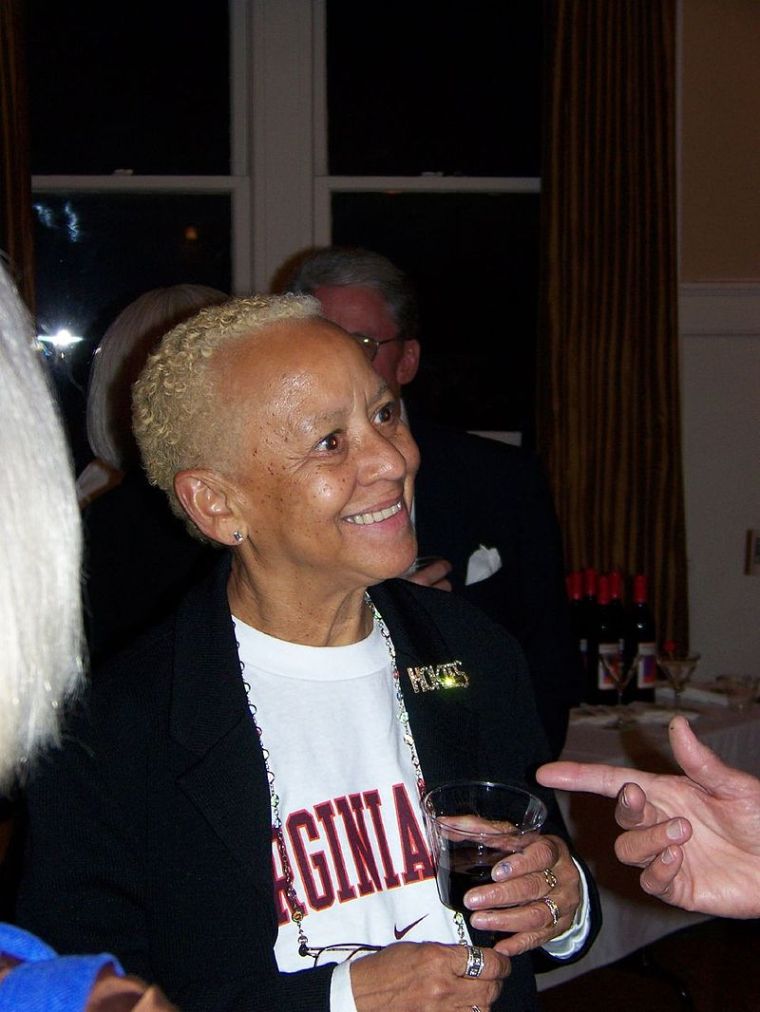
Nikki Giovanni (1943), American poet, writer, activist and educator
Everyone deserves Sanctuary a place to go where you are
safe
Art offers Sanctuary to everyone willing
to open their hearts as well as their lives”
excerpt for Art Sanctuary in Quilting the Black-Eyed Pea, poems and not quite poems
Nikki Giovanni is lauded as iconic, luminous, adventuresome and courageous. She is all of these, but I think what I like most about her is that she is straight-forward, practical and compassionate. These characteristics are the underpinning that make her a rather extraordinary poet, a powerful combination of visceral and intellectual.
There is always something to do. There are hungry people to feed, naked people to clothe, sick people to comfort and make well. And while I don’t expect you to save the world I do think it’s not asking too much for you to love those with whom you sleep, share the happiness of those whom you call friend, engage those among you who are visionary and remove from your life those who offer you depression, despair and disrespect.”
Nikki Giovanni first came to note in the late ’60s and early ’70s as part of the Civil Rights, Black Arts and Black Power movements. The strength of her voice punctuated our poetic and political world and she has written, taught and advocated for uncommon good sense ever since. As with all of us, she has many roles in life including daughter, mother, friend and lung cancer survivor. It is clear in her work that she values family and community and supports and encourages these values in others.
Ms. Giovanni was born in Knoxville, Tennessee. She earned her undergraduate degree in history with honors at Fisk University and did her graduate work at the University of Pennsylvania and Columbia University. Her knowledge of history richly informs her perspectives in poetry, essay and talk. She taught at several universities including Virginia Tech and was at Virginia Tech for the shooting by Seung-Hui Cho in 2007 when he murdered thirty-seven people. Cho was a student in her poetry class. She sensed something was amiss with him and asked the authorities to remove him from her class. After the shooting, she spoke at the convocation.
We know we did nothing to deserve it. But neither does a child in Africa dying of AIDS. Neither do the invisible children walking the night awake to avoid being captured by a rogue army. Neither does the baby elephant watching his community being devastated for ivory. Neither does the Mexican child looking for fresh water….We are Virginia Tech….We will prevail.”
This video is the first of two in this post. If you are reading from an email subscription, you will have to link through to the site to view the videos.
Ms Giovanni’s early writing was a response to the assassinations of Martin Luther King, Jr., John and Robert Kennedy, and Medgar Evans. Her first book (1968)Black Feeling, Black Talk/Black Judgementis considered by some to be the one of the most important books on the black-rights movement. Younger people reading it will want to research the history of the era to put the book in context.
Ms. Giovanni has written some twenty-one books of poetry as well as autobiography and children’s books. She’s edited anthologies and collaborated on books with James Baldwin and Margaret Walker. She’s won countless awards for both her work and her activism. The following video is a reading of Quilting the Black-Eyed Pea (We’re Going to Mars).
I want to be clear about this. If you wrote from experience, you’d get maybe one book, maybe three poems. Writers write from empathy.”





 Jamie Dedes' THE POET BY DAY Webzine