Page 152 of 183

CELEBRATING AMERICAN SHE-POETS (14): Mary Oliver, “I got saved by poetry. I got saved by the beauty of the world.”
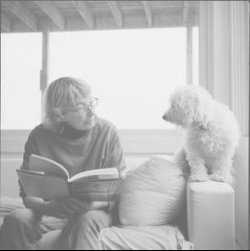
Mary Oliver (b. 1935)
Poet & Essayist Mary Oliver (b. 1935)

I love the line of Flaubert about observing things very intensely. I think our duty as writers begins not with our own feelings, but with the powers of observing.

AWARDS: Mary Oliver’s fourth book, American Primitive, won the Pulitzer Prize for Poetry in 1984. She  received the Shelley Memorial Award; a Guggenheim Fellowship; an American Academy and Institute of Arts and Letters Achievement Award; the Christopher Award and the L.L. Winship/PEN New England Award for House of Light; the National Book Award for New and Selected Poems; a Lannan Foundation Literary Award; and the New England Booksellers Association Award for Literary Excellence.

When it’s over, I want to say: all my life I was a bride married to amazement. I was the bridegroom, taking the world into my arms.

How often we turn to certain poets for certain healing, to those greater “technicians of the sacred” (to borrow from Jerome Rothenberg): Jane Hirchfield for her gentle Buddhist sensibility, John O’Donohue for his lilting Celtic reflections, W.S. Merwin and his deep ecology. Not the least among the greater technicians is Mary Oliver. Our hunger for spiritual healing is underscored by her popularity. The New York Times declared her the best-selling poet. Poet, activist and critic Alicia Ostriker writes of Oliver that she is as “visionary as Emerson.” Where there is criticism, it tends to be among feminists and others who feel she idealizes the feminine connection with nature.

51-N2B0NtNL._SX327_BO1,204,203,200_Mary Oliver’s work is deeply rooted in nature and a sense of place, the Ohio of her childhood and the New England of her adult life. More recently Florida, where she moved to be with friends after her partner of forty years died.

Influenced by Thoreau and Whitman, she’s a keen observer. She has said that she found healing in nature and the greater beauty of the world. Nature was her refuge through a difficult childhood and from an abusive father. She writes about her experience of her father in Rage from Dream Work (the Atlantic Monthly Press, 1989).

Rage

You are the dark song
of the morning…
But you were also the red song
in the night..
When the child’s mother smiles
you see on her cheekbones
a truth you will never confess
and you see how the child grows
timidly, crouching in corners…
In your dreams she’s a tree that will never come to leaf..
in your dreams you have sullied and murdered
and dreams do not lie.

However dark Rage might be, Oliver’s poems are more often filled with light and encouragement. Journey is one such:

You strode deeper and deeper
into the world,
determined to do
the only thing you could do,
determined to save
the only life you could save.

excerpt from The Journey, in Dream Work

and Wild Geese 

You do not have to be good.
You do not have to walk on your knees
for a hundred miles through the desert, repenting.
You only have to let the soft animal of your body
love what it loves. […]
The world offers itself to your imagination,
calls to you like the wild geese, harsh and exciting-
over and over announcing your place
in the family of things.

excerpt from Wild Geese in Dream Work 

When we want to breathe the clear air of nature and the best of the human spirit, we turn to Mary Oliver and the singular meditative grace of her poetry.

– Jamie Dedes

© poems Mary Oliver; photo credit, Rachel Giese Brown, 2009 – that and lists of awards are from Mary Oliver’s Amazon Page; book cover design, publisher. 

WOVEN TALE PRESS honors poet activists for poetry month …DECLARATION, a poem

IMG_3273we, the nobodies, the little people
whipped by the whims of the power mongers,
nailing us to a cross of narcissism and greed,
tossing us on the trash heap of history

we, the wounded and noble nameless,
with all our bone, blood, heart and soul
do declare unequivocally—
we find no redemption in chaos,
no joy in parting seas of blood,
no grace in killing one another

we now turn, not our cheeks, but our backs,
leaving the bullies to their naked delusion,
their rudimentary souls; relinquishing
the swords they hand us, we put our muscle
to the plow and reclaim our birthright
to all that is sane and good

Poetry is as necessary to life as water. With it we take our stand, raise the collective conscience, show a proper respect for intuition and instinct. Poetry uncobbles our hopes and dreams and anchors our power.

– Jamie Dedes
Originally published in The Woven Tale Press, April 25, 2016;© 2016, poem and photograph, Jamie Dedes, All rights reserved

THE WOVEN TALE PRESS

7529713-ca64fa203af97045d5787466612eeebdIn the April issue of The Woven Tale Press Associate Editor and Poet Michael Dickel• offers some background on 100,000 Poets for Change (100TPC) and activist poets and poetry. I have the honor to be among several of those poets featured including: 100TPC co-founder, Michael Rothenberg and St. Louis, Missouri Poet Laureate, Michael Castro. The edition includes not only outstanding poets and writers but some truly stellar artists. The Woven Tale Press is “the eclectic culling of the creative web.” View HERE

©2016, magazine cover art, The Woven Tale Press

ON THE 101st ANNIVERSARY OF THE ARMENIAN GENOCIDE: Rape of Arevik by Silva Merjanian

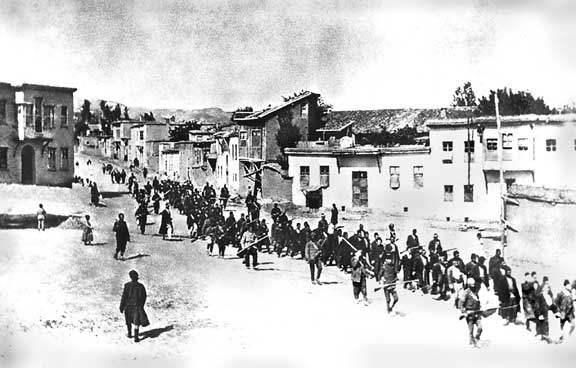
 Armenians are marched to a nearby prison in Mezireh by armed Turkish soldiers. Kharpert, Armenia, Ottoman Empire - April, 1915. *From the collection of Project SAVE Armenian Photograph Archives. Photographed by an anonymous German traveler.

Armenians are marched to a nearby prison in Mezireh by armed Turkish soldiers. Kharpert, Armenia, Ottoman Empire – April, 1915. From the collection of Project SAVE Armenian Photograph Archives. Photographed by an anonymous German traveler.

There were moonlit nights and many moonless nights
sober and drunken in one grain of sand
in billions of grains there were filthy hands
mud and fingernails between sunburned thighs
this is not my skin with nerves inside out
not my breast squeezed into faint whimpers
like dying swallows caught in a dry mouth

soon I’ll be a memory in last verse of songs
someone meant to write on a summer night
flesh to sand and sand to a story to tell
they’ll mention tattoos* and how I was a slave
look look how many stars in one grain of sand
in a billion grains in a billion tears
screams tangled like strings through my broken ribs

you did not know me then
before much before they tore off my clothes
and the desert night shivered with their rage
you did not see how my hair flowed like silk
on soft pillows where teenage dreams were weaved
you did not know me dressed with flowers in my hair
and my fathers arm around my adolescent frame
you did not see the stars from our wide windows
above the vineyard and my feet bare on the fertile soil
in our apricot tree’s cool summer shade

I’m in the evening news – in a pile of bones
look at the skull at the very left
see the sparrow lodged between those clenched jaws
I’m in the evening news a hundred years late
in the grains of sand shifting restless with shame
in the billion stars in your sky tonight
in my mother’s voice singing kenatzir pallas*
in the moonlit nights and the moonless nights
on a dagger’s blade in the Deir ez-Zor sand

– Silva Merjanian

24 April 2016 is the 101th anniversary of the Armenian Genocide, when thousands of women were dragged in the desert, raped and tortured before killed.

  • the reference to tattoos … they used to tattoo the women according to who owned them.
  • Kenatzir pallas is a lullaby very popular with Armenians and means “go to sleep my child”

“Silva’s poetry rewards the reader with the gift of exquisite lacework, adorned with choice words and skillfully wrought poetic imagery, which allow you to get a glimpse of both the intoxicating sensuality of survival and the scalpel scars on the tender skin of life. Many-layered, it excels alike in depicting the sphere of personal experience and of traumatic social issues.” – Dr. Aprilia Zank. Lecturer for Creative Writing and Translation Theory Ludwig Maximilian University, Munich, Germany in a review of Silva’s collection Rumor. Three poems rom this collection are Pushcart nominees. The net profits including the publisher’s go to The Armenian-Syrian Relief Fund. About $5,000 dollars have been raised to date.

© 2016, poem and book cover design, Silva Merjanian, All rights reserved; featured here with the permission of the poet; Silva’s website is HERE.; the header photograph is a public domian photograph courtesy of Project Save.

CELEBRATING AMERICAN SHE-POETS (13): Poet Laureate Natasha Trethewey, writing at the intersection of personal and cultural history

Natasha Trethewey (b. 1966), U.S. Poet Laureate, Poet Laureate of Mississippi, Pultizer Prize for Poetry, Robert W. Woodruff Professor of English and Creative Writing at Emory University
Natasha Trethewey (b. 1966), U.S. Poet Laureate, Poet Laureate of Mississippi, Pulitzer Prize for Poetry, Robert W. Woodruff Professor of English and Creative Writing at Emory University

After hearing Natasha Trethewey read at a poetry festival, Librarian of Congress Emeritus James H. Billington said he was “struck by a kind of classic quality with a richness and variety of structures with which she presents her poetry … she intermixes her story with the historical story in a way that takes you deep into the human tragedy of it.”

Natasha Trethewey is perhaps uniquely equipped by personal history, American history and public discourse, place of birth, education, inclination and innate talent to address a cruel and criminal aspect of our culture that dogs us unrelentingly: the roots, memory and legacy of racism. She is the daughter of a white father (poet Eric Trethewey) and black mother (social worker Gwendolyn Ann Turnbough).  Her background is rooted in the South. Born in Mississippi, when she was six years old her parents divorced and her young life was then split between Louisiana and Georgia. In Trethewey’s hands the juxtaposition of her biracial heritage and our shared history of colonialism, slavery and racism make a powerful case for the role of poetry to effectively and unflinchingly deliver truth.

At the time of her parent’s marriage and Trethewey’s birth anti-miscegenation laws were still in place, making their marriage illegal. Our laws against interracial marriage were struck down in 1967:

“Loving v. Virginia, 388 U.S. 1 (1967),[X 1] [X 2] is a landmark civil rights decision of the United States Supreme Court, which invalidated laws prohibiting interracial marriage.

“The case was brought by Mildred Loving, a black woman, and Richard Loving, a white man, who had been sentenced to a year in prison in Virginia for marrying each other. Their marriage violated the state’s anti-miscegenation statute, the Racial Integrity Act of 1924, which prohibited marriage between people classified as “white” and people classified as “colored”. The Supreme Court’s unanimous decision determined that this prohibition was unconstitutional, reversing Pace v. Alabama (1883) and ending all race-based legal restrictions on marriage in the United States.” [Wikipedia]

51T8yxaK1xL._SX331_BO1,204,203,200_ Thrall: Poems (Houghton Mifflin Harcourt Publishing Company, 2006) – a sequel to Native Guard (Houghton Mifflin Harcourt Publishing Company, 2005) –  is breathtakingly eloquent. Trethewey explores her relationship with her father in the first poem about a fishing trip. Written as an elegy though he is still alive, it tells him in effect that she is the better poet . . . or so I infered.

Tretheway moves on from that quiet meditation to questions of identity and race, exploring colonial attitudes about race reflected in the art of Spanish painters and the Casta (caste, categorization of mixed-race peoples) Paintings of 17th and 18th Century Mexico. I was unfamiliar with most of the paintings and painters, chose to look them up.  That, however, did not detract one iota from engagement with this collection.

The work is exquisite: formal, clear, precise, perceptive … Although the material is distressing, I find Trethewey’s style understated. These poems are not strident but they have sinew and bone. Her forms are mostly free verse. One poem is a series of cinquains and another is a villanelle.

13550802017232

In the video below, Trethewey offers some insight into the development of the collection and reads the eponymous poem. You will also find a sampling of her poems HERE.

Note: The painting Thrall that inspired the poem is by Juan de Pareja who was apparently the child of indentured servants and left as property to the Spanish painter Diego Rodríguez de Silva y Velázquez to whom he became an assistant. Juan de Pareja was born in 1606, freed in 1650 and died in 1670. The painting featured on the book’s cover is Spaniard and Indian Produce a Mestizo by Juan Rodríguez Juárez (1675-1728).

If you are reading this post from an email, you will have to click through to the site to view the video.

© 2016, essay, Jamie Dedes, All right reserved; Natasha Threthewey’s photograph, Jalissa Gray under CC BY-SA 3.0; cover design, publisher