last night, the stars compelled me to wrap myself in the midnight mist, to survive chill and gray and moon craters,to wait silently and with patience for the first sun
Inspired by my long-distance poetry friends at London-based Second Light Network of Women Poets (SLN), which is dedicated to encouraging and promoting women poets and women’s poetry, I’ve decided to feature one American woman poet each week on Thursday. I hope you’ll join me for these short tidbits by way of celebration.
OPPORTUNITY KNOCKS: Second Light Network of Women Poets publishes well-regarded anthologies and the biannual magazine ARTEMISpoetry, which feature the works of both contemporary well-known A-list women poets as well as talented emerging voices. Membership and publication is not limited to the UK but there are demographic restrictions: age and gender. Associate memberships are available for women under 40. Recommended.
I had eight birds hatched in one nest,
Four Cocks there were, and Hens the rest.
Note: I recognize that more correctly Anne Bradstreet would be considered an English poet. I have decided for my purposes here, I’d include her as “American.”
The illustration above is Anne Bradstreet on the cover of The Works of Anne Bradstreetpublished by The John Harvard Library . The book’s introduction is by contemporary American Poet, Adrienne Rich. Some say she (Bradstreet) was the first serious woman poet in colonial America. It could be though that she was the first to be taken seriously and published while other talents plied their art in the women’s-work ghetto of obscurity
From the publisher:
“Anne Bradstreet was one of our earliest feminists and the first true poet in the American colonies. This collection of her extant poetry and prose, scrupulously edited by Jeannine Hensley, has long been the standard edition of Bradstreet’s work. Hensley’s introduction sketches the poet’s life, and Adrienne Rich’s foreword offers a sensitive critique of Bradstreet as a person and as a writer. The John Harvard Library edition includes a chronology of Bradstreet’s life and an updated bibliography.”
public domain illustration
This is telling of the times:
Let Greeks be Greeks, and women what they are
Men have precedency and still excell,
It is but vain unjustly to wage warre;
Men can do best, and women know it well
Preheminence in all and each is yours;
Yet grant some small acknowledgement of ours.
And yet, Anne Bradstreet did have confidence in her gender as we can see in this portrait of Queen Elizabeth:
Who was so good, so just, so learned so wise,
From all the Kings on earth she won the prize.
Nor say I more then duly is her due,
Millions will testifie that this is true.
She has wip’d off th’ aspersion of her Sex,
That women wisdome lack to play the Rex
Not in my name,
my woman’s name,
not one drop of blood be shed for oil
that makes some billionaires
and sets the Middle East aflame
But in my name,
in every woman’s name, send home great armies
of the black and dispossessed,
warships and frigates turn around.
Peace in my name!
– Joan Williams
Joan Williams (1916-2008) was an Australian poet (a.k.a. Justina Williams) and communist. I believe her poetry would come under this category:
“Proletarian poetry is a genre of political poetry developed in the United States during the 1920s and 1930s that endeavored to portray class-conscious perspectives of the working-class. Connected through their mutual political message that may be either explicitly Marxist or at least socialist, the poems are often aesthetically disparate. As a literature that emphasized working-class voices, the poetic form of works could range from emulating African-American slave work songs to contemporary modernist poetry. Major poets of the movement include Langston Hughes, Kenneth Fearing, Edwin Rolfe, Horace Gregory, and Mike Gold.” MORE Wikipedia
Thanks to Susanne Harford for reminding of this poem and this poet.
If you are viewing this from Facebook or email, you’ll have to link trough to listen to the video.
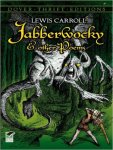
Jabberwocky
‘Twas brillig, and the slithy toves
Did gyre and gimble in the wabe;
All mimsy were the borogoves,
And the mome raths outgrabe.
“Beware the Jabberwock, my son!
The jaws that bite, the claws that catch!
Beware the Jubjub bird, and shun
The frumious Bandersnatch!”
He took his vorpal sword in hand;
Long time the manxome foe he sought —
So rested he by the Tumtum tree,
And stood awhile in thought.
And, as in uffish thought he stood,
The Jabberwock, with eyes of flame,
Came whiffling through the tulgey wood,
And burbled as it came!
One, two! One, two! And through and through
The vorpal blade went snicker-snack!
He left it dead, and with its head
He went galumphing back.
“And hast thou slain the Jabberwock?
Come to my arms, my beamish boy!
O frabjous day! Callooh! Callay!”
He chortled in his joy.
‘Twas brillig, and the slithy toves
Did gyre and gimble in the wabe;
All mimsy were the borogoves,
And the mome raths outgrabe.
– Lewis Carroll
Lewis Carroll selfie photograph,2 June 1857
Lewis Carroll (1832-1898), the pen name of Oxford mathematician, logician, photographer and author Charles Lutwidge Dodgson, is famous the world over for his fantastic classics Alice’s Adventures in Wonderland, Through the Looking Glass, The Hunting of the Snark, Jabberwocky, and Sylvie and Bruno.


 Not in my name,
 Jabberwocky

 Jamie Dedes' THE POET BY DAY Webzine