Page 182 of 183

A Bit of Irish In Honor of the Day: Poet John O’Donohue’s “Beannacht” … a blessing

The Irish poet and writer, John O’Donohue (1956-2008) was as moved by the landscape of the soul as he was by the landscape of his country with its Celtic spirituality. An ordained Catholic priest, he eventually left the priesthood, but he never abandoned the mystical roots of his Christianity. He was a Hegelian philosopher, did doctoral work on Meister Eckhart, was fluent in Irish and German, was an environmental activist, and wrote several best-selling books (both nonfiction and poetry). His most notable work was Anam Cara:A Book of Celtic Wisdom. (Anam Cara meaning soul friend.)

    Real friendship or love is not manufactured or achieved by an act of will or intention. Friendship is always an act of recognition.”

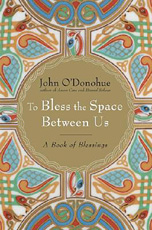
blessthespacebetweenlrgNo one knew the name of this day;
Born quietly from deepest night,
It hid its face in light,
Demanded nothing for itself,
Opened out to offer each of us
A field of brightness that traveled ahead,
Providing in time, ground to hold our footsteps
And the light of thought to show the way.

The mind of the day draws no attention;
It dwells within the silence with elegance
To create a space for all our words,
Drawing us to listen inward and outward.

We seldom notice how each day is a holy place
Where the eucharist of the ordinary happens,
Transforming our broken fragments
Into an eternal continuity that keeps us.

Somewhere in us a dignity presides
That is more gracious than the smallness
That fuels us with fear and force,
A dignity that trusts the form a day takes.

So at the end of this day, we give thanks
For being betrothed to the unknown
And for the secret work
Through which the mind of the day
And wisdom of the soul become one.

~  John O’Donohue, The Inner History of a Day, excerpt from To Bless the Space Between Us: A Book of Blessings

HAPPY ST. PATRICK’S DAY

normal_saint_patricks_day_Shamrock_Pipes

Against the Evidence, I Live By Choice ~ David Ignatow

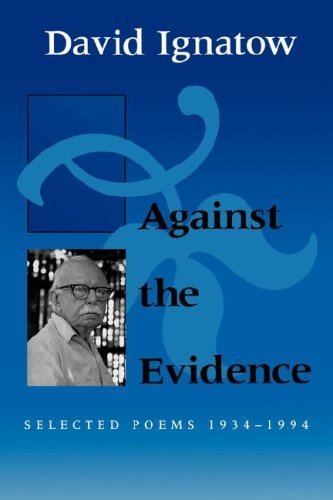
41jATvIjAMLI was reminded of David Ignatow (1914-1997, American poet and editor) yesterday when I read Luke Prater’s poem about the death of a fly, Calvin’s God, which is well done.

In his poem Luke mentions Ignatow, who wrote I Killed A Fly.

I’m thinking Ignatow has a spare and direct style that is worth studying, especially if you are serious about your own poetry. Here is a sample of his work from a favorite collection. There are a number of people who read here who will relate to this, a good Sunday night read.

.

AGAINST THE EVIDENCE

by David Ignatow

As I reach to close each book
lying open on my desk, it leaps up
to snap at my fingers. My legs
won’t hold me, I must sit down.
My fingers pain me
where the thick leaves snapped together
at my touch.
All my life
I’ve held books in my hands
like children, carefully turning
their pages and straightening out
their creases. I use books
almost apologetically. I believe
I often think their thoughts for them.
Reading, I never know where theirs leave off
and mine begin. I am so much alone
in the world, I can observe the stars
or study the breeze, I can count the steps
on a stair on the way up or down,
and I can look at another human being
and get a smile, knowing
it is for the sake of politeness.
Nothing must be said of estrangement
among the human race and yet
nothing is said at all
because of that.
But no book will help either.
I stroke my desk,
its wood so smooth, so patient and still.
I set a typewriter on its surface
and begin to type
to tell myself my troubles.
Against the evidence, I live by choice.

© poem and cover art, Wesleyan Poetry Series, used here under fair use

THE LIVES OF WOMEN

www-cover… For when I shut myself off the outer tick
I find myself listening to the quickening beat
of this dear planet as if it were my own heart’s clock.”
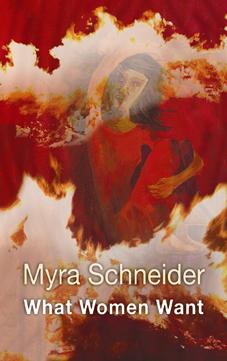
The Composition Hut, Myra Schneider in What Women Want

In this short collection of nineteen poems  – including the ten-page narratively-driven long-poem, Caroline Norton – Myra Schneider manages to cut through our many-layered lives. Her poems often move from the intimacy of  personal experience to a broader frame of reference. The opening poems are nature-and-spirit driven and bespeak a love of and concern for environment. The second part of the collection fulfills the polemic promise of the title to present hard lives and harder times in a clear and righteous outcry.

Among the opening poems is Losing, written for her publisher. Myra starts with the unimportant lose of socks and moves on to finding what is valuable:

“a sparrowhawk perched on your gate, eyes alert
for prey, words that toadleap from imagination,
from heart – to make sure every day is a finding.”

In two poems she hints at the symmetrical beauty of mathematics, “… the square root of minus one you once grasped, dumbfounded.” A visit to the Garden is bursting with color and movement and triggers speculations …

“but what does it matter? You know too well
how the years have shrunk your future,
that the past is an ever expanding suitcase.”

… and further along in the poem she closes with …

“to your feet, to the bees still milking
flowering raspberries. You free a frog
watch it hop back to its life.”

I was riveted by the story of Paula Schneider in Crossing Point, as Paula (probably Myra’s mother-in-law) crosses with her children from Germany into Holland during World War II. This is included in the second half of Myra’s book, which comes to the business at hand: injustice as it affects women and children.

Interesting that this book came my way when I am standing by two friends whose physical and emotional frailty are much entwined with their relations with fathers and husbands or boyfriends. It’s not that things haven’t been improved since our parents’ days…at least for many of us it has. It’s not that there are no kind and enlightened men. Certainly there are. It’s not because women and society are without culpability, because they are not.

The complexity of the gender and social issues examined are clear in Myra’s long poem, Caroline Norton, about the nineteenth century writer and poet,  social reformer and unwitting feminist. Caroline came to the latter two occupations, not so much by choice as necessity. As the poem folds out, we see that the brutal husband who separated Caroline from her children (with tragic results for them), was abetted and aided by the women in his life, influenced as they were by a social context in which women and children are property with no legal rights of their own. No doubt those women were numb to the implications, threatened by the hint of change, and anxious to bolster the sense of surperiority they got out of putting this woman down.

Myra stands firm in her poetic commitment to continue the fight started with Caroline Norton, since half the world is still under siege and the other half still begs improvements. We read about the child-bride (Woman) and the woman who is stoned (Her Story). One wonders what happens to the children – boys and girls – of such women. The short story here is that: What women want is justice.

For two years, I have enjoyed Myra Schneider’s work and appreciated her commitment to encouraging others to honor their inner artist, through her books on writing, her classes, and her support of Second Light Network (England), an association of women poets over forty. I suspect that her work doesn’t have the audience it deserves. I hope the day comes when that is remedied.

The closing poem in What Women Want:

WOMEN RUNNING
by Myra Schneider, 2013, All rights reserved
posted here with Myra’s permission

after Picasso: Deux femmes courant sur la plage
Look how their large bodies leaping
from dresses fill the beach, how their breasts
swing happiness, how the mediterraneans
of sea and sky fondle their flesh. Nothing

could rein them in. The blown wildnesses
of their dark animal hair, their hands joined
and raised, shout triumph. All their senses
are roused as they hurtle towards tomorrow.

That arm laid across the horizon,
the racing legs, an unstoppable quartet, pull
me from my skin and I become one of them,
believe I’m agile enough to run a mile,

believe I’m young again, believe age
has been stamped out. No wonder, I worship
at the altar of energy, not the energy huge
with hate which revels in tearing apart,

in crushing to dust but the momentum
which carries blood to the brain, these women
across the plage, lovers as they couple,
and tugs at the future till it breaks into bloom.

What Women Want, publisher (Second Light Publications)

© 2013, essay, Jamie Dedes, All rights reserved
Cover art and poetry, Myra Schneider, All rights reserved

SEPTEMBER 26, 2012: Announcing New Website for Poet Mary MacRae


The deeper I go into Mary MacRae’s poems the more spacious my own world becomes. Anne Cluysenaar

The English poet Mary MacRae died of cancer in 2009. Were it not for the love and commitment of her poet-friends at Second Light Network, we might not have the gift of her poetry to savor in our quiet moments. Poet, teacher and consultant to Second Light Network, Myra Schneider  wrote and asked me to let you know that they have established a website for Mary.

The wide range of poems in Inside the Brightness of Red includes poignant work written when she was terminally ill but also beautiful lyric poems about childhood, youth, relations with parents, marriage, friendship and her responses to art and nature. Dilys Wood

Mary’s love of life … of nature, birds, flowers, gardens, art and family and friends are evident in precise multicolored layers of her work. She was published in several prestigious literary magazines.

Her enormous warmth and zest for life were balanced with a sensitivity and deep compassion that invited many to confide in her, came into play in her perceptive and incisive criticism and pervaded her poems. Lucy Hamilton

Mary won two poetry prizes: Scintilla magazine’s Long Poem Competition and a joint first prize in the Second Light Poetry Competition. Her work is included in the second Poetry School Anthology, Entering the Tapestry (Enitharmon Press 2003) and in Four Caves of the Heart (Second Light Publications, 2004). Second Light published two collections of Mary’s poems: Inside the Color of Red and As Birds Do. 

To read a small selection of Mary MacRae’s poems – of special note is Jury – link HERE.  You can buy Mary’s two poetry collections through the website.

With permission I published the following poem before on this blog and I post it again as an example of Mary’s work. Please enjoy, but remember that it is copyrighted with all rights reserved. It belongs to Mary’s estate. This poem is from Inside the Color of Red. 

Note: I have also put a link to Mary’s site, Myra’s site, and to Second Light Network in my blogroll under Poets and Friends, which a new and developing section of my blogroll.

ELDER

by Mary MacCrae

·

A breathing space:

the house expands around me,

·

unfolds elastic lungs

drowsing me back

·

to other times and rooms

where I’ve sat alone

writing, as I do now,

when syncope –

·

one two three one two –

breaks in;

·

birdcall’s stained

the half-glazed door with colour,

·

enamelled the elder tree

whose ebony drops

·

hang in rich clusters

on shining scarlet stalks

·

while with one swift stab

the fresh-as-paint

·

starlings get to the heart

of the matter

of matter

·

in a gulp of flesh

and clotted juice that leaves me

·

gasping for words transparent

as glass, as air.

© poem and photograph, Estate of Mary MacRae, all rights reserved