The Ides of Trump Campaign was initiated by a resident of Berkeley, California who wanted to create a simple, affordable and easy way for people to show-up and be heard. To join in all you need is a postcard and a stamp. The idea is that you express your concerns with brevity on a postcard. The hope is that postcards will flood the White House on March 15, the Ides of March.
You will remember that in Shakespear’s play Julius Caesar didn’t heed the warning to beware the Ides (about mid-month) of March and was assasinated on that day. The idea here is NOT to threaten any kind of violence or other immoral behavior but to draw attention to issues of concern in a peaceful manner.
The beauty of this effort is that wherever you are in the world you too can easily have your say by sending a postcard for the Ides of Trump to:
Mr. President
1600 Pennsylvania Ave., NW
Washington, DC 20500
In my neighborhood we unequivocally DO NOT endorse or encourage violence but there are issues of concern that residents want to bring to the fore. Hence, the Unitarian Universalists of San Mateo began implementation of Justice Action Mondays: Flash Advocacy as part of its “Resist” efforts.
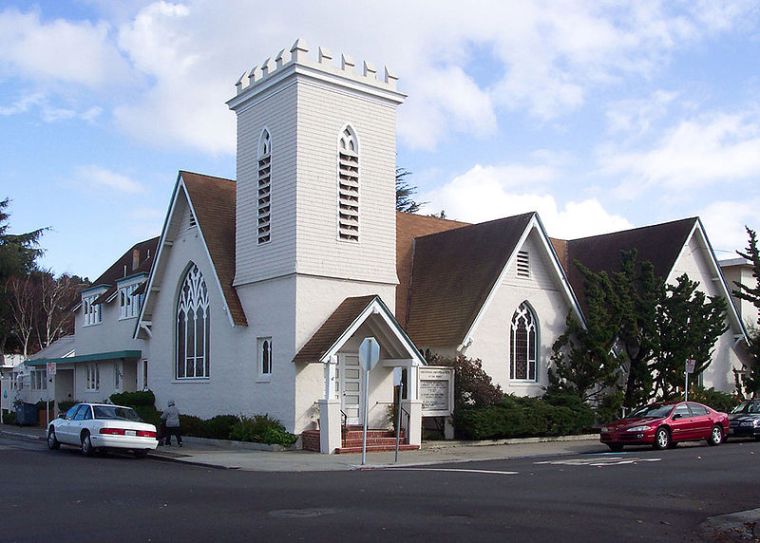
Rev. Ben Meyers and the Unitarian Universalists of San Mateo (UUSM) invited San Mateo residents to join in an open, drop-in community space where people come together in a supportive environment to make their voices heard. Justice Action Mondays,every week,5:30 – 6:30 p.m., UUSM Beck Hall, 300 E. Santa Inez Avenue, San Mateo
This Week’s Flash Advocacy Theme: The “Protest by Postcard” Ides of Trump Campaign. Participants will write a postcard (or more) with a personal message letting the President know their concerns and/or position on the issues that are paramount to them. All postcards will be mailed. Cards, stamps, message ideas, snacks and the company of good people like youself are provided. A distribution list is updated weekly on Wednesdays and the theme for the following Monday is emailed to all.
Thank you for sharing your love of words. Comments will appear after moderation.
Given the current divisive atmosphere and mean narratives, I feel compelled some evenings to share information and inspiration on topics other than poetry, which support our shared ideals.
In a courageous and compassionate move two faith organizations in my neighborhood just announced that their congregations have voted by overwhelming majorities to give physical sanctuary to vulnerable neighbors, the kind of move that has growing support across the United States under the banner of The New Sanctuary Movement, a movement with historic roots in human sanctuary (as opposed to spiritual sanctuary) in England, 600 A.D. This latest revival is a renewal of the 80s Sanctuary Movement in the U.S.
In the 1980s faith organizations were responsible for transporting and sheltering some 500,000 escaping the violence in Central America. Hundreds of congregations sheltered refugees and moved them to the U.S. and Canada.
Why give sanctuary:
The Rev. Ben Meyers minister of the Unitarian Universalists of San Mateo states: “Our Unitarian Universalist principles call us to affirm and promote the inherent worth and dignity of all people; to seek justice, equity, and compassion in human relations, and to create world community with peace, liberty and justice for all. We commit our values to action as we work with other people of faith and moral conscience congruent with these principles and this purpose. Deportation of our neighbors and the breaking up of immigrant families in our communities are among the most compelling social justice issues of our time. Standing together on the side of love, our faith communities can make a real difference.”
and …
The Rev. Dr. G. Penny Nixon, senior minister of the Congregational Church of San Mateo says: “Each week we gather in our beautiful sanctuary to remember who we are as a people of faith who follow the teachings of Jesus. For us, providing refuge means opening that sanctuary as a “safe place” to those who are an integral part of our community, and providing a haven for families to stay together.” –The Rev. Dr. G. Penny Nixon, senior minister of the Congregational Church of San Mateo
I do not represent either of the churches featured here this evening nor speak for their ministers and congregations, but this story is compelling. I hope that by featuring their justice efforts other faith organizations that haven’t picked up the banner will do so. If your synagogue, church, temple or mosque is not in the process of becoming sanctuary, then please consider initiating that conversation. If you are the leader in a faith organization or a professional journalist who would like more information, contact the ministers at clergyhousingsummit2@gmail.com or contact me via direct message on Facebook or thepoetbyday@gmail.com and I’ll be happy to connect you.
Rev. Benjamin Meyers, Minister, Unitarian Universalists of San Mateo
Rev. Ben Meyers and the Unitarian Universalists of San Mateo invite San Mateo residents to join in the creation of an open, drop-in community space where people can come together in a supportive environment to make our voices heard.
Justice Action Mondays: Flash Advocacy!
Mondays, 5:30 – 6:30 pm, Beck Hall, Unitarian Universalists of San Mateo, 300 E. Santa Inez Ave., San Mateo, CA 94401, Phone: 650 342-5946, Office Hours: Tu – Fri 10-5
This Week: The focus is on writing thank you notes to journalists and legislators who are challenging Trump’s falsehoods and investigating Russian involvement in the election. Cards, stamps, snacks and conversation provided. Do drop in for a fun hour of solidarity and activism!
A distribution list will be created to keep you informed of the topic each Wednesday.
Who are the Unitarian Universalists?
UU San Mateo
Unitarian Universalist congregations are filled with caring, open-minded people. Our faith encourages you to seek your own spiritual path. Our congregations are places where people gather to nurture their spirits and put their faith into action by helping to make our communities—and the world—a better place. We are committed to spiritual growth and transformation.
Principles and Sources
There are seven principles which Unitarian Universalist congregations affirm and promote:
The inherent worth and dignity of every person;
Justice, equity and compassion in human relations;
Acceptance of one another and encouragement to spiritual growth in our congregations;
A free and responsible search for truth and meaning;
The right of conscience and the use of the democratic process within our congregations and in society at large;
The goal of world community with peace, liberty, and justice for all;
Respect for the interdependent web of all existence of which we are a part.
Unitarian Universalism (UU) draws from many sources:
Direct experience of that transcending mystery and wonder, affirmed in all cultures, which moves us to a renewal of the spirit and an openness to the forces which create and uphold life;
Words and deeds of prophetic women and men which challenge us to confront powers and structures of evil with justice, compassion, and the transforming power of love;
Wisdom from the world’s religions which inspires us in our ethical and spiritual life;
Jewish and Christian teachings which call us to respond to God’s love by loving our neighbors as ourselves;
Humanist teachings which counsel us to heed the guidance of reason and the results of science, and warn us against idolatries of the mind and spirit.
Spiritual teachings of earth-centered traditions which celebrate the sacred circle of life and instruct us to live in harmony with the rhythms of nature.
These principles and sources of faith are the backbone of the UU religious community.
UUSM is
a Welcoming Community
a Beloved Community in the spirit of Rev. Dr. Martin Luther King, Jr.
a sanctuary congregation and active in the American Sanctuary Movement
Rev. Benjamin Meyers, Minister, Unitarian Universalists of San Mateo
Some thoughts from Rev. Ben …
John Scalzi is a Straight White Man who has a website called Whatever … I’m staring at the asphalt wondering what’s buried underneath.
A member of our congregation sent me the link to this site after I told him I was going to preach this sermon on “Intersectionality and the Transforming Power of Love.” In his tagline to describe the content of his site John Scalzi says he’s been “Taunting the tauntable since 1998.”
I want to share something from his entry from May 12, 2014 in which he uses a very intriguing way to talk about white male privilege…(I know, this has the possibility of sounding like a turn-off, tune-out the minister topic, but bear with me…this is good…)
John Scalzi writes:
“I’ve been thinking of a way to explain to straight white men how life works for them, without invoking the dreaded word “privilege,” to which they/we/I usually react like vampires being fed a garlic tart at high noon. It’s not that the word “privilege” is an incorrect word to use for straight white men, it’s just that it’s not their word. So, when confronted with the concept of “privilege,” they/we/I usually fiddle with the word itself, and haul out the dictionaries and find every possible way to talk about the word but not any of the things the word signifies.
So, the challenge, says John, is: how to get across the ideas bound up in the word “privilege,” in a way that your average straight white man will get, without freaking out about it?”
Here goes…
The difficulty for us, especially for those of us with lower degrees of difficulty in the real world, is how to see these differences more clearly and not shy away from bridging the gaps between us, and others?
How do we see beyond our blindness of privilege, and reach beyond the buffers of blessings of our given lives and learn to stand in solidarity with others facing degrees of difficulty we are only beginning to truly see and feel and understand? How do we use the gifts of OUR lives to aid others caught in the oppressions of the real world? How do we make a difference in this very different world we now find ourselves?
The great human rights advocate, Grace Lee Boggs, said,
“We never know how our small activities will affect others through the invisible fabric of our connectedness. In this exquisitely connected world, it’s never a question of ‘critical mass.’ It’s always about critical connections.”
But is the world getting more connected or more fragmented? Facebook, in conjunction with the University of Milan …announced that there were only 4.74 “degrees of separation” among its …users…. That contrasts with the famous ‘six degrees of separation’ that Yale researcher Stanley Milgram found back in the 1960s. Social media, we are led to believe, are bringing people closer together.
A study published in the American Sociological Review found [that many] Americans say they have no one they can talk to about important matters. Imagine, not having a single confidante you may safely turn to in times of critical need … or just if you need basic information. It confirms the thesis of Robert Putnam’s book, Bowling Alone: The Collapse and Revival of American Community, that we’re becoming more socially isolated, even as the world gets more wired.
In fact, the phrase “online community” may be an oxymoron, like “Jumbo Shrimp” or “Unbiased Opinion.” … Researchers at the University of Wisconsin put teenage girls in stressful situations, like solving mental arithmetic problems, meanwhile measuring the girls’ levels of cortisol, a bio-marker for stress, and oxytocin, a hormone associated with feelings of well-being and trust. During the test, the teens were permitted either to text their mothers, or to call mom on the phone. It turned out that the phone conversation, and the soothing tone of mother’s voice, lowered stress levels in the girls. Texting had no such effect.
The study confirms my own unbiased…prejudices. Call me retro, but I still prefer chatting with a real live person on the telephone, rather than interacting with a voice-mail robot or typing in two dimensions while living in the multi-dimensional world of relationship. The world has gained in efficiency and cost-savings, but lost a dimension that’s warm and comforting and connected. This is not to say that there’s expediency and benefit in texting short messages and sending information, electronically. It’s just that these are not always the right tools to use if what we’re needing is connection.
It appears that we need an human presence—the shelter of each other—to feel whole—and to know the fullness of living beyond the bubble of preferred comfort levels. There’s no digital substitute for a hug, a handshake, a smile or a word of encouragement.
This is one role that religious communities play in our culture, as well as civic organizations and, of course, bowling leagues. And clearly, merely attending a church, mosque or synagogue doesn’t automatically mean you feel known and accepted and connected. You still have to do the work of building caring bonds.
It is still true that in order to HAVE a friend, you have to BE a friend; but my point is that meaningful relationships and spiritual growth are possible in congregations and similar affinity groups in a way that cyberspace just won’t allow.
How much of the vulgarity of American culture is due to the fact that we’ve become a nation of strangers? How much of the incivility in our politics can be traced to the breakdown of respectful person-to-person communication? How do we learn these skills if they are not applied in our daily lives? The good news is that the cure for this malady is readily available. Through everyday acts of kindness, and by reaching out to others in a spirit of unity and cooperation, we can begin to re-weave the fraying fabric of community.
Indeed, the mathematical algorithms that measure “degrees of separation” across the planet show that when we reach outside our personal comfort zone, for example to encounter someone from a different race, a different religion, or a different political viewpoint, our actions have a multiplier effect.
One person who breaks through the proverbial chasms of privilege and prejudice can lower the level of estrangement in ways unseen or unfelt. This is how we weave the invisible fabric of our connectedness. But perhaps you didn’t need a university study or a mathematical analysis to tell you what the world’s religions have affirmed for centuries. The best way to bring our world closer together—to lower the degrees of separation and oppression and to level the playing field of the real world—is to build real bridges between our divisions.
Adam Gopnick, a writer for the New Yorker magazine who covered the massive marches and demonstrations—the largest in the history of this country which occurred just weeks ago says:
“Community is the only cure for catastrophe. Action is the only antidote to anger.”
By practicing the core values of faith and principles, we continue to affirm and promote the inherent worth and dignity of every person, turning strangers into friends and enemies into learning partners, one by one by one.
We must remember the haunting and prophetic words of the Lutheran Pastor Martin Niemöller, speaking of the rise of Nazism in Germany,
“First they came for the Socialists, and I did not speak out—/Because I was not a Socialist./Then they came for the Trade Unionists, / and I did not speak out—/Because I was not a Trade Unionist./ Then they came for the Jews, and I did not speak out—/Because I was not a Jew./Then they came for me—/and there was no one left to speak for me.”
If we want hope to survive in this world today…then EVERY day we’ve got to build the bridges and do the dance that keeps hope alive.
Let us rise beyond the places where we are and Pray, Stand, Walk, Work, Move, March, Teach, Reach, and SING ON, together.
Let us dare to Hope, and by our actions, help hope survive.




 Jamie Dedes' THE POET BY DAY Webzine