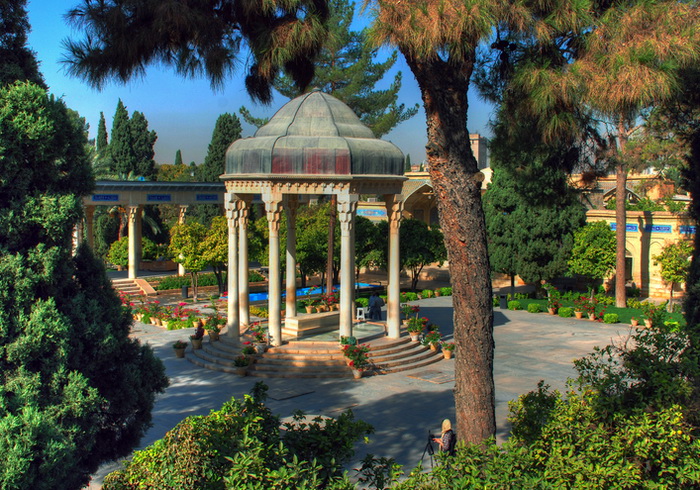
Tomb of Hafez, the Iranian poet whose poetry is regarded as a pinnacle in Persian literature and has left a considerable mark on later Western writers, most notably Goethe, Thoreau, and Emerson
“Even
After
All this time
The Sun never says to the Earth,
“You owe me.”
Look
What happens
With a love like that,
It lights the whole sky.” ― Hafiz
**********
Alone through Iran – 1144 Miles of Trust is a documentary film about Kristina Paltén, a lone Swedish woman who wanted to challenge her own and other’s prejudices against Islam by running across Iran to meet people along the way.
A wonderful heroic story: Monies for this documentary were raised through crowd funding and the film makers report they are currently in the process of editing the full movie. Here (below) is the trailer. Like the Facebook Page to stay updated about the movie.
If you are viewing this in email, you will likely have to click through to the site to view the video.
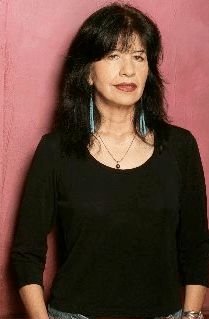
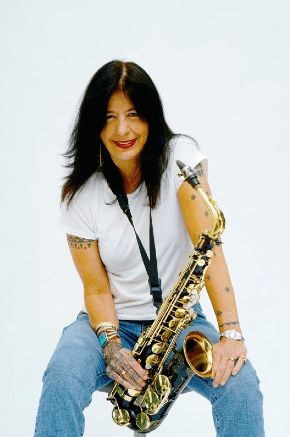
Joy Harjo (b 1951), Mvskoke (Creek) Poet, Musician, author and key player in the second wave of the Native American literary efflorescence
Crazy Brave(Norton & Company, 2012), Joy Harjo’s eminently engaging memoir, flows like a long prose poem. It is rich and well-built on a foundation of tribal mythologies, a strong sense of her ancestry, her difficult childhood and youth and salvation found in poetry and music. From her birth to a handsome much-loved fire-spirit father who inherited Indian oil money, allowing him to indulge a passion for cars, and her beautiful water-spirit singer-mother whose voice was stilled by a bully of a second-husband, Harjo tells the story of girl who survived a physically and emotionally abusive step-father, crushing poverty and the greater cultural obscenities to become one of our most influential poets and a formidable advocate for justice for Native Americans and liberation for women.
I was entrusted with carrying voices, songs, and stories to grow and release into the world, to be of assistance and inspiration. These were my responsibility.”
*****
I can’t imagine the human being who wouldn’t relate to Joy Harjo’s history, but those who have come from “broken” homes, poverty and a family of mixed ethnicity will most especially appreciate it and perhaps find some healing and strength in the pages of Crazy Brave. That Joy Harjo survived so much to become a decent loving person leaves the rest of us with no excuse; and any writer, poet or musician will take to heart the dreams and visions of that long journey to find hope and creative voice in poetry.
Joy Harjo, a member of the Mvskoke tribe was born in Tulsa, Oklahoma, an area where the Native American trail of tears ended, an area to which the indigenous peoples were removed – forced to relocate – as people of European descent moved into their original home places. The removed were the Five Civilized Tribes – Cherokee, Chickasaw, Choctaw, Mvkoke and Seminole – who were living as autonomous nations in what is now the American Deep South.
“I fought through the War Between the States and have seen many men shot, but the Cherokee Removal was the cruelest work I ever knew”. Georgian soldier who participated in the removal
*****
When the World as We Knew It Ended
It was coming.
We had been watching since the eve of the missionaries in their long
and solemn clothes, to see what would happen.
We saw it
from the kitchen window over the sink
as we made coffee, cooked rice and potatoes
enough for an army.
We saw it all, as we changed diapers and fed
the babies. We saw it,
through the branches of the knowledgeable tree,
through the snags of stars, through
the sun and storms, from our knees
as we bathed and washed the floors …
The conference of the birds warned us as they flew over
destroyers in the harbor, parked there since the first takeover.
It was by their songs and talk we knew when to rise,
when to look out the window
Joy Harjo’s poetry and music are influenced by her ethnic heritage and her feminist and social concerns as well as by her love of word and sound and her education in the arts. Largely autobiographical, her poetry is informed with descriptions of the Southwestern landscape and the mythologies, symbols and values of the Mvskoke people. Hers is the sort of writing that sits with you to become part of your own bone and marrow, which is the way of good poetry and good story. A poet of the people but also a critically-acclaimed poet, her many awards include the Wallace Stevens Award of the Academy of American Poets, The William Carlos Williams Award from the Poetry Society of America and the American Indian Distinguished Achiement in the Arts Award. She is the recipient of several grants and is a teacher, musician (saxophone) and singer. She has published some fourteen books and ten music albums.
It was a dance,
her back against the wall
at Carmen’s party. He was alone
and he called to her – come here, come here
that was the firs time she saw him
and later she and Carmen drove him home
and all the way he talked to the moon,
to the stars, to someone riding
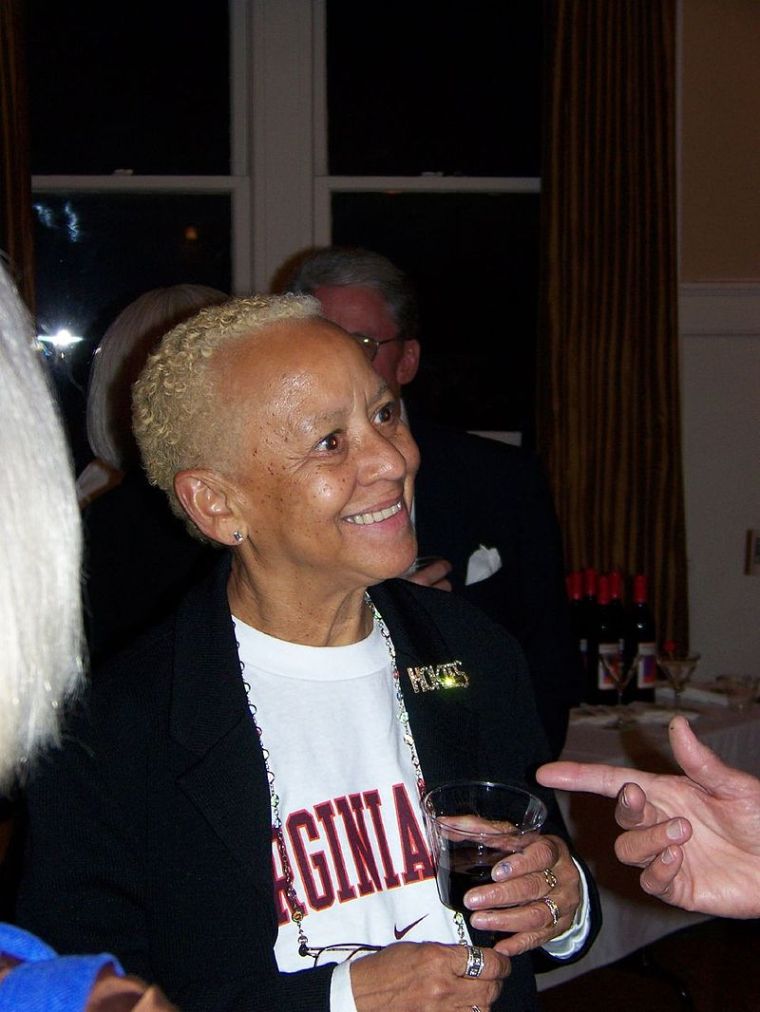
Nikki Giovanni (1943), American poet, writer, activist and educator
Everyone deserves Sanctuary a place to go where you are
safe
Art offers Sanctuary to everyone willing
to open their hearts as well as their lives”
excerpt for Art Sanctuary in Quilting the Black-Eyed Pea, poems and not quite poems
Nikki Giovanni is lauded as iconic, luminous, adventuresome and courageous. She is all of these, but I think what I like most about her is that she is straight-forward, practical and compassionate. These characteristics are the underpinning that make her a rather extraordinary poet, a powerful combination of visceral and intellectual.
There is always something to do. There are hungry people to feed, naked people to clothe, sick people to comfort and make well. And while I don’t expect you to save the world I do think it’s not asking too much for you to love those with whom you sleep, share the happiness of those whom you call friend, engage those among you who are visionary and remove from your life those who offer you depression, despair and disrespect.”
Nikki Giovanni first came to note in the late ’60s and early ’70s as part of the Civil Rights, Black Arts and Black Power movements. The strength of her voice punctuated our poetic and political world and she has written, taught and advocated for uncommon good sense ever since. As with all of us, she has many roles in life including daughter, mother, friend and lung cancer survivor. It is clear in her work that she values family and community and supports and encourages these values in others.
Ms. Giovanni was born in Knoxville, Tennessee. She earned her undergraduate degree in history with honors at Fisk University and did her graduate work at the University of Pennsylvania and Columbia University. Her knowledge of history richly informs her perspectives in poetry, essay and talk. She taught at several universities including Virginia Tech and was at Virginia Tech for the shooting by Seung-Hui Cho in 2007 when he murdered thirty-seven people. Cho was a student in her poetry class. She sensed something was amiss with him and asked the authorities to remove him from her class. After the shooting, she spoke at the convocation.
We know we did nothing to deserve it. But neither does a child in Africa dying of AIDS. Neither do the invisible children walking the night awake to avoid being captured by a rogue army. Neither does the baby elephant watching his community being devastated for ivory. Neither does the Mexican child looking for fresh water….We are Virginia Tech….We will prevail.”
This video is the first of two in this post. If you are reading from an email subscription, you will have to link through to the site to view the videos.
Ms Giovanni’s early writing was a response to the assassinations of Martin Luther King, Jr., John and Robert Kennedy, and Medgar Evans. Her first book (1968)Black Feeling, Black Talk/Black Judgementis considered by some to be the one of the most important books on the black-rights movement. Younger people reading it will want to research the history of the era to put the book in context.
Ms. Giovanni has written some twenty-one books of poetry as well as autobiography and children’s books. She’s edited anthologies and collaborated on books with James Baldwin and Margaret Walker. She’s won countless awards for both her work and her activism. The following video is a reading of Quilting the Black-Eyed Pea (We’re Going to Mars).
I want to be clear about this. If you wrote from experience, you’d get maybe one book, maybe three poems. Writers write from empathy.”
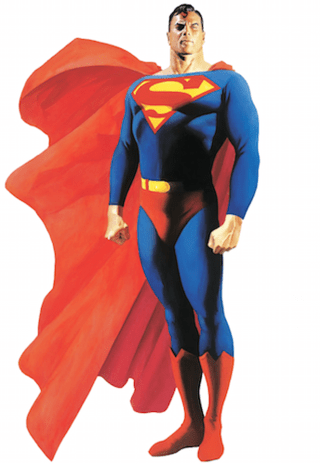
“On a purely personal level, it’s very strange, because as a kid, Superman informed my personality. Now I’ve been given the job of forming Superman’s personality and, in some ways, drawing on my own background.” J. Michael Straczynski author of Superman: Earth One
The first comic about the character (an immigrant, by the way) that was destined to become an American cultural icon came out on this day in 1938. Superman, the invention of Jerry Siegal and Joe Shuster, fought for “truth, justice and the American way.” He was ultimately affiliated with the Justice League and the Legion of Super-Heroes. He was the first of the great comic book superheros. He’s come a long way in both print and film media since 1938 and since this 1950s television version:
(I admit I could have used a more contemporary video but this is the version I grew up with and I still love it best.) Note: If you are reading this post from an email, you will have to link through to the blog to see the video.
Yesterday, I wrote a poem, an homage, to real-life superheroes, the women and men who are dedicated to fighting injustice and laying the groundwork for understanding and peace: the seeds of awakening. I wrote it because I’ve just finished reading some books by a brave and intelligent activist for common sense and social justice. The poem started out being an homage to her, but I began to think of and tick-off the names in my mind of the people who have invested their lives (and sometimes lost them) in the work of peace and justice and so had to broaden the poem’s reference. Though the poem is written in the feminine, it is meant to be inclusive of all who fight for justice, female and male.
WRITING PROMPT: Write a poem, story or essay about a real-life superhero you admire. Show why you admire this person and perhaps what you try to emulate. Or, alternately, create your own fictitious superhero. Remember, every superhero has to have a vulnerability. Superman’s was krypton.
Illustration: Superman as depicted in The World’s Greatest Super-Heroes(August 2005). Art by Alex Ross. Used under U.S. fair use doctrine.
Thank you for sharing your love of words. Comments will appear after moderation.





 Jamie Dedes' THE POET BY DAY Webzine