Page 4 of 9

THE BeZINE: March 2017, Vol. 3, Issue 6, Science in Culture, Politics and Religion
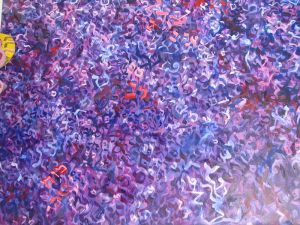
Kabbalistic painting of the supernal illumination of Hebrew letters in Creation. Courtesy of David Rakia under CC BY 3.0 License

March 15, 2017
Originally published on The BeZine site. Most of the links here will take you there.

The title of David Cooper’s book on Kabbalah invites us to re-think the Creator as Creating: God is a Verb. While I don’t want to equate science to God in a religious sense, I want to borrow this re-conception. Science is creative, creating, if you will, knowledge of the world. Science is a verb.

Too often we get tied down to a concept of science as about facts. However, as Thomas Kuhn describes it in The Structures of Scientific Revolutions, science is a process (hence, verb). The process involves a method (the scientific method), observation, repeated results, and, if repeated results are consistent, an assertion that a hypothesis is likely to be true. However, Kuhn explains that it is also a sociological process where the method and affirmed hypotheses lead to paradigmatic beliefs—models that predict reasonably well future observations.

The paradigms are not easily changed—the paradigm of Newtonian Mechanics, which work very well in most real-world situations, did not easily yield to Relativity and Quantum Mechanics even as Newtonian physics accumulated observations it couldn’t explain while quantum physics explained more and more. As a model for most human activities on Earth, though, Newton’s model still works. It’s when boring down to atomic particles or moving out into massive astronomical systems, or specific cases like black holes and light itself, that we need Quantum Mechanics.

The different (and often competing) models—also known as theories—are products of science, the verb. The scientific process refines, overturns, explores new models. Science, at its best, produces closer and closer approximations of the actual universe it models. This is different from a belief in an unwavering truth or an ideology—in part, because it relies on observation and corrections if observations do not show what the model predicts. And second, because science does not make truth statements but, rather, probability statements. Sometimes, the probability approaches 100%, sometimes only 95%.

The flexibility that comes from self-correction unfortunately also provides ammunition for “science deniers,” such as those who deny climate change. As science is a process and models do change, as models are based on predictive ability and that ability is not 100% even in the best cases, those whose ideology or greed get in the way of accepting the predictions (even the very strongly likely ones) often claim the whole model is “unreliable,” or point to earlier results that required corrections to the model in order to discredit the whole theory. Yet, those who object do not offer an alternative model that does stand up to the process of scrutiny, repeated results, and reliable prediction of future events. They often offer no alternative at all.

At its outer theoretical spheres, the science verb sometimes takes us to conversations that sound like mysticism—as do some of aspects of that mysterious energy, light. Humans have a long cultural (and religious) history with light. Arthur Zajonc’s book Catching the Light: The Entwined History of Light and Mind provides a wide ranging cultural and inter-cultural exploration of human understanding of light through history. In the end, Zajonc re-connects current quantum physics concepts with those from ancient myths as accurate metaphors (or analogies). Zajonc, a professor of physics at Amherst (now retired), has studied culture, mind and spirit in relation to physics from his perspective as a physic working in quantum optics (for example: The New Physics and Cosmology: Dialogues with the Dalai Lama, one of his better known books).

In a very real sense, the verb science interacts with arts and culture. It is an active process of human society, a developed methodology for producing close observations and repeatable results to help us build models that predict future results under different conditions. It is not a series of facts, but rather a system of understanding and predicting creation. In this way, it actively creates the world, literally as we know it. And it has influence culture. Certain newly (re)discovered understandings from mathematics helped European artists develop perspective in painting. A recent example, Chaos Theory, with its fractals and butterfly effect, has influenced art, music, and literature, and not just with science fiction movies.

In this issue, we celebrate, explore, and raise questions involving science, culture, politics, and religion. John Anstie and I both contribute poems that have sub-atomic particles at their centers, but are not (only or even mostly) about them. Naomi Baltuck explores Galileo through the Musee Galileo, in another one of her marvelous photo-essays. An sampling of snippets from science take us through Science in culture, politics and religion”  in Corina Ravenscraft’s exploration of connections. In “A Life,” Michael Watson gives a highly personal account of his own encounters and loves with different ways of understanding — or knowing — embodied in the theme’s elements of science, culture, religion, and politics. Current politics seem to attack the different approaches each has to offer. Phillip T. Stevens begins with Chaos Theory and moves into myths, the myths of myths, as it happens. Hearts, Minds, and Souls, by John Anstie, considers the theme from a socio-political framework, considering societies need to control as one of many elements in shaping science, culture, and religion through politics.

The issue has much more to offer— fiction by Joseph Hesch and lots of poetry by Jamie Dedes, Renée Espiru, Priscilla Galasso, Terri Muuss, and Phillip T. Stevens. The more light section has three more poems that are not directly related to this month’s theme, but we wanted to share with our readers at this time.

Michael Dickel
Associate Editor


“It is frequently the tragedy of the great artist, as it is of the great scientist, that he frightens the ordinary man.” Loren Eiseley (1907 – 1977), American anthropologist, educator, philosopher, and natural science writer

This issue of The BeZine is dedicated to scientists the world over, especially those who are conscientiously fighting to preserve this earth, its people, and scientific integrity. Throughout history scientists have met with the same skepticism they face in some quarters today. They were sometimes misunderstood and crudely punished. Alan Turing comes to mind first, cruelly treated after being of enormous service to his country.

I think of  Rhazes (865-925), a forward-looking medical scientist who wrote a compendium of all that was known about medicine in his time.  He was beaten over the head with his book, went blind and was unable to continue his work. Galileo’s (1564-1642) insight and honesty was labeled heresy. Albert Einstein’s (1879-1955) books were burned. Henry Oldenburg (1619-1677) was suspected of spying when he sought to acquire and publish worthy works by people outside his own country.

The tensions between ignorance and cognoscence continue today. So much so that in my country scientists are planning an Earth Day march on Washington to protest the current regime’s dismantling of climate protections. Members of many scientific and research groups are scrambling to archive government data they believe could be in jeopardy under this new regime.

Many thanks this month to Michael Dickel for having my back on this issue and for his distinguished contributions. Thanks also to all our supporters – especially Terri Stewart, Charlie Martin, Chrysty Darby Hendrick, Ruth Jewel, Lana Phillips, Sharon Frye, Silva Merjanian, M. Zane McCllelan and Inger Morgan and to this month’s contributors (not in any particular order) Priscilla Galasso, Corina Ravenscraft, Joe Hesch, Michael Watson, Naomi Baltuck,  John Anstie, James R. Cowles, Terri Muuss and Pat Leighton. All are valued as we pursue this small effort in the name of peace and understanding.

New to our pages this month is Phillip T. Stevens. Phillip tells me he spent most of the eighties and nineties as a community and arts activist. To pay his bills he taught writing and visual design to community college students and at-risk youth for the Texas Youth Commission. He published four novels, two volumes of poetry and academic papers (including a series of articles on the role of metaphoric thinking in the development of scientific theory and religious belief for the International Journal of Religion and Spirituality in Society). Phillip lives with his wife Carol in Oak Hill, Texas, where they rescue abandoned cats for Austin Siamese Rescue.

And here we are. Thanks to the efforts of many, we leave the March issue in your hands. Enjoy and …

Be inspired. Be creative. Be peace. Be …

On behalf of the Bardo Group Beguines
and in the spirit of love and community,
Jamie Dedes, Managing Editor


TABLE OF CONTENTS

Science in Culture, Politics and Religion

To Read this issue of The BeZine

  • Click HERE to read the entire magazine by scrolling. (I placed it in  backwards though, so you start at the end and move forward.  Sorry about that.  Just getting this down. J.D.), or
  • You can read each piece individually by clicking the links the below.

BeAttitudes

The Speed of Light Poem, Michael Dickel

Unreality, John Anstie

Lead Features

That Was Then, This Is Now, Naomi Baltuck
Some Scientific Snippets, Corina Ravenscraft
A Life, Michael Watson
Still Phoning ET, James R. Cowles
Myths of Eden and Science, Phillip T. Stevens

Hearts, Minds and Souls, John Anstie

Fiction

Shills Like White Elephants,  Joseph Hesch

Poetry

The Return of Primordial Night, Jamie Dedes
Butterfly Effect, Michael Dickel
The Road Leads Away and Back, Renee Espiru
Brain Tools, Priscilla Galasso
Landscape with rice, Patricia Leighton
and the word was, Terri Muuss
Two Excerpts from “Poems, Parables and Prayers”, Phillip T. Stevens

More Light

Once Upon a Sea Green Day, Jamie Dedes
Purim Fibonacci, Michael Dickel
How Can It Be, Ann Emerson
What Can I Say, Terri Muss
Spread of Fear, Carolyn O’Connell


CONNECT WITH US
Daily Spiritual Practice: Beguine Again, a community of Like-Minded People

Facebook, The Bardo Group Beguines

Twitter, The Bardo Group Beguines

THE BeZINE, Vol. 2, Issue 12, Environmental Justice, Intro and Table of Contents with Links

September 15, 2016

Originally published on The BeZine, Be inspired…Be creative…Be peace…Be
Reminder: Join us this Saturday for 100,000 Poets and Friends for Change. Our theme this year is Environment/Environmental Justice.

The Environment is a complex array of interconnections and interbeing (as Thich Nhat Hahn would say). Steve & I have various metaphors for this. He likes to refer to “his bowling pins”. He imagines setting up a toy set of pins on a lawn and bowling at them. When they scatter, you set them back up exactly where they landed and bowl again. This takes you all over the neighborhood in endless permutations. I think of “trophic cascades”, changes in an ecosystem that originate at an extinction or other dramatic altering of balance, similar perhaps to “the domino effect” but less linear. However you try to wrap your brain around it, the nature of Life on this planet is intricate and incomprehensible. We are wise to approach it with the utmost humility. Because we are intrinsically involved, however, we must not fear to engage. We are already immersed. We might as well learn to float, swim or drown with awareness. With that understanding, we invited our contributors to share their perspectives from where they are. And there are many other currents besides. Let me just mention a few for further research:

Environmental Law – there are some exciting changes emerging in the championing of the Rights of Nature in legal systems. Corporations have legal protection and rights as individuals in many countries, while communities and natural entities (bodies of water, land, animals, etc.) do not. The ability to stand up against the interests of a Corporation and say, “We don’t care if you want this resource. You can’t have it!” is an idea that can be incorporated into law. Thomas Linzey of the Community Environmental Legal Defense Fund (CELDF) is working to make that happen. Watch his keynote address to the Public Interest Environmental Law Conference (PIELC) HERE.

Deep Ecology/Environmental Philosophy – Deep ecologists are a group of philosophers who question the anthropocentrism embedded in the logic and ethics of Western culture. Arne Naess is the “Father of Deep Ecology”. Peter Singer is another important philosopher who spearheaded the discussion about the ethical treatment of animals in the early 70s. These philosophers are everything from temperate reformers (Aldo Leopold and Wendell Berry) to anti-civilizationists (Derrick Jensen).

Habitat/Wildlife/Green Corridors – where human interference has fragmented the landscape, other species suffer huge losses. Establishing connected corridors of undisturbed terrain help to shift the paradigm from domination to coexistence. The American Prairie Reserve has a habitat base of more than 353,000 acres. Read the story of this amazing management project HERE.

Organic Farming – the proliferation of large factory farms that employ pesticides, herbicides, hormones and other chemicals while dumping huge amounts of toxic waste on the land has significantly impacted the health of the planet. Soil health, human health, pollinator health – so many things are involved here. Returning to methods of food production that are more locally-scaled and less dependent on chemicals is a natural remedy, but must be radically and quickly implemented to turn degradation around. Support organic farming in your area!

And now, we proudly introduce our Table of Contents,
Priscilla Galasso with Steve Wiencek

Editorial Notes

How Will I Behave Here?, Priscilla Galasso, Contributing Editor
Nature…Place…Community, Steve Wiencek, Guest Editor
Cruel Legacy, Jamie Dedes, Managing Editor

Environment/Environmental Injustice

Awareness

All Things Are Connected,  Naomi Baltuck
The Power of Place, Michael Watson
The Hoopoes Are Back, Lynn White
Dawn Chorus, Lynn White
Another Kind of Beauty, Jamie Dedes
Cloud Watching, Jamie Dedes
Meditating on Ancient Oak, Carolyn O’Connell
The Wordless Mystery, Jamie Dedes
There Is Pleasure in the Pathless Wood, Gordon George Byron, Lord Byron

Action

The Victories Are Important!, Corina Ravenscraft
Regicide, Joe Hesch
Trespass, Terri Stewart
Naturally Devoted, Priscilla Galasso
Environmental Injustice,  Mark Heathcote
Soil Isn’t Sexy – Neither is War, Michael Dickel
Climate Change (poem), Michael Dickel

Extinction

Rounded With a Sleep, Part 1, James Cowles
Rounded With a Sleep, Part 2, James Cowles
For the Last Wolverine, video reading, James Dickey
Last Call, Corina Ravenscraft
Eden Revisited, Charles Martin
Black Honey Fare, Renee Espriu
Hoping It Regenerates – Again (artwork), Jerry Ingeman

CONNECT WITH US

succulents
Daily Spiritual Practice, Beguine Again

Facebook, The Bardo Group Beguines

Twitter, The Bardo Group Beguines

Access to the biographies of our core team, contributing writers and guest writers is in the blogroll where you can also find links to archived issues of The BeZine.

THE BeZINE, July 2016; Vol. 2/Issue 10; Faith in Things Seen and Unseen

If the doors of perception were cleansed every thing would appear to man as it is, infinite.
For man has closed himself up, till he sees all things thro’ narrow chinks of his cavern.
The Marriage of Heaven and Hell, William Blake

This is the original Table of Contents from the July 15 issue.  Working links to all the pieces are included here.

Faith! In the discussions here you won’t find consistent perspective or theology. You will find faith explored in its many manifestations, religious and otherwise. You’ll find it both shaken and unshakable and in things of the spirit, in nature and humanity, in intuition and in self and family. Unity here is not in things creedal but in the shared values of peace, sustainability and social justice and for many of us – implicitly – in ultimate salvation through artistic expression.

Unitarian Universalist Minister, Rev. Ben Meyers, starts us with an appeal to religions to give their prayers and vigils legs, to befriend one another into the groundswell of local social justice initiatives that ultimately help to inform and bolster global efforts toward equity, justice and peace.This couldn’t be more appropriate as The BeZine “went to press” amid news reports of yet more violence.

You will find our usual diversity represented: skepticism and atheism, the three Abrahamic traditions, shamanism, and the mystical perspectives of Buddhism, Hinduism and Sufism.

Our special selection of lead features and poems are by: shamanic practitioner and psychotherapist, Michael Watson; resident skeptic, James R. Cowles; the always engaging and level-headed analyst, Priscilla Galasso; the fallen altar boy, poet Joe Hesch; professional story-teller and photographer, Naomi Baltuck; our renaissance man in Sheffield, John Anstie; and university librarian, poet and artist, Corina Ravenscraft, on the ultimate triumph of the Universe.

Speaking from positions of their unshakable religious faith are: Algerian poet, Imen Benyoub, on the spiritual joys and family and community connection she finds in the holy tradition of Ramadan; Catholic Theologian, Fr. Daniel S Sormani, theology professor at Ateneo de Manila University, warmly writes about lessons learned from the homely life of the Blessed Virgin Mary; and our gentle Italian literary contributor, Mendes Biondo, tells of inspiration from the Bishop of Hippo Regius (current Annaba, Algeria), St. Augustine. Imen and Mendes are our two student contributors.

Two of our contributors allude to child sexual abuse but a third, Terri Muuss, addresses it head-on and in depth. These are experiences that can strengthen faith in self, though that doesn’t come without pain and work. Terri is featured this month in our popular “Getting to Know You” section.

Our July poetry collection covers matters spiritual, emotional and environmental with excerpts from published collections by Zine regulars: Matt Pasca, Terri Muuss, Myra Schneider, Silva Merjanian and Michael Dickel, contributing editor to The BeZine. With joy we welcome back two lights: German poet, photographer and educator, Dr. Aprilia Zank and English poet, Patricia Leighton.

New to our pages in this issue are:

  • Connie Spearing  who writes of finally “seeing” her Irish grandmother with the accidental discovery of her family’s history during and after World War 1.
  • Sandra Renew’s‘s poetry expresses her opinions on the state of the world. She wonders who sleeps at night? Who is lucky enough to live in safety and peace?
  • Anca Mihaela Bruma, citizen of world, educated in Rumania, is a poet who writes spiritual autobiography. Anca wanted to incorporate some lovely music and art into her posts. Due to copyrights in one case  (Dorina Costras’ art) and technical incompetence (mine) in the other, we are unable to share Dorina’s paintings or Anca’s soundcloud recordings. However you can view Dorina’s work HERE. You can listen to Anca on soundcloud HERE.

****

One last word: DON’T FORGET TO SAVE THE DATE Saturday, 24 September 2016 is The BeZine’s 100,000 Poets for Change, an event which we host virtually.  This event is part of an  important annual arts initiative for global solidarity and peace, social justice and sustainability. Reader participation is invited and encouraged. This is a good time to share your work in the service of a worthy cause.  As is our tradition, all submissions will be archived here and at Standford University. Instructions for participation will be provided on our blog that day with Michael Dickel serving as Master of Ceremonies.  Between Michael and me, the event will run from morning in Israel to midnight in California. The theme this year is Environment/Environmental Justice. More detail HERE.

****

Now, come friends.  Read.  Nourish yourselves at our table …

In the spirit of peace, love and community
and on behalf of The Bardo Group Beguines,
Jamie Dedes
Founding and Managing Editor
The BeZine

EDITORIAL

The World in Vigil, by Rev. Ben Meyers

THEME: FAITH IN ALL THINGS SEEN and UNSEEN

Lead Features

Knowing, Michael Watson
Varieties of Faith – Rational and Religous, James R. Cowles
Faith Means Making Choices, Priscilla Galasso
A Perfect World, Naomi Baltuck
Falling But Willing, Joseph Hesch
The Pine Cone Project, John Anstie
Regarding Faith, Corina Ravenscraft

Essays

A Month of Light, Imen Benyoub
The Blessed Mother: She Reminds Me of Who I Am and Who I Should Be, Fr. Daniel S. Sormani, C.S.Sp.
A Little Story of Faith, Mendes Biondo
NOTIONS OF THE SACRED: Poetry as Spritual Practice, Jamie Dedes
The Grandmother I Didn’t See, Connie Spearing

Speculative Flash Fiction

Moshe’s House in Space, Michael Dickle

Poetry

Rhetoric Introspection, Anca Mihaela Bruma
Our Autumn Spring, Anca Mihaela Bruma
Hindsight, Anca Mihaela Bruma

Unidos en Cristo, a poem in English y en español, Jamie Dedes

Three Poems, Michael Dickel
En Gedi, Michael Dickel
Hybrid: Warm Hunger, Michael Dickel

Lost Behind Clouds in Skies of Blue, Joseph Hesch
Hang in There, Joseph Hesch

And the Village Still Sings for Taha Muhammad Ali, Patricia Leighton

Coverage, Silva Merjanian

Passing, Terri Muuss
What Heals, Terri Muuss

Tanyou (In Search of Quietude), Matt Pasca
Silence, Matt Pasca
Toll, Matt Pasca
When Joy Breaks, Matt Pasca

Bring all those who where led astray out of the desert, Sandra Renew

3 a.m., Myra Schneider

prayer for shadows, Aprilia Zank

GETTING TO KNOW YOU

Terri Muuss, Over Exposed

CONNECT WITH US

IMG_0234Beguine Again, Spiritual Community and Practice

Facebook, The Bardo Group Beguines

Twitter, The Bardo Group Beguines

Access to the biographies of our core team, contributing writers and guest writers is in The BeZine blogroll where you can also find links to archived issues of The BeZine (currently in the process of updating), our Mission Statement and Submission Guidelines.

SAVE THE DATE: 100,000 Poets for Change act in global solidarity on September 24, 2016

100TPC2014Logo

100TAC100TMC

AN ANNOUNCEMENT FROM 100TPC COFOUNDER, MICHAEL ROTHENBERG: “On September 24, 2016 poets, musicians and artists around the world will be organizing poetry readings, parades, gallery exhibitions, music and dance performances focused on issues of peace, justice, and sustainability. This important annual global act of solidarity is the core activity of 100 Thousand Poets for Change, a non-profit organization.

100 Thousand Poets for Change offers an opportunity for a peaceful global discussion of issues such as war, global warming, poverty, racism, gender inequality, homelessness, gun violence, police brutality, lack of affordable medical care, censorship, and animal cruelty. Individual organizers are free to choose the specific topic and focus of their local event. If you are interested in participating in this global action please post sign up HERE.”

*****

100TCP - 2016

THE BARDO GROUP BEGUINES will host a virtual 100TPC event on September 24 with American-Israeli poet, Michael Dickel (Fragments of Michael Dickel) as Master of Ceremonies. Between Michael and me the event will run from morning in Israel to midnight in California.  You can share your work through Mr. Linky (instruction will be provided) or in the comments section of the blog post that day at The BeZine where you can also enjoy the work of other artist activists.

Work may include anything on topic: poetry, essay, short fiction, video (music, mime, dance, dramatic monolgue), art and photography and so forth.  The topic we’ve chosen this year – selected by Rev. Terri Stewart (Beguine Again founder) – and supported by our core team of poets, writers, story-tellers, artists and photographers, musicians and clerics is ENVIRONMENT and ENVIRONMENTAL JUSTICE.

This event is open to everyone wherever you are in the world and makes possible participation even if there is no street event happening in your area or if you are homebound. We hope you’ll join us.  Soon after the event, we’ll collect everything into one commemorative page. This is tradition. Commenorative pages from prior years can be accessed at The BeZine through its blog roll. All work will be also be archived at Stanford University, Stanford, CA.

Please feel free to share this post widely. Thank you!