Page 77 of 79

HONORING THE TRUE HISTORY OF INDIGENOUS PEOPLES … and your Wednesday Writing Prompt

Eel River, Humboldt County, California

The Wiyot lived in the Humboldt Bay area of Northern California and they live in my dreams. For about a year-and-half we made our home in Humboldt County, an area about 200 miles north of San Francisco on the far North Coast. It’s a place dense with redwood forests, wild rivers, and creeks that run dry in the summer and overflow in the winter. If you live in a rural area or grew up in one, you might take such things for granted. Having lived in paved-over cities all my life, they seemed magical to me.

Our four acres were rich with sequoia, madrone, oak, and twenty-eight fruit trees. Blue jays flew in to feed in the morning. Quail families visited at night. They marched down our drive in orderly formation. Hawks and hummingbirds put on air shows. Rosemary thrived unattended. There was a beautiful lush 100-year-old rosebush. There were wild roses too. They gifted us hips for homemade cough syrup.

Scotch Broom
Scotch Broom

The colors there were brilliant and varied: smog-free blue skies (you could see the stars at night!), rich brown earth, a population of purple iris in a grove of California bay laurel, orange cosmos and red dahlias, yellow scotch broom lining our creek-side in the company of cascading Japanese quince. The Japanese quince provided ample housing for Rufus hummingbirds. Nearby, Queen Ann’s lace stood unbent by the wind. When it went to seed we collected the seeds for cooking. They have a taste somewhere between carrot and caraway.

The spread of blackberry bushes was both wonder and wealth. They seemed never to run out of fruit. I gathered some almost every morning for breakfast and every morning I thought of the women in buckskins who preceded me more than a century ago. Perhaps there was a mother who stood on this spot, picking blackberries for her son too.

I think the peace, quiet and simplicity of that place made it easy to imagine the first peoples as they might have lived there in other times. I could see them tending fires, boiling and drying acorns and then grinding them for flour, bathing in the river, raising their children, gathering wood, hunting and enjoying sacred ceremony. I knew the very same ancient sequoia that watched over us had watched over them.

Humboldt Bay near Eureka, traditional Wiyot lands
Qual-a-wa-loo (Humboldt Bay) near Eureka, traditional Wiyot lands, The 1860 Wiyot Massacre happened on Indian Island

Finally, I did some research. I was sad but not surprised to find that the area was once inhabited by an indigenous people –  the Wiyot people – who were decimated in a genocide ~
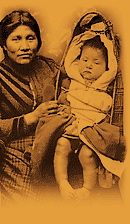
Wiyot Mother and Child

“Eureka newspapers of the time exulted at the night massacres conducted by the “good citizens of the area”. Good haul of Diggers and Tribe Exterminated! were 2 headlines from the Humboldt Times. Those who thought differently about it were shut up by force. Newspaper publisher and short story writer Bret Harte called it “cowardly butchery of sleeping women and children” — then had to flee ahead of a lynch mob that smashed his printing presses.” MORE [Wiyot Tribal Council Page]

Note: Originally written in 2012, I’ve posted this today as a an acknowledgement of Indigenous Peoples’ Day, October 12. More than 40 US jurisdictions celebrate Indigenous Peoples’ Day; the majority of these have replaced Columbus Day with this holiday, but some jurisdictions celebrate both Columbus Day and Indigenous Peoples’ Day.

In addition to reading here, please also treat yourself to Michael Watson’s post Silence, Story, and Healing, a short and thoughtful piece.

© 2012, Jamie Dedes, All rights reserved; Photo credit ~ Eel River by Jan Kronsell and released into the worldwide public domain; Scotch Broom by Danny S. – 001 under CC BY-SA 3.0; Humboldt Bay near Eureka by Tony via Wikipedia and Licensed under CC A 2.0 Generic; Wiyot Mother and Child, Humboldt State University

WRITING PROMPT

Perhaps you too grew up in a time and place where the history books taught a one-sided view of the land you live on and the people who originated there. Perhaps, like me, you had to get out of school and meet new people, read books that weren’t sanctioned by academic authority and do your own research to learn about the devastation that was  and is rained upon indigenous people all over the world … the violence, the slavery and the genocide. Perhaps you are a descendent of the original people who suffered so and know the truth from the stories of your elders. Perhaps your roots are in the nations of empire and you are saddened that they perpetrated or were complicit in such unimaginable injustice.

We can’t change what happened in the past but as writers and poets we can make sure that lies aren’t propagated and that the truth is told and shared. Write a poem, short story, essay or article that illustrates some aspect of colonialism, racial bias and stereotype, or the modern complications of colonial history.

Your Mother, a poem … and therein lies your Wednesday Writing Prompt

"The wound is the place where the light enters in." Jalāl ad-Dīn Muhammad Rūmī

your mother

a tattered memoir in sepia tones
hanging on the wall of your office
a tiny plump sparrow of a woman
by a lone stone cottage
toothless, poor old thing
a warm shawl pulled to cover her head
an apron, worn shoes
from a time long past
from another world
my Turkish grandmother
what was her name?
you never said
i never asked

– Jamie Dedes

WRITING PROMPT

My paternal grandmother never made it to the United States and died before I was born.  I remember my father mentioning her only once and saying that when his father died he was sad that his mother never wore colors again. She only dressed in black. In some times and places, it’s customary for women to wear only black after the death of a husband – not just for a mourning period, but for the rest of their lives.

A sepia photograph of her hung in my father’s office.  I knew she was his mother and never thought to ask her name or to ask about her life.  That’s something I regret. Because of this I think, she comes to mind more often than the only grandparent I ever knew, my mother’s mother, Adele.

Write a poem, creative nonfiction piece or fictionalized account of a grandparent or other relative.  Perhaps there is a mystery – something specific you wish you knew and had asked about – or perhaps there’s something you wish you’d done with him or her.

© 2016, poem, prompt and illustration, Jamie Dedes, All rights reserved

There Is Pleasure in the Pathless Wood … and therein is your Wednesday Writing Prompt

IMG_0046There is a pleasure in the pathless woods,
There is a rapture on the lonely shore,
There is society, where none intrudes,
By the deep sea, and music in its roar:
I love not man the less, but Nature more,
From these our interviews, in which I steal
From all I may be, or have been before,
To mingle with the Universe, and feel
What I can ne’er express, yet cannot all conceal

Gordon George Byron, Lord Byron
from Childe Harold, Canto iv, Verse 178

WEDNESDAY WRITING PROMPT

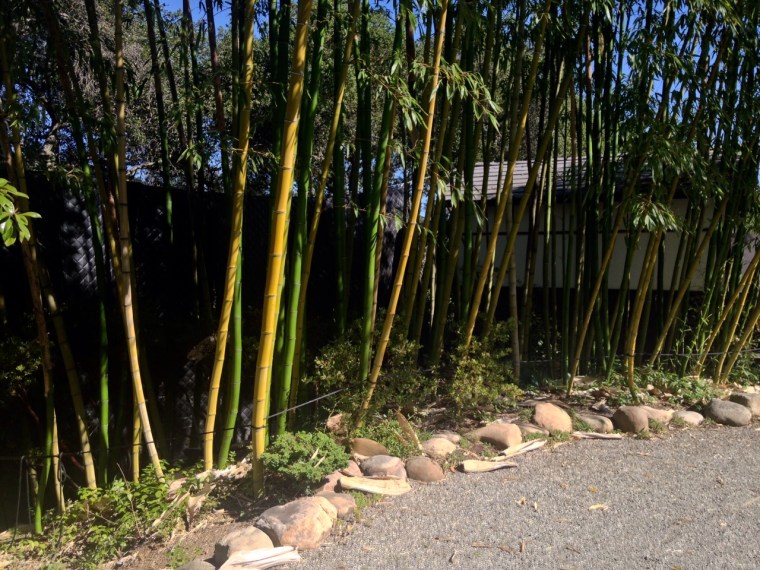
It’s important – and it’s often a relief – to get out in nature where the quiet is healing and the beauty helps us to feel our connection with the whole of the Universe.  Byron writes here of the woods.  Where do you go for solitude and solice, refreshing your soul? Woods. Garden, Lake. Ocean. Wilderness lands. Perhaps a park like the one in the photograph above. Tell us about it and how you feel, how it draws you in and wakes you up spiritually. Do it by way of poetry or creative nonfiction. May this be a meditative exercise for you.

© photo, Jamie Dedes

THAT WHITE WATCHUNG HOME, a poem … and your Wednesday writing prompt

img_1167I wonder if that old Watchung home still stands
or has it been demolished by developers building
rows on rows of barracks-like housing where
big maples used to rise to line the roadway
·
Driving up to that sprawling place, soundly built
and well-loved, a kaleidoscope of colors greeted us –
The burnished bronze of our uncle’s skin and the
brown-black of his doe eyes and dense curly hair
The azure sky and snowy clouds tumbling down to
top the perfect juicy purple of ripe Italian plums
and the brisk reds of beefsteak and plum tomatoes
The true-green of the too-long grass feathering the
rich chocolaty shades of the well-mulched earth
·
That antique home was pristine white with green trim
and such a busy, welcoming, wrap-around porch,
often with bushels of fruit and vegetables standing
in the company of freshly cut flowers piled and tossed
All waiting . . . for what and for whom?
The airy rooms were waiting too with windows
and doors thrown open to children like me breezing
in from the The City with our pallid skin and eyes
burning to see our uncle and some untouched nature
·
Well-worn carpets, Persian and Arabian, brushed bare feet
as searching room-to-room for hidden treasures and history
I marveled at the accoutrements of other decades –
the water pump, the dumb-waiter, the pull-chain water closet
Each room was a marvel of furnishings, fine wood and hand-turned
Drawers lined with newspapers, yellow and dissolving with age,
advertising corsets, questionable cures, and other ephemera of this
same place in times mostly forgotten except for stale news
telling its stories to the silence in chests mostly empty and untouched
The mammoth tables in the large white high-ceilinged kitchen and
the stately dining room with its chandelier and heavy drapes spoke of
more formal multi-generational dinners before these days of greater
mobility and the tech distractions of i-This and smart-That

The peaceable, sturdy safe-haven of that white Watchung home
matched the steady embrace of its woods and orchards
where a child like me could lie on the hardy ground,
sun blinding bright, browning spindly arms and legs, small body
soaking in rich damp earth, mind yawning, stretching, awakening
Imagination rising in mists of violet-grey shot with silver stories
and flaxen poems finding their way into the pages of a notebook
Such plum-sweet visions set free by that mystical place –
I wonder if it still stands in Watchung, if it remembers me
And how I loved it – I still do

WRITING PROMPT

I think a lot about houses and housing these days. Here in Silicon Valley there’s a critical shortage of housing in general and especially of affordable housing. I know several families who lost their homes when the housing bubble burst in the later part of the last decade. I have a neighbor who ended up on the street for two years . There are too many folks who make their way by couch-surfing or living out of their cars or trucks. We read in the papers about homeless children here and abroad and think and pray and do what we can for all those people sleeping in the rough, escaping violence in their homelands. I’ve always appreciated our homes, never anything fancy but definitely safe, clean and functional, and I remember warmly the homes and hospitality of friends and relatives with whom I stayed at different times when I was a child.

I’m sure you too have memories of the houses or apartments in which you grew-up or stayed when you were young. Maybe those memories are good. Maybe not. Either way, they probably remain vivid in your mind. Perhaps there was one thing – like the tree in A Tree Grows in Brooklyn – that had special meaning or gave you hope. Outside the complex where my mother lived there were two berry trees, Mulberry perhaps, that I thought of as guardians of the building.

Write a poem or creative nonfiction piece about the house or apartment that most stands out in your memories of childhood and tell us what it meant to you, what was special or loathsome, what dreams you may have nurtured there, or how it might have fixed your vision of the home you’d have as an adult. Take your time and enjoy the process.

© 2016, words and photograph, Jamie Dedes, All rights reserved