Page 78 of 79

the smell of wood, the scorch of fire, a poem … and Your Wednesday Writing Prompt
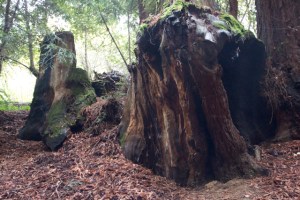
stumpsthis rough-barked sequoia stump, sitting in majesty
in its coastal home, victim of wildfire, burned down
to its gnarly roots, its nicks, holes and char, eons
of scars, life seemingly cut off, goddess snake alive
inside the concentric circles, the smell of wood and
scorch of fire, at the verge of our infinity, in its truth ~

pristine

rugged

pulsing

haunted by the geometry of limbs, the calculus of green,
the algebraic eloquence of a world within a world  ~

So present.

So essential.

So primal.

it sings to itself in the marrow of our bones

– Jamie Dedes

WRITING PROMPT

In preparation for The BeZine 100,000 Poets (and Friends) for Change

Saturday, Sept. 24, 2016

Theme: Environment/Environmental Injustice

This poem was originally written in 2014 for Wilderness Week. There were then and are now a number of fires raging in the western United States. Wildfires are a natural occurrence but since the 1980s they’ve been increasing due to human-caused climate change. According to the Union of Concerned Scientists . . .

Wildfires in the western United States have been . . . occurring nearly four times more often, burning more than six times the land area, and lasting almost five times as long (comparisons are between 1970-1986 and 1986-2003) ….. many of the areas that have seen these increases—such as Yosemite National Park and the Northern Rockies—are protected from or relatively unaffected by human land-use and behaviors. This suggests that climate change is a major factor driving the increase in wildfires.” MORE

We tend to look at these fires in terms of the expense incurred fighting them and the cost of lives, homes, habitat, wild life and so forth. However, there’s one consideration we may forget: Nature teaches us, comforts us, feeds us and is the ebb and flow of our spiritual and physical lives. The loss – the environmental injustice – is profound on more than a material level. This is what the smell of wood, the scorch of fire seeks to illustrate. “Nature” is who we are. Nature is us.

Write a poem or creative nonfiction piece on what the natural environment means to you and perhaps the sense of loss you feel as you note plants, animals, insects and wilderness that you’ve seen damaged or destroyed by climate, industry, overpopulation and whatever else has effected the area in which you live.

© 2014, poem, Jamie Dedes, All rights reservedPhoto credit ~Bay Nature.org: “The Bay Nature Institute, based in Berkeley, California, is dedicated to educating the people of the San Francisco Bay Area about, and celebrating the beauty of, the surrounding natural world. We do so with the aim of inspiring residents to explore and preserve the diverse and unique natural heritage of the region, and of nurturing productive relationships among the many organizations and individuals working towards these same goals.” Read more HERE.

You are invited to join The Bardo Group Beguines at The BeZine blog on Saturday, September 24 for 100,000 Poets (and friends) for Change.  Below is a list of more features to provide you with information. We hope you’ll join us.

RELATED:

I Remember You and the Amber Moon, a poem … and therein lies your Wednesday Writing Prompt

file3761333734081When I remember you
I remember the amber moon
and the burnished brown of old oaks,
their leaves like hands waving goodbye
Summertime, as dusk transitioned to dark,
we’d sit on the beach by slow cooking-fires,
their coals gone from hard black to gray dust
I cherished your warm hug in the chill of the night
and falling asleep, safe

I stopped loving you,
but I never stopped loving the memory of you
I carry that with me on lunatic trips of the heart ~
though my preference is to rest solitary on forest logs
with their stunning imperfections and those
secret-lives swirling in the sunless damp on which they rest

I think of the path that led from then to now,
a mix of smooth and rough along a rocky coast ~
I live near the sea to breathe
I imagine you living, wherever you are
by an ocean with your skin still smelling of Old Spice,
with your well-formed hands, the hands of a pianist and surgeon,
and the high-tensile strength of your mind

In the odd geography of life, no one knows where we came from
or how it was, how it felt to be us in the days of promise
when the spell of Hudson Bay fell like a prayer to St. Christopher
That bay is no longer our safe harbor,
but it gave us our sturdy roots and strong wings
and so the nights, the nights by this bay are good
When I smile at the amber moon, it smiles at you

– Jamie Dedes

WRITING PROMPT

Unfortunately first loves aren’t everyone’s happiest memory. Nonetheless, they often are good experiences from which to write.  Write an epistolary poem or prose piece that tells the story of your first love from the perspective of time and expresses how you feel today about that experience and that person.

© 2013, poem, Jamie Dedes, All rights reserved; Photo credit ~ Anne Lowe, Public Domain Pictures.net

WHO WILL FORGIVE GOD, a poem . . . and therein lies your Wednesday Writing Prompt

"The Apotheosis of War" 1871, Vasily Vereshchagin
“The Apotheosis of War”

God is on our side …
without a shadow of a doubt
they said and
no nay-saying her parents
her husband, her people
the politicos and demigods
their war-mongering

her eyes surveilled the warriors as
they cut across fields of innocence,
they stomped and postured

no Light shining from dark disorder
no Joy in parting a sea of blood

in her heart: doubts
large, lively, captive
packed tight into small muscle,
specters beating at the walls

ribs
sore

eyes
burning

soul
aching

they know not what they do

God forgives them all, she was taught
But who will forgive God

– Jamie Dedes

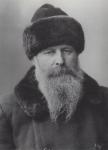
Vasili Vereshchagin
Vasili Vereshchagin

The Apotheosis of War painting (1871) is by Vasily Vereshchagin (1842-1904), a Russian artist, who dedicated this painting and one other – Left Behind  (a wounded Russian soldier abandoned by his comrades) – “to all conquerors, past, present and to come…”

WRITING PROMPT

There were several observations that contributed to this poem but, most of all, it was reading some comments on Facebook, especially this one: “If this is God’s will then God has a lot of explaining to do.”  War, destruction, murder: God’s will, free will, or the apotheosis of nihilism (insanity)? Write something that – by virtue of its brevity – is pungent: a poem or perhaps a parable.

Please feel free to put a link to your poem or parable below in comments so that I and others may come read your work.

© 2016, poem, Jamie Dedes, All rights reserved; the portrait of Vasili Vereshchagin and the photograph of “The Apotheosis of War” are both in public domain.

Le Fée Verte, Absinthé … and Your Wednesday Writing Prompt

Absinthe-glass

A glass of absinthe is as poetical as anything in the world, what difference is there between a glass of absinthé and a sunset.” Oscar Wilde 

Albert Maignan's Green Muse (1895): a poet succumbs to the Green Fairy.
Albert Maignan’s Green Muse (1895): a poet succumbs to the Green Fairy (public domain)

in the wilderness of those green hours
gliding with the faerie muse along café
walls virescent, sighing jonquil wings of
poetry, inventing tales in the sooty red
mystery of elusive beauty, beguiled by an
opalescent brew, tangible for the poet and
the pedestrian, the same shared illusions
breaching the rosy ramparts of heaven

– Jamie Dedes

WRITING PROMPT

This poem was originally written in 2011 in response to Victoria Slotto’s Writers’ Fourth Wednesday prompt, which we would host at The BeZine in the years before that site became a zine.  Victoria had written:

As a would-be artist and a former museum docent, I enjoy playing with the elements of art in my writing–both in fiction and poetry. A favorite is to use of color to create mood. In art, abstract expressionists often use color as the primary tool to convey their “story.” There are many interpretations of the meaning or symbolism accorded to each color. I’m offering a few of my own: Yellow is a happy color and can be used to liven up a scene–to make it joyful, while Red signifies anger, passion, love. Think about it: when you’re feeling intense emotions, such as rage and close your eyes, sometimes your visual field appears red. Blue and Green convey calm and  peace Black represents the unknown or fear while Brown is a grounded, earthy color. Violet or Lavender speak of spirituality while White is used to represent truth and innocence.

– Victoria C. Slotto

How does color influence your mood? How do you use color when you dress, decorate your home or choose a car? Do certain colors represent an event, holiday or childhood memory? What colors have symbolic meaning for you, perhaps related to your religion, country or ethnicity? Think for awhile about your own use of and reactions to color. Experiment: write a poem, flash fiction or creative nonfiction piece intentionally using color to set the mood or to foreshadow outcome. Take your time and enjoy yourself.

RELATED:

© 2011, poem, and 2016, prompt text, Jamie Dedes, and Victoria’s text, Victoria C Slotto, All rights reserved; photograph, glass of absinthé by Eric Litton under CC BY-SA license.