“My own work deals with cultural memory and how traumatic national events such as the Civil War are remembered, misremembered, reimagined, and reinterpreted by Americans living in later historical periods. As William Faulkner puts it in his novel Absalom, Absalom, ‘maybe nothing ever happens once and is finished.’ In other words, the past is never just the past—it co-exists with the present and shapes it, like double exposure on a piece of film.” Steven Bellin-Oka
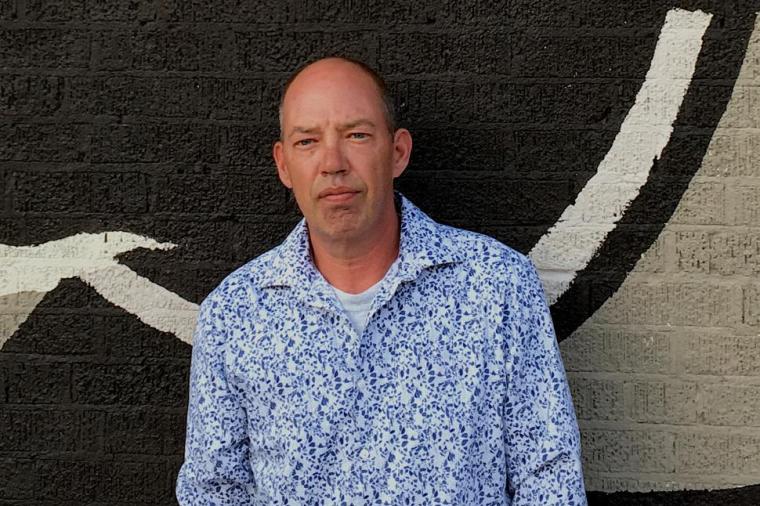
The National Parks Arts Foundation (NPAF), the Poetry Foundation, the National Parks Service, and the Gettysburg Foundation announce Steve Bellin-Oka as the 2019 Poets in Parks Artist-in-Residence. Poets in Parks is a partnership expressly designed and curated to raise the profile of poetry as a vibrant and modern public art. Bellin-Oka is the second Poets in Parks resident. He will spend one month in residency at Gettysburg National Military Park with a $1,000 stipend.
Entrance to the Gettysburg National Park courtesy of Sallicio under CC BY-SA 3.0 license
“The beauty and variety of United States national parks provide fertile ground for growing dialogue around poetry, shared history, and art as a public service,” said Stephen Young, program director at the Poetry Foundation. “We’re excited to have Mr. Bellin-Oka continue these conversations as the new Poets in Parks resident. The relationship between the past in present in his work is well-suited to Gettysburg, where history is both commemorated and alive.”
Gettysburg and Beyond
The National Park Service’s cultural mandate to recognize and foster a democratic and participatory dialogue through the arts has never been more important. The current national debate about the representation and memorial of Civil War history provides an opportunity for education and discussion.
Bellin-Oka’s poems written during the residency will expand those conversations. He will begin his month-long residency at Gettysburg National Military Park in September, writing, leading workshops, and sharing his poetry in a public reading on October 11, 2019. After his residency, he will travel to Washington, D.C. and to the Poetry Foundation in Chicago in May, 2020 on a poetry tour with the first Poets in Parks resident, Xochitl-Julisa Bermejoa, a first generation Chicana born and raised in San Gabriel, California
A Poet Connected to the Past
A native of Baltimore, Maryland, Bellin-Oka grew up surrounded by Civil War battlefields; he takes the not-so-ghostly presences of history seriously, and intends to explore them during his time at Gettysburg.
He plans to write poems that imagine Abraham Lincoln preparing to give The Gettysburg Address, the experiences of soldiers on both sides, and new works in response to Civil War poems of the battlefield.
Bellin-Oka earned his MFA from the University of Virginia and his PhD from the University of Southern Mississippi’s Center for Writers. He currently lives in Tulsa, Oklahoma, where he is a 2019 Tulsa Artists Fellow, awarded by the George Kaiser Family Foundation. His debut collection, Instructions for Seeing a Ghost, won the 2019 Vassar Miller Prize in Poetry, and will be published by the University of North Texas Press in 2020.
RELATED:
Poems online by 2019 Poets in Parks Artist-in-Residence, Steven Bellin-Oka:
This post complied courtesy of The Poetry Foundation, The National Parks Foundation, Wikipedia, and Steven Bellin-Oka’s and Xochitl-Julisa Bermejoa’s websites.
*****
The Poetry Foundation, publisher of Poetry magazine, is an independent literary organization committed to a vigorous presence for poetry in our culture. It exists to discover and celebrate the best poetry and to place it before the largest possible audience. The Poetry Foundation seeks to be a leader in shaping a receptive climate for poetry by developing new audiences, creating new avenues for delivery, and encouraging new kinds of poetry through innovative literary prizes and programs.
You can follow The Poetry Foundation and Poetry on Facebook and Twitter.
*****
The National Parks Arts Foundationis a nonprofit organization offering artist-in-residence programs, museum in-loan programs, and workshops nationwide at a number of national parks. To apply to open programs, visit HERE. .
The Gettysburg Foundation is a non-profit philanthropic, educational organization operating in partnership with the National Park Service (NPS) to preserve Gettysburg National Military Park and the Eisenhower National Historic Site, and to educate the public about their significance.
Recent in digital publications:
* Four poems , I Am Not a Silent Poet * Remembering Mom, HerStry
* Three poems, Levure littéraire Upcoming in digital publications: * Over His Morning Coffee, Front Porch Review * From the Small Beginning, Entropy Magazine (Enclave, #Final Poems)
* The Damask Rose Garden, In a Woman’s Voice
A mostly bed-bound poet, writer, former columnist and the former associate editor of a regional employment newspaper, my work has been featured widely in print and digital publications including: Ramingo’s Porch, Vita Brevis Literature, Connotation Press,The Bar None Group, Salamander Cove,I Am Not a Silent Poet, Meta/ Phor(e) /Play, The Compass Rose and California Woman. I run The Poet by Day, a curated info hub for poets and writers. I founded The Bardo Group/Beguines, a vitual literary community and publisher of The BeZine of which I am the founding and managing editor.
“Every pair of eyes facing you has probably experienced something you could not endure.” Lucille Clifton
Thank you for sharing your love of words. Comments will appear after moderation.
“Nature is a haunted house–but Art–is a house that tries to be haunted.” Emily Dickinson, The Complete Poems of Emily Dickinson
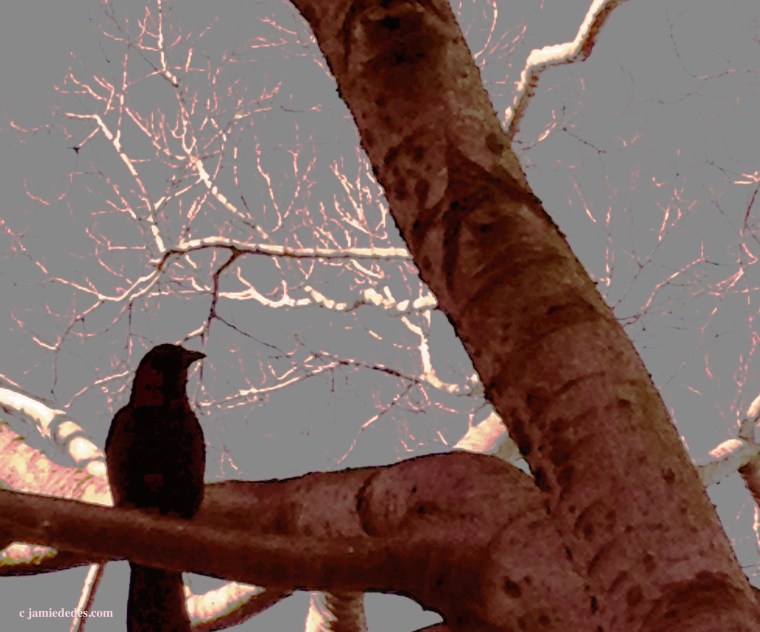
The most triumphant Bird I ever knew or met
Embarked upon a twig today
And till Dominion set
I famish to behold so eminent a sight
And sang for nothing scrutable
But intimate Delight.
Retired, and resumed his transitive Estate —
To what delicious Accident
Does finest Glory fit!
– Emily Dickinson
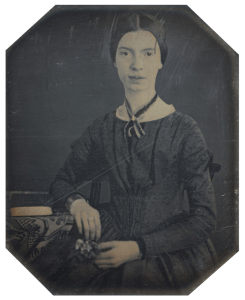
Daguerreotype taken at Mount Holyoke, December 1846 or early 1847; the only authenticated portrait of Emily Dickinson after childhood / Public Domain
EMILY DICKINSON (1830 – 1886) was an American poet. While Dickinson was a prolific poet, fewer than a dozen of her nearly 1,800 poems were published during her lifetime.The poems published then, were usually edited significantly to fit conventional poetic rules. Her poems were unique in her era. They contain short lines, typically lack titles, and often use slant rhyme as well as unconventional capitalization and punctuation. Many of her poems deal with themes of death and immortality, two recurring topics in letters to her friends. Although Dickinson’s acquaintances were likely aware of her writing, it was not until after her death that Lavinia, Emily’s younger sister, discovered her cache of poem, that the breadth of her work became public. Her first collection of poetry was published in 1890, four years after her death.
Recent in digital publications:
* Four poems , I Am Not a Silent Poet * Remembering Mom, HerStry
* Three poems, Levure littéraire Upcoming in digital publications: * Over His Morning Coffee, Front Porch Review (July 2019) * From the Small Beginning, Entropy Magazine (Enclave, #Final Poems)(July 2019)
* The Damask Garden, In a Woman’s Voice (August 2019)
A mostly bed-bound poet, writer, former columnist and the former associate editor of a regional employment newspaper, my work has been featured widely in print and digital publications including: Ramingo’s Porch, Vita Brevis Literature, Connotation Press,The Bar None Group, Salamander Cove,I Am Not a Silent Poet, Meta/ Phor(e) /Play, The Compass Rose and California Woman. I run The Poet by Day, a curated info hub for poets and writers. I founded The Bardo Group/Beguines, a vitual literary community and publisher of The BeZineof which I am the founding and managing editor.
“Every pair of eyes facing you has probably experienced something you could not endure.” Lucille Clifton
Thank you for sharing your love of words. Comments will appear after moderation.
Pearl Buck circa 1972 courtesy of Dutch National Archives, The Hague under CC BY-SA 3.0 nl license
I give you the books I’ve made, Body and soul, bled and flayed. Yet the essence they contain In one poem is made plain, In one poem is made clear: On this earth, through far or near, Without love there’s only fear.
Essence by Pearl Buck
Yesterday was the anniversary of Pearl Buck’s birth. She was the founder of Welcome House for the adoption of mixed-race children, thought in her day to be unadoptable. I consider her my spiritual mother.
“. . . the test of a civilization is the way that it cares for its helpless members.” Pearl Buck (1892-1973).
Pearl Buck was an American novelist, writer, poet, activist, and humanitarian and the first woman to be awarded the Noble Prize in Literature (1938). She grew up in China and spent most of her life there until 1934. She had a deep affection for and knowledge of the countries of the East, not just China. She suffered through the Nanking Incident when the National Revolutionary Army captured Nanking (now Nanjing) in 1927. Many Westerners were killed, their homes destroyed, and their property stolen. Her only biological child, Carol, had phenylketonuria (PKU), which causes mental retardation and seizures.
A lone child climbing the Mexico–United States barrier fence in Brownsville, Texas courtesy of Nofx221984 and generously released into Public Domain
Pearl Buck adopted seven mixed-race children. At a time when mixed-race children were considered unadoptable, she founded Welcome House, Inc., the first international, interracial adoption agency. Welcome House placed over 7,000 children.
It’s not hard to guess at just what white-hot outrage and disappointment this patron-saint of throw-away children would have knowing about the child detention centers on the U.S. Southern border, about presidential candidates using visits there as photo opportunities, and about the separation of refugee children from their parents. She would be profounly disappointed with the election of an oligarch who lives in ignorance and obscene self-indulgence while others sleep on the street and go hungry. One can guess at her anger and sadness over the children in South and Cenral America, Africa, and the Middle East running to escape violent environments, or the use of children to serve as soldiers in the Middle East and Africa, or about the numbers of children in third-world countries who die of hunger before the age of five for the wide-world’s greed and lack of care and will.
Recent in digital publications:
* Four poems , I Am Not a Silent Poet * Remembering Mom, HerStry
* Three poems, Levure littéraire Upcoming in digital publications: * Over His Morning Coffee, Front Porch Review * From the Small Beginning, Entropy Magazine (Enclave, #Final Poems)
A mostly bed-bound poet, writer, former columnist and the former associate editor of a regional employment newspaper, my work has been featured widely in print and digital publications including: Ramingo’s Porch, Vita Brevis Literature, Connotation Press,The Bar None Group, Salamander Cove,I Am Not a Silent Poet, Meta/ Phor(e) /Play, The Compass Rose and California Woman. I run The Poet by Day, a curated info hub for poets and writers. I founded The Bardo Group/Beguines, a vitual literary community and publisher of The BeZine of which I am the founding and managing editor.
“Every pair of eyes facing you has probably experienced something you could not endure.” Lucille Clifton
Thank you for sharing your love of words. Comments will appear after moderation.
…………………………………..The memories of living fall around the lives once lived, leave a hole in the pumice. The emptiness fills with words – narrative and song. That is why I write with rain drops on your windows as the train speeds by the valleys indifferently. That is why the ghosts do not speak to me or to you. That is why no one noticed
as I left the train again.
except from Return from Pompeii in Nothing Remembers, Michael Dickel
In his latest collection, Nothing Remembers (Finishing Line Press, August 2019), American-Israeli poet, writer, songwriter, photographer and artist (also husband, dad, teacher), Michael Dickel takes us with him on a wide exploration of our world in all our recollections and amnesias, a distant contemporary relative of A la recherché du temps (In Search of LostTime/Proust). It is rather noble in its observations, I think, calling us to the domain of our questions and sacred imagination, exploring the place of memory, re-visioning, and of human activity and perception in the varied landscapes of our hearts and souls and this Earth.
I found Nothing Remembers to be in effect a guided meditation on the vista and meaning of history and culture, personal and communal pathways, and the possible/probable relevance of memory, poetry, and connection: humans and their experiences as part of nature, as geologic memory, as archives of history. Recommended without reservation.
The poems from Nothing Remembers are published here today with Michael’s permission.
INTERVIEW
JAMIE: In reading the poems in this collection, I felt strong sense of their rising out of the ancient soil of Israel and other geologies of heart and soul. Would you speak to this, to what we could perhaps say is the collection’s ontological roots?
MICHAEL: I suppose exploring metaphysical questions such as memory and death (or its perceptions and effects)—main themes of Nothing Remembers—invites a metaphysical question about how these poems came to be. The title poem in particular rises out of the geography of Israel, my mother’s death, and buried in the detailed description of place, the ruins of Tel Megiddo. Tel Meggido is better known by its ancient name of Armageddon, the site of a great ancient battle that inspired apocalyptic visions down to our time.
Nothing remembers
where in our times we these rocks piled into buildings
that fell down a thousand years ago dis(re)membered from war
or earthquake raised and razed again into where nothing
recalls again the warm day anemones bloom hollyhocks
poppies forget no one and another rain day another dry day
pass hot and cold while an orvani drops blue feathers in flight
a hawk sits calmly on a fencepost and flocks of egrets
traipse toward the sea no cattle no grains all harvested
in this place we would call holy land nothing left to it but conflict
with the passing of her life that tried so hard to hang onto one
moment many moments missed so many more empty echoes
a difficult way to say goodbye to a mother watching her
evaporate like rain in the desert her mind dust that dries
lips her droned words faded as warmth from a midnight rock
meaning what the layers of history these rocks un-piled
reveal sepia photos a couple of tin-types dust school
reports cards newspaper holes the shells of bugs raised and razed
again and again into our times where nothing remembers
MICHAEL: That poem and this book as a whole, however, are more related to the archaeological term tel than to Armageddon. A tel is a place that has been built, razed, and then rebuilt on the ruins so many times that it makes a large layered mound—often a sizable hill with steep sides. Layered beneath the latest new construction, these ruins shape the base (the hill), but also the culture, legends, and of course the history of the newest “place.” In our times, many of the constructions at the top have also become historical ruins.
Memory is like this. Metaphorically, every pace has these deep layers. The human layers only make up a thin part of the geological layers. And perhaps memory has this depth too. So do our lives. And, in fact, so does death. All of these ideas have roots in geology, geography, culture, language. And from those roots, perhaps, grow (at least some of) these poems.
So from where specifically do the poems in Nothing Remembers get their being? Certainly in place, and the deep geology of place. Israel, where I’ve lived about a dozen years now, has amazing geology. Seabed thrown up to the sky. Basalt outcropping from volcanic action. The deep rift of the Jordan Valley and the Dead Sea, the Mediterranean basin, deserts, mountains. The human layers, geography (and history) go back before modern Homo Sapiens, with Neolithic sites. Flint ridges and springs of the Jerusalem mountains border the Mediterranean basin and Judean Desert, and have attracted migrating human ancestors and humans for millennia.
In addition, many of the poems started in Italy, during my sojourn there for the 100 Thousand Poets for Change International Conference, Salerno, Italy 2015. Thus Pompeii makes an appearance or two, and while only named perhaps once, the streets of Salerno, as well as the rest of the Amalfi Coast. The layers are no less deep, and the histories of Italy and Israel intertwine back to the Roman era, at least.
JAMIE: It sounds as though place is important in your writing. Are you saying that you write about place?
MICHAEL: I don’t think so. Place definitely matters to me and often place—its resonances and dissonances in particular—thus inspires and informs my writing. But always place arrives for me necessarily through its human dimension of how it shapes human perceptions and understandings. Often, especially in the last section of the book that focuses more on mortality—funerals, mourning, and again, memory—place emphasizes both the fleetingness of life and the longevity of memory. Geology is a form of memory. The limestone and its fossils reminds us of long gone seas and creatures. Perhaps we will one day be fossils, too. We spring from geology and we return to it, in the end. Several cemeteries appear in the last section. Yet, I don’t think I’m writing about the places, especially the cemeteries. I’m writing about humanity. I think.
Ultimately, of course, the poems come into being in me, from how I experience and think in the world, and my contemplations, such as what I’ve just laid out about our human place in this vast geological tel called earth. But that’s a different sense of place—where do we belong in the world, not where are we in it. Maybe, how we belong in / to the world, and how the world belongs in / to us. Belong isn’t quite right, but I’m not sure what is better. Fit? How do we fit in the world, how does the world fit in us? Perhaps this is as much about displacement as place, the displacement of memory.
I am in the end, I would say, more interested in the vast networks of relationships and associations we make with others, with this world we live in, with geography and with geology than I am interested in place itself. What you call geologies of heart and soul, that’s my “place.”
How can I paint these multiple relationships in words and images? How can I echo them in sound and rhythm? Can I even know them? Probably, I can’t know, and I can’t rely on memory to tell me.
So, I resort to images. Poetry, for me, is most about images placed in context to each other in such a way as to shift our perceptions. Place, geography, geology, the tel—these are all images standing in for where I can’t articulate what I sense in the world.
JAMIE: What is the one key thing you would like readers to walk away with from this collection?
MICHAEL: I would like people to walk away with a sense of contact with the poems, a sense of more than the surface of the world, just beyond our understanding, waiting for us to notice it. Perhaps, they might have a sense of our shared humanity, and a sense of their own depths of connection and unique perception of the imagery in the poems. I hope people walk away with a curiosity and questions to which they would like to give consideration…on their own paths, in their own journeys.
JAMIE: When does Nothing Remembers come out? Where can readers purchase it?
Nothing Remembers is due in late August. I’ve heard from the publisher that the printer has been behind schedule with other books this spring, so I’ve been saying late summer. Right now readers can place advanced orders through Finishing Line Press .
JAMIE: What’s next on your literary journey/adventure?
MICHAEL: My life journey has taken me into the medical world with a diagnosis of and treatment for non-Hodgkins Lymphoma. (Treatment has proceeded well, and my prognosis is excellent.) I am now mostly writing from the experience of cancer and incorporating that into my poetry. I am writing memoir or journals (I think Audre Lorde possibly wrote the definitive Cancer Journal)—or not yet, anyway, I should say as I don’t know where the writing will take me.
The first published piece from this work, The Crab, in The BeZine, is flash fiction that, like much fiction, captures some emotional reality of (my) having cancer (the crab). I have sent some poems out for consideration. And a folder floating on my computer cloud has more work, not all of it finished. I expect this work will be a future collection when the body of work is there. The working title is Etz Chaim (Tree of Life). As always, I continue writing about social issues, the 100TPC and The BeZine themes of peace, sustainability, and social justice.
Teachers
For my children
i
Teachers come to us again and again
and we learn from them what we will.
We give them in return only a
thin immortality. We hope for gentleness.
We dream of our old teachers often.
The bullies shout, “get the lead out”
as every muscle concentrates
on the knowledge that we cannot win this race.
ii
Teachers come to us again and again
and we learn from them what we will.
We give them in return only a
thin immortality. We hope for gentleness.
The gentle ones quietly step away,
letting go as we pedal furiously and discover
that miraculously we have found balance
while pushing forward to the next road.
iii
We sat at table eating phô, another lunch
where you ask questions that I never thought.
I try to catch these waves as they break toward shore
and wonder that you came to me last night in a dream.
In our own teaching, we find our voices
raised all too often. Yet, somehow, I step
back as you light into a world I will
not know, unless you take me along.
excerpt from Nothing Remembers
Michael Dickel
MICHAEL DICKEL (Meta /Phor (e) /Play) has won international awards and been translated into several languages. His latest poetry collection, Nothing Remembers, will come out late summer 2019 from Finishing Line Press. A poetry chapbook, Breakfast at the End of Capitalism, came out in 2017 (free PDF ). His flash fiction collection, The Palm Reading after The Toad’s Garden, came out in 2016. Previous books include: War Surrounds Us, Midwest / Mid-East, and The World Behind It, Chaos…(archived free PDF ). He co-edited Voices Israel Volume 36, was managing editor for arc-23 and 24, and is a past-chair of the Israel Association of Writers in English. He publishes and edits Meta/ Phor(e) /Play and is a contributing editor of The BeZine. He grew up in the US Midwest and now lives in Jerusalem, Israel.
Recent in digital publications:
* Four poems , I Am Not a Silent Poet * Remembering Mom, HerStry
* Three poems, Levure littéraire Upcoming in digital publications: Over His Morning Coffee, Front Porch Review From the Small Beginning, Entropy Magazine (Enclave, #Final Poems)
A mostly bed-bound poet, writer, former columnist and former associate editor of a regional employment newspaper, my work has been featured widely in print and digital publications including: Ramingo’s Porch, Vita Brevis Literature, (Meta /Phor (e) /Play, Connotation Press,The Bar None Group, Salamander Cove, I Am Not a Silent Poet, The Compass Rose and California Woman. I run The Poet by Day, a curated info hub for poets and writers. I founded The Bardo Group/Beguines, a vitual literary community and publisher of The BeZine of which I am the founding and managing editor.
“Every pair of eyes facing you has probably experienced something you could not endure.” Lucille Clifton
Thank you for sharing your love of words. Comments will appear after moderation.




 Jamie Dedes' THE POET BY DAY Webzine