What else can we do but garden our shadows while far away the universe burns and vanishes. Andrée Chedid
The Final Poem
A forge burns in my heart.
I am redder than dawn,
Deeper than seaweed,
More distant than gulls,
More hollow than wells.
But I only give birth
To seeds and to shells.
My tongue becomes tangled in words:
I no longer speak white,
Nor utter black,
Nor whisper gray of a wind-worn cliff,
Barely do I glimpse a swallow,
A shadow’s brief glimmer,
Or guess at an iris.
Where are the words,
The undying fire,
The final poem?
The source of life?
The Voice
Where is the distant voice
That speaks like my soul?
Buried beneath daylight’s clamor
Gold and the seasons
Beneath groaning streets
And the ferment of cities
In my grave of care
And blond laughter
In what bare tomb must I lie
To summon the voice
That speaks like my soul?
The Ever-Patient Woman
In the flowing sap
In her growing fever
Parting her veils
Cracking out of her shells
Sliding out of her skins
The ever-patient woman
Slowly
gives herself
life
In her volcanoes
In her orchards
Seeking solidity and measure
Clasping her most tender flesh
Straining every fine-honed fiber
The ever-patient woman
Slowly
gives herself
light.
* On her site there’s a link to her “Creative Process.” Interesting. Worth your time.
Bibliothèque Andrée-Chedid, 36 Émeriau Street (Paris), Photograph courtesy of Celette under CC BY-SA 4.0
Andrée Chedid (1920 – 2011) was an Egyptian-French poet and a novelist of Lebanese descent. She was of the Syriac Maronite Church. I believe she is better known for her fiction here in the States but I appreciate her generally spare style and think her poetry is not to be missed. She questions the human condition and asks what binds us to the world. Not unexpectedly the perfume of the orient wafts through her poems. She denounced the Lebanese Civil War.
Ms. Chedid moved to France post-WW II and remained there for the rest of her life. She was the recipient of many literary awards and was a Grand Officer of the French Legion of Honour (2009). A public library was named for her in Paris (2012). Her Amazon Page U.S. is HERE. Her Amazon Page U.K. is HERE.
Your donation HERE helps to fund the ongoing mission of The Poet by Day in support of poets and writers, freedom of artistic expression, and human rights.
Poetry rocks the world!
FEEL THE BERN
For Peace, Sustainability, Social Justice
Maintain the movement.
“Democracy is not a spectator sport.” Bernie Sanders
“Every pair of eyes facing you has probably experienced something you could not endure.” Lucille Clifton
Thank you for sharing your love of words. Comments will appear after moderation.
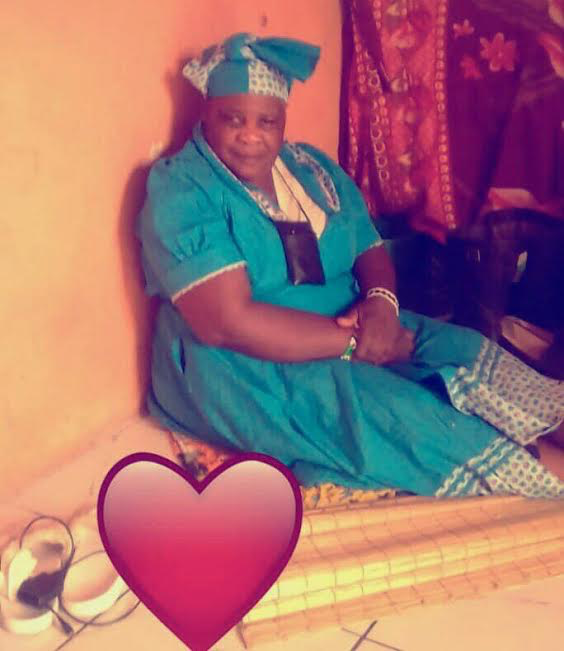
“In all her doings my mother influenced me to have endurance, dedication, resistance, faith and resilience.” Mbizo Chirasha
Our village rondavels sat on the peripheral fringes of Dayataya, that elephantine mountain of home. It cracked with a fervent babyish glee every promising dawn. Birds sang soprano and black baboons yelped baritone. The chattering monkeys and jiving rock rabbits chanted tenor. Musical Mother, your footsteps to the mountain to pick firewood for our morning meal was a goddess jive, complimenting nature’s rhythm. This is points to the meaning of mothers. They are angels, messengers of life, You, my Mother, are the goddess of all times.
Dayataya wore a light-yellow tinge on its head at dawn. Toward sunset it cracked a harmless oxblood tinted smile. You wore an earthly doek [bandana] with your resilience matching that yellow, the color of freedom.
Dayataya was our mountain of home. Its cousin, Zvegona, remained holy and steadfast, standing still in hard seasons of drought and winter. Like the steely goddess in you, it never surrenders to ravaging winds and tumultuous storms. Zvegona strutted in grey gowns on winter mornings. At night, it switched to black to compete with Dayatayas blankets of shadows that lulled us to sleep and guide us against nightmares and omens.
Your motherly love was big and it filled the caves, thickets and crevices of Dayataya. Zvamapere hills and Gwenyuchi kissed the sunrise exchanging breath in a sprightly romantic parody. At that time Corona Virus and his ancestors Influenza and Whooping cough were not yet born, the earth was virgin and fresh as a country damsel. The Zvamapere hills danced in blue bridal veils. Gwenyuchi shuffled in his grey silver suit passing the holy mist to his beloved bride Zvamapere. You giggled with joy at nature’s lively escapades.
Dear Mama, you trudged through hills and mountains and along fields hunting for life and food to feed your brood. When hunger folded its legs on our doorsteps and our stomachs roared with emptiness, you wept passionately. You persisted and won the battles against hunger. We, your brood, jostled in ignorance of your motherly dedication. We were overjoyed by the gift of food after the restless sleep of empty bellies.
You are the goddess of all times. When poverty erected its manhood into our homestead, you fumbled metaphors to gods and you chanted resistance. Then poverty, the coward scampered to other villages, those lacking your determination.Your hoe cracked palms defended our bellies from the devastation of hunger and poverty. .
The earth roasted time into years and years baked themselves into war. Chimurenga war arrived with its sleepiness nights, beatings, violence, blood, songs and massacres. You fought side by side with combatants with zeal and spirit for a new country. A war collaborator par-excellence, you slaughtered and stewed road runner chickens for comrades and scampered for blankets and jeans to clothe war cadres, you endured the pain of gun butts’ beatings inflicted by colonialist dans. The rattling of rains and the rat tat of bullets during Pungwes Nights. You were a blessed soul heaving the breath of the revolution. I dangled on your backside chanting verses imitating war time songs . . .
Vana Mai bikai Sadza, Vana Venyu Tauya
Vana Mai bikai Sadza Vana Venyu , Yuwi vana bikai Yuwi vana bikai Sadza
Vana Venyu tauya
You sang with war collaborators and comrades despite the incessant clutter of guns and hair harrowing grenades explosions. I am child of war, of rain, of the hard road and victory songs.
The storms of war raged. You protected my young body through thickets of demons and jungles of lions as I smelt the rhythm of Chimurenga and the wave of gun smoke. Behind your revolution hardened back, I carved poetry from your sweet lullabies and grieving hymns, I became a griot before I teethed. The gift I carried and still carry in my DNA, a gift from gods. Shaped by your love, I am a griot of the land. I speak to Kings, Queens,, Mediums and Revolutionaries. I preach justice to unjust. I sing truth to political imbeciles. I voice human rights to immoral ideological zealots. Dear Mama, I remain resolute. I am a griot, prince to carry forward your ideals and example. You remain my goddess of all times.
Sometime back you told of the day when I was born, that the sun went back early into the womb of earth, the moon was torn into two halves, wind raged, a storm ensued, thunder roared, lightning bolts cracked in synchrony with gun claps. The rat tat of pelting raindrops witnessed your labor pains on God’s night. I was born. The angry earth was reversed to harmony, the Chimurenga war paused, freedom songs vibrated the grenade pregnant earth. You and other peasants of the land danced fervently for the black cockerel and his revolutionary cabal. My tender soul smiled at the paradox. You, father and the villagers drank the socialist revolutionary propaganda like whisky. You munched the Nkurumaist-Castroist-Mugabeist Ideological biscuits like any other war-time peasants. Nevertheless, black cockerels drank the revolutionary eggs and you returned to scratch for dear life on the rock fringes of Dayataya. Still, you remained the goddess of all times.
I grew up as Ndoda [Xhosa term for man], a weakling because gun claps broke my ears and my lungs. I suffered from asthma, chest pains, and chronic ear infections. You carried me to hospitals in light and night for years and decades, you wept in between the my tortured seizures until your tears dried. You consulted with every hospital, healer, and prophet on my behalf. Time passed and the gods and ancestors freed me from the bondage of Satan. I grew perfectly then like a sweet potato enjoying the warmth caress of red earth. Years stewed into decades and roasted into more decades. I became a steadfast griot, toiling in the land of the Almighty Lord. I am your prince. You remain the goddess of all times.
In the wake of a pregnant anopheles [a type of mosquito] humming its blood-sucking hymn, and after bedbugs launched a terrorist bombing against my skin, I got dizzy and convulsed. I swatted the mosquitos with my big thumb and the bedbugs scattered in no time. I slept again and a revealing dream spoke to me in the rush of a presidential motorcade to long waiting hope-drained villagers.
I dreamt of you Mother, wearing a sparkling silver wedding dress, walking side by side by the great king of all times, my departed father. The Mahosa totem appeared. I carried a lit white candle and you had a bunch of white roses. A wedding song boomed feverishly from a big stereo. I can’t remember the singer, but I remember the beautiful poetic song,
Vul’indlela wemamgobhozi
He unyana wam
Helele uyashada namhlanje
Vul’indlela wela ma ngiyabuza
Msuba nomona
Unyana wami uthathile
Bengingazi ngiyombon’umakoti
Unyana wam eh ujongile this time
You looked gorgeous like Zvegona pastures during rainy season. Your smile was wide like a full summer moon. Father winked to you with heartily contentment and then swallowed their desire. I smiled to the dream and you smiled back then disappeared in a white wedding limousine. I pondered. I failed to calculate the meaning and the reason. Then on the Saturday that followed that Friday night dream, a windy morning, and my brother wept in the phone, telling me of your departure. Your death was unexpected and I failed to be there to say goodbye for the world is now ravenous.
The revolution is roasting its own grandsons and daughters. The devil is manancing. His threat long , coy and rogue. He gave birth to a cruel goblin of a son called Corona Virus. Now every door of every home is locked. Every gate of every country is locked. The goddess have take a breather, those pacesetters and trendsetters. I know I was not there to cast the last lump of shovel dust to say goodbye spirit Queen. I did what I can as a prince, your griot son, including prayers. God knows I sang a spirited supplications to the angels of God to welcome and place your motherly in the and resilient soul in the warm embrace of the Almighty God.
I failed to weep not because I am a coward. Today as I write this eulogy and my heart caves, bleeding grief. I remain chanting resilience as every morning I see you floating in the mist of dawn and later wrapped in the cloaked night I watch you sending guardian angels to guide us against evil, to protect us from poverty, hunger and demons. Dear Mama, I remain resolute knowing death is not a good guest nor a best host. I know we meet one day in the heavenly mansions of God.
Fambai Zvakanaka Shoko
Makwiramiti, mahomu-homu
Vanopona nekuba
Vanamushamba negore
Makumbo mana muswe weshanu
Hekani Soko yangu yiyi
Vakaera mutupo umwe nashe
Vana Va Pfumojena Vakabva Guruuswa
Soko Mbire ya Svosve Vanobva Hwedza
Vapfuri vemhangura
Veku Matonjeni vanaisi vemvura
Zvaitwa matarira vari mumabwe
Mhanimani tonodya, svosve tichobovera
Maita zvenyu rudzi rukuru
Matangakugara
Vakawana ushe neuchenjeri
Vakufamba hujeukidza kwandabva
Pagerwe rinongova jemedzanwa
Kugara hukwenya-kwenya
Vari mawere maramba kurimba
Vamazvikongonyadza kufamba hukanya
Zvibwezvitedza, zvinotedzera vari kure
Asi vari padyo vachitamba nazvo
Zvaitwa mukanya rudzi rusina chiramwa
Maita vari Makoromokwa, Mugarandaguta
Aiwa zvaonekwa Vhudzijena
You remain the goddess of all times. I chant resilience!
MBIZO CHIRASHA (Mbizo, The Black Poet) is one of the newest members of the Zine team and a recipient of PEN Deutschland Exiled Writer Grant (2017). He is a Literary Arts Projects Curator, Writer in Residence, Blogs Publisher, Arts for Human Rights/Peace Activism Catalyst, Social Media Publicist and Internationally Anthologized Writer, 2017 African Partner of the International Human Rights Arts Festival Exiled in Africa Program in New York, 2017 Grantee of the EU- Horn of Africa Defend Human Rights Defenders Protection Fund, Resident Curator of 100 Thousand Poets for Peace-Zimbabwe, Originator of Zimbabwe We Want Poetry Movement. He has published a collection of poetry, Good Morning President, and co-created another one Whispering Woes of Gangesand Zembezi with Indian poet Sweta Vikram.
Thank you for sharing your love of words. Comments will appear after moderation.
“In all her doings my mother influenced me to have endurance, dedication, resistance, and faith.” Mbizo Chirasha
Recently, Zimbabwean poet, Mbizo Chirasha, lost his mom. Knowing that his sense of loss and grief is compounded by the fact of his exile and an inability therefore to be with her in her last days and hours or to attend whatever funeral and memorial services are customary in his country, I invited Mbizo to write about his mom, explaining that today in the U.S. we celebrate mothers. We publish Part 1 in this post, an interview, to be followed by a hybrid poem in Part 2. / Jamie
1.) JAMIE: Mbizo, I’m sorry to learn of your loss and thank you for being willing to share some of your thoughts and poetry with us on what is Mother’s Day here in the States. When you think of your mom, what is the characteristic that stands out most?
MBIZO: I was born during the 1970s liberation struggle and my mother still even suckling a baby who was myself. She remained dedicated as the struggle collaborator. She trudged in many areas working hand in glove with combatants of the struggle, cooking for them, washing for them, and working as messengers of the war against colonialism. Nights they endure the brunt of war violence, heavy rains and ravaging wild animals, walking war bases for vigils and all night chores . Thus, she was a great example of unmatched resilience and dedication to change, to freedom for positive transformation.
My mother was gifted with the spirit of hardworking mother love. Everything we ate came from hard work, days of sweat and scramble in the fields to plant, cultivate, weed and harvest food and cash for uniforms and other necessities. She had a blessing of collectivism. She believed in collectivist approach in life. We used to have traditional beer gatherings that involved a lot of relatives, neighbors, and fellow villagers. Mother would send out a call to villagers who thrashed millet and shelled maize, from which the beer was traditionally brewed. It was shared along with goat meat and nonalcoholic traditional beverages.
We were taught to be focused, work hard, and nurture the spirit of never giving up through all those years of menacing when my mother would walk miles and miles in the scorching weather with other women. Their resolute intention was to fetch and hunt for food for our survival. We were taught to be strong, diligent, creative, hard working. We were taught to live according to our means. A great mother indeed. A dedicated soul.
2.) JAMIE: I remember that your dad was a griot, so some of his influence on you is clear in that very title. In what ways did your mom influence your love of and work on arts and literature?
MBIZO: Yes, my father was daring with words: poetry and other literature and stories. I learnt reading, spelling and writing from him from the tender age of four. My mother played a big role in everything to make me understand I must work hard in everything I do. After the death my father, she carved a creative spirit in me. She never gave up life. Her ways remained intact. She remained loyal to our clan. She never got married again but she continued to look after us throughout the conflicts. Her leadership, her energy, her resilience, her dedication to life is in my DNA, carried with me as the seed that sat in her womb.
She might not have known much of literary arts but the kind of shaping she did gave us our character, our life and everything is what you see today as I work to grow my griot career. Like my mother, I never have given up , I survive and soldier on even in traumatizing challenges. It is a gift from a mother who was a diligent formidable spirit. Thanks to her, I can be an unrelenting griot. Thanks to her I learned to think outside the box, to the rise to every occasion that warrants attention, to challenge naysayers. My mother was a tigress, unrelenting in her fight.
3.)JAMIE: How did your mom influence your activism?
MBIZO: She was part of the liberation struggle system, that were unrelenting in the struggle for the freedom of the country we have today. I believe they did their part well. However, in post-independence Zimbabwe we as people we have issues with the way the country is being governed. There is a lot corruption since 1980. Masses are suffering. Hence, I understand that freedom does not come on silver platter but its fought for with faith and resilience. Thus today I switch my roles to writing, activism, and spoken word performances. today I stand fighting to right wrong perceptions with the guiding example of our mothers and fathers who fought their own war and they won. I fight my war through literary activism . In all her doings my mother influenced me to have endurance, dedication, resistance, faith and resilience.
MBIZO CHIRASHA (Mbizo, The Black Poet) is one of the newest members of The BeZine core team. He is the founder of Womawords Literary Press, which is dedicated to giving space to the voices of women and girls and is a partner in The BeZine International Poetry Month,a blog event. He is a multi-award winning poet from Zimbabwe who is on the run. We have been coordinating in the search for safe harbor. In part I am posting this today to remind everyone that while we’ve made progress with funding, we still need to find a host for Mbizo, preferably Germany. Open to suggestion. Connect with me if you are able to help, have leads, or have questions. You can read more about Mbizo and his story: Zimbabwean Poet in Exile: Award-Winning Poet Mbizo Chirasha, A Life on the Run, Interview.
Your donation HERE helps to fund the ongoing mission of The Poet by Day in support of poets and writers, freedom of artistic expression, and human rights.
Poetry rocks the world!
FEEL THE BERN
For Peace, Sustainability, Social Justice
Sustain the movement.
“Democracy is not a spectator sport.” Bernie Sanders
“Every pair of eyes facing you has probably experienced something you could not endure.” Lucille Clifton
Thank you for sharing your love of words. Comments will appear after moderation.
“Emily* sat with her wide skirts Spread out over the squirrels and roses Like a peacock’s tail in the desert of my childhood Hugging the incubus of her daydreams And listening to her own loneliness As though her hands could touch its shape.” Ouija Poem #1, Mike Stone, February 5, 2016
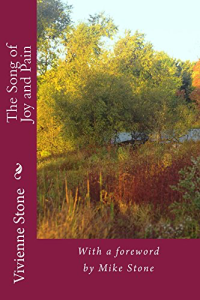
Editor’s Notes: The photographs here belong to Mike and his family. Please be respectful. Note also that Mike’s mom changed the spelling of her name from Vivian to Vivienne, hence the discrepancy between the narrative commentary and the name on the book and the header photograph. The reference to Emily in the poem above is to Vivian/Vivienne who, if she could have chosen her own name, would have chosen “Emily.” Mike’s poem above is from Songs of Joy and Pain, the complete collection of Vivienne’s poems. The book closes with some poems by Mike under the general title Conversations with My Dead Mother. / J.D.”
POETRY
Related .
Dear Child, you wonder why I watch you so,
Your solemn, grey eyes now are questioning me.
How much are they like mine! How wise and still –
Brimming with dreams. I saw your fingers clutch
Your book as though it were some precious jewel –
And so it is …
A thousand books ago,
I sat as you sit now, far, far away
In some new land, my mind the strange mirror
Of what I read. What joyous life can dance
Across a printed page! Quiet little elf,
Too old for those your age, but still too young
To understand the subtle meanings of
The grownup’s world. Like me, aloof you sit,
Thoughtful, and yet, perhaps one moment back
Your little feet were flying over sand,
Eager, and swift, like wind, and close to God –
(Or what you think God is).
You deem me rude
To come and pierce your solitude. I know
More than you dream, how precious are your thoughts,
Guarded and unperceived. You see, dear heart,
We are but one. You are the child I was,
I am the poet grown that you will be. ……………………………July 13, 1948
Child of the Poet .
I am the child of the Poet,
The daughter of the Beloved.
My soul was moulded by the hands
Of the Infinite Creator.
Silent and tender was His touch;
Eternal is His creation.
Out of a darkness do I come,
Reluctant to leave the warmth
Of the womb that has cradled me,
Rebellious at being thrust forth
From the secret nights I have known,
Into a strange, beginning day.
I am born now of love and pain
That is shared by the earth each spring,
When flowers break the hard, stubborn ground –
Shattering beauty with beauty, –
So I pierce the wind with my cries,
And the flight of years with my birth.
I am born, and the Beloved,
My Mother, is joyous and free.
Her voice is lifted in singing. –
“World, I give you my dearest child,
My vision of beauty made whole!”
And I am her dream and her song.
. . . . . . . . . . . . July 9, 1952
.
Sacrilege .
So you thought to love a poet, –
Scornfully inclined,
Dared to want a poet’s body, –
And refuse her mind!
Did you guess her soul carved deeper
Than the shallow well?
Know it filled with flames of heaven,
And the ice of hell?
Could you think to take the darling
Of the gods above,
Bind her spirit into submission,
In the name of “Love”?
Leave the hearts of poets for others –
Wiser men, and kings;
You are well-content with lesser,
Foolish, little things!
February 14, 1953
,
The Cry of the Dreamers .
World, you seek to still our yearning,
Have presumed to curse the stream
Raging in our hearts, as madness,
Hailing stagnant lakes supreme;
Proudly garbed in robes of science
You dissect the Poet’s dream!
In your land that grants the tyrant
Leave to trick the stupid breed,
Lauds the fork-tongued man as clever,
Bows before the rich man’s greed;
In their midst, you call us foolish
Who would plant a different seed …
What do you require of dreamers
Leaving footprints in the sky?
Is it envy gnawing in you
That would suffocate our cry;
In your sterile disbelieving
Do you still shout, “Crucify!”
Ever have you scorned our treasure,
Shunned the beauty we would give,
Cast away the sun and roses
Of the star-born fugitive …
Ever was Life sung by dreamers
Who were not afraid to live!
September 22, 1954
. Goodbye .
Goodbye, I will not lift my lips to touch yours
In this farewell, or look into your eyes,
Instead, I’ll note how spring has come too early –
For still, within my heart, the winter lies!
Goodbye, and speak not now of a tomorrow,
Or say, in parting, that we still are friends,
For friendship cannot be for those once lovers –
The night comes quickly when the sun descends!
We’ve learned impassioned vows are made, then broken,
We know the fires of love consume, then die,
And leave no trace – no softly burning embers
To glow, but just the ultimate – goodbye!
December 11, 1954
.
At Onslow Bay .
Spare my wild heart words of logic,
Here upon the naked sand;
Love and cautious apprehension
Never have walked hand-in-hand!
See my small form straight, unbowing,
Braced against the ocean’s wind,
Think you, that I’ll halt and ponder
If I gave too much, or sinned?
Is your heart a door half-open
On intruders’ love and pain;
Better shut and bolt it tightly –
Let me weep out in the rain …
Stooping down, you find a seashell,
Hold it, listening, to your ear,
Heeding not my young heart drowning
In the roaring floodtide here!
December 16, 1954
.
Memorable .
I crowned you with a golden crown
For which a prince might long;
I wrote you deathless in a poem;
I made your name a song,
And one dark night I burned your face
With kisses wild and strong.
But what cared you for crowns of gold?
The rhymes you never miss;
My poems you scarcely can recall;
Yet, you remember this:
That one dark night your heart was burned,
And by a young poet’s kiss.
January 22, 1955
..
– Vivienne Stone,
.
These poems are excerpts from The Song of Joy and Pain. They are copyright protected and published here with Mike Stone’s Permission.
VIVIAN STONE (a.k.a. Vivienne Stone) was born Vivian Ethel Hamm on November 16, 1927, in Reading Ohio, now a suburb of Cincinnati. She was the second of five children: Wilda (oldest), Vivian, George, Bobby, and Gloria (youngest). She attended Miami University in Oxford, Ohio. She eloped with Alvin W. Stone and they were married on June 15, 1946, in Newport, Kentucky. After the marriage they lived in Clintonville, Ohio. Vivian gave birth to Mike Stone on March 27, 1947 and to Victoria Stone on October 11, 1951.
Vivian and Alvin were divorced on November 5, 1954 when her children were three and seven, respectively. A legal agreement, approved by a Franklin County court judge, was signed saying that Dad would be awarded custody of the children. Vivian was allowed frequent visiting rights. She moved to Virginia Lee Gardens in Columbus and subsequently married Irwin (Irv) Papish, a practicing psychiatrist from Cleveland, Ohio.
Irv was called up as an Army psychiatrist with the rank of captain and transferred down to a US base in Panama with his new wife, Vivian. Toward the end of Irv’s duty in Panama, Vivian and Irv adopted two infants, Lisa and Chris.
Vivian was killed in a freak pedestrian accident in which a local driver reached over for a pack of cigarettes and inadvertently swerved into her while she was walking by the side of the road to her next-door neighbors’ house. She died two weeks later, on December 20, 1961. She was buried Hillcrest Memorial Park, Bedford Heights, Cuyahoga County, Ohio. Her poetry collection was published by her son, Mike Stone, on October 13, 2018. The collection is available in paperback, Kindle, and Kindle Unlimited through Amazon US, UK, and around the world.
Thank you for sharing your love of words. Comments will appear after moderation.




 MBIZO CHIRASHA (



 Jamie Dedes' THE POET BY DAY Webzine