The Poetry Foundation will open its doors to the youngest poetry lovers for Young People’s Poetry Day on Saturday, April 20, 10:00 AM–1:00 PM with the theme “Poetry and Science.” This annual free event features a reading by acclaimed poet and children’s author Joyce Sidman, animal odes with the Field Museum, a poetry scavenger hunt, fun crafts, writing activities, and refreshments in one of the only buildings in the world dedicated to poetry.
“Poetry and science are a natural fit, especially for young children who are already so curious and excited to learn.” says Katherine Litwin, Poetry Foundation library director. “We are celebrating that curiosity this year by providing an environment where budding poets and scientists can experiment with language.”
Special guest Joyce Sidman is the author of sixteen books of poetry for children, including Dark Emperor and Other Poems of the Night, a 2011 Newberry Honor Book. Her most recent book, The Girl Who Drew Butterflies, was named one of the New York Public Library’s Best Books of 2018; it details the life of Maria Sibylla Merian, the 17th century artist who uncovered the mysteries of metamorphosis in butterflies.
“Why read children poems about worms and beetles?” asks Sidman. “Because we—and the children we care about—need the space to pause, stretch out our arms, and touch the world. In handling its lovely mysteries, we learn from them and about ourselves.”
Please note, this event is open only to children and their accompanying caregivers
Young People’s Poetry Day: Poetry & Science
Saturday, April 20, 2019
10:00 AM–1:00 PM
Poetry Foundation, 61 West Superior Street, Chicago, IL 60654
This feature is courtesy of The Poetry Foundation.
JOYCE SIDMAN “is known for her fresh, inventive poetry for children. Her award-winning books include Dark Emperor (A Newbery Honor Book), Song of the Water Boatman and Red Sings from Treetops (both Caldecott Honor Books), Butterfly Eyes (Cybils Award), and This Is Just to Say (Claudia Lewis Poetry Award). A recent starred review in School Library Journal said, “Sidman’s ear is keen, capturing many voices. Her skill as a poet accessible to young people is unmatched.” Born in Connecticut, Joyce now lives in Minnesota. Her Amazon page is HERE.
Joyce’s website includes free classroom guides for teachers. She says, “My mission is to foster poetry and science in the classroom.”
About the Poetry Foundation The Poetry Foundation, publisher of Poetry magazine, is an independent literary organization committed to a vigorous presence for poetry in American culture. It exists to discover and celebrate the best poetry and to place it before the largest possible audience. The Poetry Foundation seeks to be a leader in shaping a receptive climate for poetry by developing new audiences, creating new avenues for delivery, and encouraging new kinds of poetry through innovative literary prizes and programs.
Follow the Poetry Foundation and Poetry on Facebook at facebook.com/poetryfoundation, Twitter @PoetryFound and @Poetrymagazine, and Instagram @PoetryFoundation.
Poet and writer, I was once columnist and associate editor of a regional employment publication. I currently run this site, The Poet by Day, an information hub for poets and writers. I am the managing editor of The BeZine published by The Bardo Group Beguines (originally The Bardo Group), a virtual arts collective I founded. I am a weekly contributor to Beguine Again, a site showcasing spiritual writers. My work is featured in a variety of publications and on sites, including: Levure littéraure, Ramingo’s Porch, Vita Brevis Literature,Compass Rose, Connotation Press, The Bar None Group, Salamander Cove, Second Light, I Am Not a Silent Poet, Meta / Phor(e) /Play, and California Woman. My poetry was recently read byNorthern California actor Richard Lingua for Poetry Woodshed, Belfast Community Radio. I was featured in a lengthy interview on the Creative Nexus Radio Show where I was dubbed “Poetry Champion.”
“What if our religion was each other. If our practice was our life. If prayer, our words. What if the temple was the Earth. If forests were our church. If holy water–the rivers, lakes, and ocean. What if meditation was our relationships. If the teacher was life. If wisdom was self-knowledge. If love was the center of our being.” Ganga White, teacher and exponent of Yoga and founder of White Lotus, a Yoga center and retreat house in Santa Barbara, CA
“Every pair of eyes facing you has probably experienced something you could not endure.” Lucille Clifton
Thank you for sharing your love of words. Comments will appear after moderation.
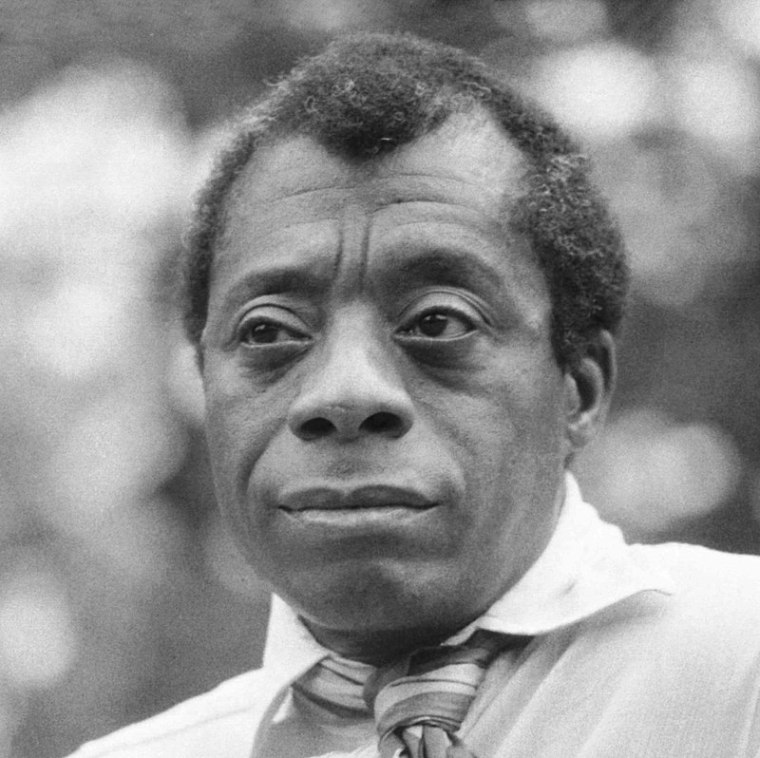
James Baldwin (1924-1987), American poet, novelist, playwright, social critic
“Love takes off the masks that we fear we cannot live without and know we cannot live within. I use the word “love” here not merely in the personal sense but as a state of being, or a state of grace – not in the infantile American sense of being made happy but in the tough and universal sense of quest and daring and growth.” James Baldwin, The Fire Next Time
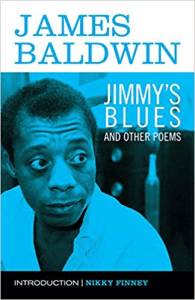
JAMES BALDWIN (1924-1987) was a novelist, essayist, playwright, poet, and social critic, and one of America’s foremost writers. His essays, such as Notes of a Native Son (1955), explore palpable yet unspoken intricacies of racial, sexual, and class distinctions in Western societies, most notably in mid-twentieth-century America. A Harlem, New York, native, he primarily made his home in the south of France.
Baldwin’s novels include Giovanni’s Room (1956), about a white American expatriate who must come to terms with his homosexuality, and Another Country (1962), about racial and gay sexual tensions among New York intellectuals. His inclusion of gay themes resulted in much savage criticism from the black community. Going to Meet the Man (1965) and Tell Me How Long the Train’s Been Gone (1968) provided powerful descriptions of American racism. As an openly gay man, he became increasingly outspoken in condemning discrimination against lesbian and gay people. Bio via James Baldwin’s Amazon page HERE.
If you are viewing this post from an email subscription, you will likely have to link through to the site to watch this video. I happened on it today, which inspired this evening post. Twenty-eight well-spent minutes.
Poet and writer, I was once columnist and associate editor of a regional employment publication. I currently run this site, The Poet by Day, an information hub for poets and writers. I am the managing editor of The BeZine published by The Bardo Group Beguines (originally The Bardo Group), a virtual arts collective I founded. I am a weekly contributor to Beguine Again, a site showcasing spiritual writers. My work is featured in a variety of publications and on sites, including: Levure littéraure, Ramingo’s Porch, Vita Brevis Literature,Compass Rose, Connotation Press, The Bar None Group, Salamander Cove, Second Light, I Am Not a Silent Poet, Meta / Phor(e) /Play, and California Woman. My poetry was recently read byNorthern California actor Richard Lingua for Poetry Woodshed, Belfast Community Radio. I was featured in a lengthy interview on the Creative Nexus Radio Show where I was dubbed “Poetry Champion.”
“What if our religion was each other. If our practice was our life. If prayer, our words. What if the temple was the Earth. If forests were our church. If holy water–the rivers, lakes, and ocean. What if meditation was our relationships. If the teacher was life. If wisdom was self-knowledge. If love was the center of our being.” Ganga White, teacher and exponent of Yoga and founder of White Lotus, a Yoga center and retreat house in Santa Barbara, CA
“Every pair of eyes facing you has probably experienced something you could not endure.” Lucille Clifton
Thank you for sharing your love of words. Comments will appear after moderation.
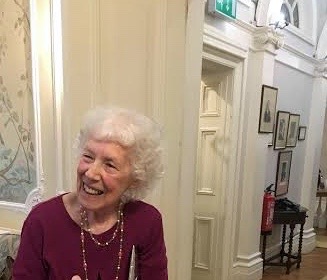
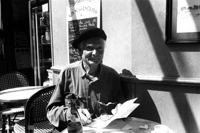
English Poet Myra Schneider at her 80th Birthday celebration and the launch of her 12th collection
“I think that the poet can write forcefully, using a different approach from a journalist, about subjects such as climate change, violence, abuse and mental illness and that this is meaningful to others. I very much believe too that poetry is a way of celebrating life. I think it deserves a central place in our world.” Myra Schneider
Plant yourself in the quiet on a familiar floor
or on an uncut summer lawn
and, thinking of seabirds, stretch out your arms,
let them ascend through the unresisting air.
With palms facing upwards, travel your hands
till your fingertips almost meet,
then release your breath, begin to separate yourself
from the weight of all that lies on you.
Allow your mind to open to this moment and your arms
to rise as they lift the palpable blue
high above the crown of your head.
Your wings will fold away
but raise them slowly to the blue again, maybe
a lightness like liquid amber will flow through you.
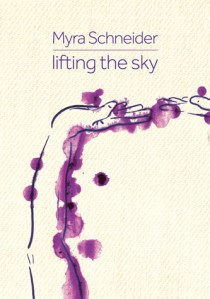
excerpt with permission from Lifting the Sky (Ward Wood Publishing, 2018)
Note: Lifting the Sky is an exercise in the Chinese meditation and breathing practice of Qigong
The poetry collection, Lifting the Sky, may be purchased directly from Myra or from Ward Wood Publishing. Myra’s Amazon Page U.S. is HERE. Her Amazon Page U.K. is HERE. Some of Myra’s collections are available through Anne Stewart’s pf poetry.
Myra’s poetry collection, Lifting The Sky “explores the theme of survival in many contexts: from the perils facing refugees and survivors of war to the detailed and tender mating ritual of endangered seahorses.
Threats to the environment are balanced by the preservation of delicate objects in ancient burial sites such as Sutton Hoo, which is also a meditation about death.
The narrative sequence Edge is a tour de force, presenting a diary of artistic and emotional breakdown due to depression followed by healing and restored creativity.” Ward Wood Publishing
Award Winning British Poet, Myra Schneider (b. 1936), Writer, Writing Coach, Consultant to Second Light Nework of Women Poets
Myra Schneider said in an interview HERE, that “I believe the role of the poet is to reflect on human experience and the world we live in and to articulate it for oneself and others. Many people who suffer a loss or go through a trauma feel a need for poetry to give voice to their grief and to support them through a difficult time. When an atrocity is committed poems are a potent way of expressing shock and anger, also of bearing witness. I think that the poet can write forcefully, using a different approach from a journalist, about subjects such as climate change, violence, abuse and mental illness and that this is meaningful to others. I very much believe too that poetry is a way of celebrating life. I think it deserves a central place in our world.”
Poet and writer, I was once columnist and associate editor of a regional employment publication. I currently run this site, The Poet by Day, an information hub for poets and writers. I am the managing editor of The BeZine published by The Bardo Group Beguines (originally The Bardo Group), a virtual arts collective I founded. I am a weekly contributor to Beguine Again, a site showcasing spiritual writers. My work is featured in a variety of publications and on sites, including: Levure littéraure, Ramingo’s Porch, Vita Brevis Literature,Compass Rose, Connotation Press, The Bar None Group, Salamander Cove, Second Light, I Am Not a Silent Poet, Meta / Phor(e) /Play, and California Woman. My poetry was recently read byNorthern California actor Richard Lingua for Poetry Woodshed, Belfast Community Radio. I was featured in a lengthy interview on the Creative Nexus Radio Show where I was dubbed “Poetry Champion.”
“What if our religion was each other. If our practice was our life. If prayer, our words. What if the temple was the Earth. If forests were our church. If holy water–the rivers, lakes, and ocean. What if meditation was our relationships. If the teacher was life. If wisdom was self-knowledge. If love was the center of our being.” Ganga White, teacher and exponent of Yoga and founder of White Lotus, a Yoga center and retreat house in Santa Barbara, CA
“Every pair of eyes facing you has probably experienced something you could not endure.” Lucille Clifton
Thank you for sharing your love of words. Comments will appear after moderation.
Every year without knowing it I have passed the day
When the last fires will wave to me
And the silence will set out
Tireless traveler
Like the beam of a lightless star
Then I will no longer
Find myself in life as in a strange garment
Surprised at the earth
And the love of one woman
And the shamelessness of men
As today writing after three days of rain
Hearing the wren sing and the falling cease
And bowing not knowing to what
WILLIAM STANLEY MERWIN (September 30, 1927 – March 15, 2019) was an esteemed American poet with some fifty books of poems, prose and translation. Merwin was an activist involved in the anti-war movement in the ’60s. He was a student of Buddhist philosophy and a proponent of deep ecology.
W.S. Merwin was born in New York City, grew up in Union City, New Jersey and Scranton, Pennsylvania and died in Maui, Hawaii, where he’d lived for many years and was active in the environmental restoration of rainforests. He was noted for a love of nature and the condemnation of war and industrialization. He had a difficult childhood and youth and words were his escape. He won prestigious awards, including two Pulitzers and stands tall in the pantheon of literary greats. We are grateful to have a few of his collections on our shelf.
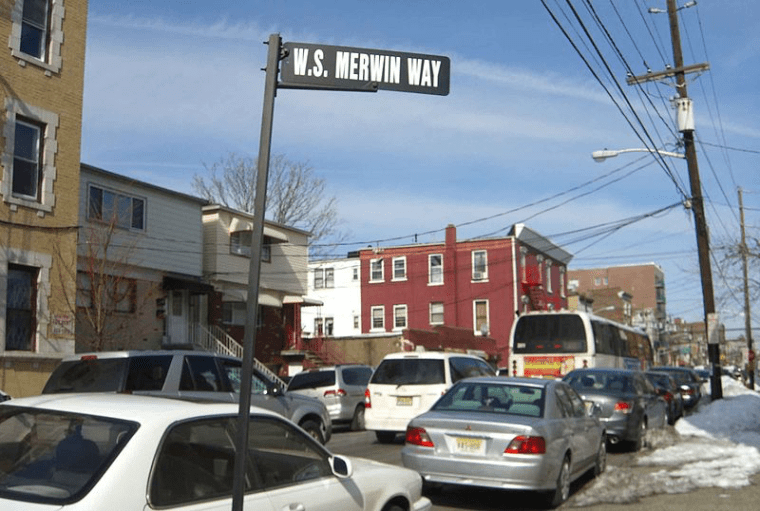
Photo credit: The street in Union City, New Jersey, which was renamed for him in 2006 courtesy of Luigi Novi under CC BY 3.0.
If you are reading this post from an email subscription, you will likely have to link through to the site to view this video.
Poet and writer, I was once columnist and associate editor of a regional employment publication. I currently run this site, The Poet by Day, an information hub for poets and writers. I am the managing editor of The BeZine published by The Bardo Group Beguines (originally The Bardo Group), a virtual arts collective I founded. I am a weekly contributor to Beguine Again, a site showcasing spiritual writers. My work is featured in a variety of publications and on sites, including: Levure littéraure, Ramingo’s Porch, Vita Brevis Literature,Compass Rose, Connotation Press, The Bar None Group, Salamander Cove, Second Light, I Am Not a Silent Poet, Meta / Phor(e) /Play, and California Woman. My poetry was recently read byNorthern California actor Richard Lingua for Poetry Woodshed, Belfast Community Radio. I was featured in a lengthy interview on the Creative Nexus Radio Show where I was dubbed “Poetry Champion.”
“What if our religion was each other. If our practice was our life. If prayer, our words. What if the temple was the Earth. If forests were our church. If holy water–the rivers, lakes, and ocean. What if meditation was our relationships. If the teacher was life. If wisdom was self-knowledge. If love was the center of our being.” Ganga White, teacher and exponent of Yoga and founder of White Lotus, a Yoga center and retreat house in Santa Barbara, CA
“Every pair of eyes facing you has probably experienced something you could not endure.” Lucille Clifton
Thank you for sharing your love of words. Comments will appear after moderation.
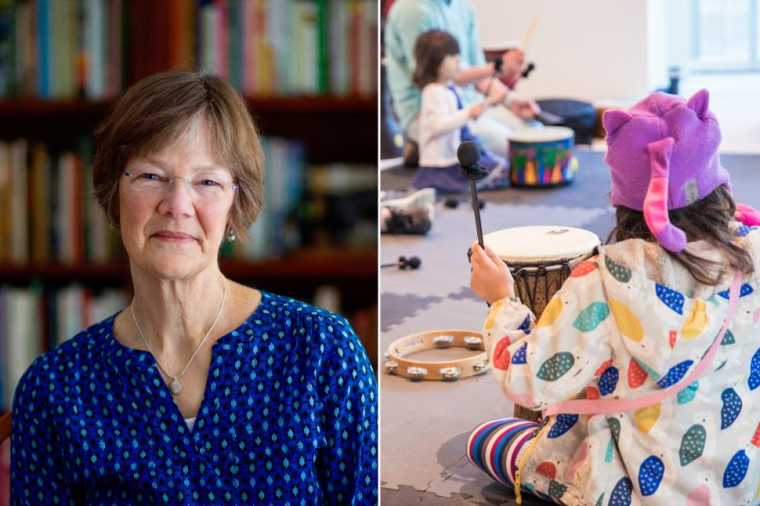
 Special guest Joyce Sidman is the author of sixteen books of poetry for children, including Dark Emperor and Other Poems of the Night, a 2011 Newberry Honor Book. Her most recent book, The Girl Who Drew Butterflies, was named one of the New York Public Library’s Best Books of 2018; it details the life of Maria Sibylla Merian, the 17th century artist who uncovered the mysteries of metamorphosis in butterflies.



 Myra is a poet and writer, a poetry coach, a teacher at the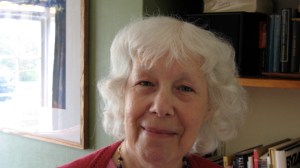

 WILLIAM STANLEY MERWIN (September 30, 1927 – March 15, 2019) was an esteemed American poet with some fifty books of poems, prose and translation. Merwin was an activist involved in the anti-war movement in the ’60s. He was a student of Buddhist philosophy and a proponent of deep ecology.
 Jamie Dedes' THE POET BY DAY Webzine