WRITERS AND CAFÉS go together like coffee and a biscotto. Perhaps the connection started in the place where coffee houses first evolved, Ottoman Turkey. There it is said the men met over small, sweet cups of Turkish coffee to socialize and entertain one another with backgammon and poetry.
Later, when coffee came to Europe, the Viennese cafès were de facto office sites of many well-known writers. The Austrian journalist, Alfred Polgar (1873-1955), admired for his witt at Vienna’s Café Central, wrote that coffee houses were “a place where people want to be alone, but need company to do so.” Maybe writers needed the noise and the caffeine to keep up the will and energy to face one white page after another.
CAFÈ CENTRAL, Vienna
Boris Vian (1920-1959), the French polymath (his abiiities included writing and poetry) claimed that “if there had not been any cafés, there would have been no Jean-Paul Sartre.” That’s an exaggeration of course, but one with which we might agree makes its point. I’ve read that Sartre and Simone de Beauvoir hung-out in Paris at Les Deux Magots and Café de Flore. The former was also a favorite of Rimbaud.
We are told that Pushkin found courage in coffee – not alcohol – before his last and fatal duel in 1837 at The Literary Café in St. Petersburg. Byron, Casanova and Henry James had their favorite coffee houses in Vienna. Lorca met Dalí at the Cafe de Oriente in Madrid, and Kafka worked on Metamorphosis at the Café Stefan in Prague. Oscar Wilde was famous in coffee houses throughout Europe, though perhaps not for having pen in hand.
HEMINGWAY, HADLEY and Friends, American Ex-pats in Paris
The connection between writers and coffee houses was well established by the time the lost generation was meeting in Paris in the 1920s. Hemingway wrote about Cafe La Rotonde and Le Dome Cafe in The Sun Also Rises. He also frequented the Dingo Bar along with F. Scott Fitzgerald and Djuna Barnes.
The Pedrocchi Cafè (1831) in Padua, like many of the old coffee houses, is still in operation and is one of the world’s largest. It was Stendhal’s home-away-from-home …
… and so the affinity continues into recent times. The Elephant House in Edinburg is the “birth place of Harry Potter.”
THE ELEPHANT HOUSE, Edinburg, “the birthplace of Harry Potter”
Mark Twain (a.k.a. Samuel Clemens) famously – or perhaps infamously – was a believer in and adept master of profanity, not as vulgarity, he said, but as release.
“Under certain circumstances, urgent circumstances, desperate circumstances, profanity provides a relief denied even to prayer.” Mark Twain, a Biography
Twain wrote of swearing as “ornamental” when practiced by American miners considered by him to be “gifted among the sons of man.”
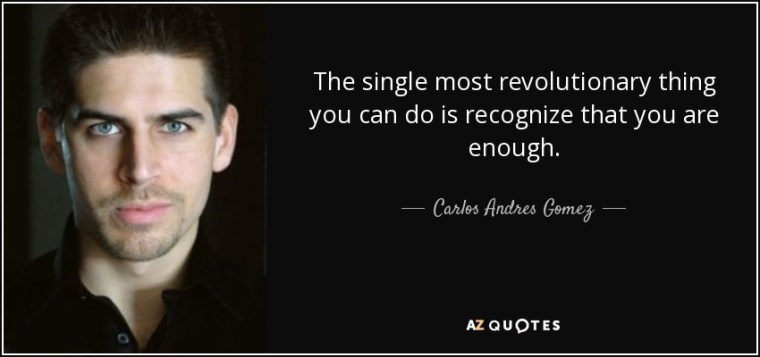
I admit I haven’t the gift to turn profanity into art and I have no taste for vulgarity. You won’t catch a swear word on my tongue or even on my mind but I do recognize that there’s a time and place and manner. I don’t know what Twain would think of award-winning American spoken-word poet, Carlos Andrés Gómez, but I like his work. Carlos moves profanity from emotional release or “ornament” to moral high ground. He applies it with searing honesty to the human condition.
Here’s Carlos telling it like it is:
If you are reading this post FROM in email, you will have to click through to view the video.
“Carlos is amazing. Pretty much everything he says, whether a ‘poem’ or not, is pure poetry. His grace and power and humor demand not only that people listen, but also that they act for change — in themselves and the world around them. And especially when it comes to the narrow norms that constrain men, hurt women, and limit us all, he can help deliver exactly the change we need. Carlos makes me laugh, cry, and hope.”
Mallika Dutt, President & CEO of Breakthrough [the global human rights organization dedicated to making violence against women unacceptable] (India)
Carlos Andrés Gómez was born in New York City (1983) but he seems very much a citizen of the world. He’s a poet, writer, actor, activist . . . and some say, a prophet. He was a social worker and a public school teacher. He is the son of a United Nation’s diplomat and an indigenous rights’ activist.
His book, Man-up: Reimagining Modern Manhood (Gotham, 2012) is a coming of age memoir that suggests an enlightened masculinity with an open self-embracing emotional life, ready to foster nonviolence and able to see women not as objects but as whole human beings, as equal partners in life and work. The book was written in part to help address some of the crises we are all so concerned about, including school drop-out rates and youth suicide. A worthy read that challenges us to exchange traditional male stereotypes of macho conformity for something more genuine and soul-satifying. Recommended for women as well as men and I’d say for anyone raising and/or educating young men.
This essay was originally published in the December 2016 issue of The BeZine. It is by Reena Prasad (Butterflies of Time – A Canvas of Poetry) and with her permission I share it here today. It is simply not to be missed. I can’t think of anything better with which to start 2017. Over the years, I have not seen another poet work with quite the same passion, consistancy or intelligence at her craft. She is diligent not only in the creative process but in getting her work out to publishers. I am pleased to be able to feature her essay here and her poetry in The BeZine. Enjoy! Reena’s bio is below the essay. J.D.
Poetry finds you when you are broken, insists on taking you into its fold, puts your pieces together and then you never leave.
It struck me when I was standing at the doorway of my home one July that the sunshine over the mussaenda was a rare shade of rose-gold and that the leaves under it were a luminous green. The street noises seemed to recede as if the stage had been taken over by some other troupe and sure enough, there was a sudden onset of activity. An excited squirrel ran up and down the guava tree, a few babblers screamed and the jackfruit tree came to life with bird cries. All because there was a long rat snake slithering leisurely across the sunlit ground. There had been stray tears on my cheek and I was a dam on the verge of a collapse but then the other world swung in and took over from me.
I was privy to nature’s poetry slam. I wanted nothing to capture it, not a camera, or a laptop nor pen and paper. A poem followed by several others swung its legs over the cacophony of humdrum routines and marched into me settling deep into waiting trenches filling me up with purpose and with immense joy. While steadily ploughing up the driest top soil and turning it over to the elements to ravage, it was changing me.
I remembered Stanley Kunitz’s translation of Akhmatova’s lines . . .
“No foreign sky protected me, no stranger’s wing shielded my face. I stand as witness to the common lot, survivor of that time, that place.”
Writing a poem is akin to exercising. To begin is difficult at times because it is easier to wallow in conceptual dramas and imaginary hammocks than to sit in one place and write or type. Think about the singular joy of munching on peanuts and reading fitness magazines on the couch compared to going running on a cold day.
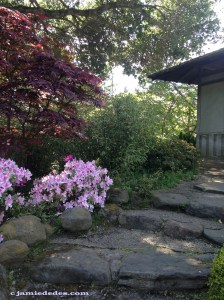
Mussaenda Frondosa
Some poems are difficult to birth even while being exhilarating with senses functioning at heightened awareness and making one sore with the intensity of thought . Once begun, every thought zooms into the present; nature, politics and emotions collide, collaborate and confound the notions of what constitutes poetry. The end comes when the experience has gone through like a sword and untwisted all the overlapping images to give one’s vision a clarity that is brighter than the sunbathed green leaves of the mussaenda.
Winner of the T.S Elliot award 2012 Poet John Burnside said,“Poetry reminds us that lakes and mountains are more than items on a spreadsheet; when a dictatorship imprisons and tortures its citizens, people write poems because the rhythms of poetry and the way it uses language to celebrate and to honour, rather than to denigrate and abuse, is akin to the rhythms and attentiveness of justice.” Central to this attentiveness is the key ingredient of poetry, the metaphor, which Hannah Arendt defined as “the means by which the oneness of the world is poetically brought about”. It’s that power to bring things together, to unify experience as “the music of what happens”, that the best poetry achieves.”
It also unifies the people reading it and the poets who write it because we search for affirmation, for reassurance that our feelings and experiences are shared by someone else somewhere and that we aren’t all alone though our pursuit of the game is almost always solitary.
While the visualized poem changes a lot after being handed over to language, the thing that is most changed at the end of the writing is me. I feel kindly and tolerant to all forms of obstacles and injustices that were hindering the poem till then, feeling mostly gratitude for the crash course on changing perception. If there is more indecision, more poems might be written.
As David Biespiel says”You become a poet when you navigate your poem’s labyrinths of mutability, not to a point of stasis, but to a point where your discoveries blossom into ecstasy, intoxication, even beatitude — or, to downplay that bit of grandiosity, into clarity, insight, judgment, understanding, private vision.”
And believe me language plays a mighty role here – give it all the vocabulary and range you can and the poem rushes through like a thing on fire. Don’t let anyone tell you that language doesn’t matter. It does. It does. It does. You wouldn’t want to be subjected to an operation if your doctor uses an rusty, blunt knife he found while swimming in the ocean. It is the same thing with poetry. Hone your weapons before you go to war. Because after that poem is written, you are healed of whatever ailed you. The better your poem, the better you feel. I have no complaints about life as long as I can write because there somewhere between the thought and the written word, lies my wetland, my wildlife reserve, my sanctuary.
Leaving you with Amiri Baraka’s lines from Preface to a Twenty Volume Suicide Note . . .
“Lately, I’ve become accustomed to the way The ground opens up and envelopes me Each time I go out to walk the dog. Or the broad edged silly music the wind Makes when I run for a bus…
REENA PRASAD is a poet from India, currently living in Sharjah (United Arab Emirates). She is the co-editor with Dr. A.V. Koshy of The Significant Anthology (2015). She writes poems looking in awe at the world from the seventeenth floor of a high rise in the Arabian desert. Her poems have been published in several anthologies and journals including The Copperfield Review, First Literary Review-East, Angle Journal, Poetry Quarterly, York Literary Review, Lakeview International Journal, Duane’s PoeTree, and Mad Swirl. She is the Destiny Poets UK’s, Poet of the Year for 2014. More recently her poem was adjudged second in the World Union Of Poet’s poetry competition, 2016.
Well, here it is Friday and the new year is upon us. This is the last of the holiday break movie reviews. Up this time is Mrs.Parker and the Vicious Circle.
Jennifer Jason Leigh won the Golden Globe for Best Performance by an Actress in a Motion Picture (1994), the National Society of Film Critics Awards (U.S.) (1995) for best actress, and second place for best actress by New York Film Critics Circle Award (1994) for her portrayal of Dorothy Parker, poet, writer, screenwriter (A Star Is Born, among others), caustic wit and founding member of the Algonquin Round Table, the vicious circle. Parker is probably the only member of the Round Table still well-known and not just by those of us old enough to remember her. Witness: The Portable Dorothy Parker is one of three in the Portable series that remains continually in print. The other two are the Bible and William Shakespeare.
The Algonquin Round Table, named for the Algonquin Hotel in New York City, was a meeting place for a circle that included New York writers, critics, screenwriters and actors. During their daily luncheons the members engaged in clever and pithy witticisms and wordplay, shared across the U.S. by the columnists in the group.
“Ducking for apples – change one letter and it’s the story of my life.”
The movie is well-larded with Parker’s quips and short wry poems. It centers on the Algonquin years, circa 1919 through 1929, and her many glamorous but disappointing love affairs.
“I require three things in a man. He must be handsome, ruthless and stupid.”
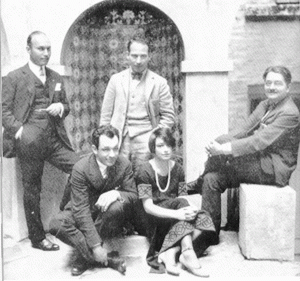
Some members and associates of the Algonquin Round Table: (l-r) Art Samuels, Charles MacArthur, Harpo Marx, Dorothy Parker and Alexander Woollcott
The movie gives us a peek in on the clever but often cruel bon mots shared by the likes of – among many others – Harold Ross, the famous (or sometimes infamous among writers) editor of the New Yorker, the humorist William Benchley (Parker’s best friend), critic and social commentator Alexander Woollcott, playwright and director George S. Kaufman, and author and playwright Robert E. Sherwood.
It’s rather fun that Peter Benchley, grandson of humorist Robert Benchley and Wallace Shawn, son of long-time New Yorker editor William Shawn, are among the cast that includes such lights as Campbell Scott, Jennifer Beale, Matthew Broderick, Martha Plimpton (distant cousin of George), Keith Carradin, Jon Favreau and Peter Gallagher.
“My land is bare of chattering folk; the clouds are low along the ridges, and sweet’s the air with curly smoke from all my burning bridges.”
Jennifer Jason Leigh is superb in the role of a complex woman who is at once smart and sexy, brittle and vulnerable. The cast is outstanding. The clothing and setting perfect. Both thumbs up on this one. I suspect those who are familiar with the background of the Table and its members will get the most out of the film but given Parker’s witticisms and Leigh’s performance I think all will enjoy Mrs Parker and the Vicious Circle.
 WRITERS AND CAFÉS go together like coffee and a biscotto. Perhaps the connection started in the place where coffee houses first evolved, Ottoman Turkey. There it is said the men met over small, sweet cups of Turkish coffee to socialize and entertain one another with backgammon and poetry.









 Jamie Dedes' THE POET BY DAY Webzine