Page 55 of 91

LATE-BREAKING NEWS: Lifting the Veil, Artists in Support of The Tahirih Justice Center

13691078_10153724292802895_2417662814280239338_o

The Tahirih Justice Center stands alone as the only national, multi-city organization providing a broad range of direct legal services, policy advocacy, and training and education to protect immigrant women and girls fleeing violence. Come out and support some of New York’s most powerful artists as they perform to raise money for a worth cause. $10 suggested donation all going to the center. Thanks to Terri Muuss for sharing this with us. Lifting the Veil Facebook Page is HERE.

August 7 at 4 p.m. – 8 p.m. EDT at BrickHouse Bewery & Restaurant 67 W. Main Street, Patchogue, New York 11772.  

*****

a man, a woman, a stick

(1921)

the stick stood in the corner of the kitchen
a constant threat; stoking, as it was meant to,
chronic intimidation

he had a man’s right to deliver his blows
to vent his anger and his self-contempt
to cause suffering for the insufferable

someone had to make it up to him,
his loss-of-face to race, creed and poverty

for her part, eve’s daughter was ripe,
shamed by her intrinsic sinfulness,
worn by her constant pregnancies

her femininity: tired and task-bound,
guilt flowing freely, as all-consuming as lava

[relief, only in death]

and the seventh child was born to die
and the man was demanding his bread

she wrapped the girl in swaddling cloth,
placed her gently by the stove, and
while the newborn made busy with dying,
the woman prepared him his meal

© 2015, Jamie Dedes

CELEBRATING AMERICAN SHE-POETS (#22): Jane Hirshfield, a human poet

Jane Hirshfeld (b. 1953), poet, essayist, translator
Jane Hirshfield (b. 1953), poet, essayist, translator

I always feel a slight dismay if I’m called a “Zen” poet. I am not. I am a human poet, that’s all.” Poet Jane Hirshfield on the Mystery of Existence, Spirituality & Health Magazine, Mar./Apr. 2013

When I think of Jane Hirshfield, I think first of her kindness to my friend, Bay Area poet, Ann Emerson (poet #9 in this series), who died a few years back and who received compassionate and generous guidance from Jane at a conference some years ago. It meant a lot to Ann and was a high-point in her six-year journey through cancer with poetry. Once having read Jane Hirshfield’s work, you can’t conceive of her as being anything but kind. The empathy expressed in her poetry is vast.

I admit to being one of those who also thinks of her as a Buddhist poet. Her poetry is Zen-like in its attentiveness, its inward-looking meditative quality, a quality of the ineffable given expression. Jane Hirshfield is a Zen practitioner, lived for several years at Tassajara and is ordained in Soto Zen.

Immersion in the life of the world, a willingness to be inhabited by and to speak for others, including those beyond the realm of the human, these are the practices not just of the bodhisattva but of the writer.” Jane Hirshfield in Nine Gates: Entering the Mind of Poetry

Another New York girl who eventually migrated to the San Francisco Bay Area, Jane Hirshfield was famously graduated from Princeton University’s first class to include women. She is the author of eight collections including The Lives of the Heart (Harper Collins, 1997), which won the Bay Area Book Reviewers Award and Given Sugar, Given Salt: Poems.

51LEMWRIG0L._SX326_BO1,204,203,200_

TREE

It is foolish
to let a young redwood
grow next to a house.

Even in this
one lifetime,
you will have to choose.

That great calm being,
this clutter of soup pots and books —

Already the first branch-tips brush at the window.
Softly, calmly, immensity taps at your life.

– ©Jane Hirshfield (from Given Sugar, Given Salt, Poems)

Originality requires the aptitude for exile.” The Question of Originality in Nine Gates

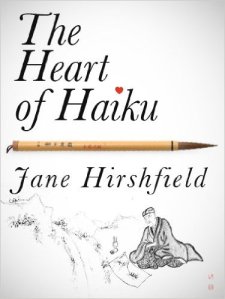
Her two collections of essays (must reads, no pedantry here) are Nine Gates: Entering the Mind of Poetry (Harper Perennial, 1998) and Ten Windows: How Great Poems Transform the World (Knopf, 2015). She also translated a collection of poems by Japanese women with Mariko Aratani: The ink dark moon : love poems by Ono no Komachi and Izumi Shikibu, women of the ancient Court of Japan (Vintage Classics). Her study The Heart of Haiku is available in Kindle Edition.

51oJEaBJOEL._SX373_BO1,204,203,200_

Reading Jane Hishfield’s work is both a joy and education for your writerly self and a balm for your spirit. If by some incalculable misfortune you haven’t met her yet, seize this day.

© 2016, words, Jamie Dedes; photograph by A. Phillips and generously released into the public domain

ON THE ANNIVERSARY OF PABLO NERUDA’S BIRTH: Everything Exists in a Word

Pablo Neruda (1904-1973), Parral, Chile
Pablo Neruda (1904-1973), b. Parral, Chile

“You can say anything you want, yes sir, but it’s the words that sing, they soar and they descend ….. I bow to them . . . I cling to them, I run them down, I bite into them . . I love words so much … The ones I wait for greedily … they glitter like colored stones, they leap like silver fish… They are foam, thread, metal, dew … I stalk certain words… They are so beautiful that I want to fit them all into my poem… I catch them in mid-flight, as they buzz past, I trap them, clean them, peel them, I set myself in front of the dish, they have a crystalline texture to me, vibrant, ivory, vegetable, oily, like fruit, like algae, like agates, like olives… And I stir them, I shake them, I drink them, I gulp them down, I mash them, I garnish them …. I leave them in my poem like stalactites, like slivers of polished wood, like coals, like pickings from a shipwreck, gifts from the waves … Everything exists in the word.” Pablo Neruda in his Memoirs

Photo credit ~ U.S. Public Domain, 1966, Neruda recording his poetry

BETWEEN SCYLLA & CHARYBDIS: why I can’t spell … and yes! You can be a writer even if you’re dyslexic

Some days I get caught between my inability to spell a word and the artistic desire to use just the right one. There’s a temptation to take the lazy way out, to substitute the easy word for the perfect one. My spelling is so bad that I got Ds and Fs on tests in elementary school. I was always the first one to get booted out of the spelling bee.

Later in life, when my son got home from school, I would hand him a manuscript and pay him a quarter for every misspelling he found. Now I just text him. Generally I can’t come close enough to the right spelling … if I could the spell-check might work for me  … so I just make like a crossword puzzle:

“Son, Homer between a rock and hard place … ?”

“Mom, Scylla and Charybdis.”

“Son, it begins with an ‘a’ and is foolish.”

“Mom, absurd…!!!!”

Even though I’m a slow reader and a poor speller, it never occurred to me that I couldn’t write for a living, probably because I wasn’t diagnosed with dyslexia until I was almost fifty. (Story for another day.) I had no name to give this puzzling situation. In retrospect, that might be a good thing.

For years I thought my problem was my Brooklynese, my pronunciation. On and off over time I read books and listened to tapes on elocution, which did seem to help a bit. Then Laurel D. sent us this Funny or Die video, The Bensonhurst Spelling Bee. It’s a chuckle-and-a-half and has nothing to do with dyslexia, but in an odd way it sort-of validates my hypothesis. Pronunciation may not be the root of the challenge, but it probably does help to complicate things.


If you’re reading in email, you’ll likely have to click through to this site to view the video. (If you’re also from Brooklyn, it’s a must see.)

Humor aside, dyslexia shouldn’t stop anyone from being a writer. It’s not a reason to give up on writing or to encourage your children to do so. HERE is a list of twenty-five well-known writers who are or were dyslexic. The late Stephen Cannell was famously dyslexic. He was open about it in an effort to help and encourage others. The Learning Center section of his website provides some background and tips.

  • It is estimated that 15-17% of the population is dyslexic.

RESOURCES:

© Jamie Dedes; Illustration is in the public domain.