Page 66 of 91

FORGING NEW-BORN CRIES OF HOPE: An In-depth Interview with Romanian Poet, Liliana Negoi
unnamed
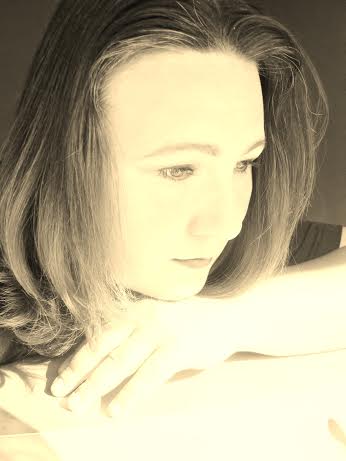
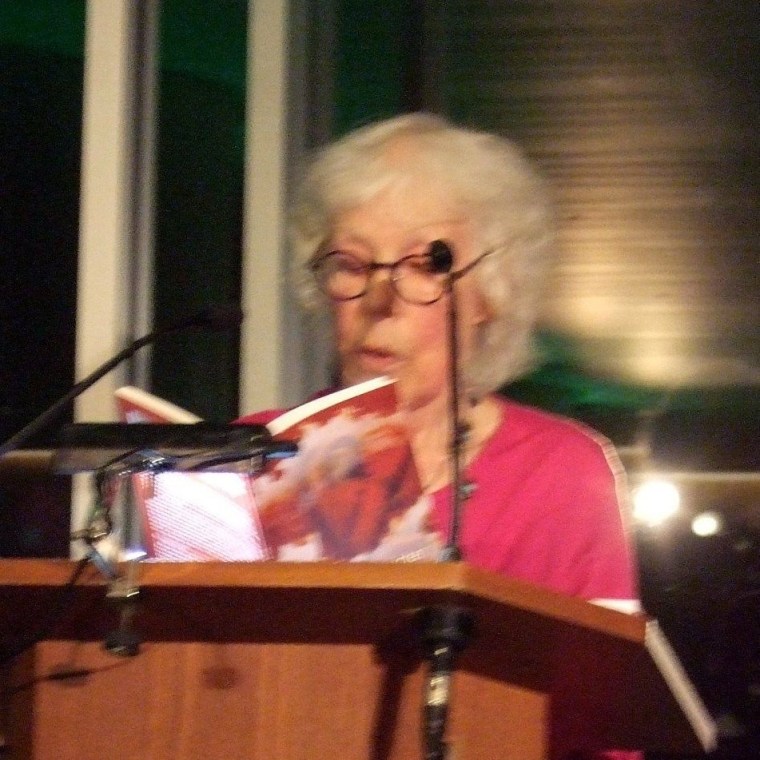
Liliana Negoi (b. 1979) Craiova, Romania

phoenix  (a tanka)

rising from my heart,
bathing in my soul’s ashes,
proud of my fire…
i’m burning words with my thought,
forging new-born cries of hope…

– Liliana Negoi

I got to know Liliana Negoi a.k.a. Lily (Endless Journey and curcubee în alb şi negru), her gentle refined spirit and her intelligent and well-crafted work years ago when we collaborated on a poetry project. We still keep in touch – it must be at least five years now – and Lily agreed to join The BeZine team and is a regular contributor of poems and essays to that peace-through-the-arts forum. Here today you have an in-depth interview with this thoughtful poet and samples of her work. Enjoy!

JAMIE: How did you come to poetry and when did you start writing it?

Although I was a big fan of reading (prose and poetry), poetry began to flow from my pen rather late – by “late” I mean when I was about eighteen years old. The thing that triggered the birth of my first poem was that my philosophy teacher from my final high school form almost died Someone told us that he was in hospital, all alone, without anyone to be there for him. This idea of profound loneliness managed to touch a “sleeping layer” in my conscience. thus my first poem, Anonymous Will, was born.

Despite that first poem coming out though, I didn’t consider writing poetry in a serious manner until much later, at first because I didn’t feel that my texts were good enough, and then because people around me didn’t seem to be much interested in poetry or writing. Also, at that time I was caught up with my music studies I paid more attention to those. A couple of years later though, I discovered the Internet (yeah, I was rather late in discovering it), and via the Internet, the English poetry websites. Eighteen years ago Romanian poetry websites were less developed, and since I wasn’t frequenting literary circles, what I found online was of much help.

At first I translated some of the poems I had already written. Later I simply began to write directly in English. The rest was a matter of time; the passion for poetry was already there. And in all this time, the creations of well-known Romanian poets like Nichita Stanescu, Marin Sorescu, Ana Blandiana, Adrian Suciu, but also foreign ones, like Pablo Neruda, Walt Whitman, and lately Nikola Madzirov, were (and are) a splendid lesson to me, with regard to understanding and writing poetry.

I also write haiku and tanka, as you know, but for some reason, despite the fact that these are also poetry forms, to me they were always on a different plan than the rest. Maybe because their spirit is of a different nature, and it took me more time to “crack the nut” and understand them.

I still see myself as a beginner in many ways, when it comes to poetry, but poetry chose to come to life through (however clumsily) me. I think this is one of my biggest joys in this life.

JAMIE: You are so productive: two blogs – one in English and one in Romanian – and five books of poetry in English and one in Romanian. I believe your children are still young … and you have your love of music and gardening to feed as well. How do each of these support and feed the others?

Yeah, I guess it sounds like a lot, if you sum it up like that :). But it was (again) all a matter of time. I didn’t do all those things at once. For instance, the first one that appeared was the English blog, when I felt that I needed something else than the poetry websites (on which I spent actually quite a few years, reading, learning, understanding – the international virtual literary community is a marvelous ground, if you know how to use it). Then came up the first poetry collection, in English, and despite the fact that there were mistakes in that process which I saw later, I think the greatest thing about that printed collection is that it made me more aware of what words truly are, and how they should be treated.

The Romanian blog appeared when a very dear friend of mine told me, with a lot of disappointment, that I should also write in Romanian, not only in English (I think I forgot to tell you that, after I started to write in English, for quite a long time I wrote only in that language). So I began to write again in Romanian, and to be honest, at first I felt like a toddler who was beginning to learn how to walk :). But then I found my way again among words, and it all fell into place.

The books…well, I guess they simply followed on the way, one by one.

As for the rest – yes, my two children are only eight and seven years old, so they do require a lot of attention. All these aspects of my life, including music and everything else, are merely the pieces of a puzzle – some bigger, some smaller, but all filling up the space of my life up to the smallest crack :). And when these things can’t fill those up, I have reading, which was the first passion in my life, starting at age four. But, again, it’s not a more crowded life than others’. It just requires (as in all cases) good time management. They are all connected – children to garden, garden to music, music to writing, or in any other order you prefer :).

This slideshow requires JavaScript.

JAMIE: You have said that you like to write in English. What about English is so appealing? How is it different from writing in Romanian?

I started to learn English when I was five years old, in kindergarten. Back then, Ceausescu was still ruling Romania; so, to have an English teacher in kindergarten was rare. My grandmother, with a spark of genius, wanted at all costs for me to start to learn this language in private, at home, so she arranged for lessons with that teacher. There were two things that I hated about it (or more like about the way of learning it): learning vocabulary by heart and learning grammar rules :).

Later, I stared English in school in my sixth form, when I was about twelve. The problems were the same. I simply didn’t understand that what I needed and wanted was to read more in that language. I think that happened about the time when I discovered the English poetry websites. I was lucky enough to talk online to English native speakers. That simple but constant contact with this language was the thing that enabled me understand what my teachers hadn’t – the inner mechanics of the language. I think it’s the same with any language – the more you read and speak it, the faster you understand and learn it, but the main thing is to read and speak about something you are interested in, not just didactical texts.

For instance, I fell in love with Nikola Madzirov’s poetry a couple of years ago, when I bumped into it by accident, while looking for something else. I read it in English back then, from his bilingual book Remnants of Another Age, but I heard some recordings of him reading his own texts in Macedonian. I was curious to see on my own how it sounded read in that language. Now, with Macedonian, the problem is the Cyrillic language, but I was fortunate enough to know most of the Russian letters from my grandmother, so I had an easier start with that. I began reading them, always comparing my reading with the English version, and listening to the several recordings of the author, and now I’m starting to slowly understand and learn Macedonian, even if my original intention was only to “feel the taste” of Madzirov’s poetry in my mouth :).

Going back to English (I’m sorry I have such a way of “expanding” my answers, please forgive me!), I think English provided me with a fluency I didn’t expect, and, for some reason, a fluency that, at the time when I began to write in English, I hadn’t found in my own native tongue. Sure, I speak Romanian without problems, but from many points of view English had a different impact on my writin and images were easier to “paint” with English words (and it happened to me to find many images that were better worded in English than in Romanain).

I think the real issue here is the musicality of a language in certain contexts; or, better said (because all languages have their own musicality), the way in which the musicality of a language resonates to the reality stimuli surrounding us. It’s the same with music. All music is beautiful, but you don’t listen to any kind of music in any given moment of the day – all languages are musical, but you can’t capture the beauty of a moment the same way in two languages. No matter how good a translation, Basho’s haikus will never convey the same feeling as in their native tongue, simply because that language has profound connections to that form and because that form responds best to that musicality. My inner structure resonates (or at least it used to resonate) better with the way English language sounds, thus my poetry, for years, flowed much better in that language.

JAMIE: What forms of poetry do you prefer and why?

I write mostly in free verse, white rhyme, or various combinations of rhyming verse, but in time I tried newer and older forms of poetry. From these, I eventually grew much attached to sonnets (especially Shakespearean sonnets), haiku and tanka.

I also have another form, the sestina, that’s dear to me, but with that one is more like a “love-hate relationship”, so to speak. One of the people who taught me online certain things about poetry made me literally try to write several forms, and at some point he mentioned the sestina, saying that a rhyming pentameter in that form was among the most difficult things to write, so in my mind I was like “challenge accepted” :))). I wrote three such texts, the first two not so bad, but of the third one (named “panta rhei”) I’m actually very proud of. I decided that even if I am able to produce a text in this form, I am not very fond of the fact that the virtuosity is strictly connected to the way one makes use of the same six end-line words all through the poem. It’s a whirling form, maybe even maddening one – and one needs much patience and determination, and above all, a VERY good motivation to write one. I only found that motivation three times so far, maybe I will find it again, but I couldn’t say when that should happen.

Sonnets, on the other hand, were something so elegant, from my point of view; they were like a time travel at first. And as with other things, I realized that not all imagery can be “stuffed” into this form. Normally a love poem, I found that love sometimes, when put in a sonnet, feels square, just like I found out that other aspects of life, when given the form of a sonnet, gain a certain nobility.

The haiku and tanka were two forms that appealed to me first due to their minimalism and strictness of rules. I’m not talking here about the 5-7-5 haiku rule – so many great haiku poems were written without respecting that rule. I’m talking about the fact that a haiku, for instance, is merely an observation of what surrounds you, as a poet, an observation of the delicate changes in the nature around you, of the delicate balance between nature and you. Haiku is not simple, precisely because it should be simple, and we, the European and American poets, don’t know how to keep things as simple as a haiku. I love haiku because it taught me to look deeper at things, but also to see the immediate beauty of everything. It’s there. You need no metaphor to acknowledge it – the beauty of life, in its entirety.

JAMIE: You’ve accomplished so much. What are your next steps, your goals for the future?

It’s hard to have steps in poetry. My only step (in this moment) related to this is to find the best way to bring words to life. Sure, I have some book projects, but I am not as disciplined in this matter as to sit down every day and tell myself “now I’m working on this or that book”. It’s a matter of inspiration, and yes, maybe some are able to summon inspiration at will. Lately though, I find myself basking in some sort of “laziness”, let’s say. I’m more like living than writing the poetry :). I definitely won’t stop writing; I just want to understand the connection between time and poetry, between time and words.

JAMIE: What advice might you have for others who self-publish their poetry, whether it be via blogs or books or both?

I think they should write for themselves, first of all, and learn to be objective. One must realize that you begin to become a poet only after you’re willing to “trim” what you create, to understand that not all words belong to one poem, just like not all poems belong to one book.

Then comes something that someone very dear to me told me at some point: do you want to publish a book in order for it to be commercial or in order for it to be good? Because it’s highly difficult to have both things at the same time nowadays. If they write for commercial reasons…I’m afraid they will have to take advice from some other person than me :).

If they don’t write for commercial reasons, then they should first of all write with profound honesty. They shouldn’t write for others to like what they pen. They should write with the awareness that those liking their poems today might not like them tomorrow, and that what matters if first of all their personal connection to what they write.

They should write with the awareness that people liking their work now will be gone in years to come, and what they write will be seen by a different generation, with different eyes, different brains and concepts. They must decide whether they want to write something that should be valid for a while or for ever. Evanescence is beautiful to talk about but difficult to assume.

Writing something that should be valid forever is not easy. For that, you must love to read – reading forms your vocabulary, your imagination, your inspiration. You must love to see things – not just look at them, but see them, in their entirety. You must love to write. Not only on a computer keyboard, but with a pen on a piece of paper. Form a connection with the words. See them inked on paper. See the poetry of the spaces in words, not just that of their letters’ lines. You must love to talk but also to listen to people. Form connections with people. Above all, if you want to write poetry, you must be willing to live it first with all that it implies.


IMG_8751

The Talking Rose

I was talking on an evening to a purple velvet rose
that was reigning in a glass bowl on a shelf inside my house –
I was asking it to sell me out its soul, but I suppose
what I offered was too little,
what I offered was too useless,
what I offered was too shallow,
for I thought I heard it grouse
of how priceless was the perfume which it spread inside my house.
Feeling vexed by the contempt and pride affected by the bloom
I ignored all further whisper it attempted to convey –
‘til one night, when in the thickly warm and humid summer gloom
all I heard was just the silence,
all I heard was just the darkness,
all I heard was just my breathing
vainly searching for a say
from the rose which, in the meantime, hushed its scent and passed away.
So I tenderly beheld it – purple velvet turned to brown –
as it gracefully adorned the wooden shelf within my room –
now, that all the sweet aroma had resigned the rose’s crown,
what was left was just the stillness,
what was left was just an echo,
what was left was just a shadow
of the rose that met its doom –
and I missed – oh! how I missed! – the talking fragrance of the bloom…

– Liliana Negoi

Liliana Negoi was born in 1979 in Craiova, Romania. She began to write poetry at the age of eighteen. She is the author of five collections of poetry in English (Sands and Shadows, Footsteps on the Sand – tanka collection, Cream of wordflakes, The Hidden Well and Amber Drops) and one in Romanian (aparenta curgere a lucrurilor). Texts of hers can be read both on her English blog Endless Journey and Romanian one curcubee în alb şi negru and she can also he heard reciting on SoundCloud HERE and HERE. She is also the author of a novel, Solo-Chess, available for free reading HERE. Many of her creations, both poetry and prose, have been published in various literary magazines. She is a member of the team publishing on The BeZine and established, together with Raluca Ioana Chipriade, an e-zine of Romanian art and culture named Din dragoste pentru arta.

© Liliana Negoi, poetry, interview responses, portrait and book-cover art; rose photograph, Jamie Dedes

CELEBRATING AMERICAN SHE-POET (9): ANN EMERSON, Far From Eyes Broken Like Windows

San Francisco Bay Area poet, Ann Emerson, was one of the first two people I invited to join in the collaboration we now call The BeZine. It was originally named Into the Bardo, in reference to the Buddhist state of existence between death and rebirth; so named because of life-compromising illnesses.

Ann was a gifted poet, but she didn’t find that out until after she was diagnosed with a rare bone cancer. She discovered her voice in a hospital poetry class. Ultimately she studied with Ellen Bass in Santa Cruz, California. 

img_0961

After diagnosis, Ann survived for an almost consistently tortured six years. Physical pain. Trauma. Fear. Chemo. Poverty. She had signs posted around her house that said, “Live!”

While Ann spent a lot of time in the hospital, her home was a cabin in the Redwoods of La Honda, a stone’s throw from the log cabin where Ken Kesey and the Merry Pranksters so famously partied in 1964. She lived with her cats. Originally there were six and they were all blind. No one would take them in, so Ann did.

l.NbSuLbZWIcnyodRP

Ann was just a thesis away from her Ph.D. A few weeks before she died, four of Ann’s poems were published in American Poetry Review

416250017_370-jpg

Two days before Ann died, she married the gentleman who was her sweetheart of thirty years. Ann’s wedding was held in her hospital room. Those of us in the attendance were required by the hospital to wear yellow gowns over our street clothes. The bride wore yellow too. The flowers and the ring were from the hospital gift shop. The founder and leader of our support group for people with catastrophic illness, a Buddhist chaplin, performed the ceremony. One of us took wedding photographs using a cell phone.  I created a virtual wedding album.The wedding was in its way lovely, but it was achingly sad.

IMG_8407

When Ann died, we sat with her for some time because Buddhists don’t believe the soul leaves the body right away. Ann’s Buddhist teacher – someone she held in high regard – came and lead us in meditation and blessing.

Here – on the third anniversary of Ann’s death – are three of her poems. In closing, I added A Hunger for Bone, the poem I wrote the day her ashes were released to the sea near Julia Pfeiffer Burns State Park in Big Sur. My poem in no way comes up to the gold standard Ann set, but it tells the story. 

Julia_Pfeiffer_Burns_State_Park

– Jamie Dedes


Elegy for Cat Five

Fuck the Glory that is Poetry,
fuck the smell of God in my hair,

The world is the color of driftwood,
this ordinary Wednesday in June.

Let’s have a moratorium on poems
about my shitty news from Stanford

and how I can’t tell heat from cold.
My blood dirty as brown sand in a museum,

and my cat, well, he has news too.
Death woman, skeleton cat,

I turned 57 yesterday when
the veterinarian said No.

I am taking us both to the ocean
for as long as we need:

red sand staining white fur.
I am smelling my cat’s iodine breath,

I am putting my hand in the wound
in my side. Dry brine stinking up

the air, seawater choking the
cawing gull in his throat.

And my face, he’d better
not fucking forget.

One more day leaving me
for a little peace of mind.

.
A Modern Poem (draft 1)

.
I am walking again through an American night,
past police stations with barred gates, windows
glazed warm with doughnuts, patrol cars in the lot.
I stand outdoors seeking coffee: someplace where
eyes will not wander through me when I sit in a red
booth filled with books as women fearing Altzeimer’s
hoard cats. I stay up until dawn, waiting for panic
to subside, to find the meaning in all things
in a city which says I am nothing.

..
I wake in my American forest, from a dream
of being shot: when one lives in a forest one cannot expect
the humane society always arriving in time. I walk through
the cabin and on down the path: moonlight blurs the redwoods,
wind blurs water. I feel like a girl safe in a picture book.
Indoors the television screen shines blue as topaz.
I am walking again through the forest aglow with
snowy owls and see-through salamanders.
Far from eyes broken like windows, and people
thinking they are nobodies, reading the paper
about life being rebuilt by night so that
no one notices it tumbling by day.


The Wrong Side of History

Fifty years ago, a house of
pale cinderblock. Sixty miles

north of here, Richmond
California, the poor

mending holes with colored thread.
I live in a house of

unnatural law, I am painting
landscapes in black: horses

and floating carpets of leaves.
When I am ten my father fills my mouth

with dirt for saying I want to die:
a ripped sheet twisted over my eyes,

my ankles hobbled in bed;
I summon the kingdom of horses

where lullabies murmur
brittle-legged ponies to sleep.

When I am twelve the city catches fire:
ruined faces of mares stretch for pages,

and when the tar roof seeps into
my room, I still do not run away.

Say nothing about the comfort of solitude,
stars crowded like sensations under the skin.

Say nothing about the morning blow of light,
the herd coughing on last night’s oily weed

– Ann Emerson


A Hunger for Bone

we scattered your relics, yours and your cats,
chared bone to be rocked by waves,
to be rocked into yourself, the rhythm
enchanting you with cool soothing spume
merging your poetry with the ether,
rending our hearts with desolation,
shattering the ocean floor with your dreams
lost in lapping lazuli tides, dependable ~
relief perhaps after pain-swollen years of
suckle on the shards of a capricious grace

those last weeks …
your restless sleeps disrupted by
medical monitors, their metallic pings
not unlike meditation bells calling to you,
bringing you to presence and contemplation,
while bags hung like prayer-flags on a zephyr
fusing blood, salt, water
into collapsing veins, bleeding-out
under skin, purple and puce-stained,
air heavy and rank; we came not with chant,
but on the breath of love, we tumbled in
one-by-one to stand by you

to stand by you
when death arrived
and it arrived in sound, not in stealth,
broadcasting its jaundiced entrance
i am here, death bellowed on morphine
in slow drip, i am here death shouted,
offering tape to secure tubing, handing
you a standard-issue gown, oversized –
in washed-out blue, for your last journey
under the cold pale of fluorescent light

far from the evergreen of your redwood forest,
eager and greedy, death snatched
your jazzy PJs, your bling and pedicures,
your journals and pens, your computer and
cats, death tried your dignity and identity –
not quickly, no … in a tedious hospital bed,
extending torment, its rough tongue salting
your wounds, death’s hungering, a hunger
for bones, your frail white bones – but you
in your last exercise of will, thwarted death,
bequeathing your bones to the living sea

– Jamie Dedes

© 2011, Ann’s poems, her photo and that of her cat, Ann Emerson estate; © A Hunger for Bone and the yellow flower photograph,  Jamie Dedes; photograph of Julia Pfeiffer Burns State Park in Big Sur courtesy of wordydave under CC BY SA 3.0

W/rites and Rhapsodies: Travel Israel and write poetry with Adeena Karasick and Michael Dickel

OriginalThis is a very special event my friend Michael Dickel, Ph.D. has designed in concert with Adeena Karasick, Ph.D. You’ve read some of Michael’s work in The Poet by Day and some in The BeZine, where he is Contributing Editor.  Link HERE for an interview with Michael. J.D.

July 3-18 2016 Travel Israel—write poetry! Immerse yourself in a spectral past and resonant present with renowned poets and performers Adeena Karasick and Michael Dickel.

Deadline for registration is 15 April.

Registration: CLICK HERE

Write! Tour! Perform! Listen! Learn! Feast! Through the labyrinths of the old city of Jerusalem, mystical mountains of Tzfat, Bedouin villages, caves and waterfalls, The Dead Sea, Galilee, Masada at sunset, or on a camel through the Sinai, write through the specters of the past into a resonant present with tour leaders and renowned authors, performers and essayists, Adeena Karasick and Michael Dickel.

AdeenaAdeena Karasick, Ph.D. is a New York based poet, performer, cultural theorist and media artist and the author of seven books of poetry and poetics.

Writing at the intersection of post-Language Conceptualism and neo-Fluxus performatics, Adeena’s urban, Jewish feminist mashups have been described as “electricity in language” (Nicole Brossard), “proto-ecstatic jet-propulsive word torsion” (George Quasha), noted for their “cross-fertilization of punning and knowing, theatre and theory” (Charles Bernstein) “a twined virtuosity of mind and ear which leaves the reader deliciously lost in Karasick’s signature ‘syllabic labyrinth’” (Craig Dworkin).

Adeena’s most recent publications are: This Poem (Talonbooks, 2012) and The Medium is the Muse: Channeling Marshall McLuhan (NeoPoiesis Press, 2014).

Adeena teaches Literature and Critical Theory for the Humanities and Media Studies Dept. at The Pratt Institute and is co-founding Director of KlezKanada Poetry Festival and Retreat. The “Adeena Karasick Archive” has just been established at Special Collections, Simon Fraser University.

B&W Pompeii copyMichael Dickel, Ph.D.is a writer, photographer and artist, is chair of the Israel Association of Writers in English. He received top awards in the 2008 and 2009 Reuben Rose Poetry Competitions, co-edited Voices Israel Volume 36 (2010) and was managing editor of arc–23 (2014) and arc–24 (2015).
Michael’s poetry, prose, and photographs have appeared in small-press literary journals, anthologies, art books,and online. His latest book of poems, War Surrounds Us, came out in July 2015.

Michael holds degrees in psychology, creative writing, and literature. He taught college and university writing courses in the United States and Israel for nearly twenty-five years. He directed the Student Writing Center at the University of Minnesota and the Macalester Academic Excellence Center at Macalester College (St. Paul, MN).

Michael has published articles, presented conference papers, and led workshops on writing and the teaching of academic writing. He lives in Jerusalem, Israel, where he writes and occasionally teaches.

 Visit W/rites and Rhapsodies Facebook site

This slideshow requires JavaScript.


© W/rites and Rhapsodies (Dr. Michael Dickel and Dr. Adeena Karasick)

A LIFE IMMERSED IN POETRY: Myra Schneider celebrating over 50 years as poet and writer

Myra Schneider
Myra Schneider

When I learned that Myra would be celebrating her 80th birthday this June, I figured I’d better grab her for an interview before anyone else pounces. Having said that, I don’t think I was the first in line. Who wouldn’t want to gather and savor the voice of so much experience: eleven collections of poetry, children’s books, author of Writing My Way Through Cancer and, with John Killick, Writing Yourself: Transforming Personal Material. Myra has collaborated on more anthologies than I can count, is a poetry coach and champion of women poets, a consultant to Second Light Network of Women Poets and a poetry editor.  Myra’s professional life seems like it is and always has been quite full and busy. Yet along the way – even when coping with catastrophic illness – Myra is able to take a breath and pen …

Today there is time
to contemplate the way life
opens, claims, parts, savour
its remembered rosemaries,
spreading purples, tight
white edges of hope, to travel
the meanings of repair, tug
words that open parachutes.

excerpt from Today There Is Time in Writing My Way Through Cancer

JAMIE: I know your interest in poetry started quite early in life.  As you look back through the lens of long life, how have your preferences, interests and style of poetry changed and why?

MYRA: By the time I’d finished at university at the beginning of the 1960s I was steeped in poetry of the past. As well as Shakespeare and Chaucer I loved Anglo-Saxon poetry, John Donne, Wordsworth and the other Romantic poets, also Gerard Manley-Hopkins. I expected poetry to be intense, spiritual and often about the natural world. My knowledge of twentieth century poetry was limited mainly to T S Eliot, some poems by Ted Hughes, Sylvia Plath and the war poets, all of whom I was excited by. However, the poetry scene in London, where I lived and still do, was pretentious at that time and male-dominated. I was soon put off poetry and for several years I read and wrote very little. When I came back to it I gradually began to read much more widely: contemporary British poets such as Seamus Heaney, Gillian Clarke, Anne Cluysenaar, Mimi Khalvati and John Burnside, and poets from further afield such as Derek Walcott and Les Murray. I also read American poets as varied as Elizabeth Bishop, Mark Doty, Louise Gluck and Philip Levine. I particularly like the expansiveness I have found in American poetry. Intensity and spirituality and the natural world are still central to me but my view of what they include has greatly widened which has influenced my own writing. This, over time, has become much more honed and also more varied in style and subject matter.

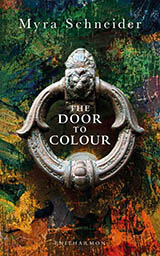
door_to_colour

JAMIE: Has your way of organizing yourself changed overtime; for example, the times that you write, when you do revisions and so forth?

MYRA: When I started writing I did not think much about the writing process. I tended to write down whatever came into my head for poem and then draft it letting it take whatever shape it seemed to fall into. Very occasionally I wrote a rhyming poem in regular verses. Later, I thought much harder about form and also in the 1990s I started to keep a notebook in which I jotted down words, ideas and details for poems. Around this time I discovered the poem worked much better if I spent a longer time working on the material and trying out the form it might go into before I started drafting unless, which happened rarely, a poem suggested itself and its shape very clearly. I found out too that allowing raw material to incubate either for a day or two or much longer frequently helped me to see what to do with it. Now I often work on more than one poem at a time – one that’s in its late stage and needing revision and one at an early stage. My main writing time has always been in the morning but I sometimes work on poems later in the day or on a train journey. In addition a certain amount of ‘writing’ goes on in my head and this could be at any time of the day or night – I might see how to cope with a problematic line or an idea for a new poem might start germinating.

JAMIE: What – if anything – has changed in terms of inspiration for poetry?

MYRA: When I started to write I had a very strong need to explore personal material – my childhood and my difficult relationships with my parents. Beyond that my poems were mainly triggered by my immediate reactions to the natural world and my teaching experience of severely disabled adults. A much greater range of subjects inspires me to write now. These include the role of women which I have explored in a number of ways, also issues like the environment, violence and the refugee problem. I feel a need too to write longer narrative poems which explore relationships and usually an issue or a theme in depth. For several years now many of my short poems have been set off by something apparently small: making tea in my yellow teapot, a painting or a small occurrence such as watching an old man running in long grass. The poem then follows a line of shifting thought aroused by the object or occurrence and takes in more than one subject. I firmly believe the most everyday material can connect with serious subject matter. My poem In the Beginning, which follows a line of thought about the big bang theory, starts and ends with a cat bowl.

JAMIE: What suggestions would you make to someone just beginning to write poetry?

MYRA: The first thing I would mention is the importance of reading a wide range of contemporary poets and I would also advise the reading of some key poets from the past. Poetry is a craft as well as an art and it’s crucial to discover how poets use different techniques and to learn as much as possible from outstanding poets about how they write. Elizabeth Bishop is a very good person to study as she uses both strict and free forms brilliantly and also tackles her subject matter in a variety of ways. There is an invaluable book, How to Read a Poem by Edward Hirsch, which looks in depth at how to read a poem and it includes a useful glossary which explains poetic terms. Quite soon after starting to write I would advise learning about the full range of poetic forms. This can be done either in a class or from a book, preferably one that’s been recommended. If at all possible I also suggest joining a poetry class or workshop which offers rigorous but supportive feedback.

JAMIE: And finally, what is the job of the poet, what is the place of poetry in our lives and in the greater world?

MYRA: I believe the role of the poet is to reflect on human experience and the world we live in and to articulate it for oneself and others. Many people who suffer a loss or go through a trauma feel a need for poetry to give voice to their grief and to support them through a difficult time. When an atrocity is committed poems are a potent way of expressing shock and anger, also of bearing witness. I think that the poet can write forcefully, using a different approach from a journalist, about subjects such as climate change, violence, abuse and mental illness and that this is meaningful to others. I very much believe too that poetry is a way of celebrating life. I think it deserves a central place in our world.

This slideshow requires JavaScript.

IN THE BEGINNING

Wheatflakes in a chestnut-brown bowl, thinking
slowed down by sleep: the morning is the same
as any other. But no repeat is exact –
the cloud cover is thicker/thinner, skin
a day more creased, closer to dust.

And this morning is marked by tufts of sparrow
on the floor: the machine that laced a small body
with blood has been stopped. The postman’s late.
Headlines exclaim from the paper. When I put on
the right glasses I discover today is momentous.

Scientists have proved the big bang they believe
set off the universe. Trying to follow, I soon
flounder among technical terms, am rescued
by the tulips standing on the breadcrumbed counter.
Their parrot scarlet sings and sings in my head.

If I’m to get a grip on time and space
I must widen my field of vision. Outside,
car tyres hiss. As drivers slow
at the roundabout they’ll read: ‘Jesus is alive’,
chalked in pigeon-dropping white on a support

of the railway bridge. I question this slogan
as I swoop underneath in my crimson Mini estate…
If I’m to understand I must study sciences
for decades, and focus on a past before bridges
arched, before Jesus walked on water,

before ape men squatted in caves,
before dinosauars lumbered,
before leaves fleshed steaming forests,
before rocks hardened,
before the Earth was flung into orbit round the Sun,
before the birth of galaxies now burnt out,
before matter scattered.

Warm fingers black with newsprint, I tremble
at the dark and shapelessness before the beginning,
the mystery of something grown out of nothing,
the changes that led to the kickstart moment
when space ballooned and time began.

Today has shrunk too small to tackle but from habit
I pour Go Cat for the murderer. A petal
falls. The post flaps onto the mat. I pick up
your letter, and suddenly nothing in the universe
is more important than reading your words.

– Myra Schneider

Myra’s books may be purchased through her website, Second Light Live, and poetry p f; also her Amazon page U.S., Amazon page UK.

© portrait, interview responses, book cover art, poems, Myra Schneider; introduction, Jamie Dedes