 This feature was originally published by ARTEMISpoetry (13 November 2013) and is delivered here with the permission of the publisher, Second Light Network of Women Poets (SLN) and the award-winning poet, Myra Schneider, whose most recent of eleven collections is The Door to Colour.
Some months ago at one of the twice-yearly poetry readings, which I help organize for Poetry in Palmers Green, a woman I didn’t know, turned to me as she was leaving and said apologetically: ‘I’m afraid I don’t write poetry.’ It was as if she had been attending under false pretences. I told her we welcomed everyone and felt it important our audience didn’t only consist of writers. The conversation reminded me sharply that in Britain poetry is in the main seen as a separate world. Who would go to a concert feeling uncomfortable that she/he didn’t play a musical instrument?
Why is it that contemporary poetry is often viewed as a minority art form when there is often no more potent way of expressing and communicating vital aspects of life and thought?
One problem is the poor coverage of poetry by the media. BBC Radio 4 broadcasts the poetry request programme Poetry Please. The medium of radio is, in fact, ideal for poetry and Radio 4, which includes readings twice a day from prose books, could offer much more. However, there are some green shoots. Radio has given serious attention to some contemporary translations of classical poetry, such as Amy Kate Riach’s translation of The Seafarer broadcast with sound effects and music on Radio 4, summer 2012. This programme also included a discussion of the poem led by Simon Armitage. This year a Radio 4 play was based on the life of the poet Clare Holtham, drawing on her writing. Radio 4 is also due to broadcast in January next year, as an Afternoon Play, Pam Zinnemann-Hope’s adaptation of her book-length poem On Cigarette Papers about the lives of her parents. More programmes with a poetry focus would be valuable.
Television rarely gives attention to poets and poetry. Serious drama, art and classical music, are all featured on both radio and television. Over recent years national newspapers have cut down the space they give to poetry. At one time there was a daily poem in The Independent and a weekly poem in The Observer. These have been dropped. The Guardian usually features a very short poem in its Saturday Review and a long review of one collection by a well-known poet. It used also to include two or three short reviews. Few bookshops hold good collections of poetry.
The mainstream media’s focus on a very small number of ‘hyped’ poets disguises the great range of lesser-known but strong writers whose poetry deserves to be heard. A large number of poetry collections are published each year but potential readers have no pointers about what is on offer amongst this confusing variety. If they go into a bookshop which does have an extensive poetry section (rare!) they may alight on books in which the poetry is obscure, erudite or both and others which are streetwise or jokey. They may remember some poems from the past which they liked as children but have no idea how to make their way into contemporary poetry. Unless they chance upon a book they can relate to they will probably give up.
There are, however, certain organizations and individuals who are concerned to take poetry to a wider audience. The Bloodaxe anthology, Staying Alive, and its sequels include in themed sections a wide range of accessible contemporary, twentieth century together with a few earlier poems, that is poems whose language and rhythm communicate their general sense. In comparison with the normal sales of poetry books, these anthologies have had huge and deserved success.
In London the Southbank Centre offers a fair number of readings by acclaimed poets from the UK and overseas. These draw in some non-poets as does Poet in the City’s themed readings. The Poetry Libraries in London and Edinburgh are invaluable resources with their comprehensive collections of books for children as well as adults. Both stock magazines and leaflets, provide information and put on intimate readings by a wide range of poets. Poems on the Underground and the charity, Poems in the Waiting Room, both long-running, bring poetry to the many who are unused to hearing or reading poems. The Poetry Society, which sees part of its role as bringing poetry to the public and is the main organizer of National Poetry Day, helps promote Poems on the Underground.
Of prime importance is the work done, on whatever scale, by individuals who have found ways to introduce poetry directly to non-poets. I want to mention some of the very different examples I am aware of.
Deborah Alma, who wrote about her Emergency Poet Service in ARTEMISpoetry 10, is in great demand at city centre events and venues such as pubs as well as at poetry and arts festivals. She travels as a poetry ‘doctor’ in her adapted ambulance and comments, ‘What I do by “prescribing” a poem for their “empty-nest-syndrome”, their stress or heart-break, is show them that poetry has something to say, that it can speak intimately…I try to tailor the poem to their reading habits and taste. I really do believe that poetry is for and about everyone. I might recommend a Bloodaxe anthology…It works! And it matters.’
Poet Kaye Lee, who attends a WEA Writing for Pleasure class, was asked by the tutor, whose interest was prose, to run a poetry session. She told me it was difficult because although one member of the group had requested poetry most of the others were antagonistic, considering it outlandish and too difficult. She started by reading and discussing several accessible list poems by Ruth Fainlight and other poets as a lead-in to writing and gradually won the group over. Keeping to the format of beginning with themed poems, she now runs one very popular session every term. Some members of the group are reading poetry for pleasure at home.
This year the Second Light Network invited a few book-groups to accept copies of Mary MacRae’s posthumous poetry collection, Inside the Brightness of Red, to study her work and to send in reviews. Some book-groups had previously avoided poetry books and a typical comment was: ‘Only twice in the last fifteen years…have we ventured into poetry. The few reviews coaxed from our group suggest that we might do well to dedicate more evenings to poetry in the future.’ Though Mary MacRae was widely admired by fellow-poets, she did not have a high public profile. Nevertheless, the many new readers targeted by this project were able to appreciate both the power of her work: ‘This is a luscious book of poetry. It oozes beauty and wistfulness and is a joy to have by the bed – a poem at bedtime.’ Such enthusiasm makes you wonder what it would take to bring more people and more poetry back together (‘a poem at bedtime’?).
While she was manager of Palmers Green Bookshop Joanna Cameron, a non-poet who loves poetry, ran a series of successful poetry readings. Much of the audience was made up of customers who didn’t write poetry. Later, Joanna was a founder member of Poetry in Palmers Green and she has brought many non-poets to the readings. She now lives near Cambridge where she is putting on readings for Oxfam. She believes it is important to be inclusive while offering a high standard of poetry. She told me she’s seen tightly buttoned men cry at events and heard people saying, ‘I didn’t know poetry could be like that’.
Coming from a background of working in casinos and playwriting, William Ayot became interested in poetry, both reading and writing it, in the 1990s. He included poetry in rehab work he did in prisons and for many years he has used poetry as part of teaching leadership in boardrooms and business schools all over the world. Unable to find a poetry group when he moved to Chester some years ago, he started Poetry on the Border. The series offers accessible poets to large audiences, many of whom are not poets. Recently he set up NaCOT (National Centre for Oral Tradition) and poetry, of course, has a role in this.
Poet John Killick has done major work using poetry with people who have dementia. He writes down a person’s words and then shapes them on the page. The resulting text is then approved by the person and released for circulation among care staff, relatives and a wider public. Anthologies of these poems have been brought out by the publisher, Hawker. John is now mentoring other poets to work in the same way. He also gives readings from these poems and his own at events which link poetry and health issues. Earlier in his career he used poetry in full time educational work with prisoners and he has done poetry residences in hospices.
Other poets are making valuable contributions in healthcare areas. Rose Flint has used poetry in hospital wards, special units and community groups. Another example is Wendy French who has worked in various health areas and been chair of Lapidus, an organization concerned with writing for personal development which very much involves poetry. Survivors Poetry offers poetry and poetry writing to those have suffered mental illness.
It goes without saying that bringing poetry to children is of paramount importance and the Poetry Society see it an essential part of their role to send poets into schools. The work of Sue Dymoke and Anthony Wilson, poets and university lecturers who support teachers by showing them exciting ways of introducing poetry to their pupils, is immensely valuable.
The Internet also offers routes into poetry. In the Guardian Poem of the Week Carole Rumens presents a poem with detailed description and comment. Helen Ivory posts a daily poem on Ink Sweat and Tears, a site which sometimes includes reviews of poetry. Oxford Brookes Poetry Centre posts a weekly poem. Some enthusiastic poets have blogzines in which they regularly introduce poets, together with one of their poems, in an informal but informative way. These sites are helpful to those beginning to read poetry and experienced writers are likely to gain insights from them too.
Blogzines I particularly I admire are posted by Kim Moore, Anthony Wilson and Jamie Dedes.
Kim Moore begins her posts with a lively account of her poetry week, then moves on to her chosen poet and poem. She told me she hoped to normalize poetry as having a part of a working week. In his daily Lifesaving Poems Anthony Wilson (mentioned above) presents a poem which is key to him and includes the personal circumstances in which he came across it as part of his commentary. Jamie Dedes, a retired journalist who lives in California, loves and now writes poetry. She often features articles, poems and interviews with poets in her daily blogzine, The Poet by Day.
It is very clear that themes of wide general interest as well as an informal approach provide inviting routes into poetry. This was underlined for me by Kim Moore. She was asked, as a local writer, to take part in a reading by a visiting poet on the subject of pregnancy and breastfeeding. The evening, she told me, was very popular and though none of her poems had any connection with the subject and no one in the audience whom she spoke to her had ever been to a poetry reading before, she sold nine copies of her debut pamphlet.
Although the media view poetry as a minority art I take heart from the fact that there are organizations and generous individuals committed to fostering an interest in it. I would like to think their number is growing and also that some of those who read this article might consider developing their own ‘open house’ approach.
How might we contribute? Possibly by boldly offering our own creative and/or critical work to various media. Would a long poem or sequence of yours, adapted, suit a Radio 4 ‘Afternoon Play’. Have you considered such a submission? Are we willing to post reviews of excellent collections we have read? Do we dare to invite a book group that we attend – one that never trifles with poetry – to look at a suitably accessible, intriguing individual collection of poetry or an anthology?
I know that the editors of ARTEMISpoetry would welcome and consider printing any information about schemes for widening the audience for poetry. After all, we are worth it.
Myra Schneider
© 2013, essay and portrait below, Myra Schneider, All rights reserved; © 2014, illustration, Second Light Live, All rights reserved
References:
Amy Kate Riach, The Seafarer, Sylph Editions, 2010
Bloodaxe Books, http://www.bloodaxebooks.com
The Poetry Library, Southbank, London, http://www.poetrylibrary.org.uk
The Scottish Poetry Library, Edinburgh, http://www.scottishpoetrylibrary.org.uk/
Poems on the Underground, http://www.tfl.gov.uk/corporate/projectsandschemes/2437.aspx
The Poetry Society, http://www.poetrysociety.org.uk
Poems in the Waiting Room, http://www.poemsinthewaitingroom.org
Kaye Lee, http://www.secondlightlive.co.uk
Second light Network of Women Poets, http://www.secondlightlive.co.uk
Mary Macrae, Inside the Brightness of Red, Second Light Publications, 2010
Joanna Cameron, joannacameron@live.com
Deborah Alma, Emergency Poet, emergencypoet.com
William Ayot, http://www.williamayot.com
John Killick, http://www.dementiapositive.co.uk
Wendy French, wendyfrench.co.uk
Rose Flint, http://www.poetrypf.co.uk
Lapidus, http://www.lapidus.org.uk
Survivors Poetry, http://www.survivorspoetry.org
Anthony Wilson, http://anthonywilsonpoetry.com
Sue Dymoke, http://suedymokepoetry.com/books
Guardian Poem of the Week, http://www.theguardian.com/books/series/poemoftheweek
Oxford Brooks Poetry Centre, ah.brookes.ac.uk
Ink Sweat and Tears, http://www.ink-sweat-and-tears.com
The Poet by Day, http://musingbymoonlight.com
Kim Moore, http://kimmoorepoet.wordpress.com
How might you contribute? Possibly by boldly offering you own creative and/or critical work to various media. Would a long poem or sequence of yours, adapted, suit a Radio 4 ‘Afternoon Play’. Have you considered such a submission? Are you willing to post reviews of excellent collections we have read? Do you dare to invite a book group that you attend – one that never trifles with poetry – to look at a suitably accessible, intriguing individual collection of poetry or an anthology?
 Myra’s long poems have been featured in Long Poem Magazine and Domestic Cherry. She co-edited with Dilys Wood, Parents, an anthology of poems by 114 women about their own parents. She started out writing fiction for children and teens. We first discovered Myra through her much-loved poem about an experience with cancer, The Red Dress.
Currently Myra lives in North London, but she grew up in Scotland and in other parts of England. She lives with her husband and they have one son. Myra tutors through Poetry School, London. Her schedule of poetry readings is HERE.
* Second Light Nework of Women Poets is open world-wide to women poets over forty. Details on SLN’s website.
Thank you for sharing your love of words. Comments will appear after moderation.

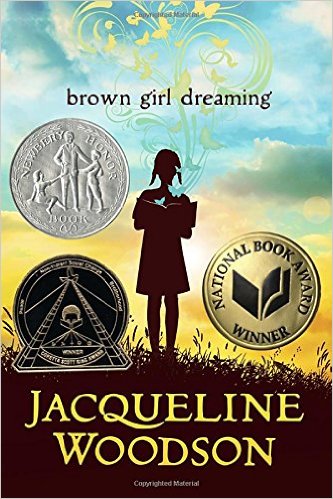 I just finished reading Brown Girl Dreaming, a memoir in free verse that is not just for brown girls. It can be read in one sitting but like all good poetry is meant to be relished … there is much to savor.


 ✺
✺  ✺ The Nexus Cafe radio returns tomorrow, Sunday, 28 February 2016, at 2:00 p.m. EST with Natasha Head and the crew! Guest: poet and poetry champion, Jamie Dedes (


 Jamie Dedes' THE POET BY DAY Webzine