SECOND LIGHT 20th ANNIVERSARY! The Bardo Group community extends to Second Light Network (women poets forty-years old or better) our best wishes, appreciation, and congratulations for its on-target focus, fine work and unrelenting commitment to poets, poetry, and to giving women in their third act a second chance. Special kudos to poet and founder, Dilys Wood, and all those who provide regular support to us here at The Bardo Group especially poets Myra Schneider who keeps us informed, provides us with wonderful poetry and instructive feature articles and Ann Stewart who so ably assists us with the details of coordination.
Jackie Kay (b. 1961), Scottish poet and novelist is judge for the 2014 Second Light Network Long and Short poetry competition, photo by Slowking4 under CC A – Noncommercial Unported License
SECOND LIGHT POETRY COMPETITION DEADLINE: TUESDAY 17th JUNE. Judge: Multi-award-winning JACKIE KAY. Long and Short Poems by Women. (‘Long’ = 50+ lines). 1st Prize £300 (in each category). More cash & book prizes + publication in ARTEMISpoetry + London reading. Enter by post or online.
Amongst Jackie Kay’s many poetry awards and prizes are the Forward, Saltire, Scottish Arts Council (for The Adoption Papers) and a shortlisting for Costa. She also writes award-winning fiction both for adults and children, and for stage and TV. She is Professor of Creative Writing at Newcastle University. She was awarded an MBE in 2006, and made a fellow of the Royal Society of Literature in 2002.
£300 First Prize for each of Long (no upper limit) and Short (max 50 lines) poems
£100 Second Prize (1 poem from either category)
£50 Third Prize (1 poem from either category)
Commended poets: book prizes
Winning & Commended Poets published (in full or extract) in ARTEMISpoetry
A reading will be organised for winners in London in Autumn 2014.
Entry: £6 each per long poem. Short poems: £4 each or £9 for 3, £14 for 8. Enter by post (2 copies) or online.
Complete details HERE. PLEASE NOTE THAT ALTHOUGH SECOND LIGHT NETWORK OF WOMEN POETS IS BASED IN ENGLAND, MEMBERSHIP IS OPEN WORLDWIDE AND SUBMISSIONS TO ARTEMISpoetry and to various anthologies and competitions are considered from women anywhere in the world. You do not need to be a member to submit your work to be considered for publication.
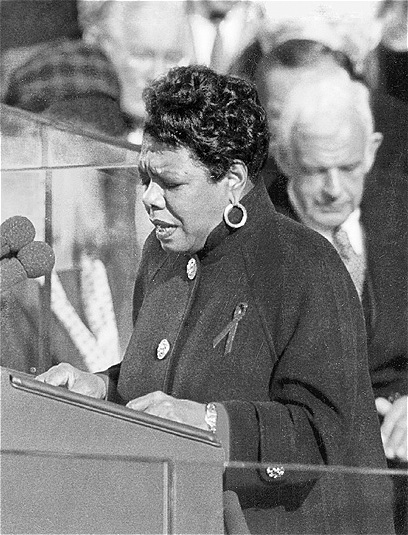
THAT UNCAGED INSPIRATION, MAYA ANGELOU, has died leaving behind the rich legacy of a well-lived eighty-six years. Her last tweet posted on May 23 was, “Listen to yourself and in that quietude you might hear the voice of God.”
I particularly appreciated her May 11 tweet, “Happy Mother’s Day to all mothers, the family and everyone you love and everyone who loves you.”
Bon voyage dear poet …
A little trivia for my San Francisco Bay Area friends: Dr. Angelou broke new ground here even as a young girl. She was SF’s first black female cable car driver.
As part of celebrating interNational Poetry Month, Blaga Todorova (Between the Shadows and the Soul) has written an essay about the Bulgarian poet, Blaga Dimitrova, which is posted today on The Bardo Group blog. Dimitrova was – in addition to being a poet – a writer and the former Vice President of Bulgaria. She was the inspiration for John Updike’s short story “The Bulgarian Poetess” … so read on and link through to the complete post. Two of Blaga Dimitrova’s poems are included there …
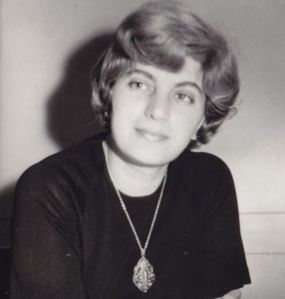
I used to hate her, foolish, a teenager’s hate that can only be explained in a parallel universe where logic doesn’t exist. I was a sixteen-year-old girl in a class with additional studies of mathematics. I was supposed to have the sharp brain, the emotion-free behavior required for someone who was a shining star in solving mathematical problems. Then suddenly there it was: the literature lesson about her and one of her poems I don’t even remember. The teacher decided that I was the one who should talk about her that day because of the first name we shared.
It was a disaster! I hadn’t read a word from what was written in the school books about her and her poetry. When I was asked the question ‘What do you think Blaga Dimitrova’s poem symbolizes?’ all I could think about to answer was, “The only person who really knows what the words…
I originally posted this feature in June last year. Since April is Poetry Month and since one woman is running for Vice President and some 300 women are running in the provincial elections today in Afghanistan, it seems a good time to revisit.
پاس په كمر ولاړه ګله! نصيب دچايي اوبه زه درخيژومه O Flower that you grow on the mountain side; The duty to water you belongs to me, but to whom would you belong?
ستا به د ګلو دوران تير شۍ به پاته شۍ دزړه سوۍ داغونه The blooming season of your beauty will pass; But the scorched patches on my heart will always remain fresh.
Zarmina’s parents at her grave. She was a poet who died after setting herself on fire. Photo by Seamus Murphy, 2012, Courtesy of the Pulitzer Center on Crisis Reporting
In June 2013 The Poetry Foundation, publisher of Poetry magazine, devoted the month’s issue to Landays, the traditional poetic form of Afghan women. . .
After learning the story of a teenage girl, Zarmina, who was forbidden to write poems and burned herself in protest, poet and journalist Eliza Griswold and photographer and filmmaker Seamus Murphy journeyed to Afghanistan to investigate the impact of the girl’s death, as well as the role that poetry plays in the lives of contemporary Pashtuns. A year later, Griswold and Murphy returned to Afghanistan to study the effects of more than a decade of U.S. military involvement on the culture and lives of Afghan women. In the course of this work, Griswold collected a selection of landays, or two-line poems. These poems are accompanied by Murphy’s photographs from the same period and are presented in the June 2013 issue of Poetry.
My pains grow as my life dwindles, I will die with a heart full of hope.
A report on death and love by Eliza Grizwold and Seamus Murphy, a project of the Pulitzer Center on Crisis Reporting. .
.Griswold describes the characteristics of a landay in her introduction: “Twenty-two syllables: nine in the first line, thirteen in the second. The poem ends with the sound “ma” or “na.” Sometimes they rhyme, but more often not. . “In Pashto, they lilt internally from word to word in a kind of two-line lullaby that belies the sharpness of their content, which is distinctive not only for its beauty, bawdiness, and wit, but also for the piercing ability to articulate a common truth about war, separation, homeland, grief, or love. Landays are centuries-old custom among Afghans, traditionally passed along in the oral tradition, and passed down through generations. The topics of the landays included in the June 2013 issue run the gamut—love, marriage, war, the status of women, drones, politics, courage, nature, and the Internet. Sometimes humorous, sometimes heartbreaking, these captivating two-line poems offer unique insight into the contemporary life of the more than twenty million Pashtun women who span the border between Afghanistan and Pakistan.” .
*****
About Poetry Founded in Chicago by Harriet Monroe in 1912, Poetry is the oldest monthly devoted to verse in the English-speaking world. Monroe’s “Open Door” policy, set forth in Volume 1 of the magazine, remains the most succinct statement of Poetry’s mission: to print the best poetry written today, in whatever style, genre, or approach. The magazine established its reputation early by publishing the first important poems of T.S. Eliot, Ezra Pound, Marianne Moore, Wallace Stevens, H.D., William Carlos Williams, Carl Sandburg, and other now-classic authors. In succeeding decades it has presented—often for the first time—works by virtually every major contemporary poet. The entire June 2013 issue is available online as of June 3 HERE. Digital copies of the June issue of Poetry magazine, as well as a digital subscription, are also available.
.
About the Poetry Foundation The Poetry Foundation, publisher of Poetry magazine, is an independent literary organization committed to a vigorous presence for poetry in our culture. It exists to discover and celebrate the best poetry and to place it before the largest possible audience. The Poetry Foundation seeks to be a leader in shaping a receptive climate for poetry by developing new audiences, creating new avenues for delivery, and encouraging new kinds of poetry through innovative literary prizes and programs. For more information, please visit http://www.poetryfoundation.org.
.
About Everything Afghanistan “Afghanistan’s recent history is a story of war and civil unrest. A country once prosperous now suffers from enormous poverty, a lack of skilled and educated workers, a crumbling infrastructure, and widespread land mines. It’s being heard about in the news every day but the media approaches this country from its dark side only. Here at Everything Afghanistan we try to show the world the other side of this war torn country. Despite years of bloodshed and destruction, there is still so much beauty that remains unseen. Here we post about Afghan related things, from politics and events to its culture and traditions. This blog is against the US invasion of Afghanistan.” Aminajalalzei, a.k.a. Vicoden.
.
About Mirman Baheer, the Ladies Literary Society “Over 300 members of Mirman Baheer, the Ladies Literary Society, stretch across the provinces of Afghanistan. Women write and recite landai, two-line folk poems that can be funny, sexy, raging or tragic and have traditionally dealt with love and grief. For many women, these poems allow them to express themselves free of social constraints and obligations. 5 out of 100 women in Afghanistan graduate from high school, and most are married by the age of 16. This kind of expression is looked down upon in society, forcing the women writing to keep their craft a secret.” The Pulitzer Center on Crisis Reporting Meetings of the poetry society are held in Kabul, but with 8 out of 10 Afghanistan women residing in rural areas, many women call in to the meetings. Zarmina Shehadi was one of those callers. She lit herself on fire two years ago. Her family denies her suicide, claiming that she lit herself on fire to get warm after a bath. “She was a good girl, an uneducated girl. Our girls don’t want to go to school,” her mother said. Zarmina is the most recent of Afghanistan’s poet-martyrs.
.
About the Pulitzer Center on Crisis Reporting The Pulitzer Center on Crisis Reporting is an innovative award-winning non-profit journalism organization dedicated to supporting the independent international journalism that U.S. media organizations are increasingly less able to undertake. The Center focuses on under-reported topics, promoting high-quality international reporting and creating platforms that reach broad and diverse audiences. .MOREPhoto credit ~ Seamus Murphy for The Pulitzer Center on Crisis Reporting Video by Seamus Murphy for the Pulitzer Center on Crisis Reporting
Thank you for sharing your love of words. Comments will appear after moderation.






 Jamie Dedes' THE POET BY DAY Webzine