“I always had this notion that you earned your living and that poetry was a grace.” Seamus Heaney (1939-2013), Irish, poet, playwright, translator, educator and Nobel Prize winner
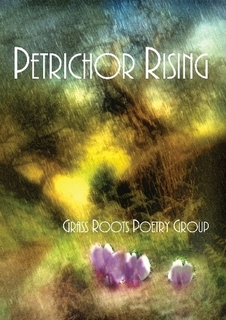
I’m sure my friend, John Anstie, poet and renaissance man, The Bardo Group core team member, and editor of and contributor to Petrichor Rising (eBook and paperback), a 2013 poetry collection of The Grass Roots Poetry Group (GRPG), would prefer that I focused on the poems and the collection. The feature-writer in me loves a good story though. (Forgive me, John!) The coming together of this group and the publication of their collection is as good a story as any and better than most … and hence, I break my usual self-imposed word limit on posts. Read on … You may recognize yourself in some of this …
“I do accounting. I am a writer.” an employee corrected me when I introduced him as an accountant.
I spent many years in the employment and training field, serving in sundry positions and writing columns, feature articles and journal pieces ad nauseam about recruiting and job search, chosing careers, assessing post-secondary vocational education programs, structuring community programs for at-risk populations (read the poor and marginalized), as well as writing about labor and job market trends including changes evolving out of advances in technology.
Wherever I worked whether it was counseling, placing executives in career positions or teaching career development and job search to ex-offenders or people transitioning off welfare, I found the same thing. Scratch the surface of almost anyone and you will find an artist. Several of the poets to this anthology earn or have earned their living doing something other than writing. John Anstie talks about discovering his “inner poet.” At core, we are creators. This is a great truth about human beings.
It used to be that most evidence of creativity ended in storage somewhere: dresser drawers, file cabinets, attics or garages … until the accessibility of social networking and self-publishing via blogs, videos, blog radio and other venues. Now creatives have easy means to deliver their work independently and to find their own audiences, modest but genuine. No longer unknown, these poets and artists join the ranks of lesser-knows. They also have a wider opportunity to meet others with the same interests and values. Put the mix together – a wonderous serendipity – and the birth of productive collaborations …
Friends in the Forest (eCollage by Anu) (c) all rights reserved
“As far as I recall, it all started with freshly-baked lemon drizzle cake . . . ‘@peterwilkin1: Good Morning. Coffee & lemon drizzle cake, anyone?’ …. One may be forgiven for thinking the GRPG is an international social network-based association for the deep appreciation and virtual consumption of cyber cake and other comestibles. Indeed this is what they do, but they also do something else remarkable – they write poetry – delightful, delicious, scrumptious, tasty, and delectable at that, poetry.” Introduction, Craig Morris
And thus it began, with friendly – often quick-witted – Twitter chat and an affinity evolved. Two years later Petrichor Rising was born and featured artwork by one, the Introduction by another, and the poetry of the rest. How did they pull it all together?
Interview with John Anstie
JAMIE: Expanding on your piece about editing Petrichor Rising (posted this evening on The Bardo Group): Learning to use language gracefully and words accurately is a lifelong challenge (and a pleasure); but editing English when the works are from such diverse regions of the world throws extra spice into the mix. There are many variations on the themes of grammar, spelling, and on syllable accent and speech inflection, how did you approach that particular challenge?
JOHN: Your first question is not a question, it is several questions, which, as you imply, could take me a lifetime (and possibly a few pages) to answer! But the simplest way I can answer this is to be entirely honest. By and large, I took each piece as it was presented and interpreted it as it was written. Grammar and spelling was not really a problem, since I left the words spelled as they were presented; my two North American friends, Jackie and Joe, if they used American English spelling, that’s how it stayed, of course. There were few issues in the grammar department. As for syllable stress and speech inflection, I had little issue with the effects of these on scansion, since almost all of the poems, except some of my own, were pretty much in the ‘free verse’ form. But you certainly have raised a valid issue for editors of international poetry collections.
.
JAMIE: How did you work out the collaboration? The book is admirably unified and surely there must have been some back-and-forth about which poems to use from each poet and how to organize the sequence.
.
JOHN: Over the two years of its gestation, there were a few changes of poems. Some of the original poems submitted were withdrawn, because of submissions elsewhere and a handful were edited and resubmitted for inclusion. The sequence was the greatest challenge for me. Initially, I asked each poet to attach key words or tags to each of their own poems, from which I intended to attempt dividing the whole body of work into sections. That didn’t work, simply because I inevitably ended up with too many key words. In the end, after we’d decided on the title, I felt it important that any themed sections should reflect the theme of the title in some way. So I worked through the whole collection of sixty-five or so poems and categorised them myself. The three sections were the end result of that part of my work on the book.
.
JAMIE: Have you had the opportunity to speak by phone or meet in person with any of the members of the Group? If so, what was that experience like.
.
JOHN: Five of us live in the UK. It was Louise, who bravely blazed a trail to Yorkshire to stay with Peter and his wife for a week. I guess she judged him to be trustworthy enough (and not the mad axe murderer he might have been!). I journeyed up to meet them both on neutral ground. We spent a fruitful and enjoyable day in each other’s company. Shan and Abi were the next to visit Yorkshire. I’ve lost count of how many times we met after that, including a couple of poetry readings at Ally Wilkin’s shop “Crystal Space” (one of the locations in Peter’s and Marsha’s joint publication, “Brianca and The Crystal Dragons”). All of this was capped in a confluence in May 2012, when the five of us from the UK, along with Joe and Quirina, who flew in from Albany, New York and Germany, came together in London – photos of this are in my Facebook album of that day HERE.
.
It was a very happy day, but one that wasn’t long enough for us all. Finally, last June, Marsha came to the UK for a conference in Leeds. She lodged with Peter and Ally for the first part of her stay and with me for the last part. It was very special to meet her too. So, in answer to your question, I’ve met nearly all of them; only Jackie in New York and Craig in South Africa have yet to meet us. Quite incredible, considering we only met on Twitter two and a half years ago! One final twist to this tale, to cut a long story short, is that Abigail turns out to be the daughter of an old school friend of mine, whom I had very recently met up with again along with another friend! It’s a very small world!
.
JAMIE: What made you choose print-on-demand over ebook? Does the GRPG plan to offer the book in ebook format? It a lovely volume, and I think would make a fine addition to anyone’s poetry library. These days, though, many appreciate ebooks for their portability as well as the saving grace of saving shelf-space.
.
JOHN: Print on demand, in the end, seems like a very sensible choice. Self publishing would have been difficult, deciding how big a print run dramatically affects the cost-per-unit economies. However, it was the publisher, Aquillrelle, who determined the route to print and we chose them, because they had published Marsha’s collection, “Spinning”, and she was very impressed with their service and attention to detail. It proved to be a good choice for me, as their Chief Editor, did have a keen eye for detail. As for the ebook, Amazon should have produced one by now, but it’s not happened yet. I suspected it might be a demand thing; I’m not sure. Even though I own an iPad Mini, which is, of course, a perfect ebook reader, it has to be said that I prefer to have a real book in my hands.
.
Note: I see that Lulu has an eBook available since we did this interview. The link is above in the opening paragraph. Jamie
.
JAMIE: Would you do it all again and if so, why?
.
JOHN: I think the answer is yes, probably, but not in the same way. What would I do differently? I couldn’t answer that until I saw the material I was working with. However, there are two more projects on my horizon before another anthology comes along. The first is going to be some kind of account of the story of an historic house, gardens and estate, for which my wife and I are members of the volunteer teams. The second may be my own first full collection. Then, for the sake of my family history, maybe I ought to complete my own autobiography.
.
Book Review in Brief
Petrichor – from the Greek pɛtrɨkər, the scent of rain on the dry earth.
.
I dislike using the word “accessible.” There have been times when I’ve wondered if that is code for a lack of intricacy or profundity. The work here is comprehensible but still complex. The poems move from nostalgia to appreciation, from the beauty of nature to the frailties of humanity, from sorrow to hope. From Craig Morris’ Introduction, which sets the mood, to Joe Hesch’s theme poem Petrichor, which closes the book, it’s a joy. Well organized with the weather metaphor as the through line, the sections are The Drought, Gathering Storm, and The Rain. Its hallmark is the show of humanity at its best.
.
This morning I will cast open the curtains, chasing the fear away and hold this crystal up to the sunlight, releasing my soul to fly
– Prism, Abigal Baker
…. and at its worst
Haunted by proper thoughts of his wife at home he wryly recollects how he told her before friends and family on their silver anniversary “I love every wrinkle, every scar I celebrate, such wonderous depths are etched upon your body a cartography of our marriage I love the silver in the gold of our hair” then renewed his marriage vows his fingers crossed, avoiding his own reflection in the mirror
– Cracks of Angst: A Portrait of an Unhappy Man, Marsha Berry
Both my thumbs up on this one. There’s still time to order Petrichor Rising for the holidays and profits go to UNICEF, making it a definite win-win.
I fled Him, down the nights and down the days;
I fled Him, down the arches of the years;
I fled Him, down the labyrinthine ways
Of my own mind; and in the mist of tears
I hid from Him, and under running laughter.
Up vistaed hopes I sped;
And shot, precipitated,
Adown Titanic glooms of chasmed fears,
From those strong Feet that followed, followed after.
But with unhurrying chase,
And unperturbèd pace,
Deliberate speed, majestic instancy,
They beat–and a Voice beat
More instant than the Feet–
“All things betray thee, who betrayest Me.” .
I pleaded, outlaw-wise,
By many a hearted casement, curtained red,
Trellised with intertwining charities
(For, though I knew His love Who followed,
Yet was I sore adread
Lest having Him, I must have naught beside);
But if one little casement parted wide,
The gust of His approach would clash it to.
Fear wist not to evade, as Love wist to pursue.
Across the margent of the world I fled,
And troubled the gold gateways of the stars,
Smiting for shelter on their clanged bars;
Fretted to dulcet jars
And silvern chatter the pale ports o’ the moon.
I said to dawn, Be sudden; to eve, Be soon;
With thy young skyey blossoms heap me over
From this tremendous Lover!
Float thy vague veil about me, lest He see!
I tempted all His servitors, but to find
My own betrayal in their constancy,
In faith to Him their fickleness to me,
Their traitorous trueness, and their loyal deceit.
To all swift things for swiftness did I sue;
Clung to the whistling mane of every wind.
But whether they swept, smoothly fleet,
The long savannahs of the blue;
Or whether, Thunder-driven,
They clanged his chariot ‘thwart a heaven
Plashy with flying lightnings round the spurn o’ their feet–
Still with unhurrying chase,
And unperturbèd pace,
Deliberate speed, majestic instancy,
Came on the following Feet,
And a Voice above their beat–
“Naught shelters thee, who wilt not shelter Me.” .
I sought no more that after which I strayed
In face of man or maid;
But still within the little children’s eyes
Seems something, something that replies;
They at least are for me, surely for me!
I turned me to them very wistfully;
But, just as their young eyes grew sudden fair
With dawning answers there,
Their angel plucked them from me by the hair.
“Come then, ye other children, Nature’s–share
With me,” said I, “your delicate fellowship;
Let me greet you lip to lip,
Let me twine with you caresses,
Wantoning
With our Lady-Mother’s vagrant tresses’
Banqueting
With her in her wind-walled palace,
Underneath her azured daïs,
Quaffing, as your taintless way is,
From a chalice
Lucent-weeping out of the dayspring.”
So it was done;
I in their delicate fellowship was one–
Drew the bolt of Nature’s secrecies.
I knew all the swift importings
On the wilful face of skies;
I knew how the clouds arise
Spumèd of the wild sea-snortings;
All that’s born or dies
Rose and drooped with–made them shapers
Of mine own moods, or wailful or divine–
With them joyed and was bereaven.
I was heavy with the even,
When she lit her glimmering tapers
Round the day’s dead sanctities.
I laughed in the morning’s eyes.
I triumphed and I saddened with all weather,
Heaven and I wept together,
And its sweet tears were salt with mortal mine;
Against the red throb of its sunset-heart
I laid my own to beat,
And share commingling heat;
But not by that, by that, was eased my human smart.
In vain my tears were wet on Heaven’s gray cheek.
For ah! we know not what each other says,
These things and I; in sound I speak–
Their sound is but their stir, they speak by silences.
Nature, poor stepdame, cannot slake my drouth;
Let her, if she would owe me,
Drop yon blue bosom-veil of sky, and show me
The breasts of her tenderness;
Never did any milk of hers once bless
My thirsting mouth.
Nigh and nigh draws the chase,
With unperturbèd pace,
Deliberate speed, majestic instancy;
And past those noisèd Feet
A voice comes yet more fleet–
“Lo naught contents thee, who content’st not Me.” .
Naked I wait Thy love’s uplifted stroke!
My harness piece by piece Thou hast hewn from me,
And smitten me to my knee;
I am defenseless utterly.
I slept, methinks, and woke,
And, slowly gazing, find me stripped in sleep.
In the rash lustihead of my young powers,
I shook the pillaring hours
And pulled my life upon me; grimed with smears,
I stand amid the dust o’ the mounded years–
My mangled youth lies dead beneath the heap.
My days have crackled and gone up in smoke,
Have puffed and burst as sun-starts on a stream.
Yea, faileth now even dream
The dreamer, and the lute the lutanist;
Even the linked fantasies, in whose blossomy twist
I swung the earth a trinket at my wrist,
Are yielding; cords of all too weak account
For earth with heavy griefs so overplussed.
Ah! is Thy love indeed
A weed, albeit amaranthine weed,
Suffering no flowers except its own to mount?
Ah! must–
Designer infinite!–
Ah! must Thou char the wood ere Thou canst limn with it?
My freshness spent its wavering shower i’ the dust;
And now my heart is a broken fount,
Wherein tear-drippings stagnate, spilt down ever
From the dank thoughts that shiver
Upon the sighful branches of my mind.
Such is; what is to be?
The pulp so bitter, how shall taste the rind?
I dimly guess what Time in mist confounds;
Yet ever and anon a trumpet sounds
From the hid battlements of Eternity;
Those shaken mists a space unsettle, then
But not ere him who summoneth
I first have seen, enwound
With blooming robes, purpureal, cypress-crowned;
His name I know, and what his trumpet saith.
Whether man’s heart or life it be which yields
Thee harvest, must Thy harvest fields
Be dunged with rotten death? .
Now of that long pursuit
Comes on at hand the bruit;
That Voice is round me like a bursting sea:
“And is thy earth so marred,
Shattered in shard on shard?
Lo, all things fly thee, for thou fliest Me!
Strange, piteous, futile thing,
Wherefore should any set thee love apart?
Seeing none but I makes much of naught,” He said,
“And human love needs human meriting,
How hast thou merited–
Of all man’s clotted clay rhe dingiest clot?
Alack, thou knowest not
How little worthy of any love thou art!
Whom wilt thou find to love ignoble thee
Save Me, save only Me?
All which I took from thee I did but take,
Not for thy harms.
But just that thou might’st seek it in my arms.
All which thy child’s mistake
Fancies as lost, I have stored for the at home;
Rise, clasp My hand, and come!”
Halts by me that footfall;
Is my gloom, after all,
Shade of His hand, outstreched caressingly?
“Ah, fondest, blindest, weakest,
I am He Whom thou seekest!
Thou dravest love from thee, who dravest Me.”
– Francis Thompson
.
“Francis Thompson (16 December 1859 – 13 November 1907) was an English poet and ascetic. After attending college, he moved to London to become a writer, but in menial work, became addicted to opium, and was a street vagrant for years. A married couple read his poetry and rescued him, publishing his first book Poems in 1893. Thompson lived as an unbalanced invalid in Wales and at Storrington, but wrote three books of poetry, with other works and essays, before dying of tuberculosis in 1907 . . .
.
“His most famous poem The Hound of Heaven, describes the pursuit of the human soul by God. This poem is the source of the phrase “with all deliberate speed,” used by the Supreme Court in Brown II, the remedy phase of the famous decision on school desegregation. A phrase in his The Kingdom of God is the source of the title of Han Suyin‘s novel and the movie Love is a Many-Splendored Thing. In addition, Thompson wrote the most famous cricket poem, the nostalgic At Lord’s. He also wrote Sister Songs (1895), New Poems (1897), and a posthumously published essay, “Shelley” (1909). He wrote a treatise On Health and Holiness, dealing with the ascetic life, which was published in 1905.G. K. Chesterton said shortly after his death that “with Francis Thompson we lost the greatest poetic energy since Browning.” His grave is in St. Mary’s Roman Catholic Cemetery in London. Among Thompson’s devotees was the young J.R.R. Tolkien, who purchased a volume of Thompson’s works in 1913-1914, and later said that it was an important influence on his own writing.The American novelist Madeleine L’Engle used a line from the poem “The Mistress of Vision” as the title of her last Vicki Austin novel, Troubling a Star.” Wikipedia
.
The photograph is in the public domain.
. . . and thus we begin another week . . .
♥
Thank you for sharing your love of words. Comments will appear after moderation.
I’m going to jump from JFK to Khalil Gibran. Bear with me.This coming Friday, November 22, is the 50th anniversary U.S. President John F. Kennedy‘s (JFK) assassination. The memory of that day is still vivid in the minds of those many of us who lived through it. Understandably there’s been a considerable mention in the press over the past week or so and Kennedy’s most oft-repeated quote is “Ask not what you can do for your country but what your country can do for you.”
If you read a lot, you know JFK may have popularized the thought but he wasn’t the first to make the observation. The point was made as long ago as Cicero in the 1st Century and Juvenal in the 2nd Century. The American jurist, Oliver Wendell Holmes, said it. Even another American president, Warren Harding, said it. However the person who comes first to my mind is the Lebanese-American artist and poet-philospher, Gibran Khalil Gibran (1883-1931). In 1925 Gibran published a book entitled The New Frontier. In it he wrote:
“Are you a politician asking what your country can do for you or a zealous one asking what you can do for your country? If you are the first, then you are a parasite; if the second, then you are an oasis in a desert.”
When Gibran came to the United States he settled in Kennedy’s home town, Boston. Perhaps JFK or his speech writers were familiar with Gibran’s work.
Here is an excerpt From The Prophet, probably Khalil Gibran’s most well-know book.
And a man said, Speak to us of Self-Knowledge.
And he answered saying:
Your hearts know in silence the secrets of the days and the nights.
But your ears thirst for the sound of your heart’s knowledge.
You would know in words that which you have always known in thought.
You would touch with your fingers the naked body of your dreams.
And it is well you should.
The hidden well-spring of your soul must needs rise and run murmuring to the sea;
And the treasure of your infinite depths would be revealed to your eyes.
But let there be no scales to weigh your unknown treasure;
And seek not the depths of your knowledge with staff or sounding line.
For self is a sea boundless and measureless.
Say not, “I have found the truth,” but rather, “I have found a truth.”
Say not, “I have found the path of the soul.” Say rather, “I have met the soul walking upon my path.”
For the soul walks upon all paths.
The soul walks not upon a line, neither does it grow like a reed.
The soul unfolds itself, like a lotus of countless petals.
Life happens – as you all know too well, I’m sure – and what little time I am able to spend online in this moment is largely dedicated to our collabrative blog, “Into the Bardo,” where lots of exciting things are happening. I’ll be back here within the next two weeks. Meanwhile, this reblog of “Bardo News” provides an overview of events, including some in which you might want to participate. Hope to see you there. Poem on … P.S.: It’s not for women only.
Via contributing poet and good friend to Bardo, Myra Schneider for Second Light Network of Women Poets: AN INVITATION TO WOMEN POETS TO SUBMIT TO A MAJOR NEW ANTHOLOGY FUNDED BY THE ARTS COUNCIL ENGLAND and open to contributions from any women anywhere in the world …
The Second Light Network of Women Poets have recently received Arts Council funding to bring out an anthology of poetry by women poets. It will be calledWings of Glass. The book will focus on ambitious writing and be published next autumn 2014 and launched at the Second Light Festival in central London in late November. The editors are Penelope Shuttle, Myra Schneider and Dilys Wood. Submissions will be accepted between 15th November and 15th January. Please see full details for submitting : www.secondlightlive.co.uk
Her Wings of Glass (the title a quotation from Sylvia Plath) is to be…
 “I always had this notion that you earned your living and that poetry was a grace.” Seamus Heaney (1939-2013), Irish, poet, playwright, translator, educator and Nobel Prize winner


 Jamie Dedes' THE POET BY DAY Webzine