These Poetry Cats Meow!
If you haven’t met Simon’s Cat before, check him out HERE.
This post is sponsored by Gypsy (The Cat’s Meow)…

Simon’s Cat courtesy of Simon’s Cat; Gypsy courtesy of Karen Fayeth, © 2013, All rights reserved
If you haven’t met Simon’s Cat before, check him out HERE.
This post is sponsored by Gypsy (The Cat’s Meow)…
Simon’s Cat courtesy of Simon’s Cat; Gypsy courtesy of Karen Fayeth, © 2013, All rights reserved

I found my way to Niamh’s blog and books via poet Reena Prisad (Butterflies of Time) when Reena reblogged a post from Niamh’s On the Plum Tree. Subsequently, Niamh visited me here and asked me to write something for her Wednesday poetry corner. I was happy to do it, especially since I have been anxious to write about Ruth Stone, an earthy poet whose work I have long admired. If you haven’t encourntered Ruth Stone yet, I hope you will enjoy meeting her today.
I’ve just finished reading Niamh’s The Coming of the Feminine Christ, which I enjoyed, and I’ve also recently asked Niamh to join us on Into the Bardo where she will share with us her wonderful sense of the numinous.
Introducing to the Plum Tree, Jamie Dedes. Jamie is a very intelligent writer and runs a poetry blogazine: Into The Bardo. I have been struck by Jamie’s clarity and thoughtfulness in all she writes and produces. I am sure she will become a hot favourite ontheplumtree as she shares her thoughts and fascinating insights with us. Thank you Jamie for being this week’s guest.

“We go on to poetry; we go on to life. And life is, I am sure, made of poetry. Poetry is not alien – poetry is . . . lurking round the corner. It may spring on us at any moment.”Jorge Luis Borges, This Craft of Verse
Poems clutter the landscape of my mind with bite-sized portions easily committed to memory, ready to be pulled out in a moment of need or want. I like to think of poetry as literary dim…
View original post 707 more words


“To hear a poem spoken in the voice of the person who wrote it is not only to witness the rising of words off the page and into the air, but to experience an aural reenactment of exactly what the poet must have heard, if only internally, during the act of composition. “ Billy Collins (b. 1941), U.S. Poet Laureate
The Voice of the Poet series was developed in 2005 by Random House. We only just discovered it and since I am enamoured of Auden’s work and am focusing on him right now, we picked up that one. However, this audio series includes other notable poets such as Elizabeth Bishop, Robert Lowell, Frank O’Hara, and a collection of five women poets: Gertrude Stein, Edna St. Vincent Millay, H.D., Louise Bogan and Muriel Ruckeyser. Each set includes a CD of poetry readings collected from a variety of sources and occasions and a small book with the texts of the poems and a brief commentary by J.D. McClatchy, a poet, literary critic and an editor of the Yale Review. I completely enjoyed the Auden collection, recommend it if you are an Auden fan, and am moving on to get whatever others in the series can still be found. I would have written something else for today, but I just couldn’t pull myself away from this. It’s the sort of thing you enjoy and value if poetry – or a specific poet – is central in your life.
* * * *
“Pack up the moon and dismantle the sun.”
The day would not be complete without a poem. Here’s Funeral Blues, one of Auden’s more well-known poems . . .
Video uploaded to YouTube by Reifgar


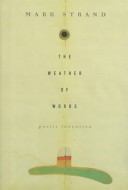 “I is for immortality, which for some poets is a necessary compensation. Presumably miserable in this life, they will be remembered when the rest of us are long forgotten. None of them asks about the quality of that remembrance–what it will be like to crouch in the dim hallways of somebody’s mind until the moment of recollection occurs, or to be lifted off suddenly and forever into the pastures of obscurity.
“Most poets know better than to concern themselves with such things. They know the chances are better than good that their poems will die when they do and never be heard of again, that they’ll be replaced by poems sporting a new look in a language more current. They also know that even if individual poems die, though in some cases slowly, poetry will continue: that its subjects, it constant themes, are less liable to change than fashions in language, and that this is where an alternate, less lustrous immortality might be.
“We all know that a poem can influence other poems, remain alive in them, just as previous poems are alive in it. Could we not say, therefore, that individual poems succeed most by encouraging revisions of themselves and inducing their own erasure? Yes, but is this immortality, or simply a purposeful way of being dead?” The Weather of Words: Poetic Inventions by Mark Strand (b. 1934, Canada), American poet and essayist, Poet Laureate Consult in Poetry to the Library of Congress (1990-1991), Pulitzer Prize (1999) for Blizzard of One, Gold Medal in Poetry (2009), American Academy of Arts and Letters.
A little something provocative this Sunday.
. . . and thus we begin another week . . .
Photo credit ~ SlowKing via Wikipedia and under the CC BY-NC


 Jamie Dedes' THE POET BY DAY Webzine
