Page 88 of 91

THE POETRY OF AFGHAN WOMEN: Landay, A Twenty-two Syllable Two-Line Poem

پاس په كمر ولاړه ګله!
 نصيب دچايي اوبه زه درخيژومه 
O Flower that you grow on the mountain side;
The duty to water you belongs to me, but to whom would you belong?

ستا به د ګلو دوران تير شۍ
زما به پاته شۍ دزړه سوۍ داغونه
The blooming season of your beauty will pass;
But the scorched patches on my heart will always remain fresh.

Zarmina's parents at her grave. She was an poet who died after setting herself on fire. Photo by Seasmus Murphy, 2012, Courtesy  of the Pulitzer Center on Crisis Reporting
Zarmina’s parents at her grave. She was a poet who died after setting herself on fire. Photo by Seasmus Murphy, 2012, Courtesy of the Pulitzer Center on Crisis Reporting

Last week The Poetry Foundation, publisher of Poetry magazine, announced the publication of the June 2013 issue, Landays. The issue is dedicated entirely to poetry composed by and circulated among Afghan women.

After learning the story of a teenage girl, Zarmina, who was forbidden to write poems and burned herself in protest, poet and journalist Eliza Griswold and photographer and filmmaker Seamus Murphy journeyed to Afghanistan to investigate the impact of the girl’s death, as well as the role that poetry plays in the lives of contemporary Pashtuns. A year later, Griswold and Murphy returned to Afghanistan to study the effects of more than a decade of U.S. military involvement on the culture and lives of Afghan women. In the course of this work, Griswold collected a selection of landays, or two-line poems. These poems are accompanied by Murphy’s photographs from the same period and are presented in the June 2013 issue of Poetry.

My pains grow as my life dwindles,
I will die with a heart full of hope.

A report on death and love by Eliza Grizwold and Seamus Murphy, a project of the Pulitzer Center on Crisis Reporting

Griswold describes the characteristics of a landay in her introduction:

“Twenty-two syllables: nine in the first line, thirteen in the second. The poem ends with the sound “ma” or “na.” Sometimes they rhyme, but more often not. In Pashto, they lilt internally from word to word in a kind of two-line lullaby that belies the sharpness of their content, which is distinctive not only for its beauty, bawdiness, and wit, but also for the piercing ability to articulate a common truth about war, separation, homeland, grief, or love.

Landays are centuries-old custom among Afghans, traditionally passed along in the oral tradition, and passed down through generations. The topics of the landays included in the June 2013 issue run the gamut—love, marriage, war, the status of women, drones, politics, courage, nature, and the Internet. Sometimes humorous, sometimes heartbreaking, these captivating two-line poems offer unique insight into the contemporary life of the more than twenty million Pashtun women who span the border between Afghanistan and Pakistan.”

*****

About Poetry
Founded in Chicago by Harriet Monroe in 1912, Poetry is the oldest monthly devoted to verse in the English-speaking world. Monroe’s “Open Door” policy, set forth in Volume 1 of the magazine, remains the most succinct statement of Poetry’s mission: to print the best poetry written today, in whatever style, genre, or approach. The magazine established its reputation early by publishing the first important poems of T.S. Eliot, Ezra Pound, Marianne Moore, Wallace Stevens, H.D., William Carlos Williams, Carl Sandburg, and other now-classic authors. In succeeding decades it has presented—often for the first time—works by virtually every major contemporary poet.

The entire June 2013 issue will be available online as of June 3 at http://www.poetrymagazine.org.Digital copies of the June issue of Poetry magazine, as well as a digital subscription, are also available.

The June 2013 issue of Poetry is accompanied by an exhibition at the Poetry Foundation gallery in Chicago, Shame Every Rose: Images of Afghanistan, which will feature a selection of Seamus Murphy’s photographs. The exhibition will run from June through August 2013 and is free and open to the public.

About the Poetry Foundation
The Poetry Foundation, publisher of Poetry magazine, is an independent literary organization committed to a vigorous presence for poetry in our culture. It exists to discover and celebrate the best poetry and to place it before the largest possible audience. The Poetry Foundation seeks to be a leader in shaping a receptive climate for poetry by developing new audiences, creating new avenues for delivery, and encouraging new kinds of poetry through innovative literary prizes and programs. For more information, please visit http://www.poetryfoundation.org.

About Everything Afghanistan
“Afghanistan’s recent history is a story of war and civil unrest. A country once prosperous now suffers from enormous poverty, a lack of skilled and educated workers, a crumbling infrastructure, and widespread land mines. It’s being heard about in the news every day but the media approaches this country from its dark side only. Here at Everything Afghanistan we try to show the world the other side of this war torn country. Despite years of bloodshed and destruction, there is still so much beauty that remains unseen.

Here we post about Afghan related things, from politics and events to its culture and traditions. This blog is against the US invasion of Afghanistan.” Amina jalalzei, a.k.a. Vicoden

About Mirman Baheer, the Ladies Literary Society
“Over 300 members of Mirman Baheer, the Ladies Literary Society, stretch across the provinces of Afghanistan. Women write and recite landai, two-line folk poems that can be funny, sexy, raging or tragic and have traditionally dealt with love and grief. For many women, these poems allow them to express themselves free of social constraints and obligations. 5 out of 100 women in Afghanistan graduate from high school, and most are married by the age of 16. This kind of expression is looked down upon in society, forcing the women writing to keep their craft a secret.” The Pulitzer Center on Crisis Reporting

Meetings of the poetry society are held in Kabul, but with 8 out of 10 Afghanistan women residing in rural areas, many women call in to the meetings. Zarmina Shehadi was one of those callers. She lit herself on fire two years ago. Her family denies her suicide, claiming that she lit herself on fire to get warm after a bath. “She was a good girl, an uneducated girl. Our girls don’t want to go to school,” her mother said. Zarmina is the most recent of Afghanistan’s poet-martyrs.

About the Pultizer Center on Crisis Reporting
The Pulitzer Center on Crisis Reporting is an innovative award-winning non-profit journalism organization dedicated to supporting the independent international journalism that U.S. media organizations are increasingly less able to undertake. The Center focuses on under-reported topics, promoting high-quality international reporting and creating platforms that reach broad and diverse audiences. MORE

The Pulitzer Center will present I Am the Begger of the World, a reading and film screening event, on July 30, 2013, at Culture Project in New York City and on Wednesday, July 31, 2013, at the Corcoran Gallery of Art in Washington, DC. Farrar, Straus and Giroux will release I Am the Beggar of the World: Landays from Contemporary Afghanistan in spring 2014.

The primary narrative content for this post is courtesy of The Poetry Foundation.
Examples of Pashto Landay, A form of Afghan poetry courtesy of Everything Afghanistan
“I will die …” Landay courtesy of the Pulitzer Center on Crisis Reporting
Photo credit ~ Seamus Murphy for The Pulitzer Center on Crisis Reporting
Video by Seamus Murphy for the Pulitzer Center on Crisis Reporting

Toward Healing and Understanding

photo-1

INTO THE BARDO, A Blogazine is an informal collection of works from diverse and visionary creatives. Our goal is to make – however modestly – a contribution toward healing and understanding. We are a collaboration of writers, poets, story-tellers, artists, musicians, and teachers from around the world.

Our focus is on sacred space (common ground) as it is expressed through the arts. Our posts cover a range of topics: religions and spirituality, life, death, personal experience, culture, politics and current events, history, art and photography. We cover these topics in the form of essay, poetry, fiction and creative nonfiction, music, art, and photography. Generally we offer a new post each day.

We consider that all art is meditation and comes from sacred space. Through their artistic inclinations, the contributors featured express the sacred. Our contributors hail from many places including: England and U.S., the Netherlands and Greece, China and India, Malaysia, Canada and South Africa.

Many different religions are represented on the site as are atheists and agnostics. What we learn in the end is that we hold pretty much the same ideals – though we may express them in different terms – and that we all have the same desire to travel our chosen paths peacefully, to live quietly, and to know that our children will grow up and grow old in a world that is not in conflict.

We’ve learned in our years of blogging that these efforts do evolve. When I started Bardo  more than two years ago, the audience was nil and the focus was narrow: one path, three people, and a wee corner of planet earth. Today  Into the Bardo has a loyal readership, steadily growing and world-wide. The works featured are the gifts of nearly forty poets and writers, photographers and artists . We hope you’ll share our adventures in sacred space and stay with us as we continue to evolve …

We’ve just redesigned the site and expanded our core team of creatives, which is complementary to a group of fine contributors, some known and loved by many of you. Announcements of more additions to the core team will be forthcoming over the next weeks.

HOW DID WE GET OUR NAME AND WHAT DOES IT MEAN? “Bardo” is a Tibetan Buddhist term referring to that place after physical death when our soul is between material manifestations. It might be likened by some (Brother David Steindle-Rast, for one) to the Christian purgatory. Chögyam Trungpa Rinchoche has written of it as the “in between, like a flowing river which belongs neither to this shore nor the other. In other words: it is the present experience, the immediate experience of now.” The expression “into the bardo,” was the name originally selected because the three people initially involved were living with life-threatening illness. Our dear friend, the poet Ann Emerson, died earlier this year. Her work is on “private” until we know the status of her copyright.

Link to Into the Bardo HERE.

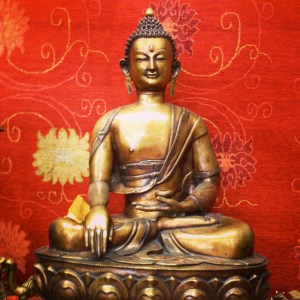
Photo credit ~ Our Gravitar – a “golden” Buddha against lovely red damask is the work of our own Wendy Alger. a fine arts photographer.

Monty Wheeler’s Debut Collection Has Arrived from Winter Goose Publishing

coffee-1Monty Wheeler’s collection of poems, The Many Shades of Dark,  was midwifed into the world by Winter Goose Publishing. An Arkansas poet, Monty has been blogging at Babbles since December 7, 2010.

Another one of our own (a poet-blogger, that is), Monty says he’s “naught but a little old feller living out his days in the foothills of the Ozark Mountains.” He says he likes,” traditional poetic forms, writing in meter and rhyme, and I strive to keep the art of formal verse alive.” In addition to poetry and writing, he enjoys fishing, hunting, and gardening … the later apparently being a new interest.

Of his blog, he tells us in the subtitle that we’ll find a “sampling of colloquial diction, informal verse in which lacks the convoluted similes and metaphors that too often fill the lines of verse . . . and who says that poetry can’t be just plain fun.”

TheManyShadesofDark_3D-881x1000In reading his book and going backward on his blog to sample a few of the poems he wrote when he started out, I was struck by three consistent characteristics: humanity, growth and honesty. Monty’s writing is genuine. A love of and knowledge of the Bible and his religion is clear in  many of the themes explored and often in the way he uses language and imagery. A man of the South, one also senses that his idioms, diction, and cadence have their roots as much in geography as they do in the Bible, “colloquial” as he says.

Some of his poems have the feel of horror literature, but essentially they deal with the traditional Christian realms of sin, retribution, redemption and salvation. The collection ends with a simple, upbeat beauty. If these themes and styles appeal to you, you will absolutely love The Many Shades of Dark. Clearly, Monty gave much thought to the poems selected for inclusion and the order in which they are delivered.

I was particularly moved by the first poem where Monty remembers his mother’s death and contemplates the pending death of his father. He writes in relatable heart-speak:

I sense the coming loss somehow;
And with his death will come the tears
Of which I’ve fought to hold for years.

Real men don’t cry . . . or so they lied;
And even when my mother died,
I raised the River Tears’ floodgate
And brought that lie a worthy mate.
And ere before Dad’s time has come,
The knowledge that I will succumb
Runs deep and icy cold in me
Like shards of ice that none should see.

Monty’s poems speak of illness and death, of struggling with issues of faith and hope, of tragedy and triumph, of environmental abuse, and of the …

Poet’s Sword

I’ve unkempt hair and wild-eyed stare;
On paper’s white and callused glare,
My pencil flies like winded kite,
And long into the night, I write!

I brave those murky catacombs,
Where long I’ve locked my tears in tombs,
Releasing each dark fear and fright.
And long into the night, I write.

It’s only through my words, you see
The monsters of my mind set free;
I thank my God the night’s finite!
And long into the night, I write.

The demons of my private Hell
And Satan’s imps I can’t dispel,
Will flee my pencil’s sword-like fight.
How long into the night, I write!

Monty closes the book as gracefully as we all hope to close our lives:

Love’s Day’s End

When sunset settles in your eyes at last,
And when your day is dark as Night’s black skies,
When naught is left ahead and Life has cast
You aside like yesterday’s old lies,
Remember me, remember our long past;

Leave not this world with heavy heart that cries.
And come the day of Death’s assured demand,
We’ll know we lived and loved as God had planned.

Bravo, Monty, and congratulations. Both my thumbs up on this one …

© 2013, cover art, Winter Goose Publishing, poems and portraits, Monty Wheeler, All rights reserved
© 2013, review, Jamie Dedes, All rights reserved

A Bit of Irish In Honor of the Day: Poet John O’Donohue’s “Beannacht” … a blessing

The Irish poet and writer, John O’Donohue (1956-2008) was as moved by the landscape of the soul as he was by the landscape of his country with its Celtic spirituality. An ordained Catholic priest, he eventually left the priesthood, but he never abandoned the mystical roots of his Christianity. He was a Hegelian philosopher, did doctoral work on Meister Eckhart, was fluent in Irish and German, was an environmental activist, and wrote several best-selling books (both nonfiction and poetry). His most notable work was Anam Cara:A Book of Celtic Wisdom. (Anam Cara meaning soul friend.)

    Real friendship or love is not manufactured or achieved by an act of will or intention. Friendship is always an act of recognition.”

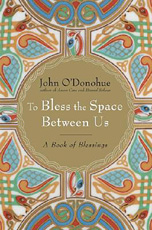
blessthespacebetweenlrgNo one knew the name of this day;
Born quietly from deepest night,
It hid its face in light,
Demanded nothing for itself,
Opened out to offer each of us
A field of brightness that traveled ahead,
Providing in time, ground to hold our footsteps
And the light of thought to show the way.

The mind of the day draws no attention;
It dwells within the silence with elegance
To create a space for all our words,
Drawing us to listen inward and outward.

We seldom notice how each day is a holy place
Where the eucharist of the ordinary happens,
Transforming our broken fragments
Into an eternal continuity that keeps us.

Somewhere in us a dignity presides
That is more gracious than the smallness
That fuels us with fear and force,
A dignity that trusts the form a day takes.

So at the end of this day, we give thanks
For being betrothed to the unknown
And for the secret work
Through which the mind of the day
And wisdom of the soul become one.

~  John O’Donohue, The Inner History of a Day, excerpt from To Bless the Space Between Us: A Book of Blessings

HAPPY ST. PATRICK’S DAY

normal_saint_patricks_day_Shamrock_Pipes