It’s great to get a poem or story published. It’s about income and getting read and for some it’s validation as well. These are all important (even vital), but I was reminded recently that our poetry and other writing is about so much more.
“The title of David Cooper’s book on Kabbalah invites us to re-think the Creator as Creating: God is a Verb. While I don’t want to equate science to God in a religious sense, I want to borrow this re-conception. Science is creative, creating, if you will, knowledge of the world. Science is a verb.”
Jamie Dedes
A friend of mine came to visit and glowed when she told me she’d read Michael’s introduction. God is a Verb and Science is a verb popped out at her. Something she’d been struggling with suddenly fell into place. Other company arrived and I wasn’t able to get further explanation. I’m pleased but not surprised with her reaction to Michael’s piece. It demonstrates the power of words to bring joy, clarification and healing.
My own recent experience: a few people commenting or emailing me saying my post here – not with a bang but a whimper – helped release needed tears.
On another occasion a woman in Scotland wrote to say she’d read my poem – Wabi Sabi – to her wabi sabi group. They found it inspiring. Wow! While I do need my payments, it’s this sort of thing – this human connection – that is satisfying right down to the marrow of my bones.
Poetry is also important as an entry point into sacred space for both artist and audience. This is motivation for everyone to practice their art, whether professionally or as amateur, which is not a pejorative. I’m sure many of you – if not all of you – know what I mean. There’s a shift that happens. Sometimes it feels more like channeling than writing. The experience is illuminating, healing and peaceful. An unexpected insight often arrives just when you need it.
Our job as poets and writers goes even further: we bear witness, we give voice to the voiceless, and we observe and commemorate.
English Poet Myra Schneider at her 80th Birthday celebration and the launch of her 12th collection
Myra Schneider said in an interview HERE, that “I believe the role of the poet is to reflect on human experience and the world we live in and to articulate it for oneself and others. Many people who suffer a loss or go through a trauma feel a need for poetry to give voice to their grief and to support them through a difficult time. When an atrocity is committed poems are a potent way of expressing shock and anger, also of bearing witness. I think that the poet can write forcefully, using a different approach from a journalist, about subjects such as climate change, violence, abuse and mental illness and that this is meaningful to others. I very much believe too that poetry is a way of celebrating life. I think it deserves a central place in our world.”
So, as we celebrate poetry this month, be sure to give yourself time to read and write … for the sake of your spirit and for the rest of us too.
Please join us at The BeZine on April 15th for our special interNational poetry issue. Michael Dickel is the lead editor.
This one is for all my poet, writer, artist and musician friends who continue to create in the face of sometimes dramatic physical health issues and disabilities. Be as well as you can be. You are valued. ♥
There are two videos included here. If you are reading this post from an email subscription, it’s likely that you’ll have to link through to the site to view the videos. They’re both worth the time and effort.
The Spoon Theory (see video above) is a clear and vivid way of explaining what it is like to live with any chronic, catastrophic and potentially life-threatening illness. I suspect that it also explains what life is like for those who have lived long enough to be described as “elderly.” Understanding The Spoon Theory gifts us with compassion for ourselves and patience with how long it takes to get things done … even a poem, piece of flash fiction, a blog post or visits to other bloggers.
The first step in living successfully with catastrophic illness and advanced aging is to recognize (acknowledge/understand) the ramifications in terms of everyday life and its details. The Spoon Theoryhelps with that.
The second step is acceptance. That’s about letting go of your story. It’s about not being defined by the circumstances of your life. It’s about living with not struggling against. This requires something much more profound than positive thinking, which tends toward the superficial.
Letting go of our stories means letting go of judgement and attachment and a sense of victimization, which are the root causes of many of our very human pathologies. The philosopher Arthur Schopenhauer wrote of this my-story mentality as “striving, disappointment, and boredom” or a life that is devoid of Spirit. Songwriters, who often make their living by stoking the “pain body” or the residue of emotional pain that stays with us [Eckhart Tolle], call this the IFD disease – idealization, frustration (the ideal cannot be achieved) and demoralization.
The third step in the journey is to adapt, a business of the heart. Adapting is not about giving up. It’s about finding our core of joy and gratitude and no one reminds of joy and gratitude better than the beloved Benedictine monk, Brother David Stendl-Rast (video below), who combines the wisdom of traditional Christianity with pragmatism of Buddhism.
No guilt. No judgement. Just joy. With understanding, self-compassion, patience and acceptance, we can still produce as so many of us do … and maybe, instead of beating ourselves up over what didn’t get done each day, we’ll be able to pat ourselves on the back for all we do accomplish. We cannot share The Spoon Theory with everyone. Many people will not understand our challenges. All that matters is that we do and that we support one another.
“In politics being deceived is no excuse.” Leszak Kolakowski
Recommended read: On Tyranny: Twenty Lessons from the Twentieth Century by Timothy Snyder. Left, right or center – American or not – it’s a must read for our chaotic times … and not just the list of lessons but Prof. Snyder’s commentary on each. This book is a rational enlightening little gem and a powerful wake-up call.
Lesson One: “Do not obey in advance. Most of the power of authoritarianism is freely given. In times like these, individuals think ahead about what a more repressive government will want, and then offer themselves without being asked. A citizen who adapts in this way is teaching power what it can do.” Prof. Snyder
BEING TRUE TO YOU: I was reminded on seeing this book trailer of my aspirational days when an editor told me that if I decided to focus on writing books for children, the primary characters should be boys. The reason, he said, was that girls will read books about boys but boys won’t read books about girls. I was also advised not to write about politics or religion. I understand his concerns: salability. Nonetheless, I write what I will. I hope you do too. It’s about being true to yourself and true to the story you have to tell.
(Note: if you are reading from an email subscription, you’ll have to link through to the site to view the two videos included in today’s post.)
BOOK TRAILERS: I don’t particularly care for the above book trailer. Occasionally I like to pop over to YouTube and check out what authors and publishers are doing. Over time I’ve found that the ones that are truly appealing (and therefore memorable) are the ones where the writer can be a bit of a ham and doesn’t take herself or himself too seriously.
GRAY SHTEYNGART: This one (below) was produced a few years ago. I rather like it. It’s not surprising that it’s good. Gary Shteyngart (Absurdistan, A Novel) is brilliant and a satirist. The trailer is for Little Failure, A Memoir, published in 2013.
Gary Shteyngart at the Los Angeles Times Festival of Books.
“Do not throw away your heart. Keep your heart. Your heart is all that matters … Throw away your ancestors! … Throw away your shyness and the anger that lies just a few inches beneath … Accept the truth! And if there is more than one truth, then learn to do the difficult work — learn to choose. You are good enough, you are HUMAN ENOUGH, to choose!” Gary Shteyngart, Super Sad True Love Story.
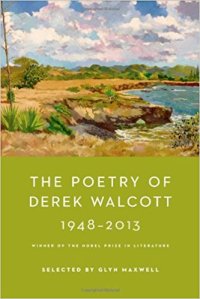
In honor of Derek Walcott who died a few days ago, the recommended read for this week is The Poetry of Derek Walcott 1948-2013. Walcott first poem was published when he was fourteen and this book was published in his 84th year. Never more than now has the world needed the grace, wisdom and universality of his poetry. This is a must add to your poetry book collection. It doesn’t include the epic Omeros, also recommended, but it does include some of his earlier work that I have not seen included elsewhere.
By shopping at Amazon through The Word Play Shopandusing the book links embedded in posts, you help to support the maintenance of this site. Thank you! (Some book links will just lead to info about the book or poet/author and not to Amazon.)
The WordPlay Shop offers books and other tools especially selected for poets and writers.
For good or ill, I seem always to have something to say. In retrospect I may find I didn’t say it well, it wasn’t worth saying, or I didn’t really know what I was talking about. Is it a gift or a curse? I don’t know. I just know that even in despair, I never have writer’s block. Having said that, I don’t blame or judge those who do. Especially right now. The world’s gone mad.
In reaction some of my friends are writing up a storm – almost literally. Others are so overwhelmed with emotion – fear, anger, hopelessness – that they can’t work. It wouldn’t matter if their jobs weren’t creative. They just can’t work. No romance about it. No calling it “writer’s block.” We should call it – in this case – what it really is: heartbreak.
Normally, I would say block comes from trying to write and edit at the same time. That doesn’t work. Or, I’d ask “Are you self-conscious? Are you afraid of being judged, of revealing yourself, of just not being good enough?” Write about those feelings then. Write just for yourself. Dabbler or journaler, amateur or professional, one of the best ways to get to the root of a problem is to put it down on paper, to explore the feelings, fears and trepidation.
Or, I’d wonder: Is it a matter of perfectionism? That can be a steel wall.
“You know, the whole thing about perfectionism. The perfectionism is very dangerous. Because of course if your fidelity to perfectionism is too high, you never do anything. Because doing anything results in…it’s actually kind of tragic because you sacrifice how gorgeous and perfect it is in your head for what it really is. And there were a couple of years where I really struggled with that.” David Foster Wallace
These days though, I’m feeling sad too … and insecure … and this may be one of those times when I should still my pen and hold my tongue, but I find I have to ask myself what can we do when we feel that our hearts are breaking? See a therapist? That might not be a bad idea, especially if the feeling goes on and on and we can’t pull ourselves out from under. Or, we could just sit with the sadness.
Periods of heartbreak and disappointment often turn out to be a sort of liminal time. . . a transitional stage . . . Most of us have experienced this in our creative lives: when events are overwhelming and our inner lives seem the most sterile but turn out to be silently rich in process and promise and demand of us patience as our becoming works itself out. During such periods, when our inner lives are dark, maybe we need to simply live in the darkness, not try to avoid it or suppress it.
For creative people – for everyone perhaps – these times can be valuable; in the sense of our becoming, a gestational period, a personal advent waiting for the birth of a truer self. Difficult as these times are, as creatives, as citizens, perhaps they are simply times to pause until the pieces come together and our intuitive sight clears. Don’t be surprised if you wake up one day to find your creative spirit is a phoenix rising from the ashes of despair, no longer haunted and ready to take on the insanity. History, personal and shared, shows us that – however trite it sounds – out of the darkness comes light. We may have a long haul ahead of us. It might not be tomorrow or the day after, but the light will come. Hold fast. We can’t afford to believe otherwise.







 Jamie Dedes' THE POET BY DAY Webzine