“There is nothing so patient, in this world or any other, as a virus searching for a host.” Mira Grant, Countdown
Whatever your view, this news will perhaps give another jumping off point for those participating in this week’s Writing Prompt. You still have time to respond. It doesn’t close until Monday.
This past Tuesday, the public safety director of Newark, New Jersey warned that people who spread disinformation about the coronavirus could be criminally prosecuted. PEN America’s Nora Benavidez, director of U.S. free expression programs, issued the following statement:
“Advising people to take care in sharing reliable and fact-based information about coronavirus makes good sense. Threatening criminal prosecution for spreading misinformation in a time of great confusion, on the other hand, is both wrongheaded and likely unconstitutional. Local leaders must prioritize protecting public health and providing credible information, but they can do that without threatening to tread on the public’s rights.”
This post is courtesy of Twitter, Newark NJ, and PEN America.
PEN America stands at the intersection of literature and human rights to protect open expression in the United States and worldwide. It champions the freedom to write, recognizing the power of the word to transform the world. Its mission is to unite writers and their allies to celebrate creative expression and defend the liberties that make it possible.
Your donation HERE helps to fund the ongoing mission of The Poet by Day in support of poets and writers, freedom of artistic expression, and human rights.
Poetry rocks the world!
FEEL THE BERN
For Peace, Sustainability, Social Justice
The Poet by Day officially endorses Bernie Sanders for President.
The New New Deal
Link HEREfor Bernie’s schedule of events around the country.
“Democracy is not a spectator sport.” Bernie Sanders
“Every pair of eyes facing you has probably experienced something you could not endure.” Lucille Clifton
Thank you for sharing your love of words. Comments will appear after moderation.
“…the ailing body points to culture, pain points to philosophy, language points to consciousness, and all point to what is still to be learned about our fragility, our mortality, and how to live a meaningful life.” Ann Jurecic, Illness as Narrative (Composition, Literacy, and Culture), p. 131
Unnameable
Large B-cell lymphoma with T cell-rich…
Damn, how do I slip that mouthful in.
To my life. My thought. This poem?
The tumor breached my spine, pressed
its attack onto nerves. A tactic to cut
communication channels. Painful alarum.
Yet here we arrive. The first day of Spring—
Shushan Purim. We walk in Jerusalem’s
Botanical Garden. The first chemical attack
on the tumor, the lymphoma, my body—
this day—dispensation given to fight back
against this pogrom in my very bones.
The red anemones, pink cyclamen,
something purple I cannot name,
shine with indifference to the wars
within my body and surrounding us.
Here we met a friend, just declared
cancer-free. Here we quietly held hands.
Here I felt something I cannot name.
—Michael Dickel
Winston Churchill in Uniform
“The boy, who as a man would later go on to lead the nation in WWII, was obviously affected by the pandemic known then as the Russian Flu in 1890.” B. H. Fraser, Poetry and the Flu, City Poems
COVID-19, the novel coronavirus (another mouthful) occupying our media and minds, spreads toward pandemic. Our responses, as societies and cultures across the globe, likely reveal much about us, as humans. If “the ailing body points to culture,” as Jurecic writes, what do thousands—or millions—of ailing bodies point toward?
Winston Churchill, as a teenager, wrote about the late 19th Century Russian Flu:
The Influenza, 1890
Oh how shall I its deeds recount Or measure the untold amount Of ills that it has done?
From China’s bright celestial land
E’en to Arabia’s thirsty sand
It journeyed with the sun.…
And now Europa groans aloud,
And ‘neath the heavy thunder-cloud
Hushed is both song and dance;
The germs of illness wend their way
To westward each succeeding day…
—Winston Churchill (age 15) Excerpts: Stanzas 1 and 7 of 12, emphasis added. Full poem
The poem ends with with very imperialistic overtones extolling Britain, especially in the last stanza:
God shield our Empire from the might
Of war or famine, plague or blight
And all the power of Hell,
And keep it ever in the hands
Of those who fought ‘gainst other lands,
Who fought and conquered well.
This could indeed voice the culture of late 19th C. Great Britain, couldn’t it?
Patients from the Influenza Pandemic of 1918–1919
The Influenza Pandemic of 1918–1919 killed more than three times as many people as the World War that preceded it (US National Archives). Yet not much was written about it. Here are extracts from two poems reprinted in a medical journal special issue on influenza, one from 1918, in the midst of the pandemic, and one from a century later:
The Influenza
Influenza, labeled Spanish,
came and beat me to my knees;
even doctors couldn’t banish
from my form that punk disease;
for it’s not among the quitters;
vainly doctors pour their bitters
into ailing human critters;
they just sneeze and swear and sneeze.
Said my doctor, “I have tackled
every sort of ill there is
(I have cured up people shackled
by the gout and rheumatiz);
with the itch and mumps I’ve battled,
in my triumphs have been tattled,
but this ‘flu’ stuff has me rattled,
so I pause to say G. Whiz.”
I am burning, I am freezing,
in my little truckle bed;
I am cussing, I am sneezing,
with a poultice on my head;
and the doctors and the nurses
say the patient growing worse is,
and they hint’ around of hearses,
and of folks who should be dead.…
—Walt May (1918)
The 1918 Spanish Flu Pandemic
…It affected the lungs and caused their skin to turn blue
Comfort was given it was all they could do
In effect it caused people to suffocate
And it continued to spread at an alarming rate.
People kept away from large crowds and were told to wear masks
And they struggled to perform their daily tasks
Remote areas in the world were affected too
By this airborne killer virus, the great Spanish flu.
Efforts were made to slow down this disease
But slowly and surely was bringing the world to its knees
Shops opening times were staggered all over the lands
And people were encouraged not to shake hands.…
They closed many schools, services were hit too
With workers struck down by this merciless flu…
—Tom Cunningham (2018)
Both poems from: “Tres Poemas Sobre la Pandemia de Gripe de 1918.” Virología: Publicación Oficial de la Sociedad Española de Virología, 21:1 pp.68–72 (PDF of the journal, with full versions of these poems and another) Note: Walt May, a humorist / poet, wrote for newspapers, with his poems formatted as prose in newspaper columns. I have taken the liberty to adjust the line breaks from the source article.
Do these examples point to differences in culture over that century? What would our own poems point to, written now, at the beginning of a potential pandemic?
Jurecic points out that “despite the [1918–1919] flu’s ferocity, for much of the twentieth century this pandemic nearly vanished from popular consciousness.…the pandemic is virtually absent from American and British literature of its era” (p.1). After citing a few literary examples that do exist from the 1918 influenza pandemic in narrative prose literature (so not the 1918 poem above), Jurecic asks this: “How to bring the pandemic and the narrative form together? It is as if the project were unimaginable in the early twentieth century” (p. 1). Is it imaginable in ours?
“In stark contrast”, she points out, much has been written about HIV / AIDS (once we acknowledged it): “Journalists, playwrights, novelists, poets, memoirists, and diarists joined artists from other media in an effort to document the [AIDS] pandemic, create memorial art, and make meaning of suffering and loss on scales ranging from individual to global” (Jurecic 1–2). She gives many reasons for this, but this is a writing prompt, so…
WEDNESDAY WRITING PROMPT
* Editor’s Note: Twelve hours after this post went up, the World Health Organization (WHO) declared the virus crisis a pandemic. Link HERE. for details.
This prompt emerges from musing about Jurecic’s questions and the quote at the top of the page: How to bring illness (personal or pandemic) of the ailing body, pain, and language to point to culture, philosophy, and consciousness in poetry that also points “…to what is still to be learned about our fragility, our mortality, and how to live a meaningful life”? Especially at this cultural-historical moment of an emerging pandemic?
Start your writing, from the midst of this emerging COVID-19 pandemic.
Write what is unnameable.
Good health to you.
—Michael Dickel
Lecturer, David Yellin
Contributing Editor of The BeZine
Share your poem/s and …
please submit your poem/s by pasting them into the comments section and not by sharing a link
please submit poems only, no photos, illustrations, essays, stories, or other prose
PLEASE NOTE:
Poems submitted through email or Facebook will not be published.
Deadline: Monday, March by 16 pm Pacific Time. If you are unsure when that would be in your time zone, check The Time Zone Converter.
Anyone may take part Wednesday Writing Prompt, no matter the status of your career: novice, emerging or pro. It’s about exercising the poetic muscle, showcasing your work, and getting to know other poets who might be new to you.
You are welcome – encouraged – to share your poems in a language other than English but please accompany it with a translation into English.
Source: Wikimedia Commons Public Domain
Postscript
“By the flash-light of her fevered vision, Plath leads us into an apocalyptic wasteland. Then, like a hypnotist, she brings us back from it…She [becomes] the master of her feverish animal, all-powerful and entirely autonomous, self-made, and self-regenerating…”
Dickinson, Emily. “Pain—has an Element of Blank.” The Complete Poems of Emily Dickinson. Ed. Thomas H. Johnson. Boston: Little Brown, 1960. 323–24.
Fadiman, Anne. The Spirit Catches You and You Fall Down: A Hmong Child, Her American Doctors, and the Collision of Cultures. New York: Farrar, Straus and Giroux, 1997.
Jurecic, Ann. Illness as Narrative (Composition, Literacy, and Culture). Pittsburgh: U of Pittsburgh Pr, 2012.
Lorde, Audre. The Cancer Journals. 2nd ed. San Francisco: Aunt Lute Books, 1980.
McKim, A. Elizabeth. “Making Poetry of Pain: The Headache Poems of Jane Cave Winscom.” Literature and Medicine. 24.1 (2005): 93–108.
Sontag, Susan. Illness as Metaphor and AIDS and Its Metaphors. New York: Anchor/ Doubleday, 1978, 1988.
Sontag, Susan. Regarding the Pain of Others. New York: Farrar, Straus and Giroux, 2003.
U.S. National Archives. “The Deadly Virus: The Influenza of 1918–1919.” Web Page.
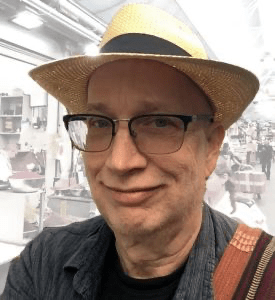
MICHAEL DICKEL (Meta /Phor (e) /Play) has won international awards and been translated into several languages. His latest poetry collection, Nothing Remembers (Finishing Line Press, 2019). A poetry chapbook, Breakfast at the End of Capitalism, came out in 2017 (free PDF ). His flash fiction collection, The Palm Reading after The Toad’s Garden, came out in 2016. Previous books include: War Surrounds Us, Midwest / Mid-East, and The World Behind It, Chaos…(archived free PDF ). He co-edited Voices Israel Volume 36, was managing editor for arc-23 and 24, and is a past-chair of the Israel Association of Writers in English. He publishes and edits Meta/ Phor(e) /Play and is a contributing editor of The BeZine. He grew up in the US Midwest and now lives in Jerusalem, Israel.
Your donation HERE helps to fund the ongoing mission of The Poet by Day in support of poets and writers, freedom of artistic expression, and human rights.
Poetry rocks the world!
FEEL THE BERN
For Peace, Sustainability, Social Justice
The Poet by Day officially endorses Bernie Sanders for President.
The New New Deal
Link HEREfor Bernie’s schedule of events around the country.
“Democracy is not a spectator sport.” Bernie Sanders
“Every pair of eyes facing you has probably experienced something you could not endure.” Lucille Clifton
Thank you for sharing your love of words. Comments will appear after moderation.
“Preventing war is much better than protesting against the war. Protesting the war is too late.” Thich Nhat Hanh, Being Peace
Nine poems this Tuesday in response to the last Wednesday Writing Prompt, pulsing peace, March 4, which encouraged poets to write about abstaining from war and conflict while committing to compromise and to unity with and respect for nature into perpetuity. There is great depth of feeling here in the distain for the ruthless insanity war and the love of an abiding and sensible peace, a peace in which we all must collaboratively invest if it is to happen.
This week we warmly welcome Adrian Slonaker, new to these pages. This collection also includes the works of poets Paul Brookes, Anjum Wasim Dar, Irma Do, Sonja Benskin Mesher, Nancy Ndeke, and Jane SpokenWord.
Join us tomorrow for the next Wednesday Writing Prompt. Michael Dickel (Meta/ Poor(3) /Play) is guest host this week. All are welcome to come out and play: beginning, emerging, and pro poets.
Warlord
loves to be entertained.
After a battle where skulls are blown apart
he loves to sit and laugh at Anthem For Doomed Youth.
After a skirmish in which men are screaming
With half a leg or arm bone shattered
By shrapnel, he guffaws at Dulce Decorum Est.
The more graphic, the more comic to him.
He says if you don’t laugh you’ll cry.
Laughter is healthy. Laughter is human.
Laughter affirms life, essential before
a fight amidst bullets, stabs and snipers.
“Oh What A Lovely War”, is his favourite film.
“All Quiet On The Western Front” a comic classic.
He knows we laugh at what we fear most.
War is like great stand up when you can barely
Breathe for laughter, your sides hurt
as if they need stiches. War is medicinal.
Warm sunny carefree mornings,
lazing on the mat , building castles in the air, as
soft gurgles of transparent streams make music
in the spheres, ripples of surging receding waves
play as Beethoven’s overture’s pauses, interlude’s
quietude engulfs the skies, being one with the golden
horizon where love reigns supreme-
Come let us waltz to Johann Strauss melodies,
And hold tender souls, breathe in pure peace, let the ocean
breeze caress the spirit for moments uncounted, evenings
may chase the nights, twinkles may keep bright the nights
emerging into holy day breaks, then in gratitude we bow to
find the gift of life, no more fear, no more strife, just poems
of love and tranquility, sweet soothing notes of flutes and pipes
and murmuring bleats of lambs innocent.
Come let us walk in forests safe, no Robin Hoods to play,
And sit with the squirrels, sing with the twittering birds, eat the
raw berries and lie on pine needles dry, let the animals freely roam,
the monkeys swing from branch to branch, flowers wild bloom around,
rest in shades and against the trunks as they brace the furious storms,
firmly rooted , no fear, no cuts, no brutal sawing of the elegant pines
no habitats destroyed, no homeless to die, no clearing no fines. Growing
on for invisible insects, purity and equality.
Come let us give up, then ………..for perpetual peace
Give up anger give up greed, give up deception and be free
give up hatred give up fights, give up conflicts give up wars
abstain from frowns to start wearing smiles, stop all conflicts for
miles and miles, give up force and corrupt power, and take up
tenderness as soft as butterflies, give up the guns and weapons and
work and sing with the bees, let us make life as sweet as honey and give
up once and for all the lust for money.
Come this is the time , let us then pray
May peace be high in perpetuity, the world may become,
as gentle as a butterfly
Amen.
Ages ago right guidance was ordained
can we revert to the simple times again?
The Earth is alive below, beneath
shaking disturbed cracking, still-
yet in revolution,moaning,
rumbling protesting, death sprawling
O’ pale moon, bear witness
O’ sometimes silent sometimes chirping birds
take notes to the skies, fly, as nature holds the
wings-from darkness to dawn.
Speak not of the blood
that flows like rivers from wounds
that oozes from cruel cuts by sticks and pellets
that drops from splinters showered by blasts
that is visible on clothes tattered and shrouds
O’ Moon
see the other side and send
a sign of peace
a bird of song
a light of love
a tree of enlightenment
Find, find a harbinger of truth
justice and salvation.
The Earth is alive below, yearning,
to heal -hoping, anticipating,
II
The decision is made, now
let us pause and reflect,withdraw
into a state of tranquility and calm
think about right and wrong
withdraw into simplicity like
the desert plain and warm
think of joy love and peace
comfort sympathy and not harm
of trees plants fresh and green
of buds flowers bright and colorful
of streams and rivers pure and clean
of seas oceans calm and serene.
so we all abstain from abuse
hatred jealousy and refuse
hasty greed and grabbing spree
and being content, with all agree
Hope be our constant company
one fine day, peace will dawn
all shall live in harmony
a dream it is, a vision new
“POETRY PEACE and REFORM Go Together -Let Us All Strive for PEACE on EARTH for ALL -Let Us Make a Better World -WRITE To Make PEACE PREVAIL.” Anjum Wasim Dar
The Path
The straight and narrow path calls to me
Stay strong, be brave, keep eyes ahead
Gluttonous green surrounds me
Lusciously tempting me
It can be all mine
Lumber, water
Resources
I will
Take
And
Share them
The path says
You have enough
Abstain from conflict
Caused by fear, greed, hurt, hate
Bridge ignorance with knowledge
Each slat a step to love and peace
Generosity widens the path
Sonja Benskin Mesher, RCA paintings (This is her Facebook page, so you can connect with her there as well as view photographs of her colorful paintings.)
REACH FOR THAT CHILD, S/HE IS THE EMBODIMENT OF LOVE AND PURITY.
In us all, big, small and distance,
Is a child,
Regailing in the wonders of Nature,
Driven by appreciation of a stranger,
He watches the canterpillar, and Marvel’s at a blade of grass,
His play is pure, devoid of gender, even of color,
Humanity is one,
Divisions are selfishness driven by greed,
Our needs tell our oneness,
Not the relics of your worship,
Our pains inform our feelings,
Not boundaries and nationalitys,
Aren’t we all of a mystical source,
A river of interconnected beads,
Aren’t we dust, coming and going back?
We build monuments,
That stand in the way of truth,
Empasis being a stumbling block,
Lenses to discount and disclaim another,
We build economies,
That draw blood to stay afloat,
Trust has been eroded with the force of ideology,
History has been faked,
To mis- teach and misdirect our thoughts,
Away from the sameness of life,
Into the fabled divides that keeps us condemning,
O sons of men !
Why won’t we remember our days of childhood,
The bliss of spontaneous songs with fellow creatures,
When worship was praise of good will like kindergarten kids,
See how we build walls ,
Not to keep disease and wild life away,
But anyone deemed other by our spitting egos,
See how armed we are,
Not against alien invasion,
Or castrophes of nature,
But against fellow men,
From references of false teachings,
That has us,
Screaming obsecinities at who we are directed to hate,
We watch beasts marching in herds in the forests,
Fish swimming in choreograpged schools in the oceans,
As for bees, they work in uniform and focused synchrony,
Yet, US,
With capacity to think and make decisions,
Ours is a house so divided we are lost at home,
Wonder of wonders our humble beginnings are no secret,
Neither our sad ends,
We are for sure the danger that harms the innocent,
Yet , we do so with minimal remorse,
And maximum force under guise of ‘self protection’
Who is self if not fellow flesh,
Who is the other if not a mirror of your own,
We are at that time of year,
When over a billion hearts deny themselves to reach out to the sky,
Traditions of Faith’s talks of self denial to reach out to the light,
But pray tell,
Is the light we seek not within us and other?
Within each creature is the universe complete,
And for it to enjoy this space that life came to experience for a while,
Peace is Paramount,
And love of other is the foundation of good will,
Without which, our deeds come short,
Awake O men of flesh and dust to your moral campus,
Seek within the true nature of why our earth is in such agony,
Stand tall with the message of wholeness,
For wholeness is the path that allows life to thrive,
Not surviving from one calamity to the next,
A fact of the world we are currently living on.
Stand and be counted as an ambassador of Peace.
Reclaim who you were before misdeeds came to rule your concious.
On the way from
winter’s weather delays and icy
lashings to the exuberance of
excursions into splashes of
spring sunshine,
let us pause and ponder
and sacrifice the coveted asset of
busyness embraced by those who
clutter and choke their calendars with commitments
because idleness is undesirable and
“rest” really is a four-letter word. Let us
resist the temptation to burden and bully our
beautiful existence with over-toil and instead be still and
gaze at grackles hopping over grass drenched
by dew and chipmunks flashing their chubby cheeks
while honoring the early-bird boldness of crocuses
chasing away snow and the curling blossoms of
blue hyacinths mimicking Marge Simpson’s beehive hairdo.
Let us smile as sincerely and as gently at others partaking in
this pursuit of
peace and paz and salaam and shalom and shaanti and mir as
at our rushed brothers and sisters who are
abstaining as we strive to listen to the longings and
needs of our planet and of each other.
I am cosmic
magnetic energy
hallucinating alternate dimensions
mask unveiled
I am in sympathetic vibration with the multiversal force
bridging time and space
creatively contemplated
coding time and consciousness
attempting to measure moments
waiting for resurrection
fusing conformity and dissention
through elevation
I am breathing in the cosmos
creationing and becoming
transform into music
feeling blue
’round midnight
I dance
Your donation HERE helps to fund the ongoing mission of The Poet by Day in support of poets and writers, freedom of artistic expression, and human rights.
Poetry rocks the world!
FEEL THE BERN
For Peace, Sustainability, Social Justice
The Poet by Day officially endorses Bernie Sanders for President.
The New New Deal
Link HEREfor Bernie’s schedule of events around the country.
“Democracy is not a spectator sport.” Bernie Sanders
“Every pair of eyes facing you has probably experienced something you could not endure.” Lucille Clifton
Thank you for sharing your love of words. Comments will appear after moderation.
The U. S. Library of Congress is the world’s largest library, offering access to the creative record of the United States — and extensive materials from around the world — both on-site and online. It is the main research arm of the U.S. Congress and the home of the U.S. Copyright Office.
The public is offered the opportunity to provide input to the Library of Congress on expertise needed by the next Register of Copyrights, the Librarian of Congress, Carla Hayden, announced.
The public input form is HERE. The deadline for submitting comments: Friday, March 20, 2020.
The Library of Congress will review all input and use it to help develop the knowledge, skills and abilities requirements for its announcement to fill the Register of Copyrights position.
Your donation HERE helps to fund the ongoing mission of The Poet by Day in support of poets and writers, freedom of artistic expression, and human rights.
Poetry rocks the world!
FEEL THE BERN
For Peace, Sustainability, Social Justice
The Poet by Day officially endorses Bernie Sanders for President.
The New New Deal
Link HEREfor Bernie’s schedule of events around the country.
“Democracy is not a spectator sport.” Bernie Sanders
“Every pair of eyes facing you has probably experienced something you could not endure.” Lucille Clifton
Thank you for sharing your love of words. Comments will appear after moderation.


 MICHAEL DICKEL (


 Jamie Dedes' THE POET BY DAY Webzine