Page 327 of 433

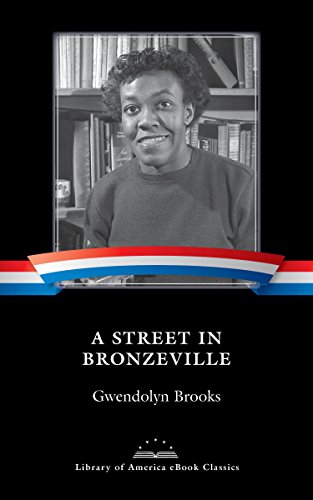
CELEBRATING AMERICAN SHE-POETS (23): Gwendolyn Brooks, Journalist, Poet, Living in the along …

51QfLM0er3L

“Live not for Battles Won.
Live not for The-End-of-the-Song.
Live in the along.”
Report from Part One

There is so much about Gwendolyn Brooks and her work that is remarkable and goes beyond the awards and acknowledgements, though these are many and prestigious and often firsts for her gender and race.

In 1968 Gwendolyn Brooks was named Poet Laureate of Illinois. In 1985, she was the first Black woman appointed U.S. Poet Laureate, known then as Consultant in Poetry to the Library of Congress. She received an American Academy of Arts and Letters Award, the Frost Medal, a National Endowment for the Arts Award, the Shelley Memorial Award, and fellowships from the Academy of American Poets and the Guggenheim Foundation.

Gwendolyn Brooks was born in Topeka, Kansas, but within a few weeks of her birth her family moved to Chicago, Illinois, her true roots and the source material for her poetry. She lived in Chicago until her death in December 2000. According to the family and friends who surrounded her at the end, she died as she lived with pencil in hand.
41XAHcIdQhL

“But in the crowding darkness not a word did they say.
Though the pretty-coated birds had piped so lightly all the day.
And he had seen the lovers in the little side streets.
And she had heard the morning stories clogged with sweets.
It was quite a time for loving. It was midnight. It was May.
But in the crowding darknesss not a word did they say.”
Old Marrieds

Gwendolyn’s first poem was published in a children’s magazine when she was thirteen years old. By the time she was sixteen 75 poems were published. Her first collection, A Street In Bronzville, was published in 1945. She never completed college because she saw herself as a poet and not a scholar. Maybe this is one reason why her poetry is so unselfconscious and down-to-earth.  There’s no posturing. It’s real and readable.  She experimented with many poetic forms and is known for her innovations to the sonnet. She seems to have invented a few forms of her own. Though her subject matter is serious and always compassionate and practical, often compellingly spiritual, she can – and often is – funny, even Suessian on occasion.

In writing of a particular time, place and people – as a journalist poet (a phrase she coined) – she not only chronicled the soul and lives of a people, she captured the essence of the eternals – the follies, the challenges, the good, the loving and the enduring – in the human condition, in the human soul … “To be in love,” she wrote, “is to touch things with a lighter hand.”

Exhaust the little moment. Soon it dies.
And be it gash or gold it will not come
Again in this identical disguise.
Annie Allen

Was she a student of Eastern mystics or Meister Eckhart? I rather doubt it. What we have here is a good woman writing from the perspective of her own sacred space, her refined intelligence and her acute observation and imagination. She certainly also writes out of the deep love she has for her people, the exploration of the complexities of being Black in America, and her rootedness and familiarity with the South Side of Chicago. I unreservedly recommend Gwendolyn Brooks for the sheer pleasure of her poetry, for some more understanding of the Black experience in America if you are not Black, for a connection with your roots if you are Black, for your understanding of your own soul and for your education as a poet.  If you haven’t met her yet, do so as soon as you can. A good place to start is with The Essential Gwendolyn Brooks from the American Poetry Project. It has a fine introduction by Elizabeth Alexander.

619tMNDYUbL._SX407_BO1,204,203,200_

John, Who Is Poor
Give him a berry, boys, when you may
And, girls, some mint when you can
And do not ask when his hunger will end
Nor yet when it began
(From Bronzeville Boys and Girls, 1956)

Library_Walk_23

We Real Cool

“We real cool. We
Left school. We

Lurk late. We
Strike straight. We

Sing sin. We
Thin gin. We

Jazz June. We
Die soon.”

― Gwendolyn Brooks

Gwendolyn Brooks, Journalist Poet, reads We Real Cool (If you are viewing this post from an email, you’ll likely have to link through to the site to see it.)

“She was learning to love moments. To love moments for themselves.”
Gwendolyn Brooks

© 2016, Jamie Dedes, All rights reserved; poems, Gwendolyn Brooks  estate; photograph of “Winnie” stone is in the public domain

Le Fée Verte, Absinthé … and Your Wednesday Writing Prompt

Absinthe-glass

A glass of absinthe is as poetical as anything in the world, what difference is there between a glass of absinthé and a sunset.” Oscar Wilde 

Albert Maignan's Green Muse (1895): a poet succumbs to the Green Fairy.
Albert Maignan’s Green Muse (1895): a poet succumbs to the Green Fairy (public domain)

in the wilderness of those green hours
gliding with the faerie muse along café
walls virescent, sighing jonquil wings of
poetry, inventing tales in the sooty red
mystery of elusive beauty, beguiled by an
opalescent brew, tangible for the poet and
the pedestrian, the same shared illusions
breaching the rosy ramparts of heaven

– Jamie Dedes

WRITING PROMPT

This poem was originally written in 2011 in response to Victoria Slotto’s Writers’ Fourth Wednesday prompt, which we would host at The BeZine in the years before that site became a zine.  Victoria had written:

As a would-be artist and a former museum docent, I enjoy playing with the elements of art in my writing–both in fiction and poetry. A favorite is to use of color to create mood. In art, abstract expressionists often use color as the primary tool to convey their “story.” There are many interpretations of the meaning or symbolism accorded to each color. I’m offering a few of my own: Yellow is a happy color and can be used to liven up a scene–to make it joyful, while Red signifies anger, passion, love. Think about it: when you’re feeling intense emotions, such as rage and close your eyes, sometimes your visual field appears red. Blue and Green convey calm and  peace Black represents the unknown or fear while Brown is a grounded, earthy color. Violet or Lavender speak of spirituality while White is used to represent truth and innocence.

– Victoria C. Slotto

How does color influence your mood? How do you use color when you dress, decorate your home or choose a car? Do certain colors represent an event, holiday or childhood memory? What colors have symbolic meaning for you, perhaps related to your religion, country or ethnicity? Think for awhile about your own use of and reactions to color. Experiment: write a poem, flash fiction or creative nonfiction piece intentionally using color to set the mood or to foreshadow outcome. Take your time and enjoy yourself.

RELATED:

© 2011, poem, and 2016, prompt text, Jamie Dedes, and Victoria’s text, Victoria C Slotto, All rights reserved; photograph, glass of absinthé by Eric Litton under CC BY-SA license.

HEADS-UP CALIFORNIA: Protect Free Speech, Right to Boycott, Peninsula Peace & Justice Center, action alert

first-crop-1024x235

ACTION ALERT
Bill in Sacramento Threatens Freedom of Speech, Right to Boycott
 AB 2844

“Engaging in an economic boycott of “any sovereign nation or people recognized by the government of the United States” — like the anti-apartheid boycotts of South Africa in the 1980s — could become a felony under a proposed state law currently making its way through the legislature.

“The bill — AB 2844 — is due to be taken up by the Senate Appropriations Committee in two weeks. Two local state senators serve on that committee. Sign the letter to urge Jerry Hill or Jim Beall to vote no.

“While AB 2844 refers to “any … nation”, it goes on to say, “including but not limited to Israel.” And that’s the real motive behind this bill: To kill the growing Boycott, Diversment and Sanction (BDS) campaign aimed at ending Israel’s illegal occupation of Palestine.” PEACE ACTION more here including information, editorials and legislative contact for your more informed decision-making and action.

– Thanks to Peace Action and Connie S. for this alert.

Oh My! 1967 – the first poem of mine ever published; Yikes! – 17 years old

Dan and I as kids and probably the last time he was shorter than I. He stands 6'5' and I stand 5'2".
My cousin Dan and me as kids and probably the last time he was shorter than I am. He stands 6’5′ and I stand around 5’2″ – give or take a bit depending on my shoes.

I was definitely the product you’d expect from the odd and awkward situation in which I grew up and surely I showed little talent, no free thinking and no genius or particular promise. The poem is not good – some youth write profoundly beautiful and wise poetry and young people today are far more savvy than I ever was  –  but it does illustrate that after fifty years or so writing will improve. We writers often have our doubts, but we are an unrelenting bunch. We write, write, write. We enrich, reform and reframe as if every word of ours will spark more Light in the collective unconscious, which I rather think they do.

Make of Me a Tree

I am young, Lord,
but my heart is true,
Make of me a tree

Make me strong and supple
That when tempests blow,
I shall stand unyielding.

Let me be humble in the
Praise of Your Majesty
And testify to Your greatness.

When rains besiege
Let me be shelter
To those who have not found Your Son,

For

Yes! I am young
but my heart is true:
Make of me a tree.

Amen.

– Jamie Dedes

As for cousin Dan in the photograph (six years younger than me), he was inspired by the poem to paint a lovely “portrait” of a tree. These days it’s Father Dan – Rev. Fr. Daniel S. Sormani, C.S.Sp. – a theologian and professor at Ateneo de Manila University in the Philippines. Dan always showed real promise. Like my son, Richard, and Dan’s brother, Christopher, even as a toddler he was smart and funny.  So many of you appreciated Dan’s piece What Have We Done That People Can Pick Up Weapons and Kill?  Come March, Dan will be back in the United States. We will get to visit for the first time in forty years.

And, yes!, I did want to become a nun. I was told there would be family background checks and I feared rightly that there were things in my parent’s history that would embarrass my mom. I became a now-and-again wife, a mother, a writer, a poet. No regrets. The life mission is essentially the same though the vehicle of service differs and the actions are grounded in ethics not creed, which is not to imply that the two are necessarily exclusive.

RELATED:

DANIEL S. SORMANI C.S. Sp.

The Blessed Mother: She reminds me of who I am and who I should be, Daniel S. Sormani, C.S.Sp., The BeZine, July 2016

Note: The photograph of the two of us together was taken at a fundraiser our mothers were helping with for the Guild for Exceptional* Children in Bay Ridge, Brooklyn, New York. This remains a worthy effort and worth your time if you happen to live in that area and are looking for a good cause to support.

* exceptional = developmental disabilities

© 1967/2016 photographs (Daniel Sormani Family Album) and text and poem (Gigi “Jamie” Dedes), All rights reserved