Courtesy of Gabriele Fangi, Wissam Wahbeh – “The destroyed minaret of the Umayyad mosque of Aleppo after its destruction in 2013 / under CC BY 3.0
“In Syria, only one pocket of resistance to the Assad regime remains, in Idlib province. But since late last year, Assad’s military has been relentlessly attacking the region, and now, nearly a million people have been forced from their homes in the freezing cold. In a war defined by displacement, this is the largest movement of people in the entire years-long conflict.” Nick Schifrin reports this evening for PBS NewshourMORE
The Doves Have Flown
what must it be like for you in your part of the world?
there is only silence, i don’t know your name, i know only
that the fire of Life makes us one in this, the human journey,
trudging through mud, by land and by sea, reaching for the sun
like entering a ritual river without a blessing or a prayer
on the street where you lived, your friends are all gone
the houses are crushed and the doves have flown
there is only silence, no children playing, no laughter
here and there a light remains to speak to us of loneliness,
yet our eyes meet in secret, our hearts open on the fringe,
one breath and the wind blows, one tear and the seas rise,
your tears drip from my eyes and i tremble with your fear
Your donation HERE helps to fund the ongoing mission of The Poet by Day in support of poets and writers, freedom of artistic expression, and human rights.
Poetry rocks the world!
FEEL THE BERN
For Peace, Sustainability, Social Justice
The Poet by Day officially endorses Bernie Sanders for President.
The New New Deal
Link HEREfor Bernie’s schedule of events around the country.
“Democracy is not a spectator sport.” Bernie Sanders
“Every pair of eyes facing you has probably experienced something you could not endure.” Lucille Clifton
Thank you for sharing your love of words. Comments will appear after moderation.
Humanity is not a single thing with thumbs and brain But a great chain of being extending Far back to some imagined Eden And forward to worlds beyond imagination.
To Be Human, Mike Stone
And today, being Tuesday, we share responses to the last Wednesday Writing Prompt, through the ache of time, February 12, which asked poets to tell us what Life is trying to express through us. In response we have a collection of some depth gifted to us by Olive Branch, m m brazfield, Anjum Wasim Dar, Frank McMahon, Sonja Benskin Mesher, Ben Naga, Nancy Ndeke, and Mike Stone.
Enjoy! and do join us for the next Wednesday Writing Prompt, which will post tomorrow. All are welcome to come out and play: beginning poets, emerging and pro.
Life –
pure,
primordial,
prana.
The subtle breath –
every second, minute, hour,
day, week, month, and year.
The challenges –
ongoing.
Learning to appreciate existence again –
this took some self-talking to.
Life, it can change–
pure,
primordial,
prana.
look beyond my dark thick gown
be strong and courageous
God is all around me
but you must look past my heavy gown
my light my freedom never closes
for i am not a door without a knob
look beyond my cowebbed gown
but make sure that you clasp your thoughts hand
you will need them for this journey
take time and show me that you are opening a window breathe liberation in
when the threads and seams of my tightly stitched sleeves imprison you
open your heart and push on through
the light is closer than it seems
there will be times when you’ll get lost amongst the blackest gauze of my deceptive petticoats
you will ache cry curse moan writhe in madness
dont be afraid to use the sharpness of righteous diligence to cut on through
don’t be afraid of my gown
within it lay your wings
Life moves like the Earth, revolving yet still,
it is unseen,felt only in places cut like crevices
and gorges, swimming in blood under cover
like rivers and streams, trampled over like
avalanches, corrosion and erosions, some
natural some by humanity,some by necessity
some to heal, some to accept, some to forget
some to live with,
Life is replete with diversity, color shape and
size,life is joyful serene and beautiful.
Life is time unseen, felt only, unpossessed
uncontrolled, it moves life
only time moves and reveals itself in ‘change’
in emotions reactions in patience in acceptance.
Life is a journey here, life has another life’.
Quintessentially.
Are we any different to the bower bird
following the in-built urge to procreate
offering or seeking a home for two
and then a few? More?
Genetic obligation to keep
the species going, dinosaur
or bug, potto, platypus or worm
living within their means.
Then we arrived, infusing life
with something different: nature,
nurture, conscience, community,
( though the trees showed us the way ),
artistry and greed. So here we are,
Tintoretto with a neutron bomb.
Sonja Benskin Mesher, RCA paintings (This is her Facebook page, so you can connect with her there as well as view photographs of her colorful paintings.)
Are we any more then than shadow?
Cast by some greater light, then adrift
Wriggling fingers of a greater hand
Scratching for some miserly purchase
From endless oceans of fine ground sand
Or pen and ink with which to stake claim
In truth no Shelley nor even Smith
The core of us barely substantial
Yet strut our stuff and nonsense at will
As self-appointed lord and master
Wild histories strained through calendars
Fuzzy snapshots back before colour
Ghost spirits captured in black and white
Beckon ever further inward yet
Moments, centuries, millennia …
Taurus, Scorpio, Aquarius
Join hands with Leo – a circle dance
To comfort those who seek for shelter
From the icy blasts of Fenrir’s howls
Parasites biting the hand that heals
Imagine that, a serpent with hands
Mythic conjurations down the years
Coded missives handed soul to soul
Like wormholes threading through the fabric
White with black within and black with white
Future yesterdays in present time
Before the confluence was broken
Who dreamt who dreamt before this head show?
Way back before the Word was spoken
Paradise captured in rhythmic rhyme
Across the darkness, “Let there be light”
Though not enough to read the rubric
Revealing the journey as the goal
Triumphs and failures, laughter and tears
Roaming eyes and hands mocked wedding bands
One for his nob and two for his heels
Reprobates disguised in monkish cowls
History’s course runs helter-skelter
Manifestation a game of chance
Your turn to despair, Ozymandias
Borne on see-through wings, ephemera
Born to dance one graceful minuet
Knowing too well death comes before night
In denial beneath the pallor
Masking the stench with sweet lavenders
The blood rushes faster and faster
The time approaches to pay the bill
The evidence is circumstantial
Time to see what hides behind the myth
Mayhap just a game – no blame, no shame
A pageant being played out as planned
In some realm beyond thought of purpose
Fresh blooms revealed all across the land
A new day emerges as mists shift
OF BALANCE AND TIPPING,
There is no formulae, of how and when,
To be concieved, to be birthed, or to exit the physical,
There is no blue print, of where and to who,
Souls pick flesh and names,
Yet, billions call earth home,
Earth is generous, almost insatiable in it’s taking, but also,
In it’s giving,
Seeking blindly in a path trodden for eons with bias,
Man is a stranger to his ways,
A racing heart out to conquer,
Often blinded by inner drives that feels little,
Or nothing for fellow kin,
Onwards match footing, marked by retrogression,
Ascending stairs to self appointed deityhood,
Man is a strange one even to fellow creatures,
Enough refuses to quench his man made thirst and,
Excess defines his bloated bludgeoning of everything,
He blames those he victimizes,
He laughs at the weak,
He taunts the struggler,
And despices the fallen,
His mortal body is a prison sentence for the pain of those easily manipulated,
What does Earth’s terrain teach the wickedness within man’s heart and deeds?
History never forgets neither does Karma smile,
The universe is the perpetual witness who never misses a detail,
We curse ourselves by our acts to others,
When we change the scales to gain us,
When we look the other way for inequity to grow roots,
When we wage dogged dogmas to kill thinking,
Or mislead to milk following for gain,
What then, after all the glory,
Begotten of spilt hopes,
Do we applaud the story of our life’s?
Nothing is not as empty as it sounds,
But a life devoid of balance whichever way it tilts,
Is a life distraught with gaps that harms,
Life is a gift ,
Sometimes without glamour or fair bells,
Still, it’s life ,
Sometimes without humor and with steep bills,
Still, it’s life,
And it’s differently the same for the grass and the grasshopper,
Man and beast,
Genders etal,
So we take within our means with a fair hand,
So we give within our means with a dear hand,
And act with the humility of the frail flesh, that all life is,
For to act otherwise,
Is to leap ahead into the abyss that historys of war chronicle,
And calamitous scrolls of nature angered enough to slap back the face of man.
As co-creators with the CREATOR,
May it be in arts or acts ,
Ours should be to seek to do good to all,
For we are children of the same sky’s,
And dust of the Earth.
To think otherwise is vanity, a fact that is in Vogue in our sad vague life’s.
Still, hope reigns in the hearts of few.
Hope is a mastard seed. Something will give.
To survive in a haphazard world
In which good and evil are meaningless words
To understand what is happening all around
What has happened and what might happen or not
To feel what is good or evil to oneself and others
To think of what one’s done and not done
What one might do and what one must
To believe what one can’t think through
And to doubt those beliefs when doubts arise
To act when there’s no more time to think
But to stop that action when there’s time to think
Or it’s no longer needed,
These are what a mind is for.
Yes, God is the pirate who sails the wide seas
Between existence and non-existence,
Between time and space,
We walk His plank, not knowing where or how to fall
And yet we fall, abandoning our theories and our faith.
Our minds, then, what, pray God, is the purpose of our minds?
Our minds that weigh less than nothing,
Yet think of weighty matters,
These doubts, why were we given them?
To balance what we think can be known
Against what we think cannot,
So our soul may keep its balance
Walking God’s narrow plank.
Walking Daisy in the morning
Is a kind of meditation.
The trees burst with raucous chirping
A cat sits in a windowsill
Watching a lone bird walking
In the alley underneath.
What else can life come up with?
Oh look, there’s a butterfly!
It is the nature of beauty to beckon us
And our nature to follow.
A plump mango falls to the ground
As easy as that.
Would that all things good were easier
Than doing evil.
My poor soul, bless its,
Well, you know what I mean,
Would soar like an eagle over dappled valleys
Dragging my body along with it if it could
But it has grown accustomed to the weight
And cumbersomeness of my body
Like a hermit grows accustomed to his cabin
Of rough-hewn logs and thatched twig roof
Lost in a wilderness of loveliness and terror.
The cabin protects it in a small way
From the vicissitudes of a heart’s seasons
And the uncertainties of our knowing,
But eventually, the weeds send their tendrils
Through the chinks between the logs
At first admitting welcome daylight
But then unwelcome cold and finally
Strangling the logs with their slow sure strength
Until the hermit is forced to leave the cabin
Looking for another not too overgrown or exposed.
The old cabin will miss its hermit
Until the last log falls to ground
And the roof lies unthatched among the weeds, but
What cares the hermit for the cabin
Or the soul for its earthly body?
Poets, philosophers, and even scientists
Have wondered what a human is,
I mean precisely what,
And so, I offer ever so humbly,
Though it may be riddled with loopholes,
Nonsequiturs and insufficiencies,
My poor view of what a human may well be
Whether or not one is made of blood and flesh,
Walks upright or can construct a proper sentence:
First of all, a human should be in possession of humanity,
That is, being sentient of what goes on around oneself
And caring for the sentience of other beings
Whether they bear one’s likeness or not.
Humanity is not a single thing with thumbs and brain
But a great chain of being extending
Far back to some imagined Eden
And forward to worlds beyond imagination.
Lastly, humanity is not measured by what one knows
But how honestly one deals with one’s ignorance.
A human might be able to whittle it down a bit
But it will always be infinite.
Call of the Whippoorwill is Mike Stone’s fourth book of poetry, It contains all new poems covering the years from 2017 to 2019. The poetry in this book reflects the unique perspectives and experiences of an American in Israel. The book is a smorgasbord of descriptions, empathies, wonderings, and questionings. It is available on Kindle and if you have Kindle Unlimited you can download it as part of your membership. I did. Recommended. / J.D
Your donation HERE helps to fund the ongoing mission of The Poet by Day in support of poets and writers, freedom of artistic expression, and human rights.
Poetry rocks the world!
FEEL THE BERN
For Peace, Sustainability, Social Justice
The Poet by Day officially endorses Bernie Sanders for President.
The New New Deal
Link HEREfor Bernie’s schedule of events around the country.
“Democracy is not a spectator sport.” Bernie Sanders
“Every pair of eyes facing you has probably experienced something you could not endure.” Lucille Clifton
Thank you for sharing your love of words. Comments will appear after moderation.
The PEN America Literary Awards have, since their founding in 1963, brought together award-winning writers, editors, translators, and critics in dynamic and diverse panels of judges that determine the given year’s most resonant literature. Over the decades, the PEN America Literary Awards have expanded across genres, celebrating a wide range of writing and recognizing writers at every stage of their careers.
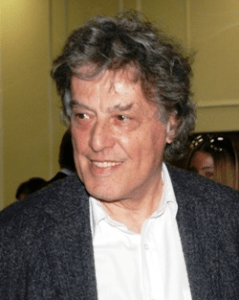
PEN America announced its major career achievement honors to be presented at the 2020 PEN America Literary Awards. Academy Award and four-time Tony Award winner Tom Stoppard will receive the PEN/Mike Nichols Writing for Performance Award for Leopoldstadt, a work of epic scale and deep personal resonance that Stoppard has said may be his final play. Leopoldstadt, set in the old Jewish quarter of Vienna, where Jews fled persecution at the turn of the 19th century, makes its world premiere on London’s West End this week, at a time when anti-Semitism is surging throughout Europe and the U.S.
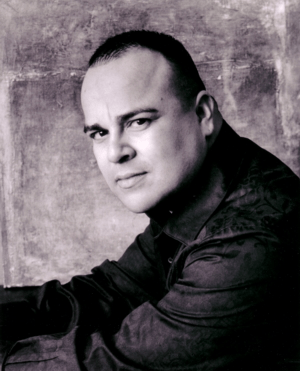
The PEN/Nabokov Award for Achievement in International Literature, honoring an author of fiction, nonfiction, poetry, and/or drama with $50,000, will be given to M. NourbeSe Philip for writing that has, for four decades, merged vital formal experimentation and considerations of race, gender, colonialism, and African Diasporic identity. Playwright Tanya Barfield, critically lauded for works including The Call, Bright Half Life, and Blue Door, will accept the PEN/Laura Pels International Foundation for Theater Award.Rigoberto González—poet, novelist, memoirist, critic, professor, and vocal champion of Latinx poets—will be honored with the PEN/Voelcker Award for Poetry. The awards will be among those presented March 2 at The Town Hall, the largest venue in the history of the PEN America Literary Awards, in a ceremony hosted by Late Night host, comedian, and “influential recommender of books” (The New York Times) Seth Meyers.
Clarisse Rosaz Shariyf, PEN America Director of Literary Programs, said, “Fostering and celebrating international literature is central to the mission of the PEN America Literary Awards; we seek to champion original and promising writers of the global community and promote their work to an American audience. This year, we are incredibly proud to honor such urgent and diverse voices, which we know have the power to awaken empathy and redefine public discourse.”
Tom Stoppard – Recipient of Honorary PEN/Mike Nichols Writing for Performance Award
PEN America introduced the PEN/Mike Nichols Writing for Performance Award in partnership with venerated late filmmaker and comedian Mike Nichols’ dear friend Lorne Michaels last year, when it was presented to Kenneth Lonergan. It confers a prize of $25,000 to a writer whose work represents the year’s best writing for performance, exemplifying excellence and influence in the world of theater, television, or film. At the March 2 ceremony, Lonergan, Cynthia Nixon, and Christine Baranski will pay tribute to Nichols and present the award to this year’s winner, Tom Stoppard.
At once elegant and variegated in their intellectual pursuits, Tom Stoppard’s twistingly cerebral plays are also suffused with humor and heart. Traversing time to extract new meaning from history and the literary canon, Stoppard dauntlessly maps the potentials and limits of human experience. In a review of Nichols’ 1984 production of The Real Thing, The New York Times deemed him “an intellect that has few equals in contemporary theater.” The Times (UK) has called him “Britain’s greatest living playwright.”
Stoppard’s newest play Leopoldstadt takes place in the eponymous old Jewish quarter of Vienna—where Jews from the Pale of Settlement migrated the late 1800s and early 1900s, seeking refuge from pogroms—and follows one Jewish family there across the first half of the 20th century. Though Stoppard often looks outward for influence, as evidenced in his works’ many references to and mind-warping reconsiderations of our literary past, he has described Leopoldstadt as a rare “personal” work. (Stoppard grew up fleeing the rise of Nazism, and his four grandparents were killed in concentration camps.)
M. NourbeSe Philip – PEN/Nabokov Award for Achievement in International Literature
Founded in 2016 in collaboration with the Vladimir Nabokov Literary Foundation, the PEN/Nabokov Award for Achievement in International Literature is conferred annually to a living author whose body of work, either written in or translated into English, represents the highest level of achievement in fiction, nonfiction, poetry, and/or drama, and is of enduring originality and consummate craftsmanship. Previous winners of the award include Sandra Cisneros, Edna O’Brien, and Adonis.
This year’s PEN/Nabokov Award judges—Alexis Okeowo, George Elliott Clarke, Hari Kunzru, Lila Azam Zanganeh, and Viet Thanh Nguyen—have chosen poet, novelist, and essayist M. NourbeSe Philip, who has bent and pushed poetry and prose in exhilarating directions, via vivid and fragmentary portraits of the pluralities of African Diasporic experience and searing indictments of the oppressive structures—legal, linguistic, social—carried across history into our present. The Tobago-born, Canada-based writer’s many singular, varied works include She Tries Her Tongue, Her Silence Softly Breaks, and Zong!
Tanya Barfield – PEN/Laura Pels International Foundation for Theater Award
The PEN/Laura Pels International Foundation for Theater Award reflects Laura Pels’s dedication to supporting excellence in American theater as well as PEN America’s commitment to recognizing and rewarding the literary accomplishment of playwrights. Recent winners have included Larissa Fasthorse, Sibyl Kempson, Tarell Alvin McCraney, Young Jean Lee, and Anne Washburn. Tanya Barfield’s “exquisite” (Time Out), “thoughtful and engrossing” (The New York Times) works—with by their resonance, poignancy, and meticulous social observation—epitomize the qualities the award was established to celebrate.
The judges of the 2020 award—Branden Jacobs-Jenkins, Kirsten Greenidge, and Naomi Iizuka—write, “With a unique emotional vividness and political nuance, Barfield’s body of work-to-date explores the complications of lives lived on the margins of belonging or between so-called ‘identities.’…Whether it’s the black tenured math professor in Blue Door (2006) coming to terms with the literal haunting of his ancestors or the couple attempting to adopt an African child battling the specters of their own white privilege in The Call (2013) or the intersectional lovers in Bright Half Life (2014) possessed by the spirits of their younger selves in a newfound era of marriage equality,Barfield’s worlds are full of ghosts and it is only through a confrontation with them that the living truly learn what it is to live.”
Leigh Silverman—who directed the premieres of Blue Door, The Call, and Bright Half Life—will present the award to Barfield at the ceremony on March 2. Actor Kerry Butler, star of The Call, and award-winning actor, writer, and singer-songwriter Eisa Davis (Pulitzer Prize finalist for Bulrusher) will perform excerpts from Barfield’s work.
Rigoberto González – PEN/Voelcker Award for Poetry
Rigoberto González courtesy of Carlos Parker under CC BY-SA 3.0
“I think, How clever time works, overlapping people’s lives at certain stages, and as some eyes are waking up, others are already closing, securing the continuity of the world. My mother and I were connected for twelve years. She also lived during a time I didn’t exist. And I, in turn, must now keep living when she does not. And yet my father, who still shares the same wheel of time, is more like my parallel line.” Rigoberto González, Butterfly Boy: Memories of a Chicano Miriposa
The PEN/Voelcker Award for Poetry, established by a bequest from Hunce Voelcker and given in even-numbered years, confers $5,000 to a poet whose body of work represents a notable and accomplished presence in American literature. The poet honored by the award is one who has expanded the scope of American poetry and continues to mature with each successive volume of poetry. Rigoberto González will be honored at the Ceremony on March 2, and will share a special reading of his poetry. Rigoberto González has authored five poetry collections, as well as two bilingual children’s books, and ten fiction and non-fiction books. A professor in the MFA program for Creative Writing at Rutgers University-Newark, he has served as a Faculty Member of CantoMundo; is a Founding Member of the Advisory Circle of Con Tinta, a collective of Chicanx/Latinx writers; and is a monthly columnist on Latinx literature for NBC Latino online as well as critic-at-large for The Los Angeles Times.
As this year’s panel of judges—Cornelius Eady, Deborah Paredez, Linda Gregerson, and Monica Youn—writes, González has “devoted his writing life not only to the development of his astonishing voice as a poet and non-fiction writer but to his astute and discerning craft as a reviewer and steadfast advocate for other Latinx voices.”
The judges continue, “Rigoberto González is one of our great mythmakers, cutting to the core of historical narratives and present-day calamities, exposing the faultlines of greed and violence, love and hunger, cruelty and corruption, family and tribe that pattern human experience. The son and grandson of migrant farm workers, and claiming a cultural heritage of lyricism and activism, he is attuned to the voices of the dead and the living, and he counsels us ‘To reach the dead // walk toward the structures still standing, / their windows still looking in.’”
About the PEN America Literary Awards
The PEN America Literary Awards have, since their founding in 1963, brought together award-winning writers, editors, translators, and critics in dynamic and diverse panels of judges that determine the given year’s most resonant literature. Over the decades, the PEN America Literary Awards have expanded across genres, celebrating a wide range of writing and recognizing writers at every stage of their careers.
In recent years, the PEN America Literary Awards ceremony has evolved from an auditorium event for winners and their families into a preeminent gathering of the city’s writing and publishing luminaries and passionate book lovers, who unite to celebrate diverse voices and catapult new writers to prominence. The ceremony encompasses live winner announcements, dramatic readings from selected award-winning works, and a moving In Memoriam segment, which recognizes the literary greats lost over the last year. Recent ceremony participants and attendees include Hari Kondabolu, Matthew Broderick, Candace Bergen, Lorne Michaels, Zadie Smith, Diane Sawyer, and Steve Martin.
While the career-achievement awards are announced in advance, the honors for individual works are announced from the stage. PEN America has previously announced Finalists for the 2020 PEN/Jean Stein Book Award, honoring a book-length work of any genre for its originality, merit, and impact, and conferring a prize of $75,000 to its author. In their selection of Finalists, the 2020 PEN/Jean Stein Book Award judging panel—Marilyn Chin, Garth Greenwell, Rebecca Makkai, Michael Schaub, and William T. Vollmann—have elevated works that have reshaped the boundaries of form and signaled strong potential for lasting literary influence. The 2020 Finalists include Anne Boyer for The Undying (Farrar, Straus and Giroux), Yiyun Li for Where Reasons End (Random House), Ilya Kaminsky for Deaf Republic: Poems (Graywolf Press), Rion Amilcar Scott for The World Doesn’t Require You (Liveright), and Chris Ware for Rusty Brown (Pantheon). The 2020 PEN/Jean Stein Book Award winner will be announced live at the March 2 ceremony.
PEN America has also released Longlists for other 2020 Literary Awards, which can be found here.
PEN America stands at the intersection of literature and human rights to protect open expression in the United States and worldwide. This organization champions the freedom to write, recognizing the power of the word to transform the world. Its mission is to unite writers and their allies to celebrate creative expression and defend the liberties that make it possible.
Your donation HERE helps to fund the ongoing mission of The Poet by Day in support of poets and writers, freedom of artistic expression, and human rights.
Poetry rocks the world!
FEEL THE BERN
For Peace, Sustainability, Social Justice
The Poet by Day officially endorses Bernie Sanders for President.
The New New Deal
Link HEREfor Bernie’s schedule of events around the country.
“Democracy is not a spectator sport.” Bernie Sanders
“Every pair of eyes facing you has probably experienced something you could not endure.” Lucille Clifton
Thank you for sharing your love of words. Comments will appear after moderation.
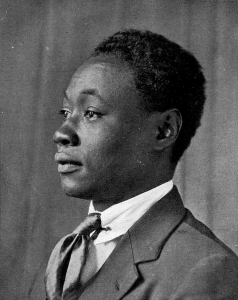
Photo of the poet, novelist and short story writer Claude McKay
“I know the dark delight of being strange, The penalty of difference in the crowd, The loneliness of wisdom among fools . . . ” Claude McKay
If We Must Die
If we must die, let it not be like hogs
Hunted and penned in an inglorious spot,
While round us bark the mad and hungry dogs,
Making their mock at our accursèd lot.
If we must die, O let us nobly die,
So that our precious blood may not be shed
In vain; then even the monsters we defy
Shall be constrained to honor us though dead!
O kinsmen! we must meet the common foe!
Though far outnumbered let us show us brave,
And for their thousand blows deal one death-blow!
What though before us lies the open grave?
Like men we’ll face the murderous, cowardly pack,
Pressed to the wall, dying, but fighting back!
– Claude McKay
Mckay says of this sonnet that it is ” … a poem that makes me a poet among colored Americans.” Nonetheless, it is a poem that inspires many of the world’s peoples in their struggles for justice. Though The Poet by Day does not endorse violence, the poem is shared today because of – among other things – its historic significance. It was published in the July 1919 issue of The Liberator. McKay wrote the poem as a response to mob attacks by white Americans upon African-American communities during Red Summer (1919). The poem was reprinted in The Messenger and the Workers’ Dreadnought (London) later that year. The poem was also read to Congress that year by Henry Cabot Lodge, the Republican Senator from Massachusetts. Wallace Thurman considered the poem as embodying the essence of the “New Negro*” movement as it was not aimed at arousing sympathy, but rather consisted of self-assertion. The poem was recited in the film August 28: A Day in the Life of a People and during Episode 3, Season 4 of The Man in the High Castle (TV series) (air date of November 15th, 2019) prior to a dangerous mission against an authoritarian regime.
* “The New Negro”, a term of the Harlem Renaissance implying an assertive advocacy of dignity and a refusal to submit quietly to the practices and laws of Jim Crowracial segregation.
Portrait of McKay in 1920 / Public Domain
CLAUDE McKAY (1889-1948) was a Jamaican writer and poet, a seminal figure in the Harlem Renaissance. He wrote five novels including: Home to Harlem (1928), a best-seller that won the Harmon Gold Award for Literature, Banjo (1929), Banana Bottom (1933), and in 1941 a manuscript called Amiable With Big Teeth: A Novel of the Love Affair Between the Communists and the Poor Black Sheep of Harlem which remained unpublished until 2017. McKay also authored collections of poetry, a collection of short stories, Gingertown (1932), two autobiographical books, A Long Way from Home (1937) and My Green Hills of Jamaica (published posthumously in 1979), and a non-fiction, socio-historical treatise entitled Harlem: Negro Metropolis (1940). His 1922 poetry collection, Harlem Shadows, was among the first books published during the Harlem Renaissance. His Selected Poems was published posthumously, in 1953.
McKay also wrote Romance in Marselle, recently unearthed after ninety years in archive and published this year by Penguin Classics. It ” traces the adventures of a rowdy troupe of dockworkers, prostitutes, and political organizers–collectively straight and queer, disabled and able-bodied, African, European, Caribbean, and American. Set largely in the culture-blending Vieux Port of Marseille at the height of the Jazz Age,” The publisher calls it, “The pioneering novel of physical disability, transatlantic travel, and black international politics. A vital document of black modernism and one of the earliest overtly queer fictions in the African American tradition.” McKay never came out but it is widely believed that he was bisexual.
McKay with Grigory Zinoviev and Nikolai Bukharin in 1923 / Public Domain
McKay was attracted to communism in his early life though he asserted that he never became a member of the Communist Party USA. Some scholars dispute this claim, due to his close ties to active members, his attendance at communist-led events, and his months-long stay in the Soviet Union in 1922–23, which he wrote about very favorably. Over time McKay became disillusioned with communism. By the mid-1930s had begun to write negatively about it. By the late 1930s his anti-Stalinism isolated him from other Harlem intellectuals. In 1942 he converted to Catholicism and left Harlem. He worked for a Catholic organization until his death.
This post was complied with material from my bookshelf, Wikipedia, Amazon, and YouTube. I believe that McKay’s poems are all in the public domain at this point. HIs U.S. Amazon Page is HERE.
Your donation HERE helps to fund the ongoing mission of The Poet by Day in support of poets and writers, freedom of artistic expression, and human rights.
Poetry rocks the world!
FEEL THE BERN
For Peace, Sustainability, Social Justice
The Poet by Day officially endorses Bernie Sanders for President.
The New New Deal
Link HEREfor Bernie’s schedule of events around the country.
“Democracy is not a spectator sport.” Bernie Sanders
“Every pair of eyes facing you has probably experienced something you could not endure.” Lucille Clifton
Thank you for sharing your love of words. Comments will appear after moderation.









 Jamie Dedes' THE POET BY DAY Webzine