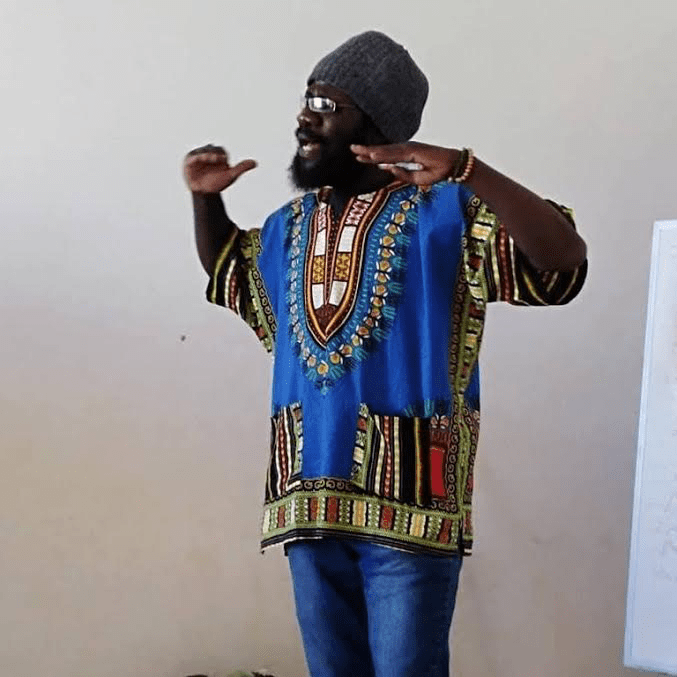
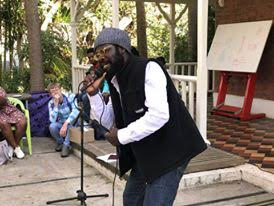
“His eagle eyes scan beyond the boundaries of his native Zimbabwe to right the crookedness of men with dubious ideals and reckless twists in lands abroad. Caressing his Lenovo mistress upon a night, he relives in recorded poesy, memories of victims of corruption and the false memoirs of looters of the land. A Letter to the President, is a collection of his experimental poetry. Here is the man on a mission and with a mission. Words are slings and rocks on his quiver. Tireless and resilient; no ugliness is too ugly to stay below his radar. His weapon of choice is his pen. Dipped in acid, as he says, no thug escapes the roast of his laser beam that put them on the spot light.” Available from African Books Collective HERE and through Amazon U.S. HERE and Amazon U.K. HERE.
Theodore Roosevelt
“Patriotism means to stand by the country. It does not mean to stand by the president or any other public official, save exactly to the degree in which he himself stands by the country. It is patriotic to support him insofar as he efficiently serves the country. It is unpatriotic not to oppose him to the exact extent that by inefficiency or otherwise he fails in his duty to stand by the country. In either event, it is unpatriotic not to tell the truth, whether about the president or anyone else.” Theodore Roosevelt (1858 – 1919), an American statesman, politician, conservationist, naturalist, writer, and the 26th president of the United States (1901 to 1909) [Note: There is wisdom in this quotation. It’s unfortunate though that Roosevelt was an ardent imperialist. / J.D.]
Mbizo Chirasha
CASAVA REPUBLICS*
Juba
Child of lost sperm in sunsets of political masturbation
Wagadugu
Deadline of our revolutions
Darfur
Constipated stomach, disease ravaged, bloodless dozing monk.
Nairobi
Culture lost in the dust of Saxon lexicon and gutter slang
Soweto
Xenophobia Drunk and Afro-phobia sloshed.
Marikana
Cervical blister of the unfinished revolution fungi.
Harare
Corruption polonium deforming elders into political hoodlums
Congo
Lodge of secessionists and human guillotines
DAWN OF SUNSET
Islamophobia and Christianophobia drank the york of our time
Socialism, liberalism and regionalism many other isms made rags
of us. Slaves to bitterness from imported political and religion attitudes.
The sleep laden minds of Zambezi lost in the in the thicket of ballot
arithmetic.
Minds swollen by songs whose tunes crevice granite boulders of unending
chumurenga.
RHETORICS
Mandela,the summer sun that rose through rubbles of our winter
Gadafi and Sadamu making shadufs and pyramids …….another spring
Obama and Osama pulling rich political carrot in Segorong
Robin Island slept golden nightmares and charcoal dreams,
Soweto virgins cracking their under feet in the long walk to freedom
Faces carrying the burden of freedom and anthems.
SANKARA ………………dream of our freedom
See Africa bleeding, burning, ———-
Freedom of states heaving under the rhythm of rubbles, slander and blunder
Revolutions dripping poetry and pop of poor masses,
Lunatics trading the countries with bread
Boozing the dew of freedom and the golden blood of mothers
SANKARA
………………dream of our freedom
See Africa bleeding, burning, ———-
Freedom of states heaving under the rhythm of rubbles, slander and blunder
Revolutions dripping poetry and pop of poor masses,
Lunatics trading the countries with bread
Boozing the dew of freedom and the golden blood of mothers
Sankara cocks crowing the dawns choked with evil generations, picking
corroded histories
Peasants planting burden, others strapping deformed dreams in theirs backs
Sankara!
*
KISINGANI AND OTHER VIRGINS
.
Azania, you sing silent mbaqanga in your sleep
….Xenophobia
Your children eating apartheid tripe and samp
I see the wild fire of Somaliland that everyone sees and
pretend to be blind. Let Samora’s spoken word caress
wounded palms of Mozambique.
I hear drumbeats of hope coming from Tumbuktu.
Kisingani your wearing silence reaches the throne of God.
Nyangani you cry silent dreams in your sleep, of children
harvesting paradoxes of history and metaphors of identity.
“In my works on African culture, I am not against races or tribes, but systems that betray Africa. People must stop being stooges and writers must write against second and third colonialistic winds.” Mbizo Chirasha in an interview with The Herald HERE.
Editor’s Note: I want to get a letter-writing campaign going for Mbizo to help him attain safe haven. More on that in Part 3 tomorrow, Monday. Yesterday (Saturday), we posted an interview HERE with Mbizo to give you a better idea of his background, philosophy and plight. Stay with us in solidarity for free-and-open civil discourse, social justice and responsible governance. May all sentient beings find peace.
MBIZO CHIRASHA is a recipient of PEN Deutschland Exiled Writer Grant (2017), Literary Arts Projects Curator, Writer in Residence, Blogs Publisher, Arts for Human Rights/Peace Activism Catalyst, Social Media Publicist and Internationally Anthologized Writer, 2017 African Partner of the International Human Rights Arts Festival Exiled in Africa Program in New York. 2017 Grantee of the EU- Horn of Africa Defend Human Rights Defenders Protection Fund. Resident Curator of 100 Thousand Poets for Peace-Zimbabwe, Originator of Zimbabwe We Want Poetry Movement. He has published a collection of poetry, Good Morning President, and co-created another one Whispering Woes of Gangesand Zembezi with Indian poet Sweta Vikram.
Jamie Dedes. I’m a freelance writer, poet, content editor, and blogger. I also manage The BeZineand its associated activities and The Poet by Dayjamiededes.com, an info hub for writers meant to encourage good but lesser-known poets, women and minority poets, outsider artists, and artists just finding their voices in maturity. The Poet by Day is dedicated to supporting freedom of artistic expression and human rights and encourages activist poetry. Email thepoetbyday@gmail.com for permissions, commissions, or assignments.
“Mother Africa survived the trauma of clanging chains of captivity during slave trade, shackles of colonialism, and winced from beatings of hard bolt nut clenched fists of apartheid. Children and grandchildren of Mother Africa watched helplessly her sorrowful dance to the acoustics of sufferance. Still, Africa remains resilient … smashing punches from kindred’s of neocolonialism: global village, digital revolution and consumerism. Mama Africa’s groin is ripped apart by her triplets: totalitarian regimes, economic malaise and moral decadence. Today Mother Africa of pyramids, Africa of Nefertiti , Africa of Lumumba, Africa of Mandela, Africa of Kambarage , Africa of Lithium , Africa of diamond and Africa of uranium wallow in murky waters of poverty, chronic civil wars, and deadly epidemics.” Mbizo Chirasha, Editor, Brave Voices Poetry Journal.
When I was a junior in high school (circa 1966), our civics/history teacher said that Africa was a continent of much promise because of its diverse populations, its biodiversity, mineral resources, endless beauty, and its arts and wisdom traditions. She was right, of course. As a consequence, we spent several months of that school year studying the promise of Africa and its peoples.
For years after, Africa haunted me: Mosi-oa-Tunya, birds hitching rides on giraffes, white rhinos, the rhythms of kebero drums and the swing-and-sway of folk dance, the injera, the wat, and the niter kibby. But our teacher’s great vision of Africa’s promise was largely unfulfilled. Blame it on the fall-out from old-and-new waves of colonialism, apartheid, and corporate land-grab and land-rape. What could have been a place of hope and high expectation is rife with turmoil, poverty, and suffering. It is a place where poets who speak out against violent despots and greedy kleptocrats put themselves at great risk in doing so. Today, I have the pleasure of featuring Mbizo Chirasha, one such poet. He is dedicated to gender equity, environmental justice, and human rights and he is on the run . / J.D.
INTERVIEW
JAMIE:What were the events in your life that lead you to socially engaged poetry?
MBIZO: My father was a storyteller, an African traditionalist, a
singer and a village griot. I grew up listening to the sound of the
wind of the drum. Ritual and ancestral ceremonies were the norm
and usually accompanied by spiritual song, dance, drum and chants. I
was introduced to words at a tender age and more over to
sounds of chirruping birds, syntactic over night hooting of owls,
the rhythmic dove cooos, the dance and the smile of white moon. I am a
grandchild of African proverb.
I am a child of war. I was born during the Zimbabwean struggle for independence.
My ears sedimented to the clap of gun shots and the thunder of death, the
thud of grenades, and heave of the Pungwe River’s songs. I read Achebe, Ngugi,
Marechera, Hamutyineyi, Neto, Senghor, Miriam Ba, Tsodzo, Chiundura Moyo, Makari,
Soyinka and more in my early teens. I became a school griot when I was seven.
JAMIE:Why is your life at risk?
MBIZO: I write the truth to any form of leadership: cultural, social and
political, My literary arts activism and my human rights and arts for
justice activities put me at risk.
I write feature articles that speak against dictatorship, injustice
and tyranny. Political leadership in Zimbabwe does not like the truth.
They want praise, which I think is a bad sign. We have violent goons
among leaders who thrive on silencing writers, artists, activists and
human rights defenders.
I am the Founder of the Zimbabwean We Want Poetry campaign, a global
literary activism campaign that exposed and is exposing political rot, poor
governance and corruption in Zimbabwe specifically and in greater Africa.
That campaign has led to the founding of the Brave Voices POETRY JOURNAL
and the Freedom Voices Poetry Writing competition. This in turn has lead to the
publication of more than 10,000 poems on various social media platforms.
My poetry in books and journals is critical to fighting systems that oppress masses,
systems that violate human rights, systems that loot the economy and subject
masses to abject poverty .
My latest poetry collection, A Letter to the President, the title itself does not sit well with politicians, zealots, and charlatans who survive on political and economic strife, but the collection is a must read.
It never mentions names but it speaks truth against injustice, corruption, violence and expediency and it got me in trouble: death threats, tailing, and haunting after the grand launch.
I don’t hesitate to write the truth. We have suffered under dictatorial leadership in Zimbabwe. We want the new leadership to reform and to refrain
from abductions, corruption, violence and looting. We need the purpose to live, to belong and to love our beautiful country. We want political violence
stopped. The abduction of artists and activists must stop.
JAMIE:What is the status of your situation now?
MBIZO: Exile has never been good but resilience is key. In exile you are both foreign to yourself and foreign to the land. Accommodation, security, resources, communication, and other foundations of personal welfare and trust become first priorities and they are not easy to come by because one is not in his usual haven. The stalking is constant and exhausting. You sleep with an open eye or walk with your eyes above your shoulders.
JAMIE:You put in an application to ICORN* in 2017. What was the response?
MBIZO: I am not happy because the reply was really bad, I don’t know whether
they want you to loose a leg, a hand, or to die for them to accept your application
to be safe.
* International Cities of Refugee Network; ICORN’s mission is “protecting and promoting writers and artists at risk.” I’ve read Mbizo’s paperwork. Responses to Mbizo’s 2017 application for assistance repeatedly indicate that his paperwork is in process but no action has been taken by ICORN on Mbizo’s behalf over the two years since he filed for safe haven.
JAMIE:What organizations have come forward to help you?
MBIZO: The main and major organization that have stood by me since 2017
are the following
a) PEN GERMANY 2017
b) EU-AFRICA DEFEND DEFENDERS FUND
c) ANDREAS WEILAND( WRITER/TRANSLATOR)
d) ELKE LANGE- SPAIN /GERMANY
e) INTERNATIONAL HUMAN RIGHTS ARTS FESTIVAL/THOMAS BLOCK
f) FREEMAN CHARI OF DIASPORA FUNDS
g) TRACY YVONNE BREAZILE
h) HADAA SENDOO FROM MONGOLIA
i) MICHALE DICKEL- WRITER IN ISRAEL
JAMIE:What is your plan now and how can we as part of the greater poetry community assist?
MBIZO: I continue with writing for justice, human rights, the truth, and with activism and literary activism. In this moment of madness, trials and hardships, poets must unite. Help me lobby resources, lobby institutions that offer assistance to writers-at-risk: PEN, UN Human Rights, Writers Centres, and Artists for Justice Centres for safety retreat.
We must all keep writing for truth, justice, and good governance.
Editor’s note: I want to get a letter-writing campaign going for Mbizo to help him attain safe haven. More on that in Part 3 on Monday. Tomorrow (Sunday), you’ll have the opportunity to read four of Mbizo’s poems. Stay with us in solidarity for free-and-open civil discourse, social justice and responsible governance. May all sentient beings find peace.
MBIZO CHIRASHA is a recipient of PEN Deutschland Exiled Writer Grant (2017), Literary Arts Projects Curator, Writer in Residence, Blogs Publisher, Arts for Human Rights/Peace Activism Catalyst, Social Media Publicist and Internationally Anthologized Writer, 2017 African Partner of the International Human Rights Arts Festival Exiled in Africa Program in New York. 2017 Grantee of the EU- Horn of Africa Defend Human Rights Defenders Protection Fund. Resident Curator of 100 Thousand Poets for Peace-Zimbabwe, Originator of Zimbabwe We Want Poetry Movement. He has published a collection of poetry, Good Morning President, and co-created another one Whispering Woes of Gangesand Zembezi with Indian poet Sweta Vikram.
Jamie Dedes. I’m a freelance writer, poet, content editor, and blogger. I also manage The BeZineand its associated activities and The Poet by Dayjamiededes.com, an info hub for writers meant to encourage good but lesser-known poets, women and minority poets, outsider artists, and artists just finding their voices in maturity. The Poet by Day is dedicated to supporting freedom of artistic expression and human rights and encourages activist poetry. Email thepoetbyday@gmail.com for permissions, commissions, or assignment
We’ve made the decision to stop all political advertising on Twitter globally. We believe political message reach should be earned, not bought. Why? A few reasons… A political message earns reach when people decide to follow an account or retweet. Paying for reach removes that decision, forcing highly optimized and targeted political messages on people. We believe this decision should not be compromised by money. While internet advertising is incredibly powerful and very effective for commercial advertisers, that power brings significant risks to politics, where it can be used to influence votes to affect the lives of millions. nternet political ads present entirely new challenges to civic discourse: machine learning-based optimization of messaging and micro-targeting, unchecked misleading information, and deep fakes. All at increasing velocity, sophistication, and overwhelming scale. These challenges will affect ALL internet communication, not just political ads. Best to focus our efforts on the root problems, without the additional burden and complexity taking money brings. Trying to fix both means fixing neither well, and harms our credibility” … Dorsey Status Update Tweets October 30, 2019 MORE
Twitter’s CEO Jack Dorsey announced yesterday that the platform will no longer accept paid political advertising. PEN America CEO Suzanne Nossel issued the following statement:
“We respect Twitter’s decision to take a pause from running political advertising, recognizing that such ads on social media can have powerful distorting effects on public discourse. We cannot risk a repeat of the 2016 election where the scourge of misinformation raised serious questions about whether the Democratic process could be trusted. As a private platform, it is reasonable for Twitter to take the time to figure out whether and how the manifest ill consequences of micro-targeted ads can be mitigated. While political ads represent an important part of our democratic discourse, online advertising methods pose unique concerns that lawmakers, companies, and civil society are only beginning to understand, much less address. We welcome Twitter’s willingness to put responsibility above revenue in seeking to prevent its platform from misleading voters and polluting the democratic process.
“Still, we recognize that there are many unanswered questions and that this policy may have some unintended consequences, including, for example, advancing incumbents who rely less on ads. While we reserve judgement on how it may play out, we commend the effort to protect democratic deliberations and emphasize the role of ideas, language, and creativity – rather than money – as tools in the battle of ideas.”
Zuckerberg in 2005 courtesy of Elaine Chan and Priscilla Chan – Derived from: File:MarkZuckerberg.jpg under CC BY 2.5
“Right now, the content debate is about political ads. Should we block political ads with false statements? Should we block all political ads? Google, YouTube and most internet platforms run these same ads, most cable networks run these same ads, and of course national broadcasters are required by law to run them by FCC regulations. I think there are good reasons for this. In a democracy, I don’t think it’s right for private companies to censor politicians or the news. And although I’ve considered whether we should not carry these ads in the past, and I’ll continue to do so, on balance so far I’ve thought we should continue. Ads can be an important part of voice — especially for candidates and advocacy groups the media might not otherwise cover so they can get their message into debates. And it’s hard to define where to draw the line. Would we really block ads for important political issues like climate change or women’s empowerment? Instead, I believe the better approach is to work to increase transparency. Ads on Facebook are already more transparent than anywhere else. We have a political ads archive so anyone can scrutinize every ad that’s run — you can see every message, who saw it, how much was spent — something that no TV or print media does.” Mark Zuckerberg in his Community Update and quarterly results MORE
This post is complied with details from PEN America, Twitter, Facebook, and Wikipedia
*****
PEN America stands at the intersection of literature and human rights to protect open expression in the United States and worldwide. It champions the freedom to write, recognizing the power of the word to transform the world. Its mission is to unite writers and their allies to celebrate creative expression and defend the liberties that make it possible.
Jamie Dedes. I’m a freelance writer, poet, content editor, and blogger. I also manage The BeZineand its associated activities and The Poet by Dayjamiededes.com, an info hub for writers meant to encourage good but lesser-known poets, women and minority poets, outsider artists, and artists just finding their voices in maturity. The Poet by Day is dedicated to supporting freedom of artistic expression and human rights and encourages activist poetry. Email thepoetbyday@gmail.com for permissions, commissions, or assignments.
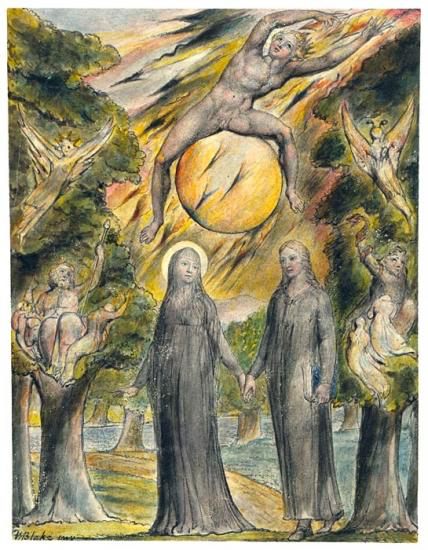
Blake’s Stage Directions : [“Milton led by Melancholy into the Groves away from the Suns flaring Beams who is seen in the Heavens throwing his darts & flames of fire The Spirits of the Trees on each side are seen under the domination of Insects raised by the Suns heat.”]
It is my honor and pleasure to bring you the sixth in what will be a series of ten Blake poems by the extraordinary American poet, Linda Chown. /. J.D.
How this splurge of Blake’s fairytale painting haunts my soul
in its wispy lingering transcendental colors and mystery.
Spontaneous Blake always makes me want to study,
to know his axes whole and catch more turns
layered and hidden inside such trenchant color treasure.
It is like I need a whole new key to see
who’s who and what in this vast Cartesian shakedown.
Body and soul, heat and shade, green and orange
vibrate in my watch. Melancholy walks with book-bound
Milton in all his academic hesitation he goes
under Apollo cavorting his leg-spread body around.
See him again. Look how he mates the sun.
As always, Blake layers his 360 degrees
to let more come through. That strange crooked melon sun
draws these serious people and insects into opaque light.
Blake knew Milton would hide in his robes, wouldn’t he?
This world is all too fecund for him to see.
And this timidity cranks this sun energy crooked
The all mental mind that encloses itself
And hides in a forest crocks the sun’s heart-heat
Blake joyfully proffered once:
“He who kisses joy as it flies by
will live in eternity’s sunrise.”
No sunrise here, or joyful kissing.
Melancholy and a lot of missing.
This haunting half-hearted vision of intensity,
this twisted sun face stuck squeezed and squinting.
LINDA E. CHOWN grew up in Berkeley, Ca. in the days of action. Civil Rights arrests at Sheraton Palace and Auto Row. BA UC Berkeley Intellectual History; MA Creative Writing SFSU; PHd Comparative Literature University of Washington. Four books of poetry. Many poems published on line at Numero Cinq, Empty Mirror, The BeZine, Dura, Poet Head and others. Many articles on Oliver Sachs, Doris Lessing, Virginia Woolf, and many others. Twenty years in Spain with friends who lived through the worst of Franco. I was in Spain (Granada, Conil and Cádiz) during Franco’s rule, there the day of his death when people took to the streets in celebration. Interviewed nine major Spanish Women Novelists, including Ana María Matute and Carmen Laforet and Carmen Martín Gaite.
Jamie Dedes. I’m a freelance writer, poet, content editor, and blogger. I also manage The BeZineand its associated activities and The Poet by Dayjamiededes.com, an info hub for writers meant to encourage good but lesser-known poets, women and minority poets, outsider artists, and artists just finding their voices in maturity. The Poet by Day is dedicated to supporting freedom of artistic expression and human rights and encourages activist poetry. Email thepoetbyday@gmail.com for permissions, commissions, or assignments.



 “In my works on African culture, I am not against races or tribes, but systems that betray Africa. People must stop being stooges and writers must write against second and third colonialistic winds.” Mbizo Chirasha in an interview with The Herald HERE.
 MBIZO CHIRASHA is a recipient of PEN Deutschland Exiled Writer Grant (2017), Literary Arts Projects Curator, Writer in Residence, Blogs Publisher, Arts for Human Rights/Peace Activism Catalyst, Social Media Publicist and Internationally Anthologized Writer, 2017 African Partner of the International Human Rights Arts Festival Exiled in Africa Program in New York. 2017 Grantee of the EU- Horn of Africa Defend Human Rights Defenders Protection Fund. Resident Curator of 100 Thousand Poets for Peace-Zimbabwe, Originator of Zimbabwe We Want Poetry Movement. He has published a collection of poetry, Good Morning President, and co-created another one Whispering Woes of Gangesand Zembezi with Indian poet Sweta Vikram.
 Jamie Dedes. I’m a freelance writer, poet, content editor, and blogger. I also manage The BeZine and its associated activities and The Poet by Day jamiededes.com, an info hub for writers meant to encourage good but lesser-known poets, women and minority poets, outsider artists, and artists just finding their voices in maturity. The Poet by Day is dedicated to supporting freedom of artistic expression and human rights and encourages activist poetry. Email thepoetbyday@gmail.com for permissions, commissions, or assignments.