LATE-BREAKING NEWS: The Second Annual Interfaith Multi-Lingual Poetry Slam for Eco Sustainability

c The Interfaith Center for Sustainable Development‎Interfaith Eco Poetry Slam صدى المناظرة الشعرية بين الاديان האקו-פואטרי סלאם הבין דתי
c The Interfaith Center for Sustainable Development‎/Interfaith Eco Poetry Slam صدى المناظرة الشعرية بين الاديان האקו-פואטרי סלאם הבין דתי

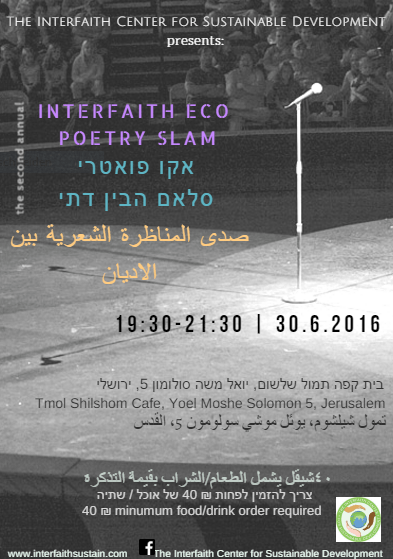
The Second Annual Interfaith Eco-Poetry Slam in Jerusalem invites you to an exciting evening of artistic expression and spoken-word poetry! Come witness a diverse lineup of poets from different faiths and cultures as they share their relationship to the Earth and their Religion through spoken-word poetry. This event calls upon you to step out of your comfort zone, meet the “other”, and be inspired by a unique atmosphere of openness and curiosity. This is a refreshing opportunity to share and listen instead of question and try to problem-solve.

All are welcome who come with an open mind and an open heart!

This event seeks to challenge us all to reach beyond our own faith-communities by focusing on the common challenges and goals of global environmental sustainability.

CONTACT INFORMATION

If you are interested in reading, performing, or even just joining in the audience please respond by email or phone to: mbekierz@interfaithsustain.com; call at: 058.769.0291; or fill out this form: http://goo.gl/forms/eRkA38sENtTdJX8B2

WHEN, WHERE and HOW MUCH
13510821_1131047490286123_1137024622540707169_n

Date: Thursday June 30th
Time: 7:30pm-9:30pm
Location: Tmol Shilshom, Yoel Moshe Solomon 5, Jerusalem
Target Audience: All People, All Faiths, All Cultures, Religious or Not
Price: minimum amount to order is 40 shekel

This event will be held primarily in English, with poems also read in Hebrew, Arabic, and other languages.

Learn more on Facebook and at The Interfaith Center of Sustainable Development.

ARABIC

في هذا المساء ستكون اللغة الإنجليزية هي المتحدث بها ما عدا الأغاني التي سيقرأونها بلغات أخرى
نحن وبكل سرور ندعوكم لهذا المساء الممتع بإيمانيات لفظية وشاعرية محكيّة، تعالوا للإستمتاع تنوع مختلف وواسع من الشعراء من مختلف الديانات والثقافات، حيث انهم يتبادلون المشاعر مع العالم وإيمانهم من خلال شعراء-سلام
هذا الحفل يدعوك للخروج من مكانك المريح للقاء ‘الآخر’، لإستقطاب الإلهام من بيئة فريدة من نوعها من انفتاح وفضول
انها فرصة منعشة ولمرة واحدة للمشاركة واستماع ولإحتواء بدال وضع الشك والمحاولة للوصول الى اجوبة
الى كل القادمين منفتحي العقل ندعوكم بكل سرور هذا المساء الخاص الذي يتطلب منا التحدي للمحاولة وللخروج للحظة من حدود إيماننا الخاصة/المجتمعّية مع التركيز على التحديات والأهداف المشتركة لنا جميعاً بالإستدامة العالمية.
ان كنت راغباً بالقراءة او بالظهور او حتى ان تكون جزئاً من الجمهور – نرجوا ان توافق على المشاركة بالميل mbekierz@interfaithsustain او بالتلفون 0587690291
او بموقع الإنترنت The Interfaith Center Of Sustainable لمتابعة القراءة تفضل بزيارة صفحة الفيسبوك خاصتنا
مركز حوار الأديان للتطوير والتنمية
بيئة الشعر بين الأديان السنوي الثاني
التاريخ: يوم الخميس 30.07.2016
المكان: “اتمول شلشوم” شارع يوئيل موشيه سولومون 5 – القدس
الجمهور: كل انسان من اي دين او ثقافة
التكلفة: 40 شاقل ليس اقل من ذلك

HEBREW

האירוע יתנהל ברובו באנגלית, למעט שירים שיוקראו בעברית ובשפות שונות.
אנו מזמינים אתכם בשמחה רבה לערב מרתק של אמנות ורבאלית ופואטיקה מדוברת!
בואו לחוות מגוון רחב של משוררים משלל הדתות והתרבויות, כאשר הם חולקים את מערכת יחסיהם עם העולם ואת אמונתם באמצעות הפואטרי-סלאם.
האירוע הזה קורא לך לצאת מאיזור הנוחות שלך, לפגוש את ‘האחר’, ולקבל השראה מאווירה ייחודית של פתיחות וסקרנות.
זו הזדמנות מרעננת וחד פעמית לחלוק ,להקשיב ולהכיל ,במקום להטיל ספקות ולנסות להגיע לתשובות.

כל הבאים עם ראש פתוח ולב פתוח מוזמנים בשמחה! הערב המיוחד מבקש לאתגר את כולנו לנסות לצאת לרגע מגבולות אמונותינו הפרטיות\קהילתיות ע”י התמקדות באתגרים והמטרות השותפים לכולנו בקיימות הגלובלית.

אם אתה מעוניין להקריא, להופיע או אפילו רק להיות חלק מהקהל – נא אשר השתתפות באיימיל או בטלפון: mbekierz@interfaithsustain.com או 058-769-0291.

לקריאה נוספת אנא בקר בדף הפייסבוק שלנו The Interfaith Center of Sustainable Development או באתר האינטרנט http://www.interfaithsustain.com

המרכז הבין דתי לפיתוח בר קיימא מציג:
האקו-פואטרי סלאם הבין דתי השנתי השני
תאריך: יום חמישי ה30 ליוני
שעה: 19:30-21:30
מקום: “תמול שלשום”, יואל משה סולומון 5, ירושלים
קהל יעד: כל בני האדם מכל דת או תרבות
מחיר: 40 ₪- כולל אוכל ושתיה עד מחיר זה


What have we done that people can pick up weapons and kill?

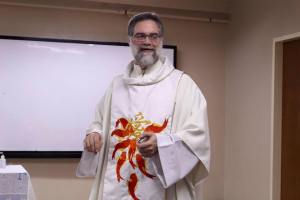
Dan and I as kids and probably the last time he was shorter than I. He stands 6'5' and I stand 5'2".
Dan and me as kids and probably the last time he was shorter than I am. He stands 6’5″ and I am 5’2″.

With all its faults – and there are many – Facebook can be a blessing. I haven’t seen my cousin Dan in almost forty years. I lost track of him, but was much delighted to find him again on Facebook last March. 

Dan and I were raised in the United States, but our family was from Lebanon. Our mothers were sisters. Our religious roots are Melchite (our grandfather’s side) and Maronite (our grandmother’s side).

My mother, Zabaida, used to tell me that in Lebanon first cousins were like brothers and sisters. Among other things this was one way she tried to understand what people meant when they talked or wrote about Jesus having brothers. I understood it as my relationship to my cousins, especially cousins Daniel and Christopher, who were brothers (Christopher died prematurely) and my most beloved relatives.  Though we haven’t seen one another in forever and we’ve walked different paths in life,  I suspect our basic values remain the same: peace, love (respect) for others and for life, and appreciation of life’s gifts. Dan has worked in many places around the world, including Algeria and Dubai. Currently he teaches Theology in the Philippines. This essay is Dan’s.

*****

What Have We Done That People Can Pick Up Weapons and Kill?

by

Fr. Daniel S. Sormani, C.S. Sp.

DANIEL S. SORMANI C.S. Sp.

It was one of those things you think but don’t want to say. In the horror of the carnage in Paris and the world’s reaction, it struck me how very little had been said about the terrorist attack in Beirut the day before…or the attack on a funeral in Baghdad…or so much of the other violence that shakes the world. And I felt like I couldn’t say it for fear of looking like I was somehow diminishing the horror or pain of Paris, afraid it could been seen as a lack of respect and understanding. But I wondered. And now so many people are indeed raising such questions, and others are also reacting to such questions, calling them an appalling lack of sympathy…and things have at times spiraled down to a repulsive debate of numbers and geography, rather than of lives and humanity.

When I was young, it was the last hurrah of Lebanon’s golden era when people still referred to it as the “Switzerland of the East” and the wealthy went there to bask on the beach in the morning and ski on its snow-capped mountains in the afternoon. It was the land of poets and artists, and welcomed refugees and visitors equally.

I remember all the Lebanese women with my mother at fundraisers for the Palestinian refugees. We were all kinds of Christians, Muslims, Druze and even a lone family of Lebanese-Jews who ran a shop in our neighborhood. We were just “us”, the Lebanese diaspora, the children of the Phoenicians. And if you were Syrian or Egyptian, that didn’t matter, then we simply enlarged our self-definition to being Middle Easterners. And if you were anything else, then we were “the melting pot” and loved to learn from you.

But so much interference in the internal workings of the country, so much pushing and shoving, dangling of carrots by different powers and religious groups, and finally civil war exploded in Lebanon. What we had known suddenly disappeared. There were a myriad of political parties I couldn’t keep up with, weekly fundraisers for dozens of necessary causes, a flood of refugees, some legal, some not. It should have brought us together, made us one in the struggle for peace and justice. But it didn’t.

I remember vividly the look of joy on the face of complete strangers if they heard my family speak a bit of Arabic. There would be warm introductions and everyone wanted to know everyone. Suddenly it was different. I would say something in Arabic, and the other person would immediately ask “Muslim?” I remember once in my old neighborhood I went into an Arabic music store and was taken by the album playing. Great music, but the dialect threw me a bit. I cheerfully greeted the young man behind the counter with a wish for a morning filled with goodness. He gave me an annoyed look and pointed to the veiled young woman. When he walked away the woman leaned over and whispered in Arabic, “Don’t mind my brother. It’s clear from the way you greeted him that you’re not Muslim.”

I remember in Algeria when I used the traditional Muslim greeting of peace in the market place and the stall-keeper rudely told me I had no right to say such a thing because he knew I wasn’t Muslim. To my delight, an elderly gentleman in traditional dress got angry and shouted at him, “And what should he do, wish you war and trouble instead?” He went on to greet me with great poetry and many warm blessings. Touched, I kissed him the way one kisses his favorite uncle and a few of the women, all wrapped in the white haiks of western Algeria, applauded and blessed God. This, I thought, is what family is, this is how we will conquer the darkness.

We have become our own worst enemy. Whenever we separate the world into “them” and “us”, whenever we accept blind generalizations and cease to see a unique individual before us, whenever we forget we are all victims of carefully orchestrated deceit and deception for wealth and power, the force of darkness wins. Bullets will never win this struggle, only the heart and mind will.I know political scientists and analysts can tear my thoughts to shreds. I do not claim an intellectual understanding…I am only sharing a broken heart that grieves.

A young Melchite priest once told me a story from his village in Lebanon during the war. There was intense shelling and sniper fire for almost three days. After it stopped, people went out to gather up the dead. An old man went to the church and asked the priest to offer two masses. The priest took his pen and book and asked the man to continue. The first mass, he said, was for his son whom they found shot to death in the orchard by their house. And the second mass was for the person who shot him. Startled, the young priest looked at the old man with amazement. The old man explained the obvious saying “What have we done that people can pick up weapons and kill strangers? What have we done that some poor fellow can kill my son without feeling it? We must pray for him, and ask God’s forgiveness.” When I remember that story, after all these years, I still cry.

© 2015, essay and family photographs, Daniel S. Sormani C.S. Sp., All rights reserved

This slideshow requires JavaScript.