Celebrating American She-Poets (15): Sylvia Plath, Listen to the Poet Reading “Ariel”
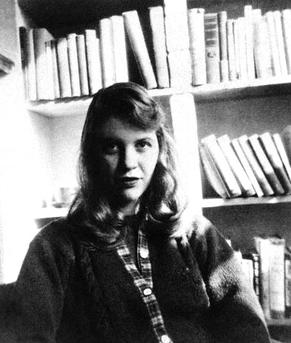
Sylvia_plath

I can never read all the books I want; I can never be all the people I want and live all the lives I want. I can never train myself in all the skills I want. And why do I want? I want to live and feel all the shades, tones and variations of mental and physical experience possible in my life. And I am horribly limited. Sylvia Plath, “The Unabridged Journals of Sylvia Plath

What a find! What a treat to hear some of “Ariel” read by its author.  So this being the soundbite world of the blogosphere, I simply give you a short bio for those who need one and leave you to the poet herself. Enjoy!

“Sylvia Plath (October 27, 1932 – February 11, 1963) was an American poet, novelist, and short-story writer. Born in Boston, Massachusetts, she studied at Smith College and Newnham College at the University of Cambridge, before receiving acclaim as a poet and writer. She was married to fellow poet Ted Hughes from 1956 until they separated in September of 1962. They lived together in the United States and then the United Kingdom, and had two children, Frieda and Nicholas. Plath was clinically depressed for most of her adult life. She died by suicide in 1963.

“Plath is credited with advancing the genre of confessional poetry and is best known for her two published collections, The Colossus and Other Poems, and Ariel. She also wrote The Bell Jar, a semi-autobiographical novel published shortly before her death. In 1982, she won a posthumous Pulitzer Prize for The Collected Poems.’ Wikipedia

https://youtu.be/AQZ3GWCAGQ0

https://youtu.be/l11raBHGbl4

https://youtu.be/U4XledceksA

“If neurotic is wanting two mutually exclusive things at one and the same time, then I’m neurotic as hell. I’ll be flying back and forth between one mutually exclusive thing and another for the rest of my days.” Sylvia Plath, “The Bell Jar”

CELEBRATING AMERICAN SHE-POETS (14): Mary Oliver, “I got saved by poetry. I got saved by the beauty of the world.”

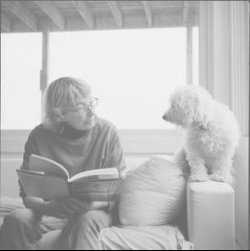
Mary Oliver (b. 1935)
Poet & Essayist Mary Oliver (b. 1935)

I love the line of Flaubert about observing things very intensely. I think our duty as writers begins not with our own feelings, but with the powers of observing.

AWARDS: Mary Oliver’s fourth book, American Primitive, won the Pulitzer Prize for Poetry in 1984. She  received the Shelley Memorial Award; a Guggenheim Fellowship; an American Academy and Institute of Arts and Letters Achievement Award; the Christopher Award and the L.L. Winship/PEN New England Award for House of Light; the National Book Award for New and Selected Poems; a Lannan Foundation Literary Award; and the New England Booksellers Association Award for Literary Excellence.

When it’s over, I want to say: all my life I was a bride married to amazement. I was the bridegroom, taking the world into my arms.

How often we turn to certain poets for certain healing, to those greater “technicians of the sacred” (to borrow from Jerome Rothenberg): Jane Hirchfield for her gentle Buddhist sensibility, John O’Donohue for his lilting Celtic reflections, W.S. Merwin and his deep ecology. Not the least among the greater technicians is Mary Oliver. Our hunger for spiritual healing is underscored by her popularity. The New York Times declared her the best-selling poet. Poet, activist and critic Alicia Ostriker writes of Oliver that she is as “visionary as Emerson.” Where there is criticism, it tends to be among feminists and others who feel she idealizes the feminine connection with nature.

51-N2B0NtNL._SX327_BO1,204,203,200_Mary Oliver’s work is deeply rooted in nature and a sense of place, the Ohio of her childhood and the New England of her adult life. More recently Florida, where she moved to be with friends after her partner of forty years died.

Influenced by Thoreau and Whitman, she’s a keen observer. She has said that she found healing in nature and the greater beauty of the world. Nature was her refuge through a difficult childhood and from an abusive father. She writes about her experience of her father in Rage from Dream Work (the Atlantic Monthly Press, 1989).

Rage

You are the dark song
of the morning…
But you were also the red song
in the night..
When the child’s mother smiles
you see on her cheekbones
a truth you will never confess
and you see how the child grows
timidly, crouching in corners…
In your dreams she’s a tree that will never come to leaf..
in your dreams you have sullied and murdered
and dreams do not lie.

However dark Rage might be, Oliver’s poems are more often filled with light and encouragement. Journey is one such:

You strode deeper and deeper
into the world,
determined to do
the only thing you could do,
determined to save
the only life you could save.

excerpt from The Journey, in Dream Work

and Wild Geese 

You do not have to be good.
You do not have to walk on your knees
for a hundred miles through the desert, repenting.
You only have to let the soft animal of your body
love what it loves. […]
The world offers itself to your imagination,
calls to you like the wild geese, harsh and exciting-
over and over announcing your place
in the family of things.

excerpt from Wild Geese in Dream Work 

When we want to breathe the clear air of nature and the best of the human spirit, we turn to Mary Oliver and the singular meditative grace of her poetry.

– Jamie Dedes

© poems Mary Oliver; photo credit, Rachel Giese Brown, 2009 – that and lists of awards are from Mary Oliver’s Amazon Page; book cover design, publisher. 

CELEBRATING AMERICAN SHE-POETS (8): Lucille Clifton, homage to my hips

Lucille Clifton (1936-2010)

” . . . writing is a way of continuing to hope … perhaps for me it is a way of remembering I am not alone.” Lucille Clifton in an interview with Michael S. Glaser

I am one of those – like the people of Buffalo – who think of Lucille Clifton as a New Yorker. She was born in Depew and grew-up and was educated in Buffalo. I suppose some Californian’s claim her as theirs because she lived in Santa Cruz for a while. Most of the world, however, sees her as belonging to Maryland. I don’t know that she lived there longest but she was that state’s Poet Laureate from 1979 – 1985.

Lucille and Fred James Clifton (professor and sculptor)  were friends with writer, playwright and publisher Ishmael Reed. It was he who introduced them to one another when he organized the Buffalo Community Drama Workshop. They acted together in a version of The Glass Managerie.  Reed took some of Lucille’s poems to Langston Hughes who included them in The Poetry of the Negro, 1746-1970.

Lucille Clifton won many grants and awards including the Ruth Lilly Poetry Prize, the Shelley Memorial Award, and Lannan Literary Award for Poetry. Two of her books were finalists for the Pulitzer Prize. In addition to poetry collections, she wrote a memoir and twenty-some children’s books. The latter include the popular well-regarded Everett Anderson series.

“Lucille Clifton is an African-American whose consciousness of her race and gender informs all of her poetry, though she never gets preachy. Instead, she has chosen a minimalist mode that clears out human society’s clutter, the mess we’ve made by identifying ourselves in contending genders, ethnicities, nations. Lightly, as if biting her tongue, with a wise smile, she shows us a radically egalitarian world where no one or no capitalized word lords it over others. …” Peggy Rosenthal, The Christian Century

Denise Levertov wrote of Lucille Clifton’s work as “authentic and profound.” I find it marked by pragmatism, strength, endurance and humor. You will see the later demonstrated in this poem and her intro to it, her ode: homage to my hips.

these hips are big hips.
they need space to
move around in.
they don’t fit into little
petty places. these hips
are free hips.
they don’t like to be held back.
these hips have never been enslaved,
they go where they want to go
they do what they want to do.
these hips are mighty hips.
these hips are magic hips.
i have known them
to put a spell on a man and
spin him like a top

– Lucille Clifton

© Lucille Clifton, “homage to my hips” from her collection Good Woman: Poems and a Memoir 1969-1980 (BOA Editions Ltd., 1987) – definitely recommended

© introduction, Jamie Dedes; Lucille Clifton’s portrait is from her Amazon Page.

Celebrating American She-Poets (3): Elizabeth Bishop, “One Art”

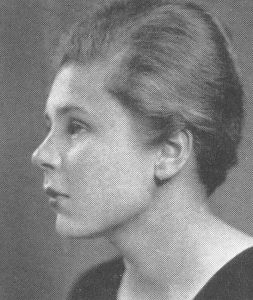
Elizabeth Bishop, 1934 Vassar Yearbook, Public Domain Photograph

Elizabeth Bishop (1911-1979), a poet and short-story writer, was U.S. Poet Laureate from 1949-1950.  She won a Pulitzer Prize for poetry in 1958, the National Book Award in 1970 and she received the Neustadt International Prize for Literature in 1976. One of her most loved – world renown – poems was One Art.

When people are good at their work, they seem to do their jobs effortlessly. We never see the hours of practice behind the dancer’s bravura performance or the pianist’s breathtaking delivery nor the years of experience behind the actor’s overnight success, the accountant’s instant analysis or the cook’s fabulously original meal pulled together with left-overs and kitchen odds-and-ends. And so it is with the practiced precision of poetry …

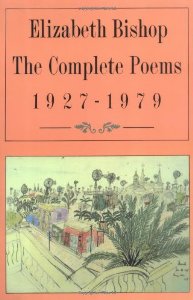
EB Collected PoemsElizabeth Bishop’s One Art  seems effortless but over the course of years she rewrote it seventeen times.

 In the short video that follows Professor M. Mark at Vassar College (Bishop’s alma mater) discusses Elizabeth Bishop, her work, and her only villanelle,* One Art, which is included in The Complete Poems 1926-1978 (recommended reading). .

One Art

The art of losing isn’t hard to master;
so many things seem filled with the intent
to be lost that their loss is no disaster.

Lose something every day. Accept the fluster
of lost door keys, the hour badly spent.
The art of losing isn’t hard to master.

Then practice losing farther, losing faster:
places, and names, and where it was you meant
to travel. None of these will bring disaster.

I lost my mother’s watch. And look! my last, or
next-to-last, of three loved houses went.
The art of losing isn’t hard to master.

I lost two cities, lovely ones. And, vaster,
some realms I owned, two rivers, a continent.
I miss them, but it wasn’t a disaster.

—Even losing you (the joking voice, a gesture
I love) I shan’t have lied. It’s evident
the art of losing’s not too hard to master
though it may look like (Write it!) like disaster.

– Elizabeth Bishop

Video uploaded by Vassar College.

* Vinanelle ~ a nineteen-line poem with two rhymes throughout, consisting of five tercets and a quatrain, with the first and third lines of the opening tercet recurring alternately at the end of the other tercets and with both repeated at the close of the concluding quatrain. New Oxford American Dictionary

© 2016, words, Jamie Dedes, All rights reserved