THE FIRST OF SPRING, a poem by Myra Schneider from “Persephone in Finsbury Park”

English Poet Myra Schneider at her 80th Birthday celebration and the launch of her 12th collection

for Anne Cluysenaar

A honey sun, the cease of gnawing wind
so we seize the day, unleash ourselves
in the country park, gaze at flowers inscribed To Dad

lying on a bench. They summon a huge bee
to their pink and yellow freesia bells. Dreamily,
I too enter the nectar-laden chambers and feed.

Turning away, we follow the droghte of March track
to the water garden where snowdrops are fading,
daffodils are on the brink of opening

and expectation’s in bloom on naked trees.
Welters of lily stalks in the darks of a pond
are tangles of umbilical cords. Beyond the garden,

beyond the singing of birds is a lake which glitters
as if it’s a source of light. We sit down
on a wicker seat and there you are breathing

in the budding warmth, freed from the last
of October now and that distressed message
you sent before your life was snatched.

You’re stooping over a small plant, stroking
its leaves, tracking the hover-rise of a damsel-fly,
smiling as you follow all the riverlets.

– Myra Schneider

The First of Spring is taken from Myra’s twelfth poetry collection, Persephone in Finsbury Park, which was published last month by Second Light Publications.  It is available  from poet Anne Stewart’s p f poetry site. The site is set up with PayPal, so it works well if you are making a purchase from outside of England. I haven’t read the collection yet, but Myra never disappoints.

unnamed-1

Myra’s poem and photograph© Myra Schneider, All rights reserved; published here with the permission of the author; book cover art, Second Light Publications

Do Not Stand by My Grave and Weep

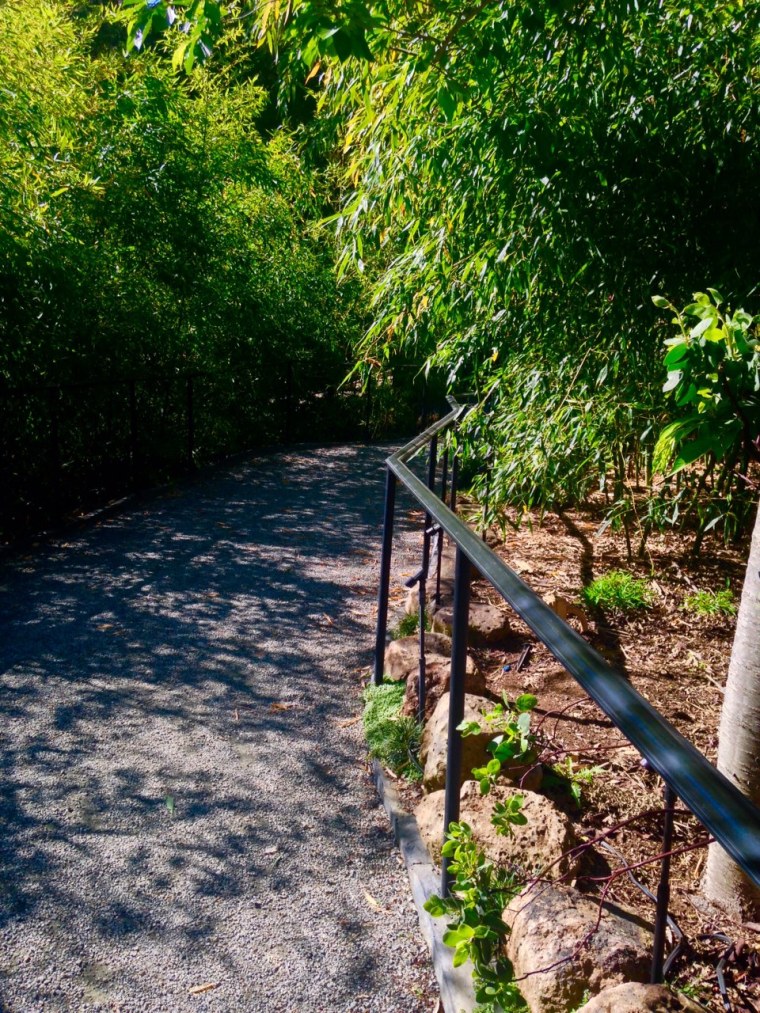
Hanoke Japanese Gardens, Saratoga, California

Do not stand by my grave and weep.
I am not there, I do not sleep.
I am a thousand winds that blow.
I am the diamond’s glint on snow.
I am the sunlight on ripening grain.
I am the gentle autumn’s rain.
When you awaken in the morning’s hush,
I am the swift uplifting rush
Of quiet birds in circled flight.
I am the soft stars that shine at night.
Do not stand at my grave and cry;
I am not there. I did not die.
Mary Elizabeth Frye (1905-2004), Poem 1932

That lovely poem (often wrongly attributed to Native American origin and tradition) reads like a prayer or a hymn. This is not surprising since true prayer and true poetry both come from Sacred Space. It was recited this past Saturday as we celebrated  the inspiring life of a dear friend who left his body shortly before his seventieth birthday and his twenty-fifth wedding anniversary. He was a nature lover and we approprately celebrated his life out-of-doors at the Hanoke Japanese Gardens. Our friend died of chronic leukemia.

Throughout the fifteen years our friend lived with dying, there was nary a complaint. Even in dying he was true to his core value, thinking of – loving – others. Among his last sentiments was the hope – the encouragement – that the lessons we’d take from his life were to live with equanimity and to live hugely, kindly and consciously.

Also read at his Celebration of Life were St. Francis’ Prayer and The Buddhist Metta (Loving Kindness) Sutra (guidance), which was written in  similiar spirit as St. Francis’ Prayer.

Lord, make me an instrument of Your peace;
Where there is hatred, let me sow love;
Where there is injury, pardon;
Where there is doubt, faith;
Where there is despair, hope;
Where there is darkness, light;
And where there is sadness, joy.

O Divine Master,
Grant that I may not so much seek
To be consoled as to console;
To be understood, as to understand;
To be loved, as to love;
For it is in giving that we receive,
It is in pardoning that we are pardoned,
And it is in dying that we are born to Eternal Life.
Amen.

– St. Francis of Assisi


This slideshow requires JavaScript.

Like many of us today, our friend combined the wisdom of several traditions to create a spiritual life that worked well for him. Raised a Catholic he took seriously the injunctions in St. Francis’ Prayer. He also valued the similar life philosophies of oneness, stewardship, non-attachment and respect for silence found in Buddhist scripture and practice and in Native American spirituality. His daily practice was Buddhist for Buddhism is indeed the master of meditative technology.

In memory of B.K.S. xo

May all sentient beings find peace.

If you are viewing this in an email, you will have to link through to the site to enjoy this beautiful and peaceful video with a Metta chant put to music. It’s sung in Pali but offers English subtitles.