Latin Review with Eddie Izzard …
… and it is Eddie Izzard after all so there is some (Warning!) unseemly language sprinkled alongside the Latin-ish. Enjoy! It’s quite brilliant.
… and it is Eddie Izzard after all so there is some (Warning!) unseemly language sprinkled alongside the Latin-ish. Enjoy! It’s quite brilliant.


Though you were worn and blistered from rummaging for truth and meaning, still you searched for parables. You disinterred rhapsodies. You fractured the dictionary freeing every word for your odyssey. The dove’s lamenting spoke to you of ancient stories. The gusty wind taught you grammar. Dancing phonemes tantalized your ears and tickled your throat.
Finally, you found meaning neatly nestled between language and myth. You razed the walls that bound your soul and deftly breached the rubble with poetry. Celebrate the noble delights. Yours for your victory. Ours for the love of your lines.
“He who draws noble delights from sentiments of poetry is a true poet, though he has never written a line in all his life.” George Sand, (1804-1876), French novelist and memoirist, The Haunted Pool (1851)
© 2015, prose poem, Jamie Dedes, All rights reserved; Photo courtesy of morgueFile


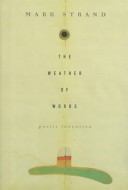 “I is for immortality, which for some poets is a necessary compensation. Presumably miserable in this life, they will be remembered when the rest of us are long forgotten. None of them asks about the quality of that remembrance–what it will be like to crouch in the dim hallways of somebody’s mind until the moment of recollection occurs, or to be lifted off suddenly and forever into the pastures of obscurity.
“Most poets know better than to concern themselves with such things. They know the chances are better than good that their poems will die when they do and never be heard of again, that they’ll be replaced by poems sporting a new look in a language more current. They also know that even if individual poems die, though in some cases slowly, poetry will continue: that its subjects, it constant themes, are less liable to change than fashions in language, and that this is where an alternate, less lustrous immortality might be.
“We all know that a poem can influence other poems, remain alive in them, just as previous poems are alive in it. Could we not say, therefore, that individual poems succeed most by encouraging revisions of themselves and inducing their own erasure? Yes, but is this immortality, or simply a purposeful way of being dead?” The Weather of Words: Poetic Inventions by Mark Strand (b. 1934, Canada), American poet and essayist, Poet Laureate Consult in Poetry to the Library of Congress (1990-1991), Pulitzer Prize (1999) for Blizzard of One, Gold Medal in Poetry (2009), American Academy of Arts and Letters.
A little something provocative this Sunday.
. . . and thus we begin another week . . .
Photo credit ~ SlowKing via Wikipedia and under the CC BY-NC

 Jamie Dedes' THE POET BY DAY Webzine
