Page 3 of 12

ARE YOU INTERESTED IN ATTENDING A 100,000 POETS FOR CHANGE WORLD CONFERENCE IN SALERNO, ITALY?

“Would you be interested in going to Salerno, Italy for a 100 Thousand Poets for Change World Conference if we held another gathering at the end of May in 2020? 4 days, workshops, party, reception, tours, poetry readings, tour Pompeii, Amalfi boat cruise…” Michael Rothenberg, 100,000 Poets for Change (100TPC) cofounder


In June of 2015, poets and other artists from all over the globe gathered in Salerno, Italy for their first 100,000 Poets for Change (100TPC) World Conference organized by 100TPC Cofounders Michael Rothenberg and Terri Carrión.  Michael is putting out feelers to see how much interest there would be in a another gathering to be held in 2020.  If this appeals to you, you can connect with Michael Rothenberg on Facebook HERE. Honestly, if I were able to travel, I’d be there faster than that fabled New York minute.

In 2015, I asked Michael Dickel (Meta/ Phor(e) /Play) who attended the first conference to pull together a report for The BeZine, which he graciously and gracefully did and has also given his permission for it to be republished here today.  I think it might help you get a better idea of what to expect. His report is below the following info on Michael Rothenberg, Terri Carrión, and 100TPC.

Photo courtesy of Giaros under CC BY-SA 3.0 license.


c Michael Rothenberg, Big Bridge Publishing

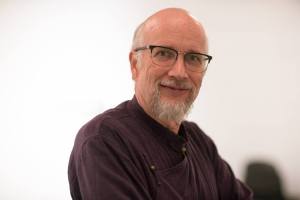
Michael Rothenberg is an American poet, songwriter, editor, and active environmentalist. Born inMiami Beach, Florida, Rothenberg received his Bachelor of Arts in English at the University of North Carolina at Chapel Hill. Afterward, he moved to California in 1976, where he began “Shelldance Orchid Gardens”, an orchid and bromeliad nursery. In 2016, Rothenberg moved to Tallahassee, Florida. In 1993 he received his MA in Poetics at New College of California. In 1989, Rothenberg and artist Nancy Davis began Big Bridge Press, a fine print literary press, publishing works by Jim Harrison, Joanne Kyger, Allen Ginsberg, Philip Whalen and others. Rothenberg is editor of Big Bridge, a webzine of poetry. Rothenberg is also co-editor and co-founder of Jack Magazine.
Terri Carrion, Big Bridge Publishing

Terri Carrión earned her MFA at Florida International University in Miami, where she taught Freshman English and Creative Writing, edited and designed the graduate literary magazine Gulfstream, taught poetry to High School docents at the Museum of Contemporary Art in North Miami and started a reading series at the local Luna Star Café. In her final semester at FIU, she was Program Director for the Study Abroad Program, Creative Writing in Dublin, Ireland.poetry, fiction, non-fiction and photography has been published in many print magazines as well as online, including The Cream City Review, Hanging Loose, Pearl, Penumbra, Exquisite Corpse, Mangrove, Kick Ass Review, Exquisite Corpse, Jack, Mipoesia, Dead Drunk Dublin, and Physik Garden among others, including the recent anthology, Continent of Light. Her chapbook “Lazy Tongue” was published by D Press in the summer of 2007. A collaborative poem with Michael Rothenberg, “Cartographic Anomaly” was published in the anthology, Saints of Hysteria, A Half-Century of Collaborative American Poetry. Her most recent project is a collaboration with F.R Lavandeira and Loreto Riveiro on a trilingual Galician Anthology, (from Galician to Spanish to English)

“100 Thousand Poets for Change, or 100TPC, is an international grassroots educational organization focusing on the arts, especially poetry, music, and the literary arts. It was founded in 2011 by Michael Rothenberg and Terri Carrion, and focuses on a worldwide event each September.” Wikipedia MORE


MICHAEL DICKEL’S REPORT ON THE 2015 CONFERENCE

Salerno, il mio amore

100TPC World Conference Banner
Santa Sofia Complex, Salerno, Italy
Inside the Santa Sofia Complex

June 3, 2015, the afternoon after I arrived in Salerno, Italy, I found my way up to the Santa Sofia Complex, an old church on a square with a fountain.The first 100-Thousand Poets for Change (100TPC) World Conference would begin with an opening reception in the evening. In the complex, I met Terri Carrion, one of the co-founders of 100TPC and co-organizer of the conference. She told me that her partner, Michael Rothenberg, was around the corner at a cafe meeting one of the writers who had just arrived from Macedonia.

Poets gathered at tables in a cafe, Salerno, Italy, 100TPC World Conference

After helping Terri and Valeriano Forté, a Salerno poet and 100TPC organizer, assemble some tables in our meeting room, I wandered down to the cafe. Several poets gathered at tables in excited conversation. Michael was with Mitko Gogov, the poet from Macedonia. Others were from the U.S., Mexico, Hungary, Germany (via the U.S. and Rome), Greece, Malaysia, and France. And this was just the beginning. All of the people at the cafe then I now count among new-found friends, along with many more that I met during the following week.

Aqueduct Salerno, Italy
Aqueduct
Salerno, Italy

Imagine, if you can, more than 80 poets from all over the world—every continent, 33 countries. Imagine poets from every generation, spoken-word artists, poets with books or no book, all come together to share the spirit of poet-activists, as 100TPC organizers. Now imagine us all talking about poetry, about arts and activism, women’s issues, oral versus print traditions, and organizing—with interpreters translating into Italian and English. That’s how our four conference days were (mostly) spent.

Alfonso Gatto Poem Detail from mural in Salerno
Alfonso Gatto Poem
Detail from mural in Salerno

Those were scheduled topics. Another one came up—artists’ international mobility. Several poets had their visa requests turned down by their home countries or Italy. So we rejoiced when three poets from Egypt finally received their visas at the last minute and arrived during the conference. Some who could not make it joined us virtually by posting to social media. For the next conference, we plan to be more prepared for this issue, and to have both advice and, if we can raise them, funds to assist people.

View of Salerno
View of Salerno

The days tended to serious dialogue on sustainability, peace and justice. The evenings (and a couple of afternoons) overflowed with poetry. Each evening, several poets read as “scheduled” readers, usually after dinner. Then came the open mic—which ranged from raucous readings to a quiet “campfire” around candles to a poetry walk from the complex to the sea. The open mic that I co-hosted with a poet living in Malaysia and a Ghanian poet was in a restaurant, the last reading of the conference.

Light and Shadow Along a Salerno Street
Light and Shadow
Along a Salerno Street
Street Art, Salerno
Street Art, Salerno

And what of Salerno? Salerno won our hearts—an old city with a castle overlooking it that once was ruled by a warrior-princess; the home of Alfonso Gatto, an Italian poet whose poetry appears in murals by contemporary artists all over the town via the Alfonso Gatto Foundation (a sponsor of the conference); a town nestled between mountains of alleyways, stone walls, beautiful squares and the sea; a song of bells, sea gulls, swallows; a haven for street artists and poets.

Arch and Tree Salerno, Italy
Arch and Tree
Salerno, Italy

The night following the end of the conference, many of us still in Salerno took over most of a small restaurant around the corner from the Santa Sofia Complex. Not wanting to let go of our transformative week of amazing global poetry, we began an impromptu reading, some reading from books of others, some reading our own work. A couple from the town, not part of our conference, sat at one of the tables listening, and then the man asked if he might read some of his work in Neapolitan. He recited his work, then line by line he read the Italian with someone translating into English. Poets attract poets.

So, in two years, we plan to return. Writer-artist-activists reading this, perhaps you’d like to join us?

Looking out the door Santa Sofia Complex
Looking out the door
Santa Sofia Complex

– Michael Dickel

© 2015, article and photographs, Michael Dickel, All rights reserved


Michael Dickel (c) 2018, Photo credit Zaki Qutteineh

MICHAEL DICKEL a poet, fiction writer, and photographer, has taught at various colleges and universities in Israel and the United States. Dickel’s writing, art, and photographs appear in print and online. His poetry has won international awards and been translated into several languages. His chapbook, Breakfast at the End of Capitalism came out from Locofo Chaps in 2017. Is a Rose Press released his most recent full-length book (flash fiction), The Palm Reading after The Toad’s Garden, in 2016. Previous books: War Surrounds Us, Midwest / Mid-East, and The World Behind It, Chaos… He co-edited Voices Israel Volume 36(2010). He was managing editor for arc-23 and arc-24. With producer / director David Fisher, he received an NEH grant to write a film script about Yiddish theatre. He is the former chair of the Israel Association of Writers in English. Meta/ Phor(e) /Play is Michael’s blogZine. Michael on Social Media: Twitter| FaceBook Page | Instagram | Academia


ABOUT

Testimonials

Disclosure

Facebook

Twitter

Poet and writer, I was once columnist and associate editor of a regional employment publication. I currently run this site, The Poet by Day, an information hub for poets and writers. I am the managing editor of The BeZine published by The Bardo Group Beguines (originally The Bardo Group), a virtual arts collective I founded.  I am a weekly contributor to Beguine Again, a site showcasing spiritual writers. My work is featured in a variety of publications and on sites, including: Levure littéraure, Ramingo’s PorchVita Brevis Literature,Compass Rose, Connotation PressThe Bar None GroupSalamander CoveSecond LightI Am Not a Silent PoetMeta / Phor(e) /Play, and California Woman. My poetry was recently read by Northern California actor Richard Lingua for Poetry Woodshed, Belfast Community Radio. I was featured in a lengthy interview on the Creative Nexus Radio Show where I was dubbed “Poetry Champion.”


 The BeZine: Waging the Peace, An Interfaith Exploration featuring Fr. Daniel Sormani, Rev. Benjamin Meyers, and the Venerable Bhikkhu Bodhi among others

“What if our religion was each other. If our practice was our life. If prayer, our words. What if the temple was the Earth. If forests were our church. If holy water–the rivers, lakes, and ocean. What if meditation was our relationships. If the teacher was life. If wisdom was self-knowledge. If love was the center of our being.” Ganga White, teacher and exponent of Yoga and founder of White Lotus, a Yoga center and retreat house in Santa Barbara, CA

“Every pair of eyes facing you has probably experienced something you could not endure.” Lucille Clifton

“The BeZine” and related activities/opportunities – news and updates

“This is the power of gathering: it inspires us, delightfully, to be more hopeful, more joyful, more thoughtful – in a word, more alive.” Alice Waters, chef, author, food activist, and founder and owner of Chez Panisse in Berkeley, California


The header to this post is our new banner for the 2019 The BeZine 100,000 Poets and Others for Change. It was designed by Team Member Corina Ravenscraft (Dragon Dreams). I appreciate the color and the flowers, which to me imply hope. So onward we go.

We use the banner as a header for our discussion page on Facebook (a gathering place of sorts) which you are encouraged to join. Our goal there is not about sharing poetry or regurgitating the news. It’s largely about “best practices.”

2018/2019 NEWS & GUIDELINES FOR POSTING ON THE DISCUSSION PAGE: We’re especially interested in filling a gap by collecting info on practical initiatives – ideas for taking action – from anywhere in the world, “best practices” so to speak that foster peace, sustainability and social justice, especially those that might be picked up and implemented elsewhere. Examples from the past include the churches that open their parking lots at night to the homeless, the barber who uses his days off to give homeless people haircuts or the group that put out clothing for people to take if needed.

Rev. Terri Stewart

FOR WRITE-UPS ON SPIRITUAL PRACTICE for Beguine Again, sister site to the Zine,  message Terri Stewart on Facebook. We also have a FB page – The Bardo Group Beguines -where we provide Zine info, inspiration, notice of spiritual events of interest to seekers and links to work posted on beguineagain.com founded and managed by Terri.

PLEASE DO NOT POST POETRY ON THE DISCUSSION PAGE. There are plenty of poetry groups on FB. We’re unique and doing something different but we do offer other opportunities to share your poetry and creative work.

SUBMISSIONS to The BeZine of poetry, essays, short stories, creative nonfiction, music videos, and artwork for The BeZine – journal or blog – are considered via email only: bardogroup@gmail.com.

The BeZine is published quarterly. Here are the schedule, themes, submission deadlines and publication dates for the rest of this year and 2019.

December 2018 issue, Deadline November 10th, Theme: A Life of the Spirit

March 2019 issue, Deadline February 10th. Theme: Peace.

June 2019 issue, Deadline May 10th. Theme: Sustainability

September 2019 issue, Deadline August 10th, Theme: Human Rights/Social Justice

December 2019 issue: Deadline November 10th. Theme: A Life of the Spirit

SEPTEMBER 28, 2019, 100,000 POETS AND OTHERS FOR CHANGE, GLOBAL, 2019 and THE BeZINE 100,000 POETS AND OTHERS FOR CHANGE VIRTUAL EVENT

Michael Dickel

Facebook message me or email me at thepoetbyday@gmail.com if you have poetry news or essays on poetry to be considered for The Poet by Day. For submissions (poetry and short fiction or creative nonfiction) for consideration by Michael Dickel for Meta/Phor(e)/Play  you can message Michael Dickel on Facebook or contact him through his blog.

The Bardo Group Begines is a twelve-member core team of poets and writers, artists and musicians, philosophers and clerics providing comfort, inspiration and information via thebezine.com and beguineagain.com.  

The BeZine is an entirely volunteer effort and a peace and justice mission.

For those who are interested, our freshly updated submission guidelines are HERE.

– Jamie Dedes, Managing Editor, The BeZine


ALERT

We are leaving 100TPC Virtual up through end-of-day October 6th (tomorrow) so that those who weren’t able to share their work – or even fave pieces on theme (Peace, Sustainability, Social Justice) by other authors – still have time to do so. Instructions in the post explain how to share your poems or other art … check it out


REMINDER

The Poet by Day

WEDNESDAY WRITING PROMPT

Response deadline is Monday, October 8, at 8 p.m. Pacific. Poems on theme are published on this site on Tuesday, the October 8. Details HERE.


ABOUT

Poet and writer, I was once columnist and associate editor of a regional employment publication. Currently I run this site, The Poet by Day, an information hub for poets and writers. I am the managing editor of The BeZine published by The Bardo Group Beguines (originally The Bardo Group), a virtual arts collective I founded.  I am a weekly contributor to Beguine Again, a site showcasing spiritual writers.

My work is featured in a variety of publications and on sites, including: Levure littéraure, Ramingo’s PorchVita Brevis Literature,Compass Rose, Connotation PressThe Bar None GroupSalamander CoveSecond LightI Am Not a Silent PoetMeta / Phor(e) /Play, and California Woman.

To write a peace poem … A virtual lesson for children from Michael Dickel to honor 100,000 Poets (and Friends) for Change …


“Poetry. It’s better than war!”Michael Rothenberg, cofounder of 100,000 Poets (and friends) for Change

Introduction for grownups

This year, 100,000 Poets for Change promoted its newest initiative, Read a Poem to a Child! Poets all over the world have visited schools, community centers, libraries, and living rooms to read poetry to children.

As a supplement to this amazing sharing of poetry (and stories, music, art), I am sharing this updated and revised exercise. In 2013, I originally developed this exercise for some poetry workshops geared to upper-elementary school children in English language classes at The Jerusalem School of Beit Hanina, in East Jerusalem. The school’s motto is “Peace begins with me,” also the name of a poetry anthology for children. My workshops coincided with Peace Days at the school. This version is modified here for the blog and a different audience.

Please feel free to use this exercise with children you know or work with, and to modify it to your needs. I ask only that you give me credit for it and include the credits for the poems, if you use them.

– Michael Dickel (Meta/ Phor(e) /Play)

Introduction for everybody

There are some words a poet might call “big.” They are not long words, with lots of letters. However, they are “big” because when you say them or when you read them, they hold a lot of things in them or a large, important meaning.

Now, if a word is very big, a poet may not want to use it in the poem at all. The whole poem may be about this very big word. If I put the word in my poem, though, it could break the poem. A person reading it would not know exactly what I meant by it. Or a person may mean one of the other things the word could mean.

Peace can be a very big word like that. We can all say we want peace. Every person might make a wish like this: “May Peace prevail on Earth.” (When something “prevails,” it wins, it is everywhere and leads everything.) Yet, the poet asks, “What do I mean by peace? What exactly is this peace I want?”

Poets can write about a big word like peace though, if they ask questions about it. They write about the answers they find. They do not always use the word “peace” when they do.

Let’s try to write a poem now, about peace. But don’t use the word peace!

Instead, ask some questions about peace, and write your answers down.

What kind of questions do poets ask?

Some of the questions poets ask have to do with the senses. Others have to do with places, or people, or things.

Below are some questions a poet might ask. They are here to help you write a poem about peace. You can ask your own questions, too.

Write down some answers to these questions (or your own, or both). You can make a list of words or phrases, write a sentence, a paragraph, a story, or a piece of a poem…

But you don’t have to write the whole poem. You will do that after answering the questions.

Some questions to help you start:

1. What does peace look like? Is there a place that you go to or have gone to where you can see peace? Where the view looks like peace?

2. What would peace feel like, if you could touch it? Is there something you touch that feels like peace to you?

3. What does peace sound like? Is there a sound you hear every day or just sometimes that sounds like peace for you?

4 What about a taste? What would peace taste like ? Do you eat anything that tastes like peace?

5. What would peace smell like? Do you ever smell peace? What other things might smell like peace?

Some more questions

Your answers from the questions you just answered can help you answer some of these questions. Or, write new answers.

Imagine someone who doesn’t know what peace is. Try to describe peace to this person as though it is an object in the world.

What does it look like?

What does it sound like?

What does it smell like?

What does it taste like?

And, what does it feel like?

Imagine someone else who doesn’t know what peace is. Try to describe peace as something people do.


Who does it?

What do they do?

Where do they do it?

When do they do it?

Why do they do it?

How do they do it?

What do they look like doing it?

What do they sound like?

Write your own poem

Look over all of your answers. Can you think of other things to write to say more about your answers? Do you have other questions that you want to ask about peace?

Do some of your answers help you think of a poem to write?

Are some of your answers fun? Funny?

Do some excite you?

Do some seem very true to you?

Do the answers to one question seem connected to the answers to another one?

Now write down a poem. You can change it as you go. You can change it after it is all written down the first time, too.

Your poem can rhyme, but it doesn’t have to. The lines of a poem are usually short, but you can also write them longer. Usually, they are not really, really long.

Try it now!

NOW THAT YOU HAVE WRITTEN A POEM

Michael Dickel (c) 2018, Photo credit Zaki Qutteineh

MICHAEL DICKEL a poet, fiction writer, and photographer, has taught at various colleges and universities in Israel and the United States. Dickel’s writing, art, and photographs appear in print and online. His poetry has won international awards and been translated into several languages. His chapbook, Breakfast at the End of Capitalism came out from Locofo Chaps in 2017. Is a Rose Press released his most recent full-length book (flash fiction), The Palm Reading after The Toad’s Garden, in 2016. Previous books: War Surrounds Us, Midwest / Mid-East, and The World Behind It, Chaos… He co-edited Voices Israel Volume 36(2010). He was managing editor for arc-23 and arc-24. With producer / director David Fisher, he received an NEH grant to write a film script about Yiddish theatre. He is the former chair of the Israel Association of Writers in English. Meta/ Phor(e) /Play is Michael’s blogZine. Michael on Social Media: Twitter | FaceBook Page | Instagram | Academia


ABOUT

Poet and writer, I was once columnist and associate editor of a regional employment publication. Currently I run this site, The Poet by Day, an information hub for poets and writers. I am the managing editor of The BeZine published by The Bardo Group Beguines (originally The Bardo Group), a virtual arts collective I founded.  I am a weekly contributor to Beguine Again, a site showcasing spiritual writers.

My work is featured in a variety of publications and on sites, including: Levure littéraure, Ramingo’s PorchVita Brevis Literature,Compass Rose, Connotation PressThe Bar None GroupSalamander CoveSecond LightI Am Not a Silent PoetMeta / Phor(e) /Play, and California Woman.

Off the Trail of Consumer Capitalism, flash fiction by Michael Dickel

This is an except from the September issue of The BeZine, themed social justice. It is another example of the quality of work we share there. It’s also an important story at this time and Michael explains why.  / J.D.


Michael Dickel (c) 2018, Photo credit Zaki Qutteineh

Off the trail

Author’s note: Originally written in July, 2013, this piece seems even more relevant and urgent 5 years later. It originally appeared here, on Meta/ Phor(e) /Play. A revised version appears in my flash fiction collection, The Toad’s Garden after The Palm Reading. This version has been slightly edited, most significantly to add the word “consumer” to modify capitalism, as the term “consumer capitalism” has come to my attention as one bandied about in place of democracy as the essential system of the United States (and promoted by some on the so-called “Christian” Right, although from my perspective, that political group seems neither Christian nor right…). The line about the great purges goes back to 2013, but we now see something like them beginning to form…


By chance I learned that they planned to crucify the married couple for honeymooning off the grid and outside of the mainstream consumer economy. The couple backpacked along the Appalachian Trail, using second-hand equipment, carrying home-prepared dried goods for meals , which friends provided to them as gifts.

The followers of Christ, Consumer-Capitalist, found such sacrilege untenable, especially in light of the anger it would cause the Corporate Lords of the Boardrooms.

I overheard my editor on his cell, assigning someone to cover the Meeting of Judgment where the sentence would be pronounced. When I understood that the other reporter wouldn’t be back from her current assignment in time, I sauntered in and asked what Ed had for me, like I didn’t know anything.

“The Reverend called to request we send someone to this meeting, give it coverage to send the message out. Work, spend, play inside the economy.”

“Got it. Keep the money flowing to oil the consumer capitalism machinery of wealth.”

I knew the catechism, but didn’t believe it. I’d sent dried lemon peels, home-made penne (dried to preserve it), a chunk of parmigiana traded on the underground market, and a sealed container of pesto for them to make a backpacker’s lemon pasta.


The Meeting of Judgment followed the usual pattern of these religious courts. A minister of the Reverend’s flock read out the charges. Two other ministers sat on either side, listening gravely. They conferred briefly. It didn’t matter that the accused even now were somewhere hiking in the woods.

As per custom, the ushers served cups of tea to the witnesses of the Meeting. We remained silent. I sipped a sad orange-pekoe until the lead minister announced the decision.

Crucifixion. It had come back in style around 2020, shortly after the great purges that deported, jailed, or enslaved first the non-Christians, then the wrong-type of Christians.

I had not seen a crucifixion. Up to now, it had been an advantage of a rural assignment.

“What are you going to do?” The man I knew as Germaine asked me. He’d popped up out of the crowd as I pushed out the door.

I’d seen Germaine at several social gatherings of people like me. My circles went along with the Reverend to a point, that is, enough to survive, and no more. We kept to ourselves, and tried to avoid the scrutiny of the Reverend and his ministers.

“Do? I’ll write a story about the Judgment, the reasons for it, and watch to see how many hits it gets on the Screens.”

I didn’t know Germaine enough to be baited into saying something damaging. Besides, that was what I planned to do.

“No, about them. We can’t let them get caught.”

“You could get crucified yourself for getting involved. Even what you said is a crime against Christian Consumer Capitalism.”

“What is Christian Capitalism? Something made up by corporate overlords who overeat from our consumption. There never was such a religion.”

I walked away. I considered whether he might be an agent provocateur, meaning I should report him before he denounced me for doing nothing. I decided that I didn’t want to get involved, and would invoke my sometime role as investigative reporter should he accuse me.


The next morning I had coffee with Frank, someone I thought I knew enough to trust under most circumstances. He told me that Germaine had been arrested for sedition, blasphemy, and heresy as a result of spouting the Devil’s own socialism.

“I’ll be damned.”

“Probably,” Frank said. “To tell you the truth, I thought he was a spy.”

After Frank went off to work, I looked for a screen-story on Germaine, but didn’t find one. I wondered how Frank had heard.

I read my own story on my screen, instead. It played well, several hits, re-posts, and praiseful comments.

It bored me. No, more than that, it sickened me.

I didn’t believe any of it. I knew the young couple, knew they loved the woods, knew they couldn’t afford a resort honeymoon because they wanted to buy a house and the downpayment would take everything they had.

They actually wanted to fit in and had no revolutionary or irreligious intent. They wanted to get along, but to also live their lives and not be pulled under the tide of consumer debt.

Just then, I realized that the Reverend and the ministers didn’t care. And maybe Frank didn’t read about Germaine on a screen.


The Reverend wanted to make a statement, keep people scared, keep people trying harder than ever to feed the economy and concentrate power and wealth into the Corporate Lords, who ran the Reverend.

Or maybe the other way around, the Reverend ran them. It doesn’t matter now, I realize.

Frank wanted me to play along and keep away from people like Germaine. It was almost a friendly gesture. It could have been a warning, even.


And that’s why I find myself sitting in a deer stand along the Appalachian Trail. The newlyweds should pass under it sometime today, if they haven’t yet been waylaid.

When they do, I’ll wait to see if they find the package I left out.

It has printouts of the screen story I wrote. It has a copy of the Judgment Decree. It has a map of little-known trails that cross this path, and what cash I could withdraw without getting stopped by a minister.

I thought that I would watch them pick it up and wait until they were gone, then make my way home after a few stops to justify my travel, should I get checked.

Now, I’m thinking maybe I’ll ask if I can walk with them a while when they go off the trail. I’ll cut out after a few days, find my own way.

I don’t know why I’ve decided to do this. I just don’t feel like writing another story I don’t believe in, I guess.

—Michael Dickel ©2018, 2017, 2013

20130729-230444.jpg


MICHAEL DICKEL a poet, fiction writer, and photographer, has taught at various colleges and universities in Israel and the United States. Dickel’s writing, art, and photographs appear in print and online. His poetry has won international awards and been translated into several languages. His chapbook, Breakfast at the End of Capitalism came out from Locofo Chaps in 2017. Is a Rose Press released his most recent full-length book (flash fiction), The Palm Reading after The Toad’s Garden, in 2016. Previous books: War Surrounds Us, Midwest / Mid-East, and The World Behind It, Chaos… He co-edited Voices Israel Volume 36(2010). He was managing editor for arc-23 and arc-24. With producer / director David Fisher, he received an NEH grant to write a film script about Yiddish theatre. He is the former chair of the Israel Association of Writers in English. Meta/ Phor(e) /Play is Michael’s blogZine. Michael on Social Media: Twitter | FaceBook Page | Instagram | Academia


ABOUT

Testimonials
Disclosure
Facebook
Twitter
Poet and writer, I was once columnist and associate editor of a regional employment publication. Currently I run this site, The Poet by Day, an information hub for poets and writers. I am the managing editor of The BeZine published by The Bardo Group Beguines (originally The Bardo Group), a virtual arts collective I founded. I am a weekly contributor to Beguine Again, a site showcasing spiritual writers.

My work is featured in a variety of publications and on sites, including: Levure littéraure, Ramingo’s Porch, Vita Brevis Literature,Compass Rose, Connotation Press, The Bar None Group, Salamander Cove, Second Light, I Am Not a Silent Poet, Meta / Phor(e) /Play, and California Woman.