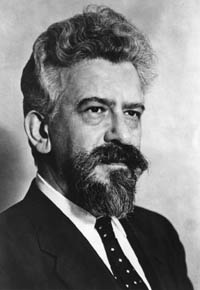
Polish-American Rabbi Abraham Joshua Heschel (1907 -1972)
It is interesting that the Jewish Day of Atonement, Yom Kippur, is being celebrated today at the same time that we are holding 100,000 Poets for Change (100TPC) around the world. Last night I couldn’t help but think of Rabbi Herschel. I tend to connect well and deeply with those who practice their religions with respect for the mystical. Without mysticism religion is just dry cracker, something without much Life or Light.
Rabbi Hershel lost his family to bombings, Nazis, and the camps. During the war, he lived for awhile in Frankfurt. He was arrested by the Gestapo and sent back to Poland. In the melting pot that was 1950s Brooklyn, we had neighbors from Poland, people who had lost everything but their generosity of spirit. Some were Catholic and some were Jewish.
There was one family I particularly loved. I encountered Rabbi Herschel on their bookshelves when I sat with the children. The wife, a beautiful frail creature whose “shell shock” was clear to me even in my early teens, was none-the-less a good mother, wife and friend. The husband, a cantor and devoted family man, let me read whatever I found in English in their house. What was remarkable to me was that he was also willing to take the time to talk to me about what I read. He encouraged me to speak my mind. With him, I never had to arm myself as the pretty dolt.
“If [a woman or man] were able to survey at a glance all he has done in the course of his life, what would he feel? He would be terrified at the extent of his own power.” Rabbi Abraham Joshua Heschel
Apropro this discssion, I was surprised (I shouldn’t have been) and charmed when I found Michael Dickel’s introduction to The BeZine 100TPC 2017 event wrapped around Yom Kippur. Here’s the introduction (below) … and when you are done reading perhaps you’ll pop over to The BeZine blog and share a poem and/or read those of others. You’d be very welcome.
– Jamie Dedes
American-Israeli Poet, Michael Dickel
This year, the last Saturday of September, the regular day for the Global 100,000 Poets for Change Events around the world, falls on Yom Kippur, considered the Holiest day of the Jewish religion. Observant Jews around the world are fasting, having spent the Days of Awe leading up to Yom Kippur asking the people in their lives for forgiveness and inventorying their transgressions against Creation. Today, we Jews go to synagogue and ask Creation (G-d) for forgiveness. Another name for Yom Kippur is the Day of Atonement.
First, the order matters: We ask the people in our lives for forgiveness. Then we think how we have acted against the World. Then and only then do we turn to G-d for forgiveness.
Second, saying sorry is not enough, in our tradition. It is a start. In the Jewish tradition, people must also act differently, that is, they must enact the apology with a change in how they are in the world.
Third, human purpose can be understood—in how I have been taught—as working toward Tikkun Olam. Tikkun Olam is the repair or healing of Creation. While there is definitely a range of interpretations that could be made on what this healing entails, it certainly incorporates attention to the physical world as well as the spiritual. These two intertwine and interrelate in such a way as to be inseparable. Social Justice, Environmental Sustainability, and Peace—and writing, the arts, music in service of activism for positive change—are very relevant issues to our human purpose, from this view.
And thus, on the Holiest Day of the Jewish Year, it is appropriate to work toward Tikkun Olam, asking G-d’s forgiveness for all we have done that harms our fellow humans, inventorying our own role, and moving forward with action that shows our genuine desire to change and make things right again.
And, further, as the spiritual and the physical are interrelated, so are all of the arts (literature, art, music, dance, stage, film…), so are all three of the themes: Social Justice, Environmental Sustainability, and Peace.
So this year, on Yom Kippur, we ask you to join in with your contributions from any of the arts—share your efforts toward healing and repair of our World. As you do, remember this, paraphrased from the sages:
Do not despair at the iniquity and injustice of the world in which we live. For today, that is, in this period where injustice, racism, and greed seem to have risen to power, do not give up or give in.
It is not up to us to complete the work of Tikkun Olam, but this does not free us from working toward the healing and repair of Creation. That is, although we may not achieve our goals of a just, sustainable and peaceful world in our lifetime, we must continue to make progress, and in working toward them, the healing of Creation will occur, one poem, one essay, one novel, one painting, one sculpture, one song, one symphony, one performance at at a time…
By action, not words alone, will this be done. If ever there was a time when this action is more needed than others, certainly now is one—Resistance! Activism! Peace! Sustainability! Social Justice!
Well, the Zine’s virtual “live” 100TPC Master of Ceremonies, Michael Dickel (Meta/ Phor(e) /Play), is doing the event from the Midwestern U.S. this year, not Israel, and I’m here in Northern California as back-up.
We have just a few hours to go before we begin The BeZine 100,000 Poets (and friends) for Change, 2017 (100TPC), our biggest event of The BeZine year. Do join us and bring your reading glasses and your work suggestive of peace, sustainability and social justice. Michael will get us started and I’ll be on hand to help put a wrap on things. We’ll run at least 24 hours to make it convenient for you to participate no matter where in the world you live.
You may have missed some of these posts that will clarify what we’re doing, how we’re doing it, and how you can participate. Here are two posts that you’ll find helpful:
Fragments—
Reflecting on anger
a sort of Introduction
i
I am trying to write a social justice-sustainability-peace song. This is as far as I have gotten.
Where have all the flowers gone, since the election? Where has the dialogue gone, now that we yell and scream? You may say it’s social media, typing, and not raised voices, But you know we’re all making some dissonant choices.
This divisiveness, it’s like some sort of infection, All the medicine won’t do any good, not pill or cream, You may say it’s someone else, spreading these angry voices, But you know we’re all making these dissonant choices.
Take care of others now, it’s time to give a helping hand, Find the empathy in your heart, spread it through the land, Stand up for justice, peace, sustainability, while you can, Find the common ground where all of us can stand…
ii
I am searching for interconnections and intersectionality between social justice, sustainability, and peace—how each affects the other. I don’t want to focus on the negative, but I do feel a need to say something that would get at the role of divisiveness and hate in our current anxieties and politics—not just in the November 2016 elections, not just between the camps, not just within the left. It is everywhere, infused with out morning hot drink.
iii
We must reach out our hands to each other. Yes, we can and should express our differences, speak our anger, listen to the anger of others. However, we cannot afford to weaponize that anger, to externalize it into missiles and nuclear warheads. Don’t let anger shoot, stab, run us over in an un-civil war of accusations and blame that wounds our souls. We cannot let this roiling rage keep us from joining together in common cause, which we all have—the need for peace, social justice, and environmentally-sustainable practices. We must use our real angers, somehow, as building tools, to join together to create more humane, just, sustainable, and peaceful structures in our world. We must harness the anger to make love, not war.
Even so, it will be an imperfect world.
But, if we find a way to work together, through our differences, it will be a better world, too.
Every woman has a well-stocked arsenal of anger potentially useful against those oppressions, personal and institutional, which brought that anger into being. Focused with precision it can become a powerful source of energy serving progress and change. And when I speak of change, I do not mean a simple switch of positions or a temporary lessening of tensions, nor the ability to smile or feel good. I am speaking of a basic and radical alteration in those assumptions underlining our lives.
I have seen situations where white women hear a racist remark, resent what has been said, become filled with fury, and remain silent because they are afraid. That unexpressed anger lies within them like an undetonated device, usually to be hurled at the first woman of Color who talks about racism.
But anger expressed and translated into action in the service of our vision and our future is a liberating and strengthening act of clarification, for it is in the painful process of this translation that we identify who are our allies with whom we have grave differences, and who are our genuine enemies.
Anger is loaded with information and energy. When I speak of women of Color, I do not only mean Black women. The woman of Color who is not Black and who charges me with rendering her invisible by assuming that her struggles with racism are identical with my own has something to tell me that I had better learn from, lest we both waste ourselves fighting the truths between us. If I participate, knowingly or otherwise, in my sister’s oppression and she calls me on it, to answer her anger with my own only blankets the substance of our exchange with reaction. It wastes energy. And yes, it is very difficult to stand still and to listen to another woman’s voice delineate an agony I do not share, or one to which I myself have contributed.
Why has this passage come to mind? Besides the fact that it remains relevant about privilege, more than 35 years later, it also speaks to the in-fighting among people who want to change the world positively, who have shared goals in making change—activists, if you will. The need to share our “grave differences,” but at the same time to work together as allies to resist—and overcome—”our genuine enemies.”
It seems to me that these are some of the tools and forces of our genuine enemies: greed, oppression, racism, ethnocentricity, genders-based bias, unfettered capitalism, and fascism. Also: war, famine, and destruction of resources. Also: hatred, division, rage. Also…
vi
Right now, my Facebook feed streams with angry posts between Clinton and Sanders supporters and third camp—fourth, fifth, sixth… camps—who attack both and each other, all arguing an election nearly a year old and few looking for ways to work together for the mid-term elections a little over a year away. People argue about the best way to resist, all the while they criticize and attack each other for not approaching a particular issue in the “correct” way.
What I don’t feel is a constructive analysis and dialogue emerging from this divisiveness. I don’t feel that the anger focuses on the genuine enemies. Instead, the angry posts shred our (potential) allies against those who would divide us on the way to grinding us up. At times, my paranoia rings its tocsin, suggesting that those who oppose positive, life-and-humanity affirming change—my genuine enemies—foment the pitched battles (especially those in social media). I feel that too many of us (yes, I would include myself) think we “understand” the problems we face, and that others “don’t get it.” We want to be correct. My way or the highway.
That path only leads to traffic jams.
vii
Lorde tells us, “Anger is loaded with information and energy.” Are we listening? I often bristle and respond with anger—I fire off a few well-aimed zingers, a few capable of carrying nuclear warheads. Or else, I turn away and don’t listen. I miss the opportunity to learn from the information in the anger.
I fight against the energy in the anger, draining us both, as I argue my point of righteousness. I don’t take in the energy in the “anger expressed” to help energize our (potential) alliance. I don’t look for ways to translate it “into action in the service of our vision and our future.”
Thus, by not listening and firing my “defensive” missiles, I miss opportunities for “a liberating and strengthening act of clarification.”
This is critical when listening across the social, racial, economic, regional, generational, religious, gendered, and so many other divides of the world. It is as critical when listening to the anger that appears ready to pull apart groups of people who want to make a positive difference. When we are torn apart from each other. Divided, we will fall.
Yet, to stand together, we will have to listen to each other, to engage in learning from each other, and to find ways to translate our anger, our pain, our fear for the future into “… the painful process” of this translation, so that we identify who are “our allies with whom we have grave differences,” and who are “our genuine enemies.”
viii
A storm hammers my brain—this tide of attacks without engaged dialogue hammers my brain—my brain hammers against the ways in which I fail to do all of the many right things that need doing. And in my frustration, I forget to try to do just some of those many right things as well as I can—even if not to the level of an ideal and perfect world.
And here is where I end up, stalled, frustrated, angry. But where I want to end up is caring for humanity with empathy at the intersections of social justice, sustainability, and peace. The writing, music, and photographs in this issue have at their heart, I believe, empathic caring for all of our fellow humans. This caring motivates the work you will find ahead. Yes, you will feel anger. Yes, you will hear anguish. But all of it comes from hearts full of a desire to create “liberating and strengthening act[s] of clarification.”
—Michael Dickel, Contributing Editor
100TPC PREQUEL ISSUE: PEACE, SUSTAINABILITY, SOCIAL JUSTICE
How to read this issue of THE BeZINE:
Click HERE to read the entire magazine by scrolling, or
You can read each piece individually by clicking the links in the Table of Contents.
To learn more about our guests contributors, please link HERE.
To learn more about our core team members, please link HERE.
Originally published on The BeZine website, this issue was produced and introduced by Contributing Editor, Michael Dickel (Fragmentarily/Meta-Phore(e) Play). Much thanks to Michael for his work on this stellar poetry issue, which as he said turned out to be – in effect – an anthology. The last hours before putting out the Zine always end up to be an overnight effort. There is some work that can’t be done until just before publication and, of course, things do go wrong. Murphy’s Law. So really double kudos and much appreciation to Michael.
Thanks also to the poets and writers who contributed. We love having so many of you together and we are pleased as always to present established, emerging and talented amateur poets to delight you. Our hope is that you (readers and writers) now have some fine new (to you) poets to follow. You’ll find links to their books and websites in the bio pages at The BeZine.
Youth Chaplaincy Program Founder, Rev.Terri Stewart. (Photo: Christmas at the King County Youth Detention Center, Seattle, Washington) Terri is the minister at Riverton Park United Methodist Church, Seattle and founder of Beguine Again
Also thanks to our stalwart supporters, including Terri Stewart ( Beguine Again), Lana Phillips, Ruth Jewell, James R. Cowles (look for a fab piece by him in next month’s issue) and Chrysty Darby Hendrick.
Much thanks to all our readers who are a valued part of The Bardo Group Beguines (the publishers of the Zine), a virtual arts collaborative. Much appreciation to the many of you who have referred poets and writers and enriched the work of this Zine in doing so. And thanks most of all to readers and writers for your love of the arts and your peacefilled hopes for humankind and our Mother Earth. J.D. – And now here’s Michael with the introduction and the table of contents …
Poetry Month means that we have arrived at
…the cruelest month, breeding Lilacs out of the dead land, mixing Memory and desire, stirring Dull roots with spring rain. (T. S. Eliot, The Wasteland)
One of the most famous poems “about” poetry, Marianne Moore‘s poem, “Poetry.” It famously begins with
I, too, dislike it: there are things that are important beyond all this fiddle.
However, she goes on in the very next lines to say
Reading it, however, with a perfect contempt for it, one discovers that there is in it after all, a place for the genuine.
There is much that is genuine in this April issue of The BeZine, which celebrates Poetry Month globally with our celebration of interNational Poetry Month. We are proud to present a wide variety of poets and poetry from all over the world. We have 45 posts of poetry (many with more than one poem), an essay, and one short story. This issue of The BeZine is an anthology!
Over the years, questions of poetry’s health, suggestions of its “death,” and concerns over who, if anybody, might be reading it, continue to swirl around in various articles, essays, and round tables. While many of the debates one might encounter in this bubbling broth come from a perspective of poetry’s decline, it seems to me that the reasons that such questions arise come from two primary sources.
One is an anxiety about how society values what we do, as poets or readers of poetry. It seems that the writers from this vein often worry that, in fact, society does not value poetry—as recorded in statistics about readership or as suggested by some other perceived decline in attention to it. The other vein, in my view, is a more healthy concern with what poetry is and what we are doing when we “do” poetry (read, write, critique).
This past year, a lot of words spilled onto the screen and page regarding Bob Dylan receiving the Nobel Prize—is a song writer a poet? Of course, poetry comes from song, so a song writer is a poet. Is poetry still song, then, or has it gone “beyond”? These articles and essays seem to flow from both of the sources I’ve suggested: anxiety and reflection. If our modest zine is any indication, poetry thrives throughout the world.
While the anxieties and reflections continue—and they are not new, witness the 1919 date of Marianne Moore’s poem—poets continue to write, and readers continue to read. You are reading this, so you are evidence of readers who have an interest in poetry. Whether there are more or fewer readers in any year or decade might fluctuate, or the methods of measuring them might change. However, as there are poets, there are those who read poetry. And listen to it—as in spoken word and slam.
Billy Collins opens his essay, The Vehicle of Language, suggesting that a problem with the reception of poetry is how poetry is taught:
For any teacher of poetry with the slightest interest in reducing the often high-pitched level of student anxiety, one step would be to substitute for the nagging and ultimately pointless question, “What does this poem mean?” the more manageable question “Where does this poem go?” Tracking the ways a poem moves from beginning to end puts the emphasis on the poem’s tendency to travel imaginatively and thus to carry the reader in the vehicle of its language.
In principle, I agree that the emphasis should be on where poetry goes, how it plays with language—not on decoding “meaning.” The same approach could be applied to the concerns expressed about poetry. The concerns need not be about where poetry is as measured against expectations of its current quality, akin to the “meaning” anxiety of its teaching.
Although some express an anxiety about the “quality” of online poetry or spoken word or even “today’s” written word, we would do well to reflect instead on where poetry is going, for us as readers and writers—where we as writers of it want to go with our poetry, and where we as readers of it want poetry to go to be most satisfying.
Poetry invites us to take an imaginative journey: from the flatness of practical language into the rhythms and sound systems of poetic speech. (Billy Collins, The Vehicle of Language)
It is our hope that you will read the poetry here with an appreciation for poetry’s “place for the genuine,” and find satisfaction in the depth and breadth presented here. Whether or not you will have “a perfect contempt for it” as you read, we leave up to you…
—Michael Dickel Contributing Editor
TABLE OF CONTENTS
Celebrating interNational Poetry Month
To Read this issue of The BeZine
Click HERE to read the entire magazine by scrolling, or
You can read each piece individually by clicking the links below.
To learn more about our guests contributors, please link HERE.



 September 15, 2017


 Jamie Dedes' THE POET BY DAY Webzine