Page 3 of 6

Thoughts and Guidelines on the Call for Submissions to the October Issue of “The BeZine” themed Music
John Anstie

” Musick has charms to soothe a savage breast “
~ Playwright and Poet, William Congreve (1670-1729), in his 1697 play, ‘The Mourning Bride’.

A letter from John:

In asking for submissions of writing, poetry, art and even music itself for the Music themed October issue of The BeZine, I am conscious that the very subject of music leaves us with a huge scope. But if I am to offer any guidelines as to what you could think about in submitting work, it might be as follows.

My personal perspective on the value of poetry has some relevance here. It is a belief that poetry should always be one step removed from the obvious, the logical and rational, in order for it to awaken the right brain, the creative side of our amazing abilities as humans; to stimulate the visceral (as opposed to the purely intellectual, rational, ‘logical’) response. In turn, this has the potential to stimulate a fresh approach to solving the challenges, be they personal or global. This hits on the core mission of The BeZine in a big way.

But if poetry has this potential power to stimulate a new way of thinking outside the framework imposed by a culture of consumerism, greed and material comfort, as opposed to our social well-being, then music does so with a vengeance. It is truly visceral without the constraints of language. Of course, when the poetry of lyrics is introduced to create song, then there is the opportunity to create something that is greater than the sum of its parts; synergy. It can provide something that dwells in the conscious and even subconscious for a lifetime – whoever forgets the words and melody of a song that they heard at a very poignant moment in their lives, which continues to inhabit a special place in memory, resonate and invoke the most emotional response every time it is heard. Some might argue this is ‘just an over-emotional response’, but I would say that it could be, nay is a key to how we may bring humanity together.

So that may be the most long-winded, not to say ‘visceral’ guideline to what I’m thinking for this issue. But I hope if nothing else it helps to focus your thoughts, as if they needed to be focused in the first place!

As ever, there are no imposed constraints, if you can provide anything with a musical theme, be it an explanation in prose or poetry of why you love a particular piece or genre of music, or even and especially a link to your favourite song or symphony, aria or opera, concerto or cantata, please let us have it. It could also be a reason why, in some instances music, song, an anthem can be used against our interests, in shoring up a malevolent dictatorship, for example, or promoting anti-social behaviours. It could equally be a short history of folk music, which often tends to tell the stories of the downtrodden masses, or of unrequited love, or … your own story. All is relevant to the October’s theme.

There are, in my book of music, no boundaries to its variety and opportunity for new arrangements and collaborations that stand to provide us and future generations with food for love and peace and social justice and to sustain us all in that future. ”

Peace and love
John


THE BeZINE submissions for the October 2017 issue – themed Music – are open and the deadline is October 10thSend submissions to me [Jamie] at bardogroup@gmail.com. Publication is October 15th. Poetry, essays, fiction and creative nonfiction, art and photography, music (videos or essays), and whatever lends itself to online presentation is welcome for consideration. No demographic restrictions and submissions of work relative to our country and its history and culture are welcome. The more diverse the representation, the better. English only or accompanied by translation into English. Please check out a few issues first and the Intro/Mission Statement and Submission Guidelines. We do not publish anything that promotes hate or violence.  The lead for the October issue is Sheffield poet and musician, John Anstie (My Poetry Library and 42).

  • CALLING ALL POETS, WRITERS, ARTISTS AND MUSICIANS: We need your most passionate work on September 30 for The BeZine 100,000 Poets (and other artists and friends) for Change live online event.
  • Heads-up on the November zine: The theme is Hunger, Poverty and Working-class Slavery. Deadline: November 10. 

JOHN ANSTIE (My Poetry Library and 42) ~ is a British writer, poet and musician –  a multi-talented gentleman self-described as a “Family man, Grandfather, Occasional Musician, Singer, Amateur photographer and Film-maker, Apple-MAC user, Implementation Manager, and Engineer”. He has participated in d’Verse Poet’s Pub and is a player in New World Creative Union as well as a being a ‘spoken-voice’ participant in Roger Allen Baut’s excellent ‘Blue Sky Highway‘ radio broadcasts. He’s been blogging since the beginning of 2011. He is also a member of The Poetry Society (UK) and is one of the stellar team that comprises The Bardo Group Begines, publishers of The BeZine.

  • Sheffield in Harmony hosted by Hallmark of Harmony (Poet John Anstie’s group), October 7, 2017, Saturday at 7:30 p.m. Firth Court. Firth Hall. Sheffield University. “Hallmark of Harmony’s annual production will showcase the considerable barbershop singing talent of our great city. We are proud to share the stage with Sheffield Harmony, who are among the leading female barbershop choruses in the UK. Moreover, this stellar lineup will be complemented by no less than UK champions and World Silver Medallist Mixed quartet, Hannah and the Hurricanes! This is going to be a phenomenal show.” Tickets HERE.

Here is an interview of John. I [Jamie] invite you to get to know him better:  Petrichor Rising and how the Twitterverse birthed friendships that in turn birthed a poetry collection

THE BeZINE 100TPC Prequel Edition, Vol. 3, Issue 12, Peace, Sustainability, Social Justice

1901786_567349210045244_3055969219023926076_nSeptember 15, 2017


Fragments—
Reflecting on anger
a sort of Introduction


i

I am trying to write a social justice-sustainability-peace song. This is as far as I have gotten.

Where have all the flowers gone, since the election?
Where has the dialogue gone, now that we yell and scream?
You may say it’s social media, typing, and not raised voices,
But you know we’re all making some dissonant choices.

This divisiveness, it’s like some sort of infection,
All the medicine won’t do any good, not pill or cream,
You may say it’s someone else, spreading these angry voices,
But you know we’re all making these dissonant choices.

Take care of others now, it’s time to give a helping hand,
Find the empathy in your heart, spread it through the land,
Stand up for justice, peace, sustainability, while you can,
Find the common ground where all of us can stand…

ii

I am searching for interconnections and intersectionality between social justice, sustainability, and peace—how each affects the other. I don’t want to focus on the negative, but I do feel a need to say something that would get at the role of divisiveness and hate in our current anxieties and politics—not just in the November 2016 elections, not just between the camps, not just within the left. It is everywhere, infused with out morning hot drink.

iii

We must reach out our hands to each other. Yes, we can and should express our differences, speak our anger, listen to the anger of others. However, we cannot afford to weaponize that anger, to externalize it into missiles and nuclear warheads. Don’t let anger shoot, stab, run us over in an un-civil war of accusations and blame that wounds our souls. We cannot let this roiling rage keep us from joining together in common cause, which we all have—the need for peace, social justice, and environmentally-sustainable practices. We must use our real angers, somehow, as building tools, to join together to create more humane, just, sustainable, and peaceful structures in our world. We must harness the anger to make love, not war.

Even so, it will be an imperfect world.

But, if we find a way to work together, through our differences, it will be a better world, too.

iv

Audre Lorde had this to say, in her 1981 speech (later printed as an essay), The Uses of Anger: Women Responding to Racism:

Every woman has a well-stocked arsenal of anger potentially useful against those oppressions, personal and institutional, which brought that anger into being. Focused with precision it can become a powerful source of energy serving progress and change. And when I speak of change, I do not mean a simple switch of positions or a temporary lessening of tensions, nor the ability to smile or feel good. I am speaking of a basic and radical alteration in those assumptions underlining our lives.

I have seen situations where white women hear a racist remark, resent what has been said, become filled with fury, and remain silent because they are afraid. That unexpressed anger lies within them like an undetonated device, usually to be hurled at the first woman of Color who talks about racism.

But anger expressed and translated into action in the service of our vision and our future is a liberating and strengthening act of clarification, for it is in the painful process of this translation that we identify who are our allies with whom we have grave differences, and who are our genuine enemies. 

Anger is loaded with information and energy. When I speak of women of Color, I do not only mean Black women. The woman of Color who is not Black and who charges me with rendering her invisible by assuming that her struggles with racism are identical with my own has something to tell me that I had better learn from, lest we both waste ourselves fighting the truths between us. If I participate, knowingly or otherwise, in my sister’s oppression and she calls me on it, to answer her anger with my own only blankets the substance of our exchange with reaction. It wastes energy. And yes, it is very difficult to stand still and to listen to another woman’s voice delineate an agony I do not share, or one to which I myself have contributed. 

Why has this passage come to mind? Besides the fact that it remains relevant about privilege, more than 35 years later, it also speaks to the in-fighting among people who want to change the world positively, who have shared goals in making change—activists, if you will. The need to share our “grave differences,” but at the same time to work together as allies to resist—and overcome—”our genuine enemies.”

Audre Lorde | Credit/Copyright: Dagmar Schultz
Audre Lorde
Photo: Dagmar Schultz

v

It seems to me that these are some of the tools and forces of our genuine enemies: greed, oppression, racism, ethnocentricity, genders-based bias, unfettered capitalism, and fascism. Also: war, famine, and destruction of resources. Also: hatred, division, rage. Also…

vi

Right now, my Facebook feed streams with angry posts between Clinton and Sanders supporters and third camp—fourth, fifth, sixth… camps—who attack both and each other, all arguing an election nearly a year old and few looking for ways to work together for the mid-term elections a little over a year away. People argue about the best way to resist, all the while they criticize and attack each other for not approaching a particular issue in the “correct” way.

What I don’t feel is a constructive analysis and dialogue emerging from this divisiveness. I don’t feel that the anger focuses on the genuine enemies. Instead, the angry posts shred our (potential) allies against those who would divide us on the way to grinding us up. At times, my paranoia rings its tocsin, suggesting that those who oppose positive, life-and-humanity affirming change—my genuine enemies—foment the pitched battles (especially those in social media). I feel that too many of us (yes, I would include myself) think we “understand” the problems we face, and that others “don’t get it.” We want to be correct. My way or the highway.

That path only leads to traffic jams.

vii

Lorde tells us, “Anger is loaded with information and energy.” Are we listening? I often bristle and respond with anger—I fire off a few well-aimed zingers, a few capable of carrying nuclear warheads. Or else, I turn away and don’t listen. I miss the opportunity to learn from the information in the anger.

I fight against the energy in the anger, draining us both, as I argue my point of righteousness. I don’t take in the energy in the “anger expressed” to help energize our (potential) alliance. I don’t look for ways to translate it “into action in the service of our vision and our future.”

Thus, by not listening and firing my “defensive” missiles, I miss opportunities for “a liberating and strengthening act of clarification.”

This is critical when listening across the social, racial, economic, regional, generational, religious, gendered, and so many other divides of the world. It is as critical when listening to the anger that appears ready to pull apart groups of people who want to make a positive difference. When we are torn apart from each other. Divided, we will fall.

Yet, to stand together, we will have to listen to each other, to engage in learning from each other, and to find ways to translate our anger, our pain, our fear for the future into “… the painful process” of this translation, so that we identify who are “our allies with whom we have grave differences,” and who are “our genuine enemies.”

viii

A storm hammers my brain—this tide of attacks without engaged dialogue hammers my brain—my brain hammers against the ways in which I fail to do all of the many right things that need doing. And in my frustration, I forget to try to do just some of those many right things as well as I can—even if not to the level of an ideal and perfect world.

And here is where I end up, stalled, frustrated, angry. But where I want to end up is caring for humanity with empathy at the intersections of social justice, sustainability, and peace. The writing, music, and photographs in this issue have at their heart, I believe, empathic caring for all of our fellow humans. This caring motivates the work you will find ahead. Yes, you will feel anger. Yes, you will hear anguish. But all of it comes from hearts full of a desire to create “liberating and strengthening act[s] of clarification.”

—Michael Dickel, Contributing Editor


100TPC PREQUEL ISSUE: PEACE, SUSTAINABILITY, SOCIAL JUSTICE

How to read this issue of THE BeZINE:

Click HERE to read the entire magazine by scrolling, or
You can read each piece individually by clicking the links in the Table of Contents.
To learn more about our guests contributors, please link HERE.
To learn more about our core team members, please link HERE.


Table of Contents

Poetry

Honeymoon’s Over, John Anstie
Refugee blues, W. H. Auden
The Hands Off, Paul Brookes
Prisoner, Paul Brookes
The Stricken, Paul Brookes
Three men,  Rob Cullen
Measuring the Weight of Clouds, Rob Cullen
I Didn’t Apologize to the Well, Mahmoud Darwish
gods of our making, Jamie Dedes
let us now praise the peace, Jamie Dedes
do not make war, Jamie Dedes
Pigeon dreams,  Jamie Dedes
Visions Then and Now / Again, Michael Dickel
Come on up folks,  Michael Dickel
High Technology Death, Michael Dickel
the game of war,  Iulia Gherghei
Peace in the Desert,  Joseph Hesch
genome for survival, Charles W Martin
:: submarine ::, Sonja Benskin Mesher
:: reimagine the world ::, Sonja Benskin Mesher
:: the burning ::, Sonja Benskin Mesher
Building Freedom, Carolyn O’Connell
Another Note in an Endless Melody, Phillip T. Stephens
the places between, Reuben Woolley
virginia’s move, Reuben Woolley
knucklebone excess, Reuben Woolley

Musings

Eclipsed, Naomi Baltuck
~ Gen X Musings ~, Corina Ravenscraft

Music

Waiting on the World to Change, John Clayton
Musical Interlude for Change, The Young Bloods and Dionne Warwick and Burt Bacharach


Except where otherwise noted,
ALL works in The BeZine ©2017 by the author / creator


CONNECT WITH US

The BeZine: Be Inspired, Be Creative, Be Peace, Be (the subscription feature is below and to your left.)

Daily Spiritual Practice: Beguine Again, a community of Like-Minded People

Facebook, The Bardo Group Beguines

Twitter, The Bardo Group Beguines


BEST PRACTICE: Standing up for freedom of expression …. an invitation.

BEST PRACTICE/STAND UP FOR FREEDOM OF EXPRESSION by expressing yourself and your positions: All writers and poets, artists, musicians, playwrights and film-makers, clergy members and friends are invited to join us on September 30 for our sixth virtual 100,000 Poets (and other artists and friends) for Change (100TPC) beginning at 12:01 a.m. P.S.T. and extending at least 24 hours. We are doing this in concert with global 100TPC. American-Israeli poet, Michael Dickel, is Master of Ceremonies. We’ll provide direction on how to join in with us in the blog post that day. Find us at The BeZine.


A unique collection of contemporary songs by artists who have been censored, persecuted, taken to court, imprisoned and even tortured for a very simple reason – their music.

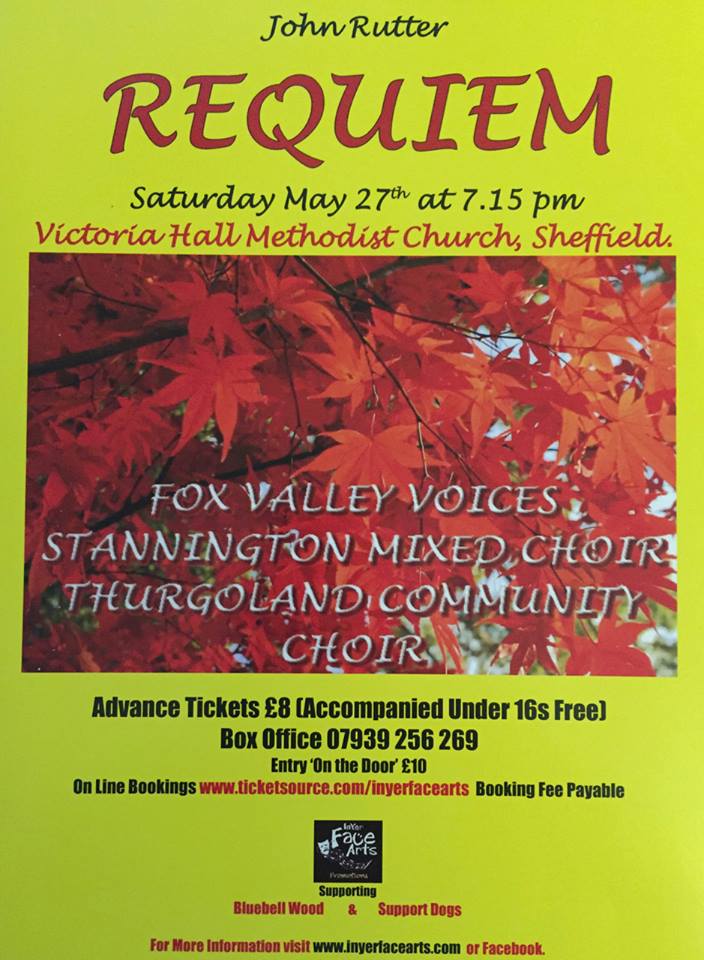
HEADS-UP SHEFFIELD and surrounding area: Save the Date, May 27th

“The chamber choir, for which I sing, along with two other local choirs (Stannington Mixed and Thurgoland Community Choir) and the talented Inyerface Arts musicians and soloists, are performing John Rutter’s Requiem as the core of a concert on Saturday, 27th May at the magnificent Victoria Hall in Sheffield. It would be very much appreciated it if you were able to share this amongst your friends, who might enjoy an amazing choral experience … Thank you.” John Anstie (My Poetry Library), is a singer, musician, poet and a member of The BeZine core team.