Public domain photograph of American poet Walt Whitman (1819-1892) This image was made in 1887 in New York, by photographer George C. Cox. The image is said to have been Whitman’s favorite from the photo-session; Cox published about seven images for Whitman, who so admired this image that he even sent a copy to the poet Tennyson in England.
This is a much expanded version of an old post. In light of so many working on novels for [inter]National Novel Writing Month (NaNoWriMo), it seems a good idea to explore this topic again.
To self-publish or not: It’s an important consideration. Some people are against it. They seek out agents and publishers and we can’t blame them. There’s validation and credibility there. Maybe though, we should weigh our circumstances and the nature of our book before making a decision.
I have an elderly friend who has struggled for years to get a book published by an academic press. She’s a good writer and it’s a good book, expertly researched. Because her subject will appeal to the unique interest of a narrow population, an easily targeted audience, I suspect she might find her perspective readers and they her without too much trouble. This would bring her enormous pleasure and no doubt would please her prospective audience as well. As it is, she’s not open to self-publishing. The gift of her book is languishing in a file drawer where, given her circumstances and the nature of her book, it is likely to stay.
No matter how we feel about self-publishing books and those publishers we once called “vanity press,” one thing’s for sure, if we are blogging and/or posting our poems on Facebook, we’re already self-publishing. And why not? If we don’t believe in ourselves, who else will? (I rarely post a poem to Facebook, not because I think it’s bad but because the visual aesthetic – or rather lack of – doesn’t appeal to me.)
Frontispiece from Common Sense first edition, 1776
We writers have long and principled tradition of self-publishing that didn’t wait for blogging technology or Amazon self-publish, CreateSpace or Lulu. The American poet Walt Whitman (1819-1892) and the first edition of his Leaves of Grass always comes to mind when I think of self-published work. There’s also the English-American “pamphleteer” – Thomas Paine (1737-1809) – who anonymously self-published Common Sense, an American pro-independence monograph. It was a best-seller in its day.
Self-publishing is a tradition that spans the globe and started long before Paine and Whitman. Self-published books have been known to sell well, to get picked up by publishers and to win awards. My only suggestion would be to find a good editor to work with you. We all need an editor – a second set of eyes – to ensure logic, flow, and accuracy.
Here for hope and inspiration is a partial list of books that started out self-published:
No Thanks, e.e. cummings
Still Alice, Lisa Genova
My Blood Approves, Amanda Hocking
Dust, Hugh Howey
Eragon, Christopher Paolini
Peter Rabbit, Beatrix Potter
The Celestine Prophecy, An Adventure, James Redfield
The Riyria Revelations, Michael J. Sullivan
Ten Tiny Breaths, K.A. Tucker
Damaged, H.M. Ward
Started self-publishing after being traditionally published:
“In 2011 I decided it was time to start publishing my own books. The digital revolution had made that possible with retailers like Amazon, B&N, iBooks, Google and Kobo opening their doors to authors. I formed Fog City Publishing and became my own publisher. It’s been a thrilling few years since then. I’ve sold over 7 million books since going out on my own. I hit #1 on the NY Times Bestseller List with my novel Summer Secrets and since then twenty-two other titles have hit both the NYT and USA Today Bestseller Lists. In July 2014, I was named the Amazon KDP Bestselling Author of All Time! Did I say it’s been a thrilling few years?” Barbara Freethy (Women’s Fiction, Contemporary Romance, and Romantic Suspense / four star reads.) Read more HERE.
The women and men at their devices …
In fine Whitmanesque publishing tradition
Put out newfangled electronic edition
A word symphonic record to leave behind
Carefully tweaked, tempered and timed
Baring witness to love, history, and crime
All good-natured, well-reasoned, and rhymed
Poet and writer, I was once columnist and associate editor of a regional employment publication. I currently run this site, The Poet by Day, an information hub for poets and writers. I am the managing editor of The BeZine published by The Bardo Group Beguines (originally The Bardo Group), a virtual arts collective I founded. I am a weekly contributor to Beguine Again, a site showcasing spiritual writers. My work is featured in a variety of publications and on sites, including: Levure littéraure, Ramingo’s Porch, Vita Brevis Literature,Compass Rose, Connotation Press, The Bar None Group, Salamander Cove, Second Light, I Am Not a Silent Poet, Meta / Phor(e) /Play, and California Woman. My poetry was recently read byNorthern California actor Richard Lingua for Poetry Woodshed, Belfast Community Radio. I was featured in a lengthy interview on the Creative Nexus Radio Show where I was dubbed “Poetry Champion.”
Travers in the role of Titania in a production of A Midsummer Night’s Dream, c. 1924
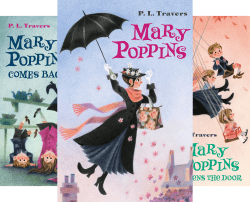
Some of us say we write from the heart, some from spirit. P. L. Travers, OBE(1899-1996, Australian national, British citizen), actress, poet and the conjuror of Mary Poppins, wrote in a Parabola* article that
I sit down inside my abdomen and brood and brood until I figure out how I feel about it.”
I noted the quotation above but I don’t remember the exact context of the piece. I think it was Tavers’ way of talking about the exploration of a painful childhood, one out of which she created a children’s classic. She once told a friend that the people and the objects of her early life were like a spindle around which she wove the threads of her imagination. That worked for her as a writer and for us as readers. In using her childhood to create characters and stories, she gave us a gift that ranks with those given to us by J.M. Barrie, L. Frank Baum, C.S. Lewis and Lewis Carroll.
Of course art-making isn’t therapy, but I often think artists don’t need to be quite so loath to admit some relationship between art-making and therapy.” Short-story writer, Deborah Eisenberg, Paris Review Interview #218, 2016
Travers’ why of writing was – at least in part – to heal and to imagine the childhood she would have liked.
Ultimately, we write for many reasons: to recover, to find closure or completion, to find meaning and understanding and to cherish the gifts of life. I relish life through writing. When I write a poem about an experience or observation, it’s often a way to savor it, prolong or relive the pleasure or heal the wound. It’s a way to live hugely. On the other hand, sometimes I use fiction to reframe experience. I think most people would agree that we also write to have our say and – in the spirit of Joseph Conrad – to help the reader see. That may sound to some like colossal chutzpah, but we all have something to say. We all have a perspective to share.
No matter where our writing comes from or why we write, we have to get the job done. For many of us the muse is a fairly consistent companion. For others it’s a struggle to connect. Either way, we develop habits, disciplines, and rituals to court the muse. It is often as though there is a sort of magical thinking or personal superstition in play. We must sit in this chair at this desk or at this cafe or we simply can’t write. Perhaps that’s why well-known and prolific writers are always being asked how, when and where they write, just another way of saying, “How do you court the muse?” The answers writers give can reveal demons, superstitions, irritation with the question, or even a tongue firmly in cheek. The “tips” or “rules” can be wise, cool, pragmatic, quirky, absurd or disagreeable. You may end up feeling affirmed, acquiring a useful tool, or finding yourself entertained.
Henry Miller‘spolicy was to work on one project at a time. Some will disagree with that. I do. I think many of us find one activity feeds another, that our multiple projects or different artistic outlets form a rich diet for the muse and make us more productive. I have a writer friend who says, “suum cuique” . . . to each his own . . . though to the old Romans that phrase was about justice (may each get their due), not about writing rituals. But the point is made.
John Steinbeck’s tips are pragmatic, born of a long, intense and consistent experience. In the fall of 1968, Steinbeck was actually too ill for a standard interview and one was pieced together from the East of Eden diaries (Journal of a Novel) and from some letters, which were later collected and published in one book. The tips have been widely published and were also included in Steinbeck’s Paris Review, The Art of Fiction** interview. [The Paris Review Interviews are required reading for writers and poets.] Steinbeck’s second tip is “Write freely and as rapidly as possible and throw the whole thing on paper. Never correct or rewrite until the whole thing is down. Rewrite in process is usually found to be an excuse for not going on. It also interferes with flow and rhythm which can only come from a kind of unconscious association with the material.” This is consistent with the philosophy and structure of NaNoWriMo. You write, write, write all month and don’t do your rewrites, editing and proofing until after that.
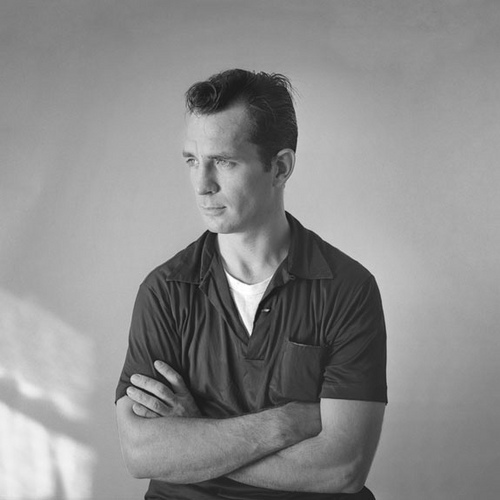
Jack Kerouac’s famous thirty tips are … well, they’re Jack … quirky … but useful … You can check them out HERE on the Gotham Writers’ Workshop site.
Jack Kerouac (1922-1969), American poet and novelist
The best tip I ever got was to “listen to and feel, see and smell the world around you.” Inspiration is everywhere: in the air and its scents, in the conversations you overhear, in your self-talk and memories, in the arguments with your spouse and the aroma of dinner cooking. It’s in the coo of the mourning dove, in the feel of your child’s hand in yours, in your own hopes and dreams and the life experiences and observations others share with you. Inspiration is in the news and in history. Be open to everything without exception. Nora Ephron constantly reminded those around her that everything “is copy.” We might say that everything holds the seed of a story, a character, or a scene.
Some of my most profitable lessons came from my high school English teacher, Sister Francis of Assisi, C.S.J. who encouraged my early writing. Sometimes I imagine her leaning over my desk and I hear her whispering …
What is it you really want to say?
Is this word appropriate? It is accurate?
What is your theme?
Does this really have to rhyme? Be cautious of rhyming.
Is this artfully dramatic or is it bad melodrama?
Is that lyrical or flowery?”
Read and read some more:
What writers do you enjoy most? Why? What can you learn from reading their work?
What novels do you dislike? Why? What can you learn from your reaction?
Reorder and rename the everyday. In truth the ordinary is often extraordinary and it’s your job to recognise and illustrate this.
Practically speaking, the muse is probably most responsive to the simple act of gluing the seats of our pants to our chairs and staying there until the job is done. Perhaps the muse is not fickle. Perhaps to be constant she requires our constancy.
Tips, tricks and rules are helpful and can be inspiring, but take them under advisement. In the end, the best magic for courting the muse is the magic that works for you ….
Work calmly, joyously, recklessly on whatever is in hand”. Henry Miller
* Parabola is a magazine of The Society for the Study of Myth and Tradition. P.L. Travers was one of the founders.
** The Paris Review, The Art of Fictioninterviews from 1953 through 2016 are freely posted online.
Poet and writer, I was once columnist and the associate editor of a regional employment publication. Currently I run this site, The Poet by Day, an information hub for poets and writers. I am the managing editor of The BeZine published by The Bardo Group Beguines (originally The Bardo Group), a virtual arts collective I founded. I am a weekly contributor to Beguine Again, a site showcasing spiritual writers.
My work is featured in a variety of publications and on sites, including: Levure littéraure, Ramingo’s Porch, Vita Brevis Literature,Compass Rose, Connotation Press, The River Journal,The Bar None Group, Salamander Cove, Second Light, I Am Not a Silent Poet, Meta / Phor(e) /Play, and California Woman
Thank you for sharing your love of words. Comments will appear after moderation.
OUR NEW NAME AND SUBTITLE:THE BARDO GROUP, an international collective fostering proximity, peace and healing through our love of the arts and humanities
We have added “Group” to our new name to be inclusive and accurate, acknowledging the many people who support this blogazine through linking, reblogs, mentions, comments and as core team members, contributors, guests and visitors. All are valued. This has never been a “my” blog. It has always been an “our” blog.
We’ve kept “Bardo” in the title because that word is associated with this site.
The Bardo Group is “international.” Our contributors are from: India, South Africa, North Africa, Saudi Arabia, China, Malaysia, Canada, the United States and England.
We are nurturing a growth that goes beyond the simple idea of “connectivity” to a more productive virtual “proximity” … think in terms of artistic gatherings – not always formally organized – that you’ve read about…







 Jamie Dedes' THE POET BY DAY Webzine