SELF-PITY AND SELF-AGGRANDIZEMENT, the snares of writing from one’s own biography
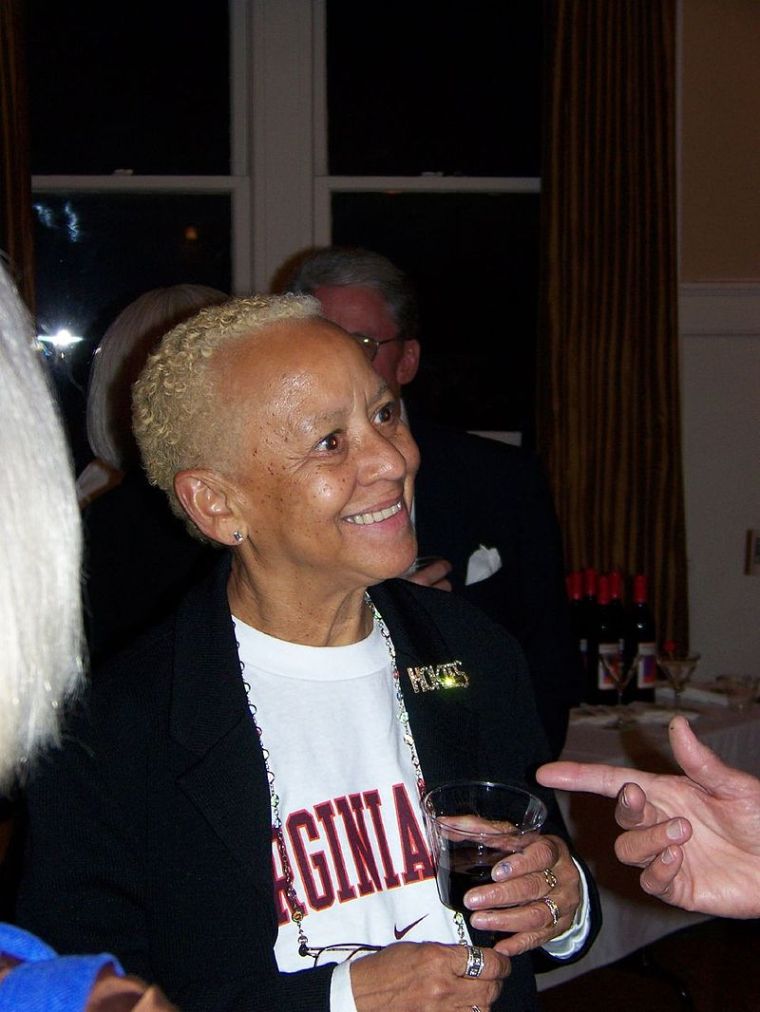
IMG_0689 (1)What feeds our imagination: the lives of others or our own lives? My impulse is to say a healthy dollop of each, but it is always interesting to see what someone else has to say.  Poet Nikki Giovanni says,

I want to be clear about this. If you wrote from experience, you’d get maybe one book, maybe three poems. Writers write from empathy.”

51ZfrreZciL._SX332_BO1,204,203,200_

In contrast the Dominica-born British novelist Jean Rhys wrote five stunning novels milked from her own life. Autobiographic elements are even in Wide Sargasso Sea, Rhys’ post-colonial drama in which travesties of racial inequality, patriarchy, displacement and assimilation are themes. This book, a much-lauded prequel to Charlotte Brontë’s Jane Eyre, evolved from Rhys’ dissatisfaction with Brontë’s treatment of Antoinette Cosway, from Rhys’ own life experience of rejection and emotional turmoil, and from her observation of and distress with how the people of Dominica were viewed and treated by colonizers.  The book is her (re)vision of Antoinette Cosway, a Creole heiress, married for her money to an unnamed English gentleman who changed her name and pronounced her mad. Antoinette does not fit in with the Europeans or the Jamaicans. In her own life Jean Rhys never felt that she fit in.

Jean Rhys was an astute self-observer, scrupulously honest.  She worked hard to avoid both self-pity and self-aggrandizement or congratulation. If you’ve read her work you know she largely succeeded.

In one of Rhys journals she imagines herself in court:

It is in myself.

What is?

All. Good evil, love, hate, life, death, beauty, ugliness.

And in everyone?

I do not know everyone. I only know myself.

And others?

I do not know them. I see them as trees walking.

Counsel for the Prosecution: There you are!  Didn’t take long, did it?

Clearly Jean Rhys felt her own life was what she knew best, the podium from which she could speak. She did what she felt called to do, what was natural for her. By being careful and conscious she avoided the pitfalls of self-pity and self-aggrandizement. Certainly to one degree or another writing is therapy. Most of us agree on that. At its best, however, it doesn’t read that way.

© 2016, Jamie Dedes

CELEBRATING AMERICAN SHE-POETS (17): NIKKI GIOVANNI, Quilting the Black-eyed Pea

Nikki Giovanni (1943), American poet, writer, activist and educator

Everyone deserves Sanctuary a place to go where you are
safe
Art offers Sanctuary to everyone willing
to open their hearts as well as their lives”
excerpt for Art Sanctuary in Quilting the Black-Eyed Pea, poems and not quite poems

Nikki Giovanni is lauded as iconic, luminous, adventuresome and courageous.  She is all of these, but I think what I like most about her is that she is straight-forward, practical and compassionate. These characteristics are the underpinning that make her a rather extraordinary poet, a powerful combination of visceral and intellectual.

There is always something to do. There are hungry people to feed, naked people to clothe, sick people to comfort and make well. And while I don’t expect you to save the world I do think it’s not asking too much for you to love those with whom you sleep, share the happiness of those whom you call friend, engage those among you who are visionary and remove from your life those who offer you depression, despair and disrespect.”

Nikki Giovanni first came to note in the late ’60s and early ’70s as part of the Civil Rights, Black Arts and Black Power movements. The strength of her voice punctuated our poetic and political world and she has written, taught and advocated for uncommon good sense ever since. As with all of us, she has many roles in life including daughter, mother, friend and lung cancer survivor. It is clear in her work that she values family and community and supports and encourages these values in others.

Ms. Giovanni was born in Knoxville, Tennessee. She earned her undergraduate degree in history with honors at Fisk University and did her graduate work at the University of Pennsylvania and Columbia University. Her knowledge of history richly informs her perspectives in poetry, essay and talk. She taught at several universities including Virginia Tech and was at Virginia Tech for the shooting by Seung-Hui Cho in 2007 when he murdered thirty-seven people.  Cho was a student in her poetry class. She sensed something was amiss with him and asked the authorities to remove him from her class.  After the shooting, she spoke at the convocation.

We know we did nothing to deserve it. But neither does a child in Africa dying of AIDS. Neither do the invisible children walking the night awake to avoid being captured by a rogue army. Neither does the baby elephant watching his community being devastated for ivory. Neither does the Mexican child looking for fresh water….We are Virginia Tech….We will prevail.”

This video is the first of two in this post. If you are reading from an email subscription, you will have to link through to the site to view the videos.

Ms Giovanni’s early writing was a response to the assassinations of Martin Luther King, Jr., John and Robert Kennedy, and Medgar Evans.  Her first book (1968) Black Feeling, Black Talk/Black Judgement is considered by some to be the one of the most important books on the black-rights movement.  Younger people reading it will want to research the history of the era to put the book in context.

Ms. Giovanni has written some twenty-one books of poetry as well as autobiography and children’s books. She’s edited anthologies and collaborated on books with James Baldwin and Margaret Walker. She’s won countless awards for both her work and her activism. The following video is a reading of Quilting the Black-Eyed Pea (We’re Going to Mars).

I want to be clear about this. If you wrote from experience, you’d get maybe one book, maybe three poems. Writers write from empathy.”

portrait ~ Brett Weinstein under CC BY-SA 2.0