Page 6 of 12

THE BeZINE, July 2016; Vol. 2/Issue 10; Faith in Things Seen and Unseen

If the doors of perception were cleansed every thing would appear to man as it is, infinite.
For man has closed himself up, till he sees all things thro’ narrow chinks of his cavern.
The Marriage of Heaven and Hell, William Blake

This is the original Table of Contents from the July 15 issue.  Working links to all the pieces are included here.

Faith! In the discussions here you won’t find consistent perspective or theology. You will find faith explored in its many manifestations, religious and otherwise. You’ll find it both shaken and unshakable and in things of the spirit, in nature and humanity, in intuition and in self and family. Unity here is not in things creedal but in the shared values of peace, sustainability and social justice and for many of us – implicitly – in ultimate salvation through artistic expression.

Unitarian Universalist Minister, Rev. Ben Meyers, starts us with an appeal to religions to give their prayers and vigils legs, to befriend one another into the groundswell of local social justice initiatives that ultimately help to inform and bolster global efforts toward equity, justice and peace.This couldn’t be more appropriate as The BeZine “went to press” amid news reports of yet more violence.

You will find our usual diversity represented: skepticism and atheism, the three Abrahamic traditions, shamanism, and the mystical perspectives of Buddhism, Hinduism and Sufism.

Our special selection of lead features and poems are by: shamanic practitioner and psychotherapist, Michael Watson; resident skeptic, James R. Cowles; the always engaging and level-headed analyst, Priscilla Galasso; the fallen altar boy, poet Joe Hesch; professional story-teller and photographer, Naomi Baltuck; our renaissance man in Sheffield, John Anstie; and university librarian, poet and artist, Corina Ravenscraft, on the ultimate triumph of the Universe.

Speaking from positions of their unshakable religious faith are: Algerian poet, Imen Benyoub, on the spiritual joys and family and community connection she finds in the holy tradition of Ramadan; Catholic Theologian, Fr. Daniel S Sormani, theology professor at Ateneo de Manila University, warmly writes about lessons learned from the homely life of the Blessed Virgin Mary; and our gentle Italian literary contributor, Mendes Biondo, tells of inspiration from the Bishop of Hippo Regius (current Annaba, Algeria), St. Augustine. Imen and Mendes are our two student contributors.

Two of our contributors allude to child sexual abuse but a third, Terri Muuss, addresses it head-on and in depth. These are experiences that can strengthen faith in self, though that doesn’t come without pain and work. Terri is featured this month in our popular “Getting to Know You” section.

Our July poetry collection covers matters spiritual, emotional and environmental with excerpts from published collections by Zine regulars: Matt Pasca, Terri Muuss, Myra Schneider, Silva Merjanian and Michael Dickel, contributing editor to The BeZine. With joy we welcome back two lights: German poet, photographer and educator, Dr. Aprilia Zank and English poet, Patricia Leighton.

New to our pages in this issue are:

  • Connie Spearing  who writes of finally “seeing” her Irish grandmother with the accidental discovery of her family’s history during and after World War 1.
  • Sandra Renew’s‘s poetry expresses her opinions on the state of the world. She wonders who sleeps at night? Who is lucky enough to live in safety and peace?
  • Anca Mihaela Bruma, citizen of world, educated in Rumania, is a poet who writes spiritual autobiography. Anca wanted to incorporate some lovely music and art into her posts. Due to copyrights in one case  (Dorina Costras’ art) and technical incompetence (mine) in the other, we are unable to share Dorina’s paintings or Anca’s soundcloud recordings. However you can view Dorina’s work HERE. You can listen to Anca on soundcloud HERE.

****

One last word: DON’T FORGET TO SAVE THE DATE Saturday, 24 September 2016 is The BeZine’s 100,000 Poets for Change, an event which we host virtually.  This event is part of an  important annual arts initiative for global solidarity and peace, social justice and sustainability. Reader participation is invited and encouraged. This is a good time to share your work in the service of a worthy cause.  As is our tradition, all submissions will be archived here and at Standford University. Instructions for participation will be provided on our blog that day with Michael Dickel serving as Master of Ceremonies.  Between Michael and me, the event will run from morning in Israel to midnight in California. The theme this year is Environment/Environmental Justice. More detail HERE.

****

Now, come friends.  Read.  Nourish yourselves at our table …

In the spirit of peace, love and community
and on behalf of The Bardo Group Beguines,
Jamie Dedes
Founding and Managing Editor
The BeZine

EDITORIAL

The World in Vigil, by Rev. Ben Meyers

THEME: FAITH IN ALL THINGS SEEN and UNSEEN

Lead Features

Knowing, Michael Watson
Varieties of Faith – Rational and Religous, James R. Cowles
Faith Means Making Choices, Priscilla Galasso
A Perfect World, Naomi Baltuck
Falling But Willing, Joseph Hesch
The Pine Cone Project, John Anstie
Regarding Faith, Corina Ravenscraft

Essays

A Month of Light, Imen Benyoub
The Blessed Mother: She Reminds Me of Who I Am and Who I Should Be, Fr. Daniel S. Sormani, C.S.Sp.
A Little Story of Faith, Mendes Biondo
NOTIONS OF THE SACRED: Poetry as Spritual Practice, Jamie Dedes
The Grandmother I Didn’t See, Connie Spearing

Speculative Flash Fiction

Moshe’s House in Space, Michael Dickle

Poetry

Rhetoric Introspection, Anca Mihaela Bruma
Our Autumn Spring, Anca Mihaela Bruma
Hindsight, Anca Mihaela Bruma

Unidos en Cristo, a poem in English y en español, Jamie Dedes

Three Poems, Michael Dickel
En Gedi, Michael Dickel
Hybrid: Warm Hunger, Michael Dickel

Lost Behind Clouds in Skies of Blue, Joseph Hesch
Hang in There, Joseph Hesch

And the Village Still Sings for Taha Muhammad Ali, Patricia Leighton

Coverage, Silva Merjanian

Passing, Terri Muuss
What Heals, Terri Muuss

Tanyou (In Search of Quietude), Matt Pasca
Silence, Matt Pasca
Toll, Matt Pasca
When Joy Breaks, Matt Pasca

Bring all those who where led astray out of the desert, Sandra Renew

3 a.m., Myra Schneider

prayer for shadows, Aprilia Zank

GETTING TO KNOW YOU

Terri Muuss, Over Exposed

CONNECT WITH US

IMG_0234Beguine Again, Spiritual Community and Practice

Facebook, The Bardo Group Beguines

Twitter, The Bardo Group Beguines

Access to the biographies of our core team, contributing writers and guest writers is in The BeZine blogroll where you can also find links to archived issues of The BeZine (currently in the process of updating), our Mission Statement and Submission Guidelines.

THE EVOLUTION Shall Be Written in Poetry

Face the Monster

When we marched,
Slithered
Through slimy mud past riot-shielded cops in Alexander
(This is the ghetto.)
While children peered wild-eyed from dark windows,
For some of us these were re-runs of earlier apartheid-burdened days.
But, then, it was defiant resolution that drove our hearts and braced our feet.
Now, sadness at betrayal sat sadly on our hearts.
Our shouted slogans hung heavy over us in grimy air.
We winced at familiar oft-repeated lies
Oft-repeated lies.

Dennis Brutus, South African Poet/Activist (1924 – 2009), in Leafdrift

There are people for whom poetry exists almost exclusively as an aid to social change, to political discourse– not as some sort of didacticism – but as a discussion, a wake up call (consciousness raising), a way of approaching some truth, finding some meaning, encouraging resolution. A horrific war photo, a terrorist act, a homeless person outside the grocery, a friend in pain that can be traced to a social injustice, and the words start to flow. There’s the urge to respond, to do something …. even if that something is simply the passion to express the moment in poetry. Perhaps righteous passion is the strongest form of resistance and poetry the conscience of the collective soul.

In Dennis Brutus’ poem above, he points to the world we now live in. Having survived Robben Island with Nelson Mandela, he was freed only to find that while racial apartheid ended in South Africa it had become world-pervasive,, expressing itself as economic inequality. The few haves vs. the masses of have-nots.

I can’t help but think that the revolutionary peace, justice and sustainability so many of us seek is rooted in the slow transformation of values. Hence, it is more evolutionary than revolutionary. As such, perhaps that change is as gradual as the pervasiveness of our desires.

Perhaps it is evident in our blogosphere and the heart-born prose and poems of simple folk like you and me with nary a pundit or politician among us. Perhaps it’s a bottom-up thing, more likely to be blogged than broadcast, often rising from homespun poetry – outsider art – sometimes rudimentary and awkward, but always quiet and true and slow like a secret whispered from one person to the next. It is perhaps something stewing even as we write, read, and encourage one another. Perhaps there is some bone and muscle in what we do. Individually we have miniscule “audiences.” Collectively we speak to enormous and geographically diverse populations.

So let some impact from my words echo resonance
lend impulse to the bright looming dawn

Dennis Brutus

Poem on, my friends, and keep your ideals.  They are real …

… and to my country-folk today …

Happy Fourth of July!

In the confusion of these days, let’s not abandon the highest, most ethical and sensible of our aspirations.

© 2016, Jamie Dedes, All rights reserved; illustration courtesy of Frits Ahlefeldt, Public Domain Pictures.net.

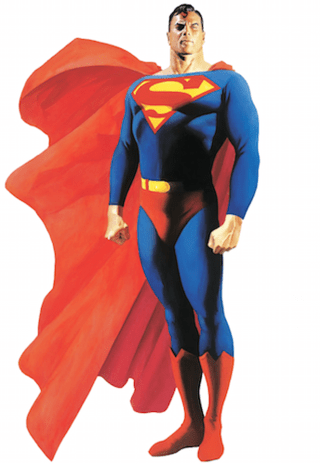
HAPPY ANNIVERSARY, SUPERMAN … and therein lies a writing prompt for you

SupermanRoss“On a purely personal level, it’s very strange, because as a kid, Superman informed my personality. Now I’ve been given the job of forming Superman’s personality and, in some ways, drawing on my own background.”  J. Michael Straczynski author of Superman: Earth One

The first comic about the character (an immigrant, by the way) that was destined to become an American cultural icon came out on this day in 1938.  Superman, the invention of Jerry Siegal and Joe Shuster, fought for “truth, justice and the American way.” He was ultimately affiliated with the Justice League and the Legion of Super-Heroes. He was the first of the great comic book superheros. He’s come a long way in both print and film media since 1938 and since this 1950s television version:

(I admit I could have used a more contemporary video but this is the version I grew up with and I still love it best.)
Note: If you are reading this post from an email, you will have to link through to the blog to see the video.

Yesterday, I wrote a poem, an homage, to real-life superheroes, the women and men who are dedicated  to fighting injustice and laying the groundwork for understanding and peace: the seeds of awakening. I wrote it because I’ve just finished reading some books by a brave and intelligent activist for common sense and social justice. The poem started out being an homage to her, but I began to think of and tick-off the names in my mind of the people who have invested their lives (and sometimes lost them) in the work of peace and justice and so had to broaden the poem’s reference.  Though the poem is written in the feminine, it is meant to be inclusive of all who fight for justice, female and male.

WRITING PROMPT: Write a poem, story or essay about a real-life superhero you admire. Show why you admire this person and perhaps what you try to emulate. Or, alternately, create your own fictitious superhero. Remember, every superhero has to have a vulnerability. Superman’s was krypton.

Illustration: Superman as depicted in The World’s Greatest Super-Heroes (August 2005). Art by Alex Ross. Used under U.S. fair use doctrine.

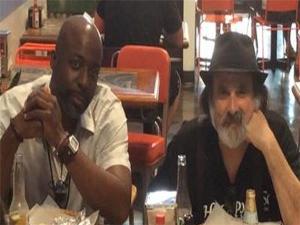
In Conversation: Poet/Musician Graffiti Bleu & Michael Rothenberg, cofounder of the global peace initiative, 100,000 Poets for Change

810919_RJ8dSr1y

You can listen to the two-hour podcast HERE. Recommended! This post is meant as an alert and also to share my two cents.

As I write, it’s just a few hours after listening to Just My Thoughts with Graffiti Bleu on BlogTalk Radio. The show started with an exploration of What does the revolution look like? with Graffiti Blue, Michael Rothenberg, and the show’s panel and callers comprised of poets involved in 100,000 Poets for Change (100TPC).

Harkening back to Gil Scott-Heron and his poem, The Revolution Will Not Be Televised,  part of the discussion was on technology and social networking and their roles in fostering peace, social justice and sustainability. When Heron wrote his poem in 1971, the means to formulate and distribute information and opinion were dominated by mainstream media and corporate interest, which were not in sympathy with the revolution Heron envisioned. Those interests are still dominant and still lack sympathy, but there’s something of a balance occurring – however imperfect – now that we plain folk have access to the tools of technology and social networking. Without social networking, we wouldn’t have 100TPC, which can happily be said to have gone viral since Michael Rothenberg put out a call on Facebook for poets to join in a global peace effort back in 2010. While each of us in the “100,000” has a relatively small “audience” together we touch many, many minds and hearts. We do have an agenda, but it doesn’t foment strife. We’re not in anyone’s pocket. That’s clean power. It’s power to …

On a personal level, one benefit of technology is that people who are homebound – as I sometimes am – can take part in change-making initiatives more actively than simply writing letters-to-the-editor or to our legislators, which is not to say we should give that up. I started a virtual 100TPC via The BeZine and with The Bardo Group Beguines so that disabled people and people who do not live near a 100TPC event would have the opportunity to have their say, to lend their support. Our 2015 commemorative page is HERE.

We need to do more than “talk.”  Agreed. And I think that one of things 100TPC gives us is hope … huge hope from seeing that there are people in every nook-and-cranny of the world who share our values and priorities. This helps us to keep on keeping on with our local grassroots initiatives as well as our broader advocacy. This serves to sustain our faith and commitment.

Ultimately for me, 100TPC is about breaking down barriers, crossing boarders. It leads the way in our evolutionary journey toward a sustainable peace. In the documentary film Ten Questions for the Dalai Lamathe Dalai Lama says “we need more festivals.”  In other words, if we get to know people, if we break bread with them or share a bowl of rice, we are less likely to think of them as “other.”  It will be more difficult to turn around the next day and do harm.  100TPC is our festival. Once we’ve shared hearts, souls and stories through poetry, how can we marginalize anyone? How can we abandon or abuse?

Can the revolution be bloodless? The question is really “will it be?” I don’t think so. I don’t think revolutions are by their very nature “bloodless.” The psychopaths will always be with us and until we stop marginalizing people and leaving them desperate and vulnerable to tyrants, we’ll never have bloodless reform. We’ll never achieve a sustainable peace. Peace is a state that takes awareness and awareness takes growth, which is an evolutionary process.  That doesn’t mean we should give up. It means that as poets we should continue to bear witness, to touch hearts, to raise consciousness and to nurture the process of growth. As poet Michael Dickel said in an interview on this site HERE: “. . . it may not be ours to see the work completed, but that does not free us from the responsibility to do the work.”

© 2016, words, Jamie Dedes, All rights reserved; photograph courtesy of Graffiti Bleu and Michael Rothenberg.