“I adore social media. FaceBook and WordPress have been incredible avenues of not only reading the words of poets world-wide, but also gaining friends, virtual but real . . .The poets are people like me and you who want the same thing: respect, a safe and healthy environment for family and friends, and the freedom to have fun without being hurt or harming others. I think the great [William Shakespeare] would have loved the world-wide web…” Clarissa Simmens
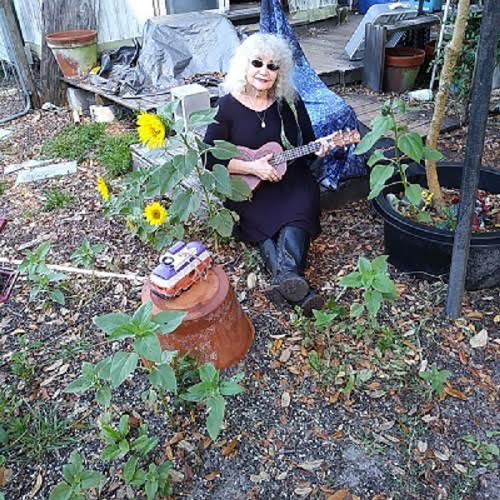
A couple of weeks ago The Poet by Day, Wednesday Writing Prompt was Spinning With Shakespeare. Readers were challenged to write a poem using phrases from Shakespeare that have come into general usage. It was fun. The poems were great. You can read them HERE. Meanwhile, it happens that Clarissa Simmens has a passion for Shakespeare, so much so that she does a yearly poetic homage to WS, as she refers to him. She shared her 2018 homage with us in comments. Here (below) are those poems for you to read today along with an interview of Clarissa and her bio.
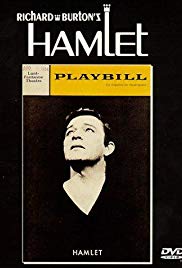
Shakespearian Trivia: As I read through Clarissa’s responses to my interview questions, I had to chuckle. Her intro to Shakespeare was in high school and included a local movie-theater-showing of Hamlet with Richard Burton in the lead. I suspect Clarissa and I are of an age and may have seen the same show. My intro to Shakespeare included the 1964 “electrovision” (early video/closed circuit TV) version of Hamlet at our own local movie theater. Apparently this presentation was being delivered to high school students all over the U.S. as an English literature course requirement. The production was directed by Sir John Gielgud. It was done sans period costumes and with minimal sets. It is said that Burton disliked the production and wanted the videos destroyed. Apparently at least one copy survived. I found it HERE on YouTube. Time has tampered with the visual but there’s nothing wrong with the sound. Close your eyes and listen. Enjoyable!
– Jamie Dedes
THE UNCERTAIN GLORY OF AN APRIL DAY…
Shakespeare’s Birthday Approximately April 23, 1564
In cold country I sadly plucked the lute
Shining in England, you the rising son {sun}
Seeking me in verse, yet remaining mute
Why don’t you know we are meant to be one
Oh, dear Will, you were fated to be mine
Although centuries separate us now
Twin souls formed by a heavenly design
Calling your name, but me you disavow
Yet I’ve glimpsed your soul somewhere in my space
Perhaps in a yellow striped bumble bee
And though you changed I recognize your face
But stung by your insensitivity
Wading through tears, my grief so prodigious
We’ve lost so much, love now sacrilegious
(c) 2018 Clarissa Simmens (ViataMaja)
AND HERE IS MY ANNUAL BIRTHDAY SONNET CREATED FROM THE FIRST LINES OF SHAKESPEARE’S SONNETS:
#60 Sin of self-love possesseth all mine eye
#88 When thou shalt be disposed to set me light
#66 Tired with all these, for restful death I cry
#80 O, how I faint when I of you do write.
#139 O, call not me to justify the wrong
#150 O, from what power hast thou this powerful might
#100 Where art thou, Muse, that thou forget’st so long
#28 How can I then return in happy plight
#43 When most I wink, then do mine eyes best see
#66 Tired with all these, for restful death I cry
#52 So am I as the rich, whose blessed key
#115 Those lines that I before have writ do lie
#56 Sweet love, renew thy force; be it not said
#71 No longer mourn for me when I am dead
Characters from Shakespeare’s plays. Unknown artist.
INTERVIEW
JAMIE:When and how did your passion for Shakespeare start? CLARISSA: I saw my first Shakespeare play in high school. It was a class trip to a local movie house showing Hamlet starring Richard Burton. This was a filming of a rehearsal with no scenery or costumes. There Burton was in a black sweater (my favorite clothing color) and without the distraction of a mise en scène, Hamlet suddenly became real to me: just words and emotion. I then began reading his plays very carefully. Around that time, I bought a copy of MacBird!, the Macbeth satire centering around the theory that President Johnson was behind the JFK assassination. Once again, I saw the incredible relevance of WS. I began reading him for enjoyment, rather than to pass school tests and although not covered in class, I discovered his sonnets. How I love the structure of a Shakespearean Sonnet! Everything WS wrote can be seen in a modern context and that was what I needed to learn in order to enjoy him.
JAMIE: What drew you to writing your own poetry?
CLARISSA: At about age 3 or 4 I had a Little Golden Book called A Bird Can Fly and So Can I. There was about a line or two for a series of animals and my parents read it to me so many times that I memorized it and composed my own poem about a pig. I don’t know if I had an innate sense of rhythm or if it is the autism, but although I was never a finger waver (we are all different on the Autism Spectrum) I was certainly a “counter” and loved flicking my fingers over numbers and syllables especially. Rhyming poetry just suited me. Didn’t know the name, but when I finally learned about Iambic Pentameter (and all those other meters) I began writing my own sonnets. I mostly write open and free verse now, but I think the physical part of words has been replaced by my playing ukulele and guitar. Something about pressing the chords and plucking them on string instruments reminds me of rhythmic, but structured, writing.
JAMIE:Who are the poets other than Shakespeare that you admire?
CLARISSA: The great Confessional Poet Sylvia Plath will always be my heroine because of the honest sharing of her mental health struggle. It is the reason why I mention my autism in many of my poems. Another is Emily Dickinson with her slashing dashes. I tend to end my poems with ellipses because it is as if my voice is trailing off… But one day I wondered if I was unconsciously doing a passive-aggressive imitation of her. Marina Tsvetaeva who said “I know the truth” (and she did) has touched me no matter how many times I read her poems. Allen Ginsberg’s Howl changed my whole opinion of poetry, indoctrinating me into a lifetime of so-called hippie-ism that can be interpreted as love of peace and tree-hugging. TS Eliot’s Waste Land, despite his bigotry in other works, has always remained one of my favorite poems (as you can see in my first poetry book Madame Sosostris Explains). Finally, I would add Bob Dylan. Once announcing to a Survey of American Lit class that he was the greatest contemporary poet, the class and the instructor howled with laughter, so all these years later I finally felt vindicated when he won the Nobel Prize in Literature. JAMIE:What is the importance of poetry on the global scene? I adore social media. FaceBook and WordPress have been incredible avenues of not only reading the words of poets world-wide, but also gaining friends, virtual but real, nevertheless. I don’t sell many poetry books on Amazon but am pleased to see that many of my books are borrowed in India and Japan. Most of all, it is the only way to truly learn about different cultures. This is why I enjoy your associated Ezines including The BeZine and The Poet By Day, 100,000 Poets for Change, and other sites you have generously shared. Reading globally, and being able to comment on other works, are what I consider grassroots-level knowledge. These poems are not media soundbites or part of a political or monetary agenda. The poets are people like me and you who want the same thing: respect, a safe and healthy environment for family and friends, and the freedom to have fun without being hurt or harming others. I think the great WS would have loved the world-wide web…
Thank you for giving me this opportunity to share my thoughts with you!
CLARISSA SIMMENS (Poeturja) is an independent poet; Romani drabarni (herbalist/advisor); ukulele and guitar player; wannabe song writer; and music addict. Favorite music genres include Classic Rock, Folk, Romani (Gypsy), and Cajun with an emphasis on guitar and violin music mainly in a Minor key. Find her on Amazon’s Author Page, on her blog, and on FacebookHERE.
Poet and writer, I was once columnist and associate editor of a regional employment publication. I currently run this site, The Poet by Day, an information hub for poets and writers. I am the managing editor of The BeZine published by The Bardo Group Beguines (originally The Bardo Group), a virtual arts collective I founded. I am a weekly contributor to Beguine Again, a site showcasing spiritual writers. My work is featured in a variety of publications and on sites, including: Levure littéraure, Ramingo’s Porch, Vita Brevis Literature,Compass Rose, Connotation Press, The Bar None Group, Salamander Cove, Second Light, I Am Not a Silent Poet, Meta / Phor(e) /Play, and California Woman. My poetry was recently read byNorthern California actor Richard Lingua for Poetry Woodshed, Belfast Community Radio. I was featured in a lengthy interview on the Creative Nexus Radio Show where I was dubbed “Poetry Champion.”
“What if our religion was each other. If our practice was our life. If prayer, our words. What if the temple was the Earth. If forests were our church. If holy water–the rivers, lakes, and ocean. What if meditation was our relationships. If the teacher was life. If wisdom was self-knowledge. If love was the center of our being.” Ganga White, teacher and exponent of Yoga and founder of White Lotus, a Yoga center and retreat house in Santa Barbara, CA
“Every pair of eyes facing you has probably experienced something you could not endure.” Lucille Clifton
Thank you for sharing your love of words. Comments will appear after moderation.
“Our perfect companions never have fewer than four feet.” Sidonie Gabrielle Colette, Gigi and the Cat
had we homÍnidos our wits, we’d have had his cojones clipped
before some perro made him into a crippled capon, that tomcat
he was boisterous and adamant and ready for trouble, it wasn’t
just his maleness he lost, it was his life, poor thing and he left
the other mourning and coughing up chicken bits and hair balls
too woebegone to steal fatty succulents from Mexicali Rose
while she was busy adjusting the bbq grill, flirting with Brian ~
those two spiced their tacos with a bit of kissy-face touchy-bod
in the heat of the heat of that summer in ’86, when we celebrated
Cinco de Mayo in the park off Alameda de las Pulgas and a new
little furry calabaza came into our lives, half-starved and dehydrated
with a heavy chain-choker some gamberro put around his neck –
idiot! – and Brian freed him and we rushed him to the vet hospital
where they repaired the damage, he became el hermano pequeño
to the black and white, the essential practical cat, forgetting her
tom and her mourning, letting that sweet boy stroll into her heart
I know you are all critter lovers, so this week’s prompt honors that. Tell us about one of your furry, feathered or other animal companions in poem/s and …
Share your poem/s on theme in the comments section below or leave a link to it/them. All poems on theme will be published on the first Tuesday following this post.
No poems submitted through email or Facebook will be published.
IF this is your first time joining us for The Poet by Day, Wednesday Writing Prompt, please send a brief bio and photo to me at thepoetbyday@gmail.com to introduce yourself to the community … and to me :-). These are partnered with your poem/s on first publication.
PLEASE send the bio ONLY if you are with us on this for the first time AND only if you have posted a poem (or a link to one of yours) on theme in the comments section below.
Deadline: Monday, March 11 by 8 pm Pacific Standard Time.
Anyone may take part Wednesday Writing Prompt, no matter the status of your career: novice, emerging or pro. It’s about exercising the poetic muscle, showcasing your work, and getting to know other poets who might be new to you. This is a discerning non-judgemental place to connect.
You are welcome – encouraged – to share your poems in a language other than English but please accompany it with a translation into English.
Poet and writer, I was once columnist and associate editor of a regional employment publication. I currently run this site, The Poet by Day, an information hub for poets and writers. I am the managing editor of The BeZine published by The Bardo Group Beguines (originally The Bardo Group), a virtual arts collective I founded. I am a weekly contributor to Beguine Again, a site showcasing spiritual writers. My work is featured in a variety of publications and on sites, including: Levure littéraure, Ramingo’s Porch, Vita Brevis Literature,Compass Rose, Connotation Press, The Bar None Group, Salamander Cove, Second Light, I Am Not a Silent Poet, Meta / Phor(e) /Play, and California Woman. My poetry was recently read byNorthern California actor Richard Lingua for Poetry Woodshed, Belfast Community Radio. I was featured in a lengthy interview on the Creative Nexus Radio Show where I was dubbed “Poetry Champion.”
“What if our religion was each other. If our practice was our life. If prayer, our words. What if the temple was the Earth. If forests were our church. If holy water–the rivers, lakes, and ocean. What if meditation was our relationships. If the teacher was life. If wisdom was self-knowledge. If love was the center of our being.” Ganga White, teacher and exponent of Yoga and founder of White Lotus, a Yoga center and retreat house in Santa Barbara, CA
“Every pair of eyes facing you has probably experienced something you could not endure.” Lucille Clifton
Thank you for sharing your love of words. Comments will appear after moderation.
“For, after all, every one who wishes to gain true knowledge must climb the Hill Difficulty alone, and since there is no royal road to the summit, I must zigzag it in my own way. I slip back many times, I fall, I stand still, I run against the edge of hidden obstacles, I lose my temper and find it again and keep it better, I trudge on, I gain a little, I feel encouraged, I get more eager and climb higher and begin to see the widening horizon. Every struggle is a victory. One more effort and I reach the luminous cloud, the blue depths of the sky, the uplands of my desire.” Helen Keller, The Story of My Life [recommended – Kindle version is a whopping sixty-cents]
In the dark,
Found light
Brighter than many ever see.
She,
Within herself,
Found loveliness,
Through the soul’s own mastery.
And now the world receives
From her dower:
The message of the strength
Of inner power.
– Langston Hughes
HELEN KELLER (1880-1968) is a hugely compelling figure for so many of us, an inspiration. She was the first deaf and blind person to earn a B.A. – at Harvard University, no less. She was a writer and activist.
LANGSTON HUGHES (1902-1967) – also an inspiration – was a social activist and leader of the Harlem Renaissance, a poet, novelist, playwright, and columnist. Hughes was an early innovator of a new style in his time, jazz poetry – i.e. jazz-like rhythms, improvisational feel – and much of his poetry was on social justice themes. (Jazz poetry tends to be consider outsider art. It is the root of poetry slams and hip-hop.)
Poet and writer, I was once columnist and associate editor of a regional employment publication. I currently run this site, The Poet by Day, an information hub for poets and writers. I am the managing editor of The BeZine published by The Bardo Group Beguines (originally The Bardo Group), a virtual arts collective I founded. I am a weekly contributor to Beguine Again, a site showcasing spiritual writers. My work is featured in a variety of publications and on sites, including: Levure littéraure, Ramingo’s Porch, Vita Brevis Literature,Compass Rose, Connotation Press, The Bar None Group, Salamander Cove, Second Light, I Am Not a Silent Poet, Meta / Phor(e) /Play, and California Woman. My poetry was recently read byNorthern California actor Richard Lingua for Poetry Woodshed, Belfast Community Radio. I was featured in a lengthy interview on the Creative Nexus Radio Show where I was dubbed “Poetry Champion.”
“What if our religion was each other. If our practice was our life. If prayer, our words. What if the temple was the Earth. If forests were our church. If holy water–the rivers, lakes, and ocean. What if meditation was our relationships. If the teacher was life. If wisdom was self-knowledge. If love was the center of our being.” Ganga White, teacher and exponent of Yoga and founder of White Lotus, a Yoga center and retreat house in Santa Barbara, CA
“Every pair of eyes facing you has probably experienced something you could not endure.” Lucille Clifton
Thank you for sharing your love of words. Comments will appear after moderation.
“The country’s money simply declined by 38 percent”, explains Milner, author of The Lives and Times of Bonnie and Clyde. “Gaunt, dazed men roamed the city streets seeking jobs … Breadlines and soup kitchens became jammed. [In rural areas] foreclosures forced more than 38 percent of farmers from their lands [while simultaneously] a catastrophic drought struck the Great Plains … By the time Bonnie and Clyde became well-known, many had felt that the capitalistic system had been abused by big business and government officials … Now here were Bonnie and Clyde striking back.” Milner, E.R. The Lives and Times of Bonnie and Clyde.Southern Illinois University Press, 2003.
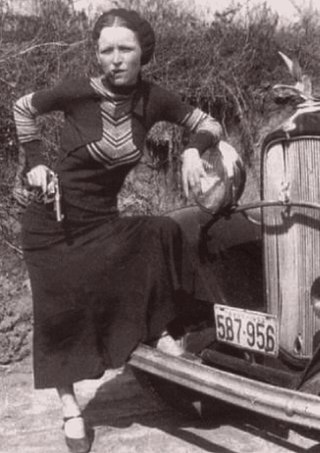
The Guardian recently ran a feature, ‘We donte want to hurt anney one’: Bonnie [Parker] and Clyde’s [Barrow] poetry revealed” … Wow! Who knew? I certainly didn’t. The quote in the headline is allegedly Clyde’s work. He tried his hand, but it looks like Bonnie was the poet. For those who may not know these were Depression Era criminals in a day when the most notorious were labeled “Public Enemy” and these two certainly were, though they are often glamorized in media.
Apparently there’s a notebook in which the poems believed to be written by the couple are collected. It is up for auction by Barrow’s nephew. (Find more details and photos of the notebook at Heritage Auctions. They’re also auctioning off photographs.)
A little further research – very little (but I was curious) – reveals that there are several poems popularly ascribed to Bonnie. Here’s one:
The Story of Bonnie and Clyde
You’ve read the story of Jesse James
Of how he lived and died;
If you’re still in need
Of something to read,
Here’s the story of Bonnie and Clyde.
Now Bonnie and Clyde are the Barrow gang,
I’m sure you all have read
How they rob and steal
And those who squeal
Are usually found dying or dead.
There’s lots of untruths to these write-ups;
They’re not so ruthless as that;
Their nature is raw;
They hate all the law
The stool pigeons, spotters, and rats.
They call them cold-blooded killers;
They say they are heartless and mean;
But I say this with pride,
That I once knew Clyde
When he was honest and upright and clean.
But the laws fooled around,
Kept taking him down
And locking him up in a cell,
Till he said to me,
‘I’ll never be free,
So I’ll meet a few of them in hell.’
The road was so dimly lighted;
There were no highway signs to guide;
But they made up their minds
If all roads were blind,
They wouldn’t give up till they died.
The road gets dimmer and dimmer;
Sometimes you can hardly see;
But it’s fight, man to man,
And do all you can,
For they know they can never be free.
From heart-break some people have suffered;
From weariness some people have died;
But take it all in all,
Our troubles are small
Till we get like Bonnie and Clyde.
If a policeman is killed in Dallas,
And they have no clue or guide;
If they can’t find a fiend,
They just wipe their slate clean
And hand it on Bonnie and Clyde.
There’s two crimes committed in America
Not accredited to the Barrow mob;
They had no hand
In the kidnap demand,
Nor the Kansas City depot job.
A newsboy once said to his buddy;
‘I wish old Clyde would get jumped;
In these awful hard times
We’d make a few dimes
If five or six cops would get bumped.’
The police haven’t got the report yet,
But Clyde called me up today;
He said, ‘Don’t start any fights
We aren’t working nights
We’re joining the NRA.’
From Irving to West Dallas viaduct
Is known as the Great Divide,
Where the women are kin,
And the men are men,
And they won’t ‘stool’ on Bonnie and Clyde.
If they try to act like citizens
And rent them a nice little flat,
About the third night
They’re invited to fight
By a sub-gun’s rat-tat-tat.
They don’t think they’re too tough or desperate,
They know that the law always wins;
They’ve been shot at before,
But they do not ignore
That death is the wages of sin.
Some day they’ll go down together;
And they’ll bury them side by side;
To few it’ll be grief
To the law a relief
But it’s death for Bonnie and Clyde.
– Bonnie Parker
.
“At approximately 9:15 a.m. on May 23, the posse, concealed in the bushes and almost ready to concede defeat, heard Barrow’s stolen Ford V8 approaching at a high speed. . . . The lawmen opened fire, killing Barrow and Parker while shooting a combined total of about 130 rounds. . . Barrow was killed instantly [but an officer reports hearing] Parker scream as she realized Barrow was dead before the shooting at her fully began. The officers emptied all their arms at the car. Any one of the many wounds suffered by Bonnie and Clyde would have been fatal.” Wikipedia
.
All photographs in the post are in the public domain.
Poet and writer, I was once columnist and associate editor of a regional employment publication. I currently run this site, The Poet by Day, an information hub for poets and writers. I am the managing editor of The BeZine published by The Bardo Group Beguines (originally The Bardo Group), a virtual arts collective I founded. I am a weekly contributor to Beguine Again, a site showcasing spiritual writers. My work is featured in a variety of publications and on sites, including: Levure littéraure, Ramingo’s Porch, Vita Brevis Literature,Compass Rose, Connotation Press, The Bar None Group, Salamander Cove, Second Light, I Am Not a Silent Poet, Meta / Phor(e) /Play, and California Woman. My poetry was recently read byNorthern California actor Richard Lingua for Poetry Woodshed, Belfast Community Radio. I was featured in a lengthy interview on the Creative Nexus Radio Show where I was dubbed “Poetry Champion.”
“What if our religion was each other. If our practice was our life. If prayer, our words. What if the temple was the Earth. If forests were our church. If holy water–the rivers, lakes, and ocean. What if meditation was our relationships. If the teacher was life. If wisdom was self-knowledge. If love was the center of our being.” Ganga White, teacher and exponent of Yoga and founder of White Lotus, a Yoga center and retreat house in Santa Barbara, CA
“Every pair of eyes facing you has probably experienced something you could not endure.” Lucille Clifton
Thank you for sharing your love of words. Comments will appear after moderation.
 hared her 2018 homage with us in comments. Here (below) are those poems for you to read today along with an interview of Clarissa and her bio.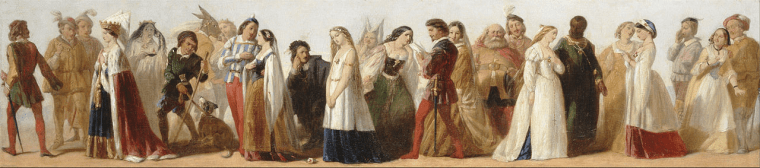
 Poet and writer, I was once columnist and associate editor of a regional employment publication. I currently run this site, The Poet by Day, an information hub for poets and writers. I am the managing editor of The BeZine published by The Bardo Group Beguines (originally The Bardo Group), a virtual arts collective I founded. I am a weekly contributor to



 Jamie Dedes' THE POET BY DAY Webzine