Page 98 of 127

CELEBRATING AMERICAN SHE-POETS (25): Olympian Alexi Pappas, draws attention to the art of the poem

Olympic_rings_without_rims.svg

So many of us are enchanted by Alexi Pappas, the Greek-American, poet, film-maker and Olympic champion. She’s not only wholesome, bright-spirited and hard-working, she’s a talent who, by virtue of interest and ethnic heritage,  links the historic roots of the Olympics with the modern event . . . and she’s drawing attention to our primary love, poetry. This is altogether a lovely package.

Scary Things

The thing about scary things
like spiders
is that they do not scare me
nearly as much
as the things I want the most.

The want things creep and stay
live in my mind–
a much harder place to reach and find
cannot be killed
will grow instead
unlike the spider in my bed
the scary want inside my head
is not afraid
and will not flee
rather than boo
says come and get me.

– Alexi Pappas

We couldn’t let this week go by without acknowledging Alexi Pappas, who has dual citizenship – U.S. and Greece. She explains here why she chose to run for Greece, but she was born in the States and her hometown is Alameda, California.

RELATED
Road to Rio is paved with poetry for runner Alexi Pappas, PBS Broadcasting
This Olympian — and poet — on her love for “freedom within boundaries”, PBS Broadcasting
Alexi Pappas, Wikipedia
Alexi Pappas, Dartmouth University Big Green (Sports)

WHO WILL FORGIVE GOD, a poem . . . and therein lies your Wednesday Writing Prompt

"The Apotheosis of War" 1871, Vasily Vereshchagin
“The Apotheosis of War”

God is on our side …
without a shadow of a doubt
they said and
no nay-saying her parents
her husband, her people
the politicos and demigods
their war-mongering

her eyes surveilled the warriors as
they cut across fields of innocence,
they stomped and postured

no Light shining from dark disorder
no Joy in parting a sea of blood

in her heart: doubts
large, lively, captive
packed tight into small muscle,
specters beating at the walls

ribs
sore

eyes
burning

soul
aching

they know not what they do

God forgives them all, she was taught
But who will forgive God

– Jamie Dedes

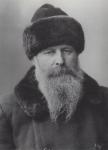
Vasili Vereshchagin
Vasili Vereshchagin

The Apotheosis of War painting (1871) is by Vasily Vereshchagin (1842-1904), a Russian artist, who dedicated this painting and one other – Left Behind  (a wounded Russian soldier abandoned by his comrades) – “to all conquerors, past, present and to come…”

WRITING PROMPT

There were several observations that contributed to this poem but, most of all, it was reading some comments on Facebook, especially this one: “If this is God’s will then God has a lot of explaining to do.”  War, destruction, murder: God’s will, free will, or the apotheosis of nihilism (insanity)? Write something that – by virtue of its brevity – is pungent: a poem or perhaps a parable.

Please feel free to put a link to your poem or parable below in comments so that I and others may come read your work.

© 2016, poem, Jamie Dedes, All rights reserved; the portrait of Vasili Vereshchagin and the photograph of “The Apotheosis of War” are both in public domain.

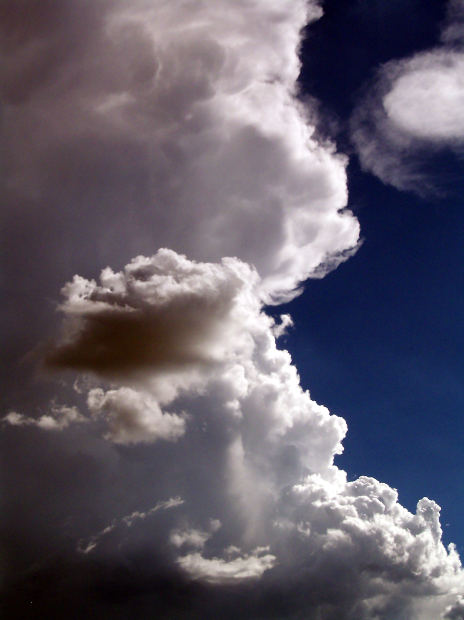
cloud watching, a poem

file0001128026195the open sky

,,,,tufts like spun sugar . . .

white with sunlight

layered on an endless blue blessing

free-form

and unbounded

.       idly floating . . . waiting on nothing

not the brightness of day

nor the cool calm night

….present with our pleasure

 . . . we eye one another

my silent mind . . . t]

their silent flow

. . . . . . occasional storms 

. . .mostly languid though . . .

peaceable

. . . as the blue upon which they rest . . . .cresting

. . . . . . . …………………their charism weightless as sea foam,

they brush my imagination

at the matrix of our shared meditation

©2013, poem, Jamie Dedes, All rights reservedPhoto courtesy of morgueFile

THINGS FALL APART

Nigerian poet, novelist, professor and critic, Chinua Achebe (1930-2013)

800px-Things_Fall_Apart_books_02

CHINUA ACHEBE was a Nigerian poet and novelist. His first novel Things Fall Apart (1958) is his major work and is said to be the most widely read book in modern African literature. He is considered the founding father of African literature in English.

Listen to a short interview with Achebe‘s daughter in pop-out player on BBC’s Witness. Published in 1958, Things Fall Apart “was set in pre-colonial rural Nigeria and examines how the arrival of foreigners – imposing their own traditions – led to tensions within the Igbo society. The book revolutionised African culture, and began a whole new genre of world literature. Witness radio program hears from Achebe’s youngest daughter, Nwando Achebe.”

Refugee Mother and Child Poem

No Madonna and Child could touch
that picture of a mother’s tenderness
for a son she soon would have to forget.
The air was heavy with odours

of diarrhoea of unwashed children
with washed-out ribs and dried-up
bottoms struggling in laboured
steps behind blown empty bellies. Most

mothers there had long ceased
to care but not this one; she held
a ghost smile between her teeth
and in her eyes the ghost of a mother’s
pride as she combed the rust-coloured
hair left on his skull and then –

singing in her eyes – began carefully
to part it… In another life this
would have been a little daily
act of no consequence before his
breakfast and school; now she

did it like putting flowers
on a tiny grave.

– Chinua Achebe, Collected Poems

“Charity . . . is the opium of the privileged.”  Chinua Achebe, Anthills of the Savannah

RELATED:

Africa’s Voice, Nigeria’s Conscience, New York Times
The Sacrificial Egg, The Atlantic